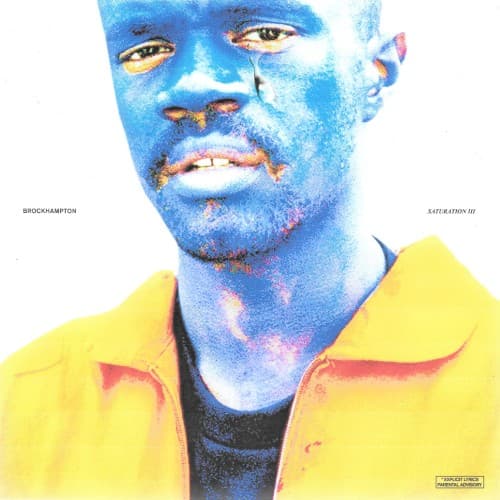
BROCKHAMPTON Saturation III — The Boy Band Ran Out of Time
Three albums in eight months is not sustainable. Anyone who has ever made anything knows this. You cannot keep that pace without something breaking — the music, the relationships, or both.
BROCKHAMPTON released Saturation III in December 2017, eight months after the first Saturation, and if you listen closely you can hear the exhaustion creeping in at the edges. But exhaustion is not always a bad thing. Sometimes it strips away the performance and leaves only the truth.
The boy band label was always a joke until it became accurate. Somewhere between the first album and this one BROCKHAMPTON stopped being a novelty and became a phenomenon. Teen girls screamed at their shows. Music journalists who dismissed them at first were now writing think pieces.
The weight of that attention is all over this album. It is less playful than Saturation I, less ambitious than Saturation II, and somehow more honest than both. This is the sound of a crew realizing that fame does not fix anything.
Kevin Abstract spends half the album wrestling with loneliness despite the sold-out shows. Dom McLennon is sharper and more focused than he has ever been. Ameer Vann sounds like he knows something bad is coming.
The production team — led by Romil Hemnani with contributions from Jabari Manwa and Kiko Merley — creates soundscapes that feel like the morning after a party, all cigarette smoke and regret. There is a darkness here that the first two albums only hinted at.
Does this make it better or worse than its predecessors? The fans still argue about it. Some say it is the most mature. Others say it lost the spark.
What is clear is that it captures a specific moment — the instant before a collective falls apart.
When the Sugar Rush Wears Off
The sonic palette here is muddier and heavier than anything BROCKHAMPTON had done before. Where Saturation I sounded like summer and Saturation II sounded like triumph, Saturation III sounds like comedown. Romil Hemnani leans into distortion and dissonance, building beats that feel intentionally uncomfortable. The clean lines and bright synths that defined the earlier albums are replaced by bass that rattles and drums that feel one step behind the tempo.
There is a deliberate ugliness to some of these productions. Jabari Manwa's contributions feel more abrasive, more willing to let the low end swallow everything. The vocal mixing is looser — voices bleed into each other, ad-libs sit too high in the mix, hooks feel unfinished.
It all adds to the sense that this album was made under pressure, in a rush, with the deadline approaching faster than anyone wanted to admit. And yet that pressure creates its own kind of energy.
Lyrically the group is at its most vulnerable. Kevin Abstract abandons the bravado almost entirely and spends most of his verses dissecting his own insecurity. Dom McLennon delivers some of the most technically impressive writing of the trilogy, cramming internal rhymes and double meanings into nearly every bar.
Ameer Vann is still playing the heavy, still rapping about violence and regret, but there is a weariness in his delivery that was not there before. The features are minimal — Joba handles most of the melodic lifting, and his voice cracks more often here, intentionally fraying at the edges.
The album is not without faults. The pacing drags in the middle stretch, and some tracks feel like ideas that needed another week in the studio. The Cinema interludes break up the momentum more than they build atmosphere.
As cohesive as the group sounds, there are moments where you can feel the seams — verses that do not quite connect, hooks that land flat, transitions that feel awkward. This is not a perfect album. It is a rushed one. But what does the rush accomplish?
The Long Walk Home
The album opens with pure adrenaline and then slowly deflates. The first stretch hits hard and fast, all aggression and quotables, before the energy starts to fracture. By the middle section the mood shifts entirely — introspection replaces bravado, melancholy replaces momentum. The sequencing feels intentional, like the group wanted you to experience the same arc they were living: hype to exhaustion to acceptance.
The back half is where the album earns its reputation. The pacing slows down, the production gets sparser, and the emotional stakes get higher. There are fewer punchlines and more confessions. The hooks get simpler and the verses get longer.
It is the sound of a crew that has been running nonstop for a year finally sitting down and admitting they are tired.
The Cinema interludes serve as breathing room, though they also interrupt the flow. They feel like the group trying to force structure onto an album that might have worked better without it. The decision to split the tracklist into chapters is admirable but not entirely successful. You end up skipping past them on repeat listens, which defeats their purpose.
The final stretch of the album is its strongest and its most devastating. The sequencing here is flawless — each track flows into the next with purpose, building toward a conclusion that feels both inevitable and earned. The group sounds exhausted but not defeated. The production strips away almost everything, leaving only the voices and the truth.
The Last Good Summer
In the BROCKHAMPTON discography this is the hardest album to rank. It does not have the explosive energy of Saturation I or the experimental ambition of Saturation II, but it has something those albums do not — consequence. This is the album where the stakes became real, where the hype turned into pressure, where the boy band joke stopped being funny. It is the least fun album in the trilogy and probably the most important.
Who should listen to this? Anyone who loved the first two Saturation albums but wanted the group to grow up. Anyone interested in how collectives fall apart. Anyone who wants to hear what happens when fame arrives faster than anyone is ready for.
Who might not enjoy it? Fans looking for bangers and good vibes will find this album too heavy, too slow, too willing to wallow. This is not party music. It is music for the morning after.
How has it aged? Better than it should have. In 2017 this felt like the end of something. In hindsight it was.
Ameer Vann would be gone within six months. The group would never recapture this energy. Every album they released after this one felt like an attempt to rebuild what was already broken. Saturation III is the last time BROCKHAMPTON sounded like they believed in the project.
If you are new to the group start with Saturation I, move to Saturation II, and then come here when you are ready for the comedown. The essential tracks are the ones where the facade drops completely and the group stops performing. The long-term influence is harder to measure — BROCKHAMPTON inspired a generation of bedroom producers and DIY collectives, but none of them captured the same chemistry.
The boy band metaphor was always more accurate than anyone wanted to admit. And like every boy band, they peaked fast and burned out faster.
Three albums in eight months, and this was the one where they finally ran out of road.
Track Listing
Boogie
▲The opening is all teeth and no mercy. Romil Hemnani builds the beat around a distorted bass loop that sounds like it is collapsing in on itself, and the group tears through verses with the kind of aggression that only comes from proving doubters wrong. Kevin Abstract opens with a hook that is half-sung, half-shouted, and every member who follows matches his energy. Dom McLennon delivers one of the most technically flawless verses on the entire album, internal rhymes stacking so fast you have to rewind to catch them all. Ameer Vann sounds hungrier than he has in months. The track is chaotic in the best way — voices overlapping, ad-libs bleeding into the next bar, everyone fighting for space in the mix. It is the perfect thesis statement for an album that refuses to play it safe. This is BROCKHAMPTON at full power, and it reminds you why the hype was never unearned.
Zipper
●Joba takes the lead here and the track shifts into something darker and more unstable. The production is built around a mangled vocal sample and drums that feel deliberately off-time, creating a sense of unease that never fully resolves. Joba's hook is more scream than melody, and his verse is unhinged in a way that works until it does not. The rest of the group sounds less comfortable on this beat — verses feel like they are fighting the production instead of riding it. Ameer Vann is the only one who fully commits to the chaos, delivering a verse that matches the energy. The track is ambitious but messy, the kind of experiment that is more interesting than enjoyable. It works as a statement of intent but not as something you will return to often.
Johnny
●This is the most polished track on the first half of the album, and it suffers for it. The production is clean and radio-ready, built around a guitar loop that feels like it belongs on a different project entirely. Kevin Abstract handles the hook with a melodic approach that is more accessible than anything else here, and the verses are competent but safe. Dom McLennon is the only one who elevates the material, packing his sixteen bars with wordplay that deserves a better backdrop. The rest of the group sounds like they are going through the motions. It is not a bad track, but it is the first moment on the album where you can feel the group trying to appeal to a wider audience instead of trusting their instincts. The compromise shows.
Liquid
▲The energy picks back up immediately. The beat is built around a hypnotic synth loop and a bassline that feels like it is pulling you underwater, and the group responds with some of the most focused rapping on the album. Kevin Abstract's verse is sharp and self-aware, Dom McLennon continues his hot streak with another technically flawless performance, and Ameer Vann delivers the kind of menacing bars that made him a standout in the first place. Joba handles the hook with a melodic approach that actually complements the production instead of fighting it. The track feels like the group remembered what made them dangerous in the first place — no compromises, no second-guessing, just raw talent and chemistry. This is the sound of a crew that knows exactly what they are capable of when they stop overthinking.
Cinema 1
●The first interlude arrives and the momentum dies. It is a minute of ambient noise and fragmented dialogue that is meant to establish atmosphere but mostly just interrupts the flow. You understand what the group is trying to do — create a cinematic experience, break the album into chapters — but the execution does not justify the disruption. On first listen it feels like a necessary breath. On repeat listens you skip it.
Stupid
▲This is the poppiest moment on the album and it works better than it should. The production is bright and melodic, built around a piano loop that feels almost optimistic, and the group leans into the accessibility instead of resisting it. Kevin Abstract delivers a hook that is genuinely catchy, and the verses are playful without being lightweight. Dom McLennon finds pockets in the beat that no one else would have thought to use. Ameer Vann sounds almost relaxed, which is rare for him. The track is a reminder that BROCKHAMPTON can make crowd-pleasers without sacrificing their identity. It is one of the few moments on the album where the group sounds like they are having fun, and that energy is contagious. This is the track that should have been a single.
Bleach
▲The album takes a hard left turn into vulnerability. The production is sparse and melancholic, built around a guitar loop that sounds like it was recorded in a bedroom, and Kevin Abstract uses the space to deliver one of the most emotionally raw performances of his career. He is singing more than rapping, and his voice cracks in ways that feel intentional and devastating. Ryan Beatty appears on the hook and his contribution elevates the entire track, adding a layer of sweetness that contrasts beautifully with the underlying sadness. The rest of the group stays out of the way, letting Kevin and Ryan carry the emotional weight. This is the moment where the album stops being about hype and starts being about honesty. It is the turning point, and it is impossible to ignore.
Alaska
●The introspection continues but the execution falters. The production is pretty but toothless, built around a lo-fi beat that feels more like background music than a proper foundation. The verses are fine but forgettable — everyone sounds like they are trying to match the mood instead of creating it. Kevin Abstract's hook is serviceable but lacks the punch of his best work. The track is not bad, it is just unnecessary. It feels like the group was chasing a vibe instead of building a song, and the result is something that fades from memory the moment it ends. This is the kind of track that works in the context of the album but does nothing on its own.
Hottie
▲The energy snaps back with a track that feels like a leftover from Saturation II. The production is bouncy and aggressive, built around a distorted bass loop and drums that hit harder than anything in the middle stretch. Ameer Vann takes the lead and delivers one of his strongest performances on the album, rapping with the kind of intensity that made him essential to the group's chemistry. The rest of the crew matches his energy, trading bars with precision and confidence. The hook is minimal but effective, and the track moves fast enough that you do not have time to question anything. This is BROCKHAMPTON doing what they do best — controlled chaos, perfect chemistry, no weak links. It is a reminder that even when the album drags, the group is still capable of elite-level execution.
Cinema 2
●Another interlude, another interruption. This one is slightly longer and slightly more annoying. The fragmented dialogue and ambient noise add nothing to the listening experience, and the decision to place it right after one of the album's strongest tracks feels like self-sabotage. You skip it.
Sister / Nation
▲This is the most ambitious track on the album and it earns every second of its runtime. The production shifts halfway through, moving from a sparse, haunting first half into a more aggressive, distorted second half. Kevin Abstract opens with a verse that is equal parts confession and accusation, and the rest of the group follows with contributions that feel like they were written in the same emotional headspace. Ameer Vann delivers what might be his final great verse with the group, rapping about violence and regret with a clarity that is both impressive and unsettling in hindsight. Dom McLennon closes the track with a verse that ties the entire album together, addressing fame, identity, and the cost of ambition with a level of insight that most rappers never reach. The transition between the two halves is seamless, and the production work from Romil Hemnani is some of his best. This is the centerpiece of the album, the moment where everything clicks.
Rental
▼The album is running out of steam and this track does not help. The production is lo-fi and minimal, built around a simple guitar loop and drums that barely register. The verses are scattered and unfocused, with no clear narrative or emotional through-line. Joba's hook is more atmosphere than melody, and it does not provide enough structure to hold the track together. The group sounds exhausted, which might be the point, but exhaustion does not always make for compelling listening. This is the weakest moment on the album, a track that feels like it was included to hit a runtime instead of serving a purpose. It drags.
Stains
▲Redemption arrives in the form of the album's most emotionally devastating track. The production is built around a melancholic piano loop and minimal drums, and Kevin Abstract uses the space to deliver a verse that is almost unbearably vulnerable. He is rapping about loneliness, about feeling disconnected despite the success, about the gap between what everyone sees and what he feels. The rest of the group contributes verses that feel like responses to Kevin's confession, each member addressing their own version of the same isolation. Dom McLennon is particularly sharp here, delivering bars that are both technically impressive and emotionally resonant. The hook is simple and repetitive, and it works perfectly. This is the sound of a group that has stopped performing and started being honest. It is the best track on the album.
Cinema 3
●The final interlude is mercifully short. It serves as a transition into the album's closing statement, and for once the disruption feels justified. The ambient noise fades into silence, and you brace yourself for what comes next.
Team
▲The album closes with the group at its most stripped down and sincere. The production is minimal — just a piano, some light percussion, and space for the voices to breathe. Each member takes a turn delivering what feels like a final statement, addressing the group's future, their individual struggles, and the weight of everything that has happened over the past year. Kevin Abstract's verse is the most personal, and he sounds exhausted in a way that is both sad and cathartic. Ameer Vann closes the album with a verse that feels like a goodbye, though no one knew it at the time. The hook is simple and communal, the entire group singing together, and it is the most honest moment of unity on the entire album. This is not a triumphant ending. It is a realistic one. The group made it to the finish line, but just barely. The song fades out and you are left with the distinct feeling that you just witnessed the end of something. You did.