From Queens Bridge to Dreamville: Bas's Transatlantic Hip-Hop Journey
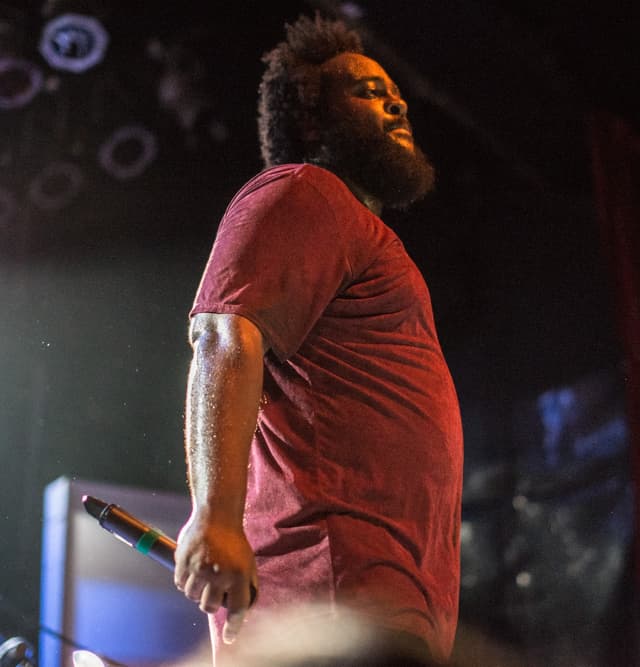
Bas emerged in the 2010s as one of Dreamville Records' most consistent voices, carving out space for introspective, melody-driven rap that bridges continents and sensibilities. Born Abbas Hamad in Paris to Sudanese parents and raised in Queens, New York, his music reflects a genuinely transatlantic perspective rarely heard in American hip-hop. While his Dreamville labelmate J. Cole commands stadiums, Bas has built his reputation on something quieter but no less substantial: crafting albums that feel like extended conversations rather than commercial announcements.
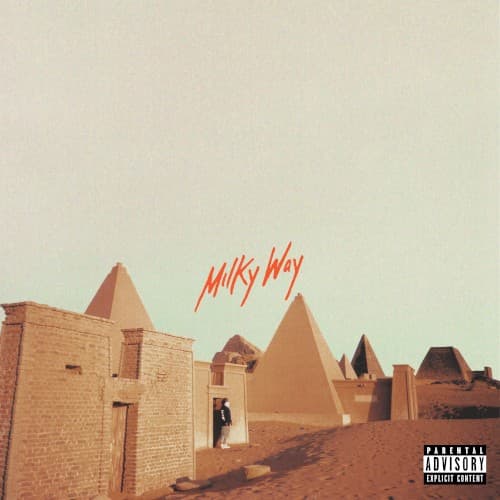
Signing to Dreamville in 2014, Bas found himself in an unusual position within hip-hop's label ecosystem. He wasn't the flagship artist demanding mainstream crossover, nor was he positioned as an underground purist. Instead, he occupied the middle ground where artistic ambition meets accessibility, where personal narrative threads through polished production without sacrificing either intimacy or listenability. His 2018 album Milky Way exemplified this balance, earning critical recognition for its cohesive vision and emotional honesty while showcasing his evolution as both writer and curator of sound.
What distinguishes Bas in an era of playlist-driven consumption is his commitment to album craft. He builds projects with thematic throughlines and sonic consistency, an increasingly rare approach in hip-hop's singles-focused landscape. His Queens upbringing gives him East Coast credibility, his Sudanese heritage provides global perspective, and his Dreamville affiliation connects him to one of hip-hop's most artist-friendly infrastructures. The combination produces music that feels both regionally grounded and culturally expansive.
Melodic Introspection: Bas's Sound Between Rap and Atmosphere
Bas operates in the space where traditional rap cadence dissolves into melodic phrasing. His vocal approach favors smooth delivery over aggressive punchlines, creating tracks that sit comfortably between conscious hip-hop and the melodic trap that dominated the late 2010s. He doesn't sing in the Auto-Tuned sense that defines much contemporary rap, but his flow incorporates tonal variation and melodic awareness that makes his music feel sonically warmer than straight-ahead boom-bap.
Production choices across his discography lean toward lush, layered instrumentation. Collaborations with producers like Ron Gilmore and J. Cole himself yield beats that incorporate live instrumentation, subtle electronic textures, and carefully placed samples. The sonic palette favors mid-tempo grooves over aggressive trap percussion, creating space for his lyrics to breathe. On Milky Way, this approach reached its most refined expression, with tracks that moved fluidly between introspective verses and expansive, almost cinematic instrumental passages.
Lyrically, Bas writes with novelistic detail about relationships, displacement, ambition, and the psychological weight of navigating multiple cultural identities. He avoids the extremes that define much contemporary rap: neither hyper-violent street narratives nor purely aspirational luxury rap. Instead, he documents the interior life of someone straddling worlds, whether geographic, cultural, or professional. His writing feels literary without becoming inaccessible, personal without collapsing into solipsism. The result is music that rewards close listening while remaining immediately engaging on first encounter.
Building a Discography: Bas's Steady Ascent Through Dreamville
Bas's path into professional music began through Queens connections and internet-age networking rather than traditional industry channels. His early mixtapes Quarter Water Raised Me Vol. II and Last Winter built local buzz, but the pivotal moment came when his music reached J. Cole through mutual connections. Cole recognized something in Bas's approach that aligned with Dreamville's artist-development philosophy: talent that needed refinement and platform rather than complete reconstruction.
His debut studio album Last Winter arrived in 2014, introducing his melodic sensibility to a wider audience but still finding its footing in terms of production consistency and thematic focus. The project showed promise without fully realizing it, a common first-album tension between artistic vision and market expectations. Features from J. Cole provided visibility, but the album's reception remained largely within hip-hop's dedicated listener community rather than breaking through to broader commercial success.
Too High to Riot in 2016 marked significant artistic growth. The album demonstrated sharper song construction, more cohesive production, and stronger thematic coherence around ambition, romance, and cultural dislocation. Tracks like "Night Job" and "Housewives" showcased his ability to craft narratives that felt cinematic in scope while remaining grounded in specific emotional experience. The project didn't spawn radio hits, but it solidified his position within Dreamville's roster as an album artist rather than a singles-driven act.
Milky Way in 2018 represented his most complete artistic statement. The album received critical praise for its sonic consistency and emotional depth, with production that felt both contemporary and timeless. Features from J. Cole, Ari Lennox, and others enhanced rather than overshadowed his presence, a sign of artistic confidence. The project explored themes of love, loss, and searching for home across multiple geographies and emotional states. Critics noted its maturity and cohesion, awarding it recognition as one of the year's stronger mainstream rap releases without massive commercial fanfare.
Subsequent releases including We Only Talk About Real Shit When We're Fucked Up (2020) and the collaborative project with The Hics continued his exploration of melodic hip-hop while experimenting with live instrumentation and jazz influences. These projects demonstrated artistic restlessness, a refusal to simply repeat the Milky Way formula even after critical success. Bas positioned himself as an artist interested in growth rather than commercial optimization, a stance enabled by Dreamville's artist-friendly infrastructure.
Carving Space: Bas's Role in Dreamville's Artist Ecosystem
Bas's significance lies less in revolutionary innovation and more in demonstrating viable alternative paths within contemporary hip-hop. In an era where streaming metrics and viral moments often define success, he built a career on sustained album craft and incremental audience growth. His presence on Dreamville's roster illustrates that labels can develop artists over multiple projects without demanding immediate commercial returns, a model increasingly rare in major-label hip-hop.
His influence on younger artists appears most clearly in how he navigates cultural hybridity. Second-generation immigrant rappers in particular have looked to his example of incorporating multiple cultural identities without exoticizing them or relegating them to tokenistic references. He showed that being Sudanese-American in Queens could inform music without becoming its sole defining characteristic, a balance many artists with similar backgrounds struggle to achieve.
Within Dreamville's constellation of talent, Bas occupies the essential role of consistent album craftsman. While J. Cole pursues conceptual ambition and artists like Ari Lennox define the label's R&B lane, Bas represents reliable quality in the melodic rap space. His albums contribute to Dreamville's reputation as a label where artistic development matters, where projects receive proper rollout and support even without guaranteed platinum plaques. That institutional support, in turn, influences how other independent and boutique labels approach artist development in the streaming era.