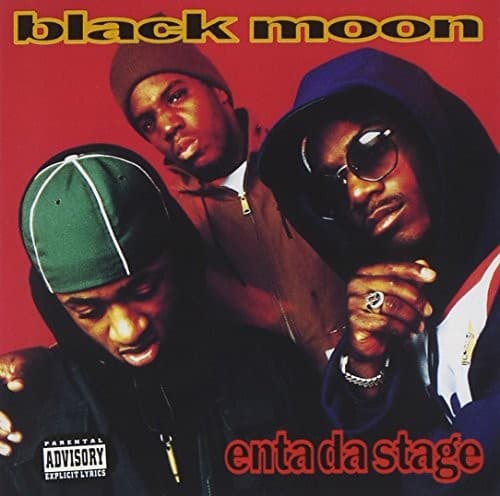
Black Moon Enta da Stage — The Blueprint for Brooklyn's Darkest Corner
Every best-album conversation about 1993 eventually arrives at the same crossroads: do you pick the album that dominated radio or the one that rewired the underground? While Snoop and Wu-Tang were building empires that year, three kids from Brooklyn stepped into a basement studio and recorded something that felt like it was meant to be discovered rather than sold. No hooks chasing crossover appeal. No guest verses from established names.
Just Buckshot's cold monotone, Evil Dee's dusty drums, and a mission to prove that New York still had teeth.
The Boot Camp Clik empire starts here, though nobody called it that yet. Black Moon dropped Enta da Stage on an independent label most people had never heard of, with production that sounded intentionally lo-fi even by 1993 standards. The album landed in record stores the same month as everything from Onyx to A Tribe Called Quest, and it got buried in the release schedule chaos. But the heads who found it heard something different — a refusal to compromise that bordered on hostility.
What keeps this album in rotation three decades later? The unfinished quality became its signature. The muffled kicks that sound like they were recorded through a blanket. The samples chopped so close to the original you can still hear the vinyl crackle underneath.
Buckshot's voice, devoid of melody or charisma in the traditional sense, functioning more like percussion than singing. Most rappers in 1993 were trying to stand out. Black Moon sounded like they were trying to disappear into the basement and take you with them.
Basement Science — When Lo-Fi Was a Philosophy
Evil Dee and Mr. Walt built this entire album around the SP-1200, and you can hear the machine's limitations in every bar. The sampler only held ten seconds of audio, which meant every loop had to be short, every chop had to count, and nothing could breathe too long before cycling back. That technical constraint became the album's aesthetic — beats that feel claustrophobic by design, bass that punches without ever getting warm, hi-hats so sharp they sound like they might cut through the speaker cone.
The production philosophy here runs opposite to what was winning in 1993. No live instruments sweetening the mix. No jazz interludes providing breathing room.
Da Beatminerz — the production crew that would become legendary off this debut — sampled obscure funk and soul records, then drained all the color out of them. The result sounds like someone pulled classic breakbeats through a trash compactor and reassembled the pieces with duct tape. It should not work, but it does, because the griminess serves the content. When Buckshot raps about Brooklyn street politics, the beats sound like the cracked pavement he is describing.
Buckshot's delivery operates on a different frequency than his peers. Where Nas painted pictures and Biggie told stories, Buckshot just states facts in a voice that never rises above conversational volume. He does not perform; he reports.
His flow sits so far back in the pocket it occasionally sounds offbeat, but that laid-back cadence makes the threats land harder. There is no theatrical menace here, just the certainty that he has done this before and will do it again. Lyrically, he sticks to battle raps and street narratives without much deviation, which becomes a limitation across fourteen tracks. By the back half, the subject matter starts feeling repetitive even when the execution stays sharp.
What is the album's biggest flaw? Too many mid-tempo bangers stacked consecutively without dynamic shifts. The energy peaks early and then plateaus for long stretches, which tests patience even when individual tracks hit. A few more tempo changes or a strategically placed interlude could have helped the album breathe.
As it stands, Enta da Stage demands active listening — this is not background music, and it punishes anyone who treats it that way.
Concrete Logic — How the Album Moves Like the Borough
The opening stretch establishes dominance immediately. Powaful Impak! sets the tone with a brief intro that feels like a warning shot, then the album slides directly into battle mode and never looks back. The first four tracks function as a manifesto — this is who we are, this is what we sound like, adjust your expectations accordingly.
The sequencing here works because it front-loads the aggression, making it clear that Black Moon is not interested in easing listeners into their world.
The middle section sags slightly under the weight of similar tempos and redundant battle raps. This stretch includes some strong individual moments, but the pacing flattens out when the album needs a pivot. The beats remain sturdy, but the lack of sonic variety starts to feel like a creative choice that stops serving the material.
You can hear where a feature verse or a different kind of production approach might have broken up the monotony without diluting the aesthetic. Instead, Black Moon doubles down on their established formula, which builds consistency at the expense of dynamic range.
The closing run regains momentum by leaning into the album's strengths. Enta da Stage arrives late but functions as a thesis statement, summarizing everything that came before with renewed focus. The final tracks do not reinvent the sound, but they refine it, proving that the formula still works when the execution stays sharp.
The album ends without fanfare or victory lap — just a fade-out that suggests the session could have kept going indefinitely. It is an abrupt but appropriate conclusion for a record that never cared about traditional album structure in the first place.
The Influence Nobody Wanted to Admit
In Black Moon's discography, Enta da Stage remains the creative peak. Their later albums refined the sound and brought better budgets, but nothing they made afterward carried this level of raw conviction. This is the album that defined Boot Camp Clik's aesthetic before the collective even had a name, and every subsequent release either built on this foundation or tried to recapture it. For fans who came up on the Clik's catalogue, this debut functions as required listening — the origin point for everything that followed.
Who should play this? Listeners who prefer their hip-hop unpolished and confrontational. Fans of Onyx, M.O.P., or early Mobb Deep will recognize the sonic DNA here. This album rewards patience and repeat listens — the beats that sound simple on first spin reveal layers after you live with them.
Who might skip it? Anyone looking for lyrical complexity or melodic hooks. Buckshot's content rarely ventures beyond battle raps and street talk, and the minimalist production will sound dated to ears trained on modern mixing standards. This is not music designed for casual consumption.
How has it aged? Better than most boom bap from the same era. The lo-fi production that sounded cheap in 1993 now reads as intentional grit, and the lack of commercial concessions gives the album a timeless quality that radio-friendly records from the period lack. You can still hear this album's influence in underground New York rap — that preference for murky samples, stripped-down drums, and monotone delivery traces directly back to what Black Moon pioneered here.
Essential tracks to start with: Who Got da Props? remains the most accessible entry point, with a hook that actually sticks and energy that translates immediately. Buck Em Down display the production aesthetic at its most refined.
I Got Cha Opin demonstrates how effective Buckshot's understated delivery can be when locked into the pocket. Similar albums worth exploring: Smif-N-Wessun's Dah Shinin', Heltah Skeltah's Nocturnal, and O.G.C.'s Da Storm — all Boot Camp Clik releases that expanded on this blueprint. For adjacent sounds from the same period, check Onyx's Bacdafucup and Mobb Deep's The Infamous.
Three decades later, Enta da Stage still sounds like it was recorded in a basement you were not supposed to find. That is exactly why it endures.
Track Listing
Powaful Impak!
▲A forty-second warning shot that establishes the album's no-frills approach. Evil Dee loops a stark drum break with minimal embellishment, while Buckshot announces his arrival with the kind of calm authority that suggests he has already won before the first round started. This intro works because it refuses to oversell what is coming — just a brief statement of purpose before the real work begins.
Niguz Talk Shit
▲The first full track arrives with a crawling bassline and drums that sound like they were recorded in a stairwell. Buckshot's flow here exemplifies his entire approach: no wasted syllables, no inflection changes, just threats delivered in the same tone you would use to order coffee. The hook barely qualifies as a hook, more like a repeated phrase that anchors the verses without offering any melodic relief. Evil Dee's production choice to keep the sample loop so short creates a hypnotic effect that either locks you in or drives you away — there is no middle ground. The track sets the template for everything that follows: minimal production, maximum hostility, zero compromise.
Who Got da Props?
▲The album's signature track and its most accessible moment. Mr. Walt flips a soul sample into something that actually swings, giving Buckshot room to show some personality beyond the monotone battle raps. The hook here is the closest thing to commercial the album offers, which probably explains why this became the single. Buckshot's delivery loosens slightly, allowing some rhythm into his cadence without sacrificing the edge. I heard this at a block party in Bed-Stuy in 1994, speakers mounted on a fire escape, and it cut through every other record the DJ played that afternoon. The beat has just enough bounce to work in a party context while maintaining the gritty aesthetic that defines the album. Still the best entry point for listeners unfamiliar with Black Moon's sound.
Ack Like U Want It
▲Evil Dee chops a jazz sample into something jagged and confrontational, then lets Buckshot navigate the pockets with his trademark laid-back aggression. The track demonstrates how effective the minimalist approach can be when the rapper and producer are perfectly synced. Buckshot's threats here feel less performative than on other tracks — he is not trying to convince you he is dangerous, just stating facts about what happens when people test him. The beat switch halfway through provides one of the album's few moments of structural variation, proving Da Beatminerz could construct more complex arrangements when they chose to. Strong track that benefits from appearing early in the sequence before the formula starts feeling repetitive.
Buck Em Down
▲One of the album's coldest beats — a looped piano stab that sounds like it is falling down stairs, paired with kicks so muffled they barely register as bass. Buckshot rides this skeletal production with his most detached vocal performance, somehow making extreme violence sound mundane. The hook is just him repeating the title phrase with zero melodic variation, which should not work but does because the entire aesthetic commits to minimalism. This track exemplifies what made Black Moon influential: they took the boom bap formula and stripped it down even further than anyone thought possible, proving that less could still be more if you had the conviction to follow through.
Black Smif‐n‐Wessun
▲The first guest appearance introduces Tek and Steele, who would soon release their own Boot Camp Clik classic. Their chemistry with Buckshot is immediate — all three rappers share the same no-frills approach to battle raps, stacking threats without any theatricality. Mr. Walt provides a slightly more energetic beat than usual, with a horn sample that adds some brightness to the otherwise murky sonic palette. The posse cut format works here because nobody tries to steal the spotlight; it is three voices unified by the same mission. This track planted the seeds for what would become the Boot Camp Clik collective, showcasing how multiple artists could operate within this stripped-down aesthetic without redundancy.
Son Get Wrec
●A brief posse cut that functions more as an interlude than a full track. Multiple voices trade short verses over a looped drum break with minimal melodic content. The energy stays high, but the abbreviated runtime prevents the track from developing any real momentum. It feels like a cipher that got captured on tape and dropped into the tracklist without much consideration for how it fits into the album's larger structure. Not a skip, but not essential either.
Make Munne
▼The album's weakest moment — a functional mid-tempo banger that brings nothing new to the table. Evil Dee's production here sounds like an earlier draft of ideas executed better elsewhere on the record. Buckshot's verses cover familiar territory without the sharpness that makes his other battle raps compelling. The hook attempts to add some commercial appeal but lacks the melodic strength to actually stick. This is the track that proves the album's biggest flaw: when the formula does not hit, there is nothing underneath to compensate. Filler that could have been cut without losing anything essential.
Slave
●A conceptual detour that attempts to address systemic oppression but lacks the lyrical depth to do the subject justice. Buckshot's straightforward delivery works for battle raps but struggles when tasked with carrying more complex social commentary. The production mirrors the heavier subject matter with a slower tempo and darker sample choices, but the execution feels underdeveloped compared to the more focused tracks. The intent is admirable — a break from the constant battle raps to address something substantive — but the result feels like an incomplete idea that needed more time to develop. Not bad, just undercooked.
I Got Cha Opin
▲The album snaps back to form with one of its most effective minimalist workouts. Mr. Walt constructs the beat from barely three elements: a chopped vocal sample, a kick drum, and a snare that sounds like it was recorded in a cardboard box. Buckshot locks into the pocket so deeply that his voice becomes another percussion element, riding the sparse production with absolute confidence. No hook, no melody, just four minutes of perfectly executed boom bap fundamentals. I played this on repeat during a cross-country drive in 1995, windows down through the desert, and the hypnotic loop never got old. This track demonstrates why Black Moon's approach works: when you strip everything down to the essentials, execution becomes everything, and here the execution is flawless.
Shit Iz Real
▲Another guest-heavy posse cut featuring various Boot Camp affiliates trading verses over a grimey loop. The energy stays high throughout, with each rapper bringing their own personality while maintaining the collective aesthetic. Evil Dee's production here is busier than usual, layering multiple samples without losing the raw edge that defines the album. The track works as a showcase for the wider Boot Camp Clik roster, proving that the chemistry extended beyond just Black Moon's core members. Solid posse cut that builds momentum heading into the album's final stretch.
Enta da Stage
▲The title track arrives late but earns its placement by functioning as the album's thesis statement. Buckshot delivers some of his sharpest battle raps over a beat that summarizes Da Beatminerz' entire production philosophy: dusty drums, chopped soul samples, and absolutely zero concessions to radio. The hook repeats the title phrase with the kind of confidence that only comes after proving your point across twelve tracks. This would have made a strong album opener, but placing it near the end allows it to function as a victory lap instead — evidence that the formula still hits even after extended exposure. Everything that makes this album work is present here: the raw production, the understated delivery, the refusal to compromise.
How Many MC's…
●A posse cut that feels more chaotic than focused. Multiple voices trade bars over a frenetic beat, but the energy reads more scattered than intense. The rapid-fire verse exchanges prevent anyone from building real momentum, and the production lacks the hypnotic quality that makes the album's best tracks so effective. It is not actively bad, just unnecessary — another posse cut on an album that already had several, adding length without adding value. Could have been trimmed.
U da Man
▲The album closes with Buckshot addressing an unnamed adversary over one of Mr. Walt's most sinister beats. The production is all menace — a minor-key loop that sounds like a horror movie score chopped into boom bap rhythm. Buckshot's delivery here is icier than usual, every threat landing with the calm certainty of someone who has already decided how this ends. The track provides no resolution, no triumphant finale, just a final demonstration of the aesthetic that defined the previous thirteen tracks. The abrupt ending feels appropriate for an album that never cared about traditional structure. It just stops, as if the tape ran out or the session ended, leaving you with the same unfinished feeling that defines the entire project.