The Masked Architect of Underground Hip-Hop's Golden Age
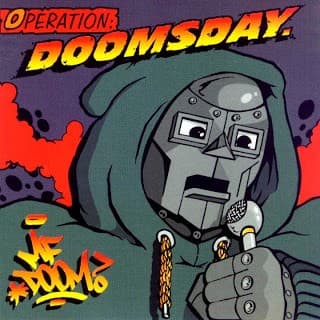
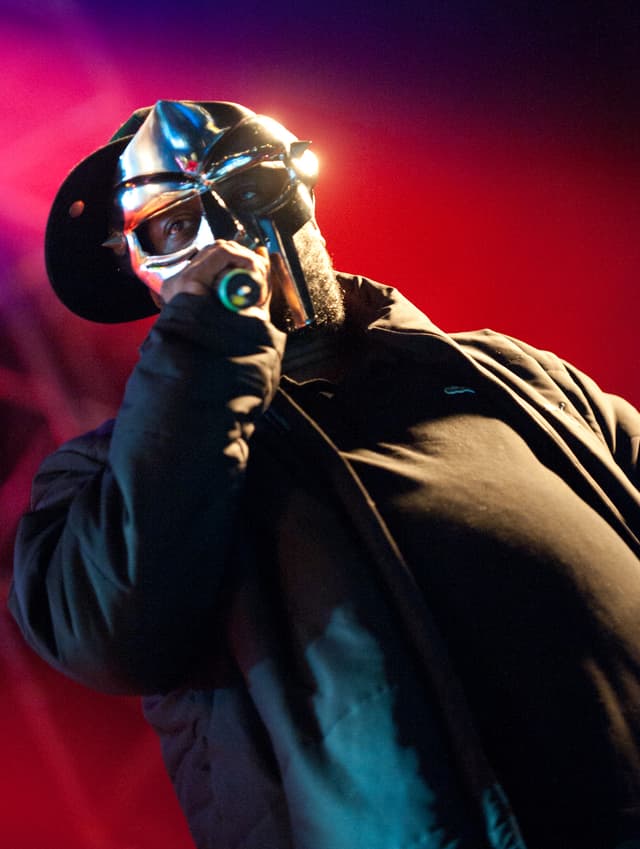
MF DOOM built a career on contradiction. Born Daniel Dumile in London and raised in Long Island, he emerged twice in hip-hop history — first as Zev Love X of KMD in the early 90s, then reborn behind a metal mask after personal tragedy derailed his initial run. The mask became more than gimmick. It represented artistic rebirth, anonymity in an era obsessed with celebrity, and a comic book supervillain persona that allowed complete creative freedom. His 1999 solo debut Operation: Doomsday arrived with zero industry support, pressed and distributed through his own means, and gradually built a cult following that would redefine what underground hip-hop could achieve commercially and artistically.
DOOM's approach rejected every mainstream convention. He rapped about nothing and everything — breakfast cereal, obscure film references, abstract internal monologues that doubled back on themselves. His production style favored dusty samples from forgotten television shows, vintage cartoons, and jazz records so obscure that even dedicated crate-diggers struggled to identify sources. Where peers chased radio play, he recorded entire albums under different aliases, treated live shows as performance art experiments, and maintained such fierce independence that major labels never controlled his output. By the time of his death in October 2020, he had influenced everyone from Tyler, The Creator to Earl Sweatshirt without ever compromising his vision for commercial acceptance.
Complex Wordplay Meets Analog Production Aesthetics
DOOM's verbal technique operates on multiple levels simultaneously. Surface-level bars deliver humor and pop culture references, but beneath that sits intricate internal rhyme schemes, double entendres that reveal themselves on repeated listens, and metaphors nested inside other metaphors. He would rhyme the middle of words rather than endings, slip between personas mid-verse, and construct entire songs as elaborate jokes with delayed punchlines. His flow rarely emphasized aggression or speed — instead, he spoke with the casual authority of someone explaining complex concepts to children, letting the syllables tumble naturally across off-kilter rhythms.
Production-wise, DOOM pioneered what became known as the "lo-fi aesthetic" before that term carried commercial weight. He sampled Scooby-Doo dialogue, obscure European jazz, vintage science education films, and stitched them together with drum breaks that deliberately avoided clean quantization. The result sounded like transmissions from another era — analog warmth, vinyl crackle, slightly out-of-tune instruments creating an atmosphere of beautiful imperfection. Where contemporaries polished beats for club systems, DOOM's instrumentals rewarded headphone listening, revealing layered details that only emerged after dozens of plays. His self-production on most projects meant complete creative control, allowing sonic experiments that no outside producer would have sanctioned.
From KMD's Tragedy to the Supervillain's Underground Empire
The Daniel Dumile story begins with promise cut short. As Zev Love X in KMD alongside his brother DJ Subroc, he signed to Elektra Records in the late 80s and released Mr. Hood in 1991 — conscious, Afrocentric hip-hop that garnered critical respect. Their sophomore album Black Bastards was completed in 1993, but Elektra shelved it after deeming the cover art too controversial. Weeks later, Subroc died after being struck by a car. The double blow — losing his brother and his record deal simultaneously — sent Dumile into a half-decade retreat from music and public life.
He resurfaced in 1997 at open mics around Manhattan, now wearing a mask inspired by Marvel Comics supervillain Doctor Doom and calling himself MF DOOM. The persona allowed him to start over without carrying the weight of past trauma visibly. Operation: Doomsday dropped in 1999 through Fondle 'Em Records, financed partly by DOOM himself. It sold slowly but steadily, spreading through word-of-mouth and underground retailers. Tracks like "Doomsday" and "Rhymes Like Dimes" showcased his evolved style — abstract, reference-heavy, produced with equipment most rappers had abandoned for newer technology. The album now holds classic status, its initial obscurity only adding to its legend.
The early 2000s saw DOOM's most prolific period. He launched multiple alter-egos: Viktor Vaughn for the Vaudeville Villain and VENOMous Villain projects, King Geedorah for Take Me to Your Leader. Each alias explored different aspects of his personality and production approach. But the career-defining moment came through collaboration. Madvillainy, his 2004 partnership with producer Madlib under the name Madvillain, elevated DOOM from cult figure to legitimate underground institution. Madlib's dusty, sample-heavy beats matched DOOM's vocal aesthetic perfectly, and tracks like "Accordion" and "All Caps" became anthems for a generation of listeners who valued artistic integrity over commercial success.
Subsequent years brought MM..FOOD (2004), an entire concept album using food metaphors, and The Mouse and the Mask (2005) with Danger Mouse, built entirely around Adult Swim cartoon samples. He collaborated with Ghostface Killah on DOOM's criminally underrated 2006 project, worked with Jake One, and released Born Like This in 2009. Throughout this period, DOOM's live reputation grew complicated — he sometimes sent imposters wearing the mask to perform shows, treating concerts as extensions of the supervillain mythology rather than traditional artist-fan transactions. Some fans felt betrayed; others saw it as performance art consistent with his rejection of celebrity culture.
His final years saw fewer releases but sustained influence. He relocated to London, dealing with immigration issues that prevented easy return to the United States. Projects arrived sporadically: the 2017 Czarface collaboration, occasional features, rumors of albums that never materialized. When his death was announced in December 2020 — two months after it occurred — the hip-hop community mourned not just an artist but an entire aesthetic approach that he had pioneered and protected.
The Supervillain's Enduring Influence on Independent Hip-Hop
DOOM's impact extends far beyond his own discography. He proved underground hip-hop could sustain a career without major label support, radio play, or visual presence. Artists like Tyler, The Creator, Earl Sweatshirt, and Joey Bada$$ cite him as direct influence, adopting his complex internal rhyme schemes and willingness to prioritize artistic vision over accessibility. The lo-fi production aesthetic he championed became an entire subgenre, spawning countless bedroom producers who valued texture and atmosphere over pristine mixing.
His mask mythology demonstrated that hip-hop stardom could exist on different terms. While peers built brands through social media visibility and personal revelation, DOOM maintained mystery until death. The contradiction between his public persona and Daniel Dumile the private person created space for the music to exist independently of biography. Younger artists adopted similar approaches — concealing faces, using alter-egos, treating artist identity as malleable rather than fixed.
Operation: Doomsday's critical reevaluation continues. Initially ignored by mainstream publications, it now appears regularly on greatest underground hip-hop albums lists, its 9.3 rating on this site reflecting a consensus that emerged gradually rather than immediately. The album's influence shows in how many contemporary artists prioritize vibe and texture over commercial song structure, trust listeners to decode complex references, and embrace imperfection as aesthetic choice. DOOM taught a generation that hip-hop greatness didn't require platinum plaques or arena tours — just uncompromising vision and the patience to let the right audience find you.