From Compton Streets to Aftermath: The Game's Resurrection Through Hip-Hop
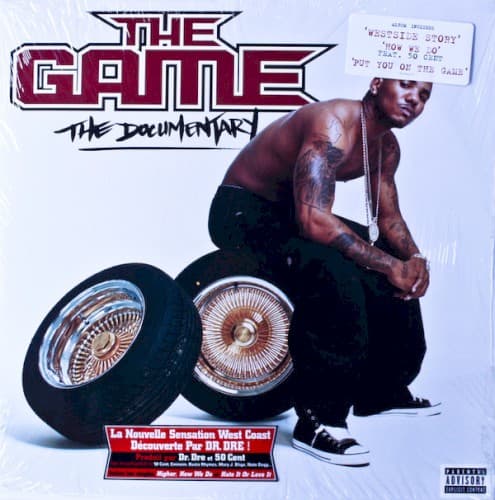
Jayceon Terrell Taylor emerged from Compton in 2005 with The Documentary, an album that felt like both a time capsule and a revival—the sound of West Coast gangsta rap filtered through the hyperaware sensibility of someone who had studied every verse, every production choice, every cultural moment that came before. The Game arrived at a peculiar crossroads in hip-hop history, when the West Coast's commercial dominance had waned and G-Unit ruled the charts with their gritty New York sound. His debut bridged that gap, reconnecting the lineage from Eazy-E and Tupac through Dr. Dre's polished modernism while simultaneously engaging with the street narratives that defined mid-2000s rap.
What distinguished him immediately was his relationship to hip-hop itself—not just as a participant but as a devoted student. His verses read like annotated bibliographies of rap history, dropping references to legendary tracks and artists with the fervor of someone who had converted to the culture later than most. That late start, beginning his rap career in earnest after recovering from a near-fatal shooting in 2001, gave him a hunger that translated into an obsessive work ethic and an encyclopedic command of the genre's vocabulary. His career has been defined by this duality: reverence for tradition and an almost confrontational need to prove his place within it.
Referential Lyricism and the Architecture of West Coast Sound
The Game's sonic identity rests on two pillars: his dense, reference-heavy lyricism and his commitment to classic West Coast production aesthetics. His flow tends toward the deliberate and forceful, each bar delivered with conviction, prioritizing clarity and impact over technical complexity. He doesn't innovate with rhythm or vocal experimentation—instead, he builds verses like arguments, stacking evidence of his legitimacy through name-checks, geographical markers, and autobiographical detail. This approach can feel exhausting or exhilarating depending on the listener's tolerance for self-mythology, but it undeniably reflects someone who understands hip-hop as a continuum of voices and moments.
Production-wise, his best work favors soulful loops, melodic basslines, and the kind of cinematic sweep that Dr. Dre perfected across decades. The Documentary showcased this template at its peak: Kanye West's chipmunk soul on "Dreams," Just Blaze's triumphant horns on "Higher," and Dre's own architectural layering throughout. Later albums would experiment with different regional sounds—Southern bounce, East Coast boom-bap, contemporary trap inflections—but his most resonant material always circles back to that California foundation. His ear for beats is catholic and sometimes scattershot, willing to chase trends or recruit any producer who might elevate a track, which gives his discography a restless quality that mirrors his personality.
The Documentary Era and Two Decades of Relentless Output
The Documentary arrived in January 2005 with institutional backing that few debut artists receive: Dr. Dre executive production, 50 Cent co-signs, and the full weight of Aftermath and G-Unit machinery. It moved 586,000 copies in its first week and eventually went triple platinum, spawning hits like "How We Do" and "Hate It or Love It" that still define mid-2000s rap radio. The album succeeded because it delivered exactly what it promised—an authentic Compton narrative wrapped in immaculate production, with enough pop sensibility to reach beyond the streets. Critics praised its cohesion and ambition, and it established The Game as the first credible West Coast star since Snoop Dogg's initial run.
But success brought immediate complications. His public falling out with 50 Cent and eventual departure from G-Unit in 2005 overshadowed his sophomore effort, Doctor's Advocate (2006), even as that album proved his viability without the G-Unit umbrella. Produced largely without Dr. Dre's involvement, it still went double platinum, driven by singles like "One Blood" and a rawer, more independent aesthetic. This began a pattern that would define his career: consistent commercial performance coupled with diminishing cultural centrality. LAX (2008) and The R.E.D. Album (2011) maintained his platinum streak, but the conversation around him increasingly focused on industry beef, social media controversies, and his prolific but somewhat scattershot album rollouts.
The second decade of his career saw volume replace urgency. Jesus Piece (2012), The Documentary 2 and 2.5 (both 2015), 1992 (2016), and Born 2 Rap (2019) showcased his ability to recruit impressive features and deliver competent, sometimes inspired street rap, but they also revealed diminishing returns. The Documentary 2 aimed for legacy consolidation, bringing back Dre for limited input and attempting to recapture the narrative cohesion of his debut. It succeeded in stretches—"On Me" featuring Kendrick Lamar felt vital, and certain deep cuts demonstrated he hadn't lost his ear for production—but the double-album sprawl diluted its impact. By Born 2 Rap, which he claimed would be his final album, The Game occupied an odd space: a veteran with undeniable respect for the craft, a prolific hitmaker who could still land features from elite artists, yet somehow peripheral to the genre's current conversations.
West Coast Torchbearer or Footnote? Assessing The Game's Impact
The Game's legacy is contested terrain. His advocates point to The Documentary as one of the last truly great West Coast gangsta rap albums, a project that successfully bridged eras and proved the sound's commercial viability in a post-Tupac landscape. His influence on younger West Coast artists is tangible—artists like YG and Nipsey Hussle built on the template he reestablished, that blend of geographical pride, street reportage, and crossover ambition. His name-checking style, while sometimes excessive, reinforced a culture of hip-hop history awareness and lineage respect that resonates with fans who value continuity.
But his detractors see someone who never grew beyond that initial formula, who confused volume with evolution and social media presence with cultural relevance. The constant beefs—50 Cent, Jay-Z, Meek Mill, countless others—sometimes read as desperate attempts to remain visible rather than organic conflicts born from creative friction. His two-decade output, impressive in its consistency, lacks the clear artistic peaks and reinventions that define truly transformative careers. Where Kendrick Lamar evolved from regional torchbearer to global voice, The Game remained locked in the mode he perfected in 2005.
What's undeniable is his dedication and his role as a connector. He remained loyal to Dr. Dre's legacy when Dre himself moved away from regular production work. He consistently championed West Coast history, keeping names and moments alive in his verses even when it cluttered his songs. For a generation of fans who discovered West Coast rap through The Documentary, he represents an entry point and an encyclopedia—someone who made the sound accessible while pointing back to its roots. Whether that's enough to secure a spot among hip-hop's essential voices remains debatable, but it's a contribution that shouldn't be dismissed.