Style & Context
Influences
Takashi Murakami's Superflat movement, Japanese yokai folklore, children's book illustration, psychedelic poster art
Location
This cover emerged from Kanye's temporary creative compound in Wyoming, where isolation bred introspection and collaboration.
Visual Language
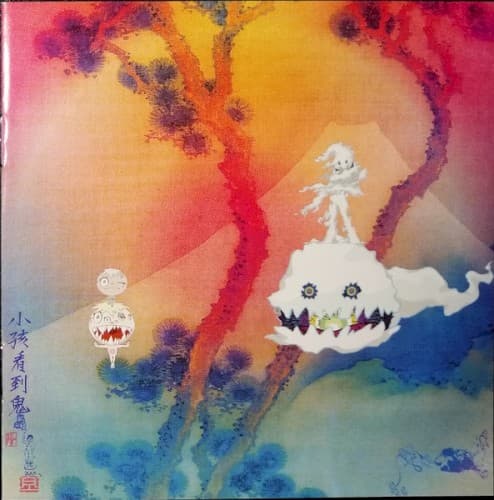
Murakami deliberately avoids his signature pop-art polish for loose, bleeding watercolors that feel unfinished and vulnerable.
Symbols
White ghost figure on cloud
Represents the spirits both artists battle with and channel through their creative process.
Toothy monster balloon
Symbolizes the demons of depression and addiction that haunt both Kanye and Cudi throughout their careers.
Japanese calligraphy (left margin)
Murakami's signature stamp connects Eastern artistic tradition to Western hip-hop innovation and spiritual seeking.
Where Sound Meets Image
The watercolor bleeding mirrors the album's hazy, cloud-rap production where boundaries between Kanye's and Cudi's voices dissolve into shared consciousness. The white ghost stands atop darkness just as tracks like 'Reborn' and 'Cudi Montage' find transcendence through acknowledging pain. The toothy monster captures the manic energy of 'Feel The Love' with its primal screams, while the serene cloud represents moments of clarity in 'Freeee' and '4th Dimension.' Murakami's fusion of cute and disturbing matches the album's tonal whiplash between playful experimentation and raw confession.
This cover helped normalize fine art collaborations in hip-hop's streaming era, proving album art still mattered even when reduced to smartphone thumbnails. The hand-painted aesthetic influenced a wave of organic, unpolished cover art that rejected digital perfection. Murakami's involvement legitimized the seven-track album format Kanye championed throughout 2018's Wyoming sessions, showing brevity could carry artistic weight. The ghost imagery became visual shorthand for the album's mental health themes, appearing on merchandise and concert visuals.