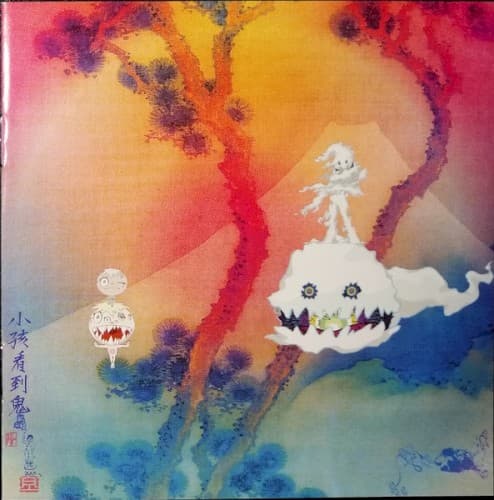

The Collision of Two Visionaries: KIDS SEE GHOSTS as Hip-Hop Alchemy
KIDS SEE GHOSTS emerged in 2018 as a creative detonation point — Kanye West and Kid Cudi reuniting after years of fractured friendship to build something neither could achieve alone. The supergroup arrived during Kanye's Wyoming album series, a concentrated burst of collaborative output that redefined his creative process. What made KIDS SEE GHOSTS distinct wasn't just the pedigree of its members, but the genuine chemistry of reconciliation. These weren't two stars sharing space on a tracklist. They were old collaborators rediscovering shared language.
The pairing felt inevitable in hindsight. Cudi's melodic introspection had shaped Kanye's 808s era, while Kanye's maximalist production ambition pushed Cudi beyond his comfort zones. Together, they created a seven-track project that compressed their cumulative influences — psychedelic rock, gospel transcendence, trap percussion, grunge guitars — into a compact statement of mutual respect. The album functioned as both creative reset and historical bridge, connecting Kanye's early vulnerability to his later spiritual fixations, while letting Cudi reclaim the experimental edge that made his debut revolutionary.
Though the group's lifespan was brief, its impact registered immediately. KIDS SEE GHOSTS proved that experimental hip-hop could hit the mainstream without dilution, that vulnerability and aggression could coexist without contradiction, and that some creative partnerships achieve their fullest potential in concentrated bursts rather than prolonged campaigns.
Psychedelic Maximalism: The Sonic Architecture of KIDS SEE GHOSTS
The sound of KIDS SEE GHOSTS sits at the intersection of Kanye's genre-agnostic production and Cudi's celestial humming, creating something that feels ancient and futuristic simultaneously. The production pulls from krautrock motorik rhythms, Kurt Cobain guitar distortion, Ennio Morricone western grandeur, and 808-driven trap foundations. It's dense without being cluttered, chaotic without losing direction. Kanye's production choices here favor texture over cleanliness — guitars fuzz and bleed, vocal samples pitch-shift into alien registers, drums hit with unpolished force.
Cudi's vocal approach functions as the project's emotional anchor. His signature hums drift across tracks like smoke, grounding the experimental production in human warmth. When he sings, it's with that familiar blend of fragility and defiance that made his solo work resonate. Kanye, meanwhile, toggles between spiritual proclamations and street-level intensity, his verses more conversational than preachy. The duo's chemistry is most evident in how they trade space — Cudi handles melodic hooks while Kanye delivers percussive declarations, creating a push-pull dynamic that keeps the listener suspended between introspection and euphoria.
What distinguishes KIDS SEE GHOSTS sonically is its refusal to settle. Tracks shift abruptly, moods pivot without warning, and the production aesthetic values rawness over polish. It sounds like two artists working in real-time, capturing sparks rather than constructing monuments. The result is hip-hop that breathes with improvisation while maintaining structural cohesion, experimental enough to challenge genre boundaries but grounded enough to feel accessible.
From Wyoming to the Wilderness: The KIDS SEE GHOSTS Timeline
The KIDS SEE GHOSTS origin story begins not in 2018, but years earlier when Kid Cudi became a fixture in Kanye's creative orbit. Cudi co-wrote key songs on 808s & Heartbreak, helping Kanye navigate vulnerability in ways that redefined mainstream rap. Their early collaborations felt natural — two Midwestern outsiders using melody to process darkness. But by the mid-2010s, the relationship had fractured publicly. Cudi called out Kanye in a Twitter rant, Kanye responded with stage dismissals, and the partnership seemed permanently severed.
The reconciliation happened quietly, then exploded into the Wyoming sessions. Kanye retreated to Jackson Hole in spring 2018, orchestrating a series of collaborative albums produced in seclusion. KIDS SEE GHOSTS was the fourth release in this sequence, arriving on June 8, 2018, just one week after Kanye's solo effort Ye. The album was brief — seven tracks, 23 minutes — but it felt monumental. The project debuted at number two on the Billboard 200, moved 142,000 units in its first week, and immediately sparked critical discourse about hip-hop's experimental boundaries.
What made the rollout unusual was its lack of traditional promotion. No singles preceded the album. No music videos dropped beforehand. The project simply appeared, streamed globally, and let the music speak. This approach mirrored the album's aesthetic — spontaneous, unfiltered, built on creative momentum rather than commercial calculation. The supporting tour, billed as the Kids See Ghosts Experience, featured elaborate visual production including floating stages and psychedelic projections, translating the album's sonic density into physical spectacle.
But the group's lifespan was always intended to be finite. After the album and tour, both artists returned to solo work. Kanye spiraled into gospel-driven Sunday Service performances and the Jesus Is King era, while Cudi focused on acting and incremental music releases. The KIDS SEE GHOSTS project never received a follow-up, and by 2022, the collaboration had formally ended. What remains is a single album — a snapshot of two artists at a specific moment of creative and personal alignment, capturing lightning without attempting to bottle it permanently.
The Aftershock: How KIDS SEE GHOSTS Redefined Collaborative Hip-Hop
KIDS SEE GHOSTS stands as proof that supergroups don't need longevity to leave permanent marks. The project demonstrated that hip-hop's experimental fringes could achieve immediate mainstream resonance without compromising vision. It influenced a generation of artists who saw genre-blending not as crossover strategy but as creative necessity. You hear its DNA in Travis Scott's psychedelic production choices, in the way Tyler, The Creator constructs albums as complete sonic environments, in how contemporary hip-hop treats vulnerability and aggression as complementary rather than contradictory.
The album also redefined how collaborative projects could function in streaming culture. The seven-track format became a blueprint — compact enough to sustain attention across a single listen, dense enough to reward repeated engagement. It proved that albums didn't need sprawling tracklists to make cultural impact, that brevity could amplify rather than diminish artistic ambition. This approach rippled through hip-hop's subsequent years, influencing how artists like Pusha-T, Freddie Gibbs, and Earl Sweatshirt approached album construction.
More importantly, KIDS SEE GHOSTS preserved a specific moment in hip-hop history when experimentation felt genuinely risky again. It arrived when the genre's commercial center had calcified around trap formulas and playlist optimization. The project's willingness to embrace dissonance, to let tracks breathe and mutate, to prioritize artistic chemistry over algorithmic logic — these choices mattered. The legacy isn't measured in chart longevity or sequel albums. It's measured in permission granted: permission to be weird, to collaborate honestly, to build something fleeting but undeniable, then let it exist on its own terms.