The scorecard
6.7/10 · Good
- Writing25%
- 6.0
- Production25%
- 7.0
- Delivery15%
- 7.5
- Cohesion15%
- 6.5
- Originality10%
- 6.5
- Replay value10%
- 6.5
Relationship hurt and street anxiety are written with real feeling on Drowning and No Comparison, though many verses stay at the level of general heartbreak.
Metro Boomin's moody beat on No Comparison and DJ Mustard's sparse bounce on Somebody show a wide, well-chosen range for a debut.
His cracked, melodic voice carries the album, bending hooks like Say A' into something closer to R&B than rap.
Fifteen songs in about fifty minutes hold a steady romantic mood, though the back half repeats the same heartbreak template.
Few rappers of the moment sang this much or this openly, and the interpolations on Get to You and Bad Girl fold R&B memory into trap.
The platinum certification and the hooks suggest the strongest songs will last, even if the weaker deep cuts will not.
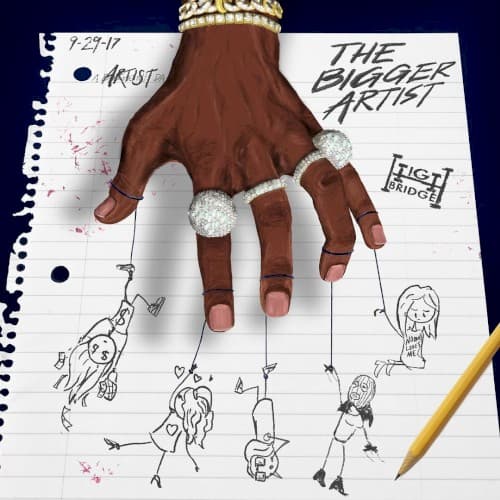
A Boogie wit da Hoodie The Bigger Artist — Singing Through the Hurt
The Bigger Artist is a debut album that treats vulnerability as its main weapon, and it works. A Boogie wit da Hoodie arrives from the Bronx, but the record makes more sense when heard against the West Coast tradition of the sung hook, the lineage that runs from Nate Dogg's choruses to the smooth bounce of DJ Mustard. What he adds is a cracked, aching voice and a willingness to let heartbreak sit at the center of a trap record rather than at the edges.
The thesis is that this album earns its good reputation by being sincere and well sequenced, and loses points only for repeating itself. The best songs turn private hurt into catchy sing-alongs, and the production is varied enough to keep a long run of similar subject matter from going stale. It debuted at number four on the Billboard 200 and later went platinum, and the numbers fit the quality: this is a record with real hooks, not just a name.
What sets it apart is how little it hides. A Boogie sings more than he raps, but he does not use melody as a way to avoid saying something. The lyrics circle loyalty, doubt, wanting and being wanted, and they do so in plain language that makes them easy to remember. Where a lot of melodic rap of the period leaned on vague moodiness, this record anchors its feelings in specific kinds of situations.
The guest list reflects the moment, with Kodak Black, 21 Savage, PnB Rock, YoungBoy Never Broke Again, Chris Brown, Trey Songz and Robin Thicke all appearing. Most of them extend the mood rather than interrupt it. The risk, as with many debut albums of this length, is that the later songs start to feel like variations on the earlier ones.
A Cracked Voice Over Borrowed Warmth
The central asset is the voice. A Boogie's delivery sits between rapping and singing, with a rasp that breaks slightly on the high notes and gives even simple lines a human weight. He bends syllables to fit a melody rather than the other way round, and that gives the hooks their stickiness. It is the most distinctive thing on the record, and it is the main reason the album stands apart from the more mechanical melodic rap of its moment.
The production is unusually varied for a debut. Cardo, Illmind, Murda Beatz, Metro Boomin, Scott Storch, Mustard and a long list of others contribute, and the album avoids the sameness that often comes with a crowded credit sheet. Some beats are dark and spacious, others are bright and bouncy, and a few lean on soulful loops. The most interesting choices are the interpolations: one song borrows from a Lauryn Hill track, another from Robin Thicke, another from Maroon 5. Those borrowings tie the album to an older R&B tradition, which fits a rapper who clearly wants to make pop-literate songs.
In West Coast terms, what is earned and what is borrowed is easy to tell apart. The sung-hook approach and the sparse, ratchet bounce of the Mustard cut are inherited from a Los Angeles playbook, and A Boogie uses them respectfully rather than copying them. What he earns is the emotional directness: this is not the swagger of a gangsta record but the confessional tone of a man who admits he does not have everything under control.
The writing is solid but limited. The best verses describe specific moments, such as doubt creeping into a relationship or the feeling of being unable to move on. The weaker ones fall back on general lines about pain and loyalty that could belong to any melodic rapper. Across fifteen songs the themes repeat, and the album would benefit from more variation in subject matter.
The features are mostly well chosen. The trap guests bring grit, the R&B guests bring polish, and the album avoids the sense of a checklist. The weakness is not the guests but the template: when the formula of a hurt chorus and a smooth beat repeats too many times, the effect begins to blur.
Fifteen Songs, One Long Ache
The album is sequenced like a mood rather than a story, and the first half is the stronger stretch. It opens with confident, melodic songs that establish the voice, then moves into its biggest singles while the energy is high. By the time the record reaches its emotional centerpiece, the pacing has built real momentum, and the shift from bounce to ache feels natural.
The middle section works as a pivot. The tempo drops, the production grows sparser, and the writing turns more inward. This is where the album's identity is clearest, and the sequencing gives each song enough room to breathe. The Mustard-produced song serves as a brighter break, which keeps the sequence from becoming a single long sigh.
The back half is where the album starts to repeat itself. Several songs follow the same pattern of a smooth beat, a melodic chorus and a verse about trust, and the differences between them become harder to hear. The R&B-leaning collaborations add some variety, but they also tilt the album toward a softer, more generic sound. The closing track returns to a harder energy, which gives the record a sturdier finish than the middle suggests.
At about fifty minutes, the length is only partly earned. The strongest ten songs would make a near-perfect record, and the remaining five are competent but interchangeable. The album does not collapse under its own weight, but it does lose some of its early sharpness. A listener who stops after the eleventh track will have heard most of what it has to offer.
A Debut That Proves the Hook Was Never an Accident
The Bigger Artist is a very good debut that sets a high bar for the rest of the catalog. It ranks as the most consistent and best sequenced album in the A Boogie wit da Hoodie catalog, and the reasons are specific: the voice is fresh, the production is varied, and the sincerity is convincing. It does not rank higher because of the repetition in the second half and the limited range of the writing. Its platinum certification confirms that the audience heard what the critics heard.
It is for listeners who like melody in their rap and do not mind emotional openness. Fans of Chris Brown, Trey Songz and Kodak Black will find familiar guests, and anyone who enjoys the more R&B-leaning side of trap will find a lot to like. It is not for listeners who want complex wordplay, hard street narratives or a more varied palette of subjects. If you want a rapper to talk about anything other than relationships and anxiety, look elsewhere.
The album should age well because its best songs were built on feeling rather than novelty. The sung-hook approach has become standard in the years since, which makes it easy to underestimate how fresh it sounded at the time. The interpolations give the record a timeless quality, and the vocal performances still sound lived-in.
Start with Drowning, No Comparison and Get to You, which show the album's hook, its brooding side and its R&B memory in turn. For what to hear next, go to Kodak Black's early work for a rougher, more fragile approach to melody, and to Chris Brown's catalog for the pop-R&B tradition that clearly shaped the record. The album's best quality is that its saddest songs are also its catchiest.
Track by track
Track Listing
No Promises
StandoutA confident, melodic opener from Cardo that establishes the voice and the album's romantic distrust. It does its job with a clean hook and a steady beat.
Undefeated
Solid21 Savage brings a cold, deadpan counterpart to A Boogie's melodic delivery over a beat from Illmind and Murda Beatz. The contrast gives the song its character, though it is more of a flex than a statement.
Drowning
StandoutThe lead single with Kodak Black is the album's most recognizable song and a clear example of its approach. The beat from Quasi and Jahaan Sweet is spare and melancholic, leaving room for both voices. Kodak's strained delivery fits A Boogie's cracked singing, and the chorus lands as a sad, easy-to-remember refrain. It went platinum, and it is the strongest argument for the album's melodic sensibility. The performance sounds like a conversation between two people unsure of themselves.
Say A'
StandoutA bouncy, hook-driven single that shows the lighter side of the record. Ness and Nick Seeley give it a bright, catchy beat, and the chorus is among the most memorable on the album. It is simple, effective and clearly built for repeat play.
No Comparison
StandoutMetro Boomin supplies a dark, slow beat that gives A Boogie room to deliver his most brooding performance. The song is spacious and heavy, and the vocal carries real pain without pushing into melodrama. It is the emotional core of the album and the clearest proof that the sincerity is not an act. One of the best songs on the record, and the one that most justifies the title.
Unhappy
SolidScott Storch and Diego Ave provide a smooth, melodic backdrop for a song about discontent. It is well made and easy to enjoy, though it follows the album's template closely.
Let’s Start Over
SolidA reflective, mid-tempo plea for reconciliation. The delivery is earnest, and the hook is memorable, but the song blends into the sequence around it.
Get to You
StandoutBuilt on an interpolation of a Lauryn Hill song, this is one of the album's most interesting production choices. Metro Boomin, Southside and Nav give it a smooth, bouncy feel, and the borrowed melody gives the chorus an extra layer of warmth. A strong example of how the record folds R&B memory into trap.
Somebody
StandoutMustard supplies a bright, minimal beat that gives the album a rare moment of lightness, and Don Q adds a clipped guest verse. The Los Angeles bounce suits A Boogie's melodic approach. A welcome change of tempo.
Money Sprung
SolidA confident flex with Don Q that leans on swagger more than feeling. The beat is solid, but the song is one of the less distinctive entries in the middle of the album.
If I Gotta Go
SolidA reflective, melodic track about leaving and loss. The delivery is sincere, but the song is slightly longer than its ideas and does not add much to the album's mood.
Fucking & Kissing
SolidChris Brown adds a smooth, polished guest vocal on a sleek, R&B-leaning song about desire. It is short, catchy and slickly produced, though it is more a pop moment than a rap one.
Bad Girl
SolidTrey Songz and Robin Thicke join for a smooth, radio-ready song built on an interpolation of a Thicke record. It is polished and pleasant, but it is the album's most conventional R&B moment and sits well outside the rap core of the record.
Stalking You
StandoutAn interpolation of a Maroon 5 song gives this track a familiar pop melody, and A Boogie's delivery adds a more obsessive edge. It is catchy and slightly unsettling, and a good example of how he reshapes borrowed material.
Beast Mode
StandoutPnB Rock and YoungBoy Never Broke Again join A Boogie on a long, hard-edged closer produced by Young Troy. The energy is higher than on most of the album, and the three voices give the song a lively, competitive feel. It is a strong finish that reminds the listener of the street side of the record.
Frequently Asked Questions
Is The Bigger Artist good?
What are the best songs on The Bigger Artist?
How did The Bigger Artist perform on the charts?
Who is featured on The Bigger Artist?
Styles