The scorecard
5.7/10 · Mixed
- Writing25%
- 4.5
- Production25%
- 7.0
- Delivery15%
- 6.5
- Cohesion15%
- 5.0
- Originality10%
- 5.0
- Replay value10%
- 6.0
Lyrics stay in a narrow lane of flexes and taunts, and despite some humor the little detail there is gets flattened by relentless beats and similar flows.
Clipped, softly distorted synthesizers, thick bass and well-placed beat switches keep the sound loud and consistent, but the palette is familiar and rarely surprises.
Carson's half-slurred flow and snicker ad-libs suit the beats, and "Down2Earth" shows a distinct wheezy tone, but the performances rarely change from song to song.
Bonus tracks push the total near an hour and the sameness wears on the listener, though the harder first half and bubblier second half give the standard edition some shape.
Critics called it a lateral move from A Great Chaos, and only "Psycho" and the Atlanta-leaning touches break from a formula Carson had already perfected.
The energy and short songs suit playlists and live crowds, but the monotony critics noted makes the album less rewarding start to finish at home, so its lasting value is uncertain.
Ken Carson More Chaos: The Formula at Number One
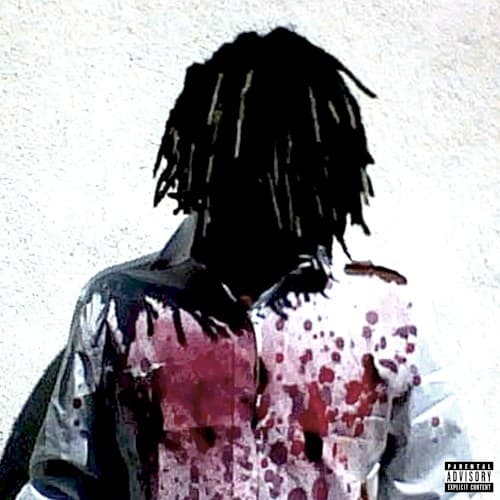
More Chaos opens a new chapter by repeating the last one, and that is both its appeal and its ceiling. Ken Carson's fourth album takes the digitized, clipped, bass-heavy sound of A Great Chaos, was recorded largely on a tour bus, and arrives with the confidence of a rapper who no longer needs to prove the formula works. The thesis is that this is a very effective delivery system for a sound that has stopped surprising, a record that gets its energy from momentum and its flaws from the absence of any new idea.
The chart story captures the tension. The album debuted at number one on the Billboard 200 with 59,500 units, Carson's first, yet only about 11,000 of those were pure sales, which made it the lowest-selling number one since 2022. That is a streaming-era result: deep engagement from an existing fan base rather than a widening of it. The reviews followed the same split. Critics praised the energy and then reached for words like lateral, monochrome and monotonous, and the fact sheet records a Metacritic average of 71 from five critics, generally favorable but hardly rapturous.
The contrarian position is that monotony is not automatically a flaw here. Rage is closer to club music than to the album tradition rap fans inherited, and a record built to overpower you in a crowd should be judged by whether the overpowering works. For roughly the first half, it does. Dense, compressed beats and a half-slurred bark produce a mood of agitated anxiety that is hard to shake.
The trouble is that a formula, unlike a style, runs out of room. A Great Chaos offered new tricks, and More Chaos offers the same tricks at higher volume. That leaves the record in an awkward place: better than its harshest critics allowed, less than its chart position implies, and revealing about how a loyal audience and a streaming algorithm can keep a sound at number one while the sound itself stands still.
Clipped Synths, a Half-Slurred Bark, and No New Tricks
The production is again the main attraction, and it is consistent. F1lthy, Lil 88, Star Boy and Outtatown are among the credited producers, working across a long list of collaborators, and the result is a unified palette of clipped, softly distorted synthesizers, thick bass lines and 808 drums. The sound is loud, dense and compressed, and critics described its mood as anxious and agitated, particularly in the first half. A few songs add beat switches that break up the pummel, and the best of these moments use a change of rhythm to reset the ear before it tires.
Carson's delivery is the second constant. He raps in a half-slurred, half-mumbled flow with a recurring snicker as an ad-lib, and he treats the voice as a texture that sits tightly against the beat. The method is instinctive: he has said he worked straight from the brain, choosing a beat, reacting to the mood and recording quickly, and much of it was made on a bus between shows. That explains both the album's immediacy and its sameness. Songs built from first impressions tend to share the same first impression.
The writing is where the album will divide listeners. The lyrics are flexes and taunts, delivered with the confidence of a self-declared cult leader, and a critic at The New York Times called the outlook pure id. There is humor in some of the threats and a few moments of doubt late in the sequence, but most of the record keeps to a narrow lane of money, drugs and swagger. The concrete weakness follows from that: when the beats are relentless and the flows are similar, the lyrical detail that does exist is flattened. One reviewer noted that the second half is more lyrically vivid, then added that the unceasing pummel of the beats cancels the benefit.
Context sharpens the criticism. Two prominent reviewers compared the album unfavorably with Playboi Carti's Music, released the same year, saying that Carson's record lacks the unpredictability that kept that album from going stale. It is a fair point about the ceiling of the approach. Yet there is a more interesting counterargument in the record itself: one writer heard it as anachronistic, drawing more on Atlanta rap of the Future and Young Scooter school than on the Whole Lotta Red template that most rage artists follow. That suggests Carson's real gift is not originality but synthesis, taking familiar parts and fitting them into a very efficient machine.
The effect, at its best, is physical and immediate, and the album understands that. A critic at AllMusic argued that the repetition is part of the appeal, that this is music to be overpowered by. That is a defensible reading, and it explains why the record plays well at live shows and festivals. It does not explain why it should hold up outside them, and the album's most honest limitation is that it works best as an environment rather than as a collection of songs.
Dense First Half, Brighter Second Half, Backwards Order
As a sequence, More Chaos is front-loaded and then softens, and the difference between the two halves is the most interesting thing about the record. The opening run is the most compressed: hard-hitting bass, skittering synthesizers and a nearly unbroken stream of threats and flexes. It sets a tone of agitated anxiety and holds it for several songs without letting up. Some listeners will love the stampede, and others will find it exhausting, and the record makes no effort to accommodate the second group.
The pacing shifts around the midpoint. A three-song run built on beat switches gives the album its most dynamic stretch, and from there the textures turn bubblier, with candied Auto-Tune, brighter melodies and a more playful tone. A critic at NME said the album took off after its first five tracks, and the claim is easy to understand: this is where the writing becomes more colorful and the production starts to breathe. It is also where the record's genuine variety lives, which makes the order of the songs feel backwards. The most interesting material arrives after the point at which many listeners have stopped paying attention.
Two tracks mark the edges of the album's range. "Psycho" leans into cloud-rap influences and a melodic hook, and it offers the clearest relief from the distorted bass that surrounds it. "Thx" closes the standard edition with a warmer, upbeat instrumental and a rare moment of direct address, which gives the album a human ending after so much posturing. It is the sort of moment that suggests how much more the record could have used.
The length is the structural problem. The standard edition runs about forty-nine minutes across eighteen songs, and the digital and streaming versions add several more bonus tracks, pushing the total close to an hour. For a record with this much sameness, that is too long. A tighter, sharper cut that lost the middle filler and kept the best of both halves would have been a far more convincing statement, and it would have given the second half's better ideas the attention they deserved.
Consolidation, Not Evolution: Where More Chaos Lands
More Chaos is a good but unambitious record, and it ranks below A Great Chaos in spirit if not in sales. No other Ken Carson album is rated on this site yet, so its position here is provisional, but the fact sheet gives enough context to place it: the previous album was the breakthrough and this one is the consolidation, a number-one debut that critics called lateral. Complex ranked it 24th among 2025's best albums, which suggests there is real affection for it, while the Pitchfork and Slant reviews suggest the limits of that affection. Taken together, the record is a strong expression of a sound Carson has already mastered, not a step toward a new one.
It is for listeners who want rage at full intensity, who enjoy a record as an environment, and who care more about how a song feels than what it says. It is also a good pick for anyone who prefers Atlanta-leaning production to the Whole Lotta Red template. Skip it if you want variety, lyrical detail or evidence of growth. The album's most honest feature is that it never pretends to offer these things.
As for how it will age, the early signs are mixed. The streaming figures, more than 614 million global streams by July 2026, are healthy but modest next to the chart debut, and the sales figures suggest that its audience is committed rather than expanding. The sound will keep working in a crowd, and that may be where its lasting value lies. As a record to revisit at home, it is less certain.
Start with "Lord of Chaos", which delivers the album's thesis in two minutes, then "LiveLeak", which Carson calls his hype track, and "Psycho" for the most melodic and surprising stretch. For what to hear next, A Great Chaos is the essential companion and the stronger overall record, while Playboi Carti's Music is the one critics held up as the more unpredictable counterpart. More Chaos proves that Carson can fill a number-one album with a single mood, and its best argument for him is that the mood is still enjoyable in the fifth song.
Track by track
Track Listing
Lord of Chaos
StandoutThe opener and the album's clearest statement of intent. Video-game-style synthesizers and distorted 808s drive a relentless, unbroken rap that sets the agitated tone in barely two minutes. It has a music video directed by Nick Spiders, and the brevity helps: nothing here overstays, and the mood arrives fully formed. It is a strong introduction to everything the record does well, the compressed bass, the clipped delivery, the sheer momentum, and it also previews what it does not do, which is change. The track works better as a first impression than as a favorite, but as a calling card for the whole album it is hard to beat. A good place to start, and a fair test of whether the rest will suit you.
Xposed
StandoutCarson delivers threats in a humorous tone over skittering synthesizers that one critic compared to a mid-2000s Young Jeezy record. At nearly four minutes it is one of the longer tracks, and the humor gives it more personality than most. Solid, though a little long for its idea.
Money Spread
StandoutHard-hitting bass and unusual vocalizations that one critic likened to a spaceship with a corrupted motherboard. It is the shortest of the early tracks at under two minutes, and it was the song chosen for the release-day video, filmed during the tour. The beat is punchy and the vocal effects give it a distinct identity within the album's sameness. It is a prime example of the record's strengths, speed and texture over substance, and it is gone before the formula can wear thin. The writing is minimal, but the track is built for impact, and it delivers it. A strong early cut that shows why the fan base keeps showing up.
Root of All Evil
SolidA swagged-out cadence over a heavy beat, with Carson sounding relaxed and sure of himself. It is solid and fits the opening run well, though it does not stand apart from its neighbors.
K‐Hole
SolidGlitch-like, staccato flows over a dense beat make this one of the more rhythmically interesting early tracks. At over three minutes it asks for patience, and the repetition is rewarded only partly. Solid but not essential.
Trap Jump
StandoutThreats and brags over militaristic 808s and jagged synthesizers that one critic compared to shrapnel, built around an anthemic hook. Another reviewer described the lyrics as humblebrags, which fits. It is a strong, loud track and one of the more anthem-like moments in the early going.
Blakk Rokkstar
StandoutFast synthesizers and hi-hats over booming bass, and the first of a three-song run where the beat switches keep the ear engaged. At nearly four minutes it has time to develop, and it does. One of the better examples of the album's dynamics.
LiveLeak
StandoutNamed for the now-defunct video site known for gore and shock clips, this track was chosen by one critic as the best representation of the album's gory ethos. Carson calls it his hype track, and over lo-fi synthesizers, snares and 808s he describes himself as a vampire in a grinning, theatrical way. The beat switches add variety, and the vocal has more bounce than usual. It is the most fun the album has, and the playful menace makes the aggression easier to enjoy than the straight threats elsewhere. The lyrics are silly, and that is part of the charm. The track delivers the album's brand at its most entertaining, and it is probably the best argument for staying through the middle.
Diamonds
StandoutThe third song in the beat-switch run, running close to four minutes, and the one that does the most with the length. The changes of rhythm keep the track from settling, and the brighter touches foreshadow the album's second half. A solid, enjoyable track.
Dismantled
SolidConfident rapping over a machine-like, bass-driven beat. It is competent and cleanly built, but it blends into the middle of the album and offers little to remember beyond its rhythm.
200 Kash
SolidHeavily distorted bass and lyrics that one critic called proverbial. Under two minutes, it is quick and loud, and it ends before it wears out. Brief and functional.
Down2Earth
SolidA wheezy, lean-dipped delivery that makes the track one of the more distinct vocal performances on the record. Critics heard the hollow, lust-driven relationships of an earlier Carson album in it. A modest, atmospheric change of tone.
Confetti
SolidA bubblier, brighter cut in the second half that fits the album's turn toward candied Auto-Tune. It is pleasant and easy to like, but it does not make a strong case for itself beyond mood. Solid filler.
Naked
StandoutOne of two tracks critics singled out for heroic-sounding synthesizers. The melody gives the beat a lift, and the song is among the more uplifting moments of the second half. Good, and a welcome contrast to the denser first half.
Kryptonite
StandoutAnother track praised for its heroic synthesizers, with the hollow, lust-driven relationships that critics connected to Carson's earlier work. The melody is a strength, and the sentiment is thin but consistent. Solid.
Psycho
StandoutCloud-rap influences meet distorted bass, and the result is the most melodic track on the record. One critic compared it to seeing a rainbow from a dungeon window, which captures the contrast with the rest of the album. Carson sings and floats more than he barks, and the production lets the melody lead. It is the clearest sign of what he could do if he broadened his palette, and it works as a relief and a surprise. The weakness is that it is an exception: the album offers it as a single moment of grace and then returns to its usual mood. A highlight, and the best case for a more varied second half.
Inferno
SolidA mid-length track from the album's late stretch that continues the bubblier textures without adding much new. Fine in context, and easy to skip in isolation.
Thx
StandoutThe final track on the standard edition, and the most direct moment on the album. Carson thanks his family, friends, drugs and drug dealer, and offers relationship advice over an upbeat instrumental, which gives a rare glimpse of the person behind the persona. A critic at The New York Times heard flickers of warmth and self-doubt in it, and that is the right reading. It is not deep, and the advice is casual rather than reflective, but it works because it is so different from everything before it. A fitting end and one of the album's best ideas, even if the writing stays simple.
2000
SolidA bonus track with rolling synthesizers that continues the album's sound without adding to it. It is fine, and it feels like an extension, not an arrival.
Evolution
WeakA bonus track at over three minutes that offers more of the same textures and flows. It does not distinguish itself from the tracks around it, and it is the kind of addition that stretches the record without strengthening it.
Ghoul
SolidA bonus track, produced by Pi'erre Bourne, that layers horror-movie screams over a demonic beat. It fits the album's gothic aesthetic and is a fun curiosity, but it arrives after the album has already made its case.