Kodak Black: Pompano Beach's Unfiltered Voice of Florida Trap
Kodak Black arrived in rap with a voice that sounded half-finished and fully alive. Born Dieuson Octave on June 11, 1997, to a Haitian immigrant mother, he grew up in the Golden Acres housing project in Pompano Beach, Florida, and started rapping in elementary school. By his own telling, the options were to sell drugs or to rap, and he went with the microphone.
The break came in 2014 with "No Flockin" and "Skrt", two songs that put him on the map. In October 2015 Drake posted a video of himself dancing to "Skrt", and that same month Kodak signed with Atlantic Records. It was a fast climb for a teenager who had only released a handful of mixtapes.
What makes him durable is how unguarded the music feels. He raps about fear, grief, loyalty and mistakes with a mumbled urgency that can read as vulnerable one minute and defiant the next, and his catalog tracks a career lived in public, for better and for worse.
A Slurred, Youthful Delivery Built for Emotional Trap
Kodak's delivery is the signature. The New Yorker described a "manifestly youthful voice", and it fits: the vocals bend and slur, words trail off, and a melody is as likely to be hummed as rapped. He has been grouped with the so-called mumble rappers, a label that undersells how carefully he lands his hooks.
He has named Boosie Badazz and Chief Keef as influences, and you can hear both. From Boosie comes the raw, aching directness about hardship; from Keef, the willingness to treat vibe and tone as the point. The Fader's 2016 take is worth remembering too, comparing the way he voices a poverty-stricken environment to the emotional intelligence of teenage voices like Mobb Deep and Lil Wayne.
The beats around him are mostly Southern trap templates with sparse piano and 808s, and he is at his best when they leave room for his pitch to crack. When the production gets busier or the hook is generic, the weaker side of his catalog shows: songs that lean on attitude and little else.
From Project Baby to Zeze: Kodak Black's Rise, Setbacks and Returns
His earliest projects were Project Baby in December 2013, Heart of the Projects in 2014 and Institution in 2015. The Atlantic deal arrived after the Drake moment, and in 2016 he was named to the XXL Freshman Class, a list that also included Lil Uzi Vert and Lil Yachty.
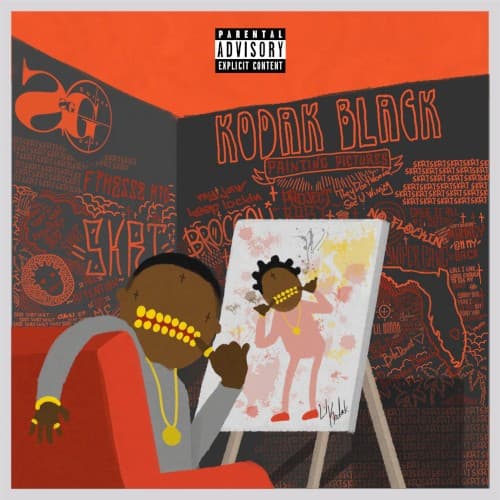
"Tunnel Vision" in February 2017 became his first top-ten hit, peaking at number six on the Hot 100, and it set the table for his debut album. Painting Pictures landed on March 31, 2017 at number three on the Billboard 200 with 71,000 equivalent units, a career best at that point. Our review of the album treats it as a promising but uneven debut, a young artist whose best moments outran his sequencing. He followed it that August with the mixtape Project Baby 2, which spawned "Roll in Peace" with XXXTentacion, a close friend from the same South Florida scene.
Dying to Live, released in December 2018, was his commercial peak. It reached number one on the Billboard 200 and produced "Zeze" with Travis Scott and Offset, which peaked at number two on the Hot 100 and remains his highest-charting song. The album also carried a tribute to the late XXXTentacion and featured Juice WRLD and Lil Pump.
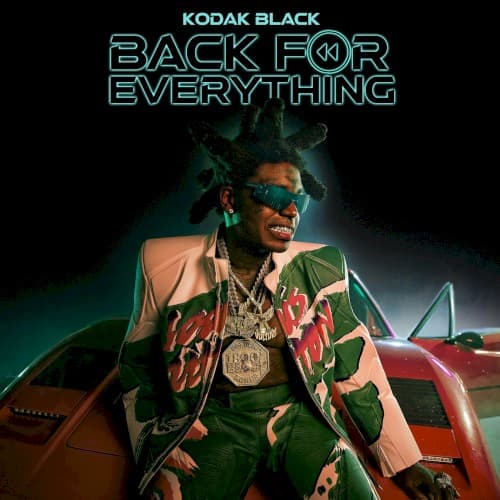
Legal trouble interrupted the momentum more than once. A 2019 arrest for making false statements to obtain weapons led to a federal prison sentence of nearly four years, and his third album, Bill Israel, came out in November 2020 while he was incarcerated. President Donald Trump commuted the sentence in early 2021. He bounced back with "Super Gremlin", a top-five hit that appeared on Back for Everything in February 2022, an album that reached number two. That year he also appeared on "Silent Hill" from Kendrick Lamar's Mr. Morale & the Big Steppers.
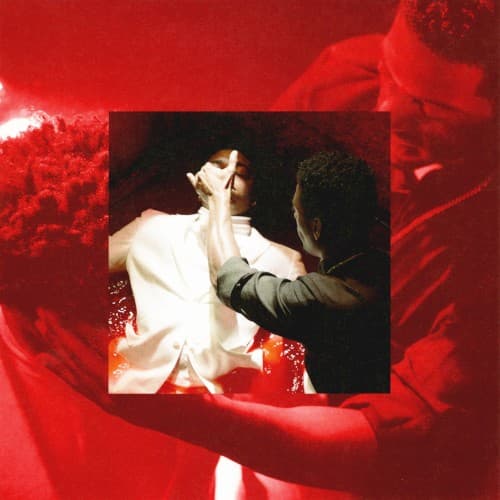
After leaving Atlantic following Pistolz & Pearlz, he signed with Capitol Records and released When I Was Dead and Just Getting Started. He has since announced plans to go independent.
Kodak Black's Legacy: Fearless Honesty, Real Controversy
Kodak was one of the most visible faces of the late-2010s youth wave in Florida hip-hop, alongside peers such as XXXTentacion and Lil Pump. He proved that a rapper with a blunt, almost fragile delivery could chart hits without smoothing off his rough edges, and his run of top-ten singles from "Tunnel Vision" to "Super Gremlin" is evidence of how much listeners respond to that approach.
His commercial reach has also been unusually resilient through legal setbacks. A 2016 sexual assault accusation ended in 2021 with a plea to a lesser assault charge and probation, and he was criticized in 2016 for a studio video that mocked dark-skinned women, which drew accusations of misogynoir. These episodes complicate his image, and they are part of why he has been a divisive figure even as the hits continued.
He is also a figure of local pride. Kodak has publicly leaned into his Haitian heritage, including on the cover art of Haitian Boy Kodak, and he has given to charities in South Florida. The honest conclusion for a listener is that his best records are intimate and strange and his weakest are interchangeable. Few rappers of his generation have been so consistently memorable when the writing and the beat meet him halfway.