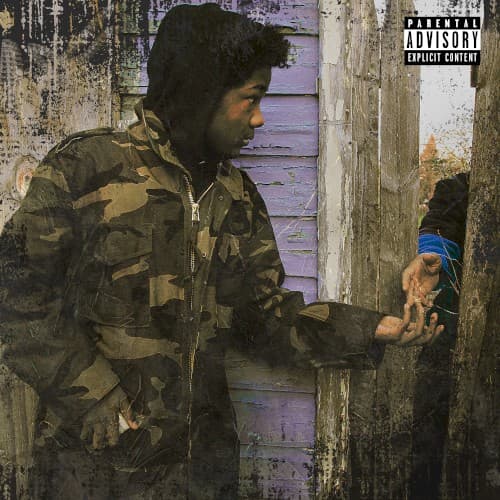
Conway the Machine God Don't Make Mistakes — The Major Label Gamble That Preserved the Underground
Remove the drums from half these tracks and nothing changes. That is not a criticism. Conway the Machine built his entire career on the understanding that tension matters more than energy, that a loop can carry more weight than a full arrangement. Silence between bars hits harder than ad-libs.
Major label debuts are business decisions disguised as creative statements. Interscope paid for market access, radio consideration, playlist placement. What they got was an album that sounds like it was recorded in the same Buffalo basement where Conway made his name, except now the sample clearances cost six figures. The features came from artists who do not typically show up on Griselda projects.
The label wanted a star. Conway gave them a craftsman.
This is not the album that was supposed to happen. Original plans included different producers, different sequencing, different energy. Conway scrapped most of it. What survived is an album about survival itself — physical, financial, creative.
Every bar references the cost of making it this far. The question is whether preserving underground principles on a major platform counts as a win or just expensive stubbornness?
The Sound of Saying No to Everything
Griselda's entire aesthetic is built on what other producers threw away twenty years ago. Daringer, Beat Butcha, and the rest of the production crew source drums that sound like they were sampled off cassette dubs, layer soul loops that never resolve, and leave space where most modern rap production would add three more elements. God Don't Make Mistakes pushes that philosophy further than any previous Conway project — some tracks feel deliberately unfinished, others strip arrangements down until only the essential components remain. The result is an album that sounds expensive and DIY at the same time.
Conway's vocal delivery has not changed since he started rapping. The right side of his face does not move. His flow cannot rely on inflection or melodic range.
What he has is precision — every word lands exactly where it needs to, every bar builds toward a punchline or image that justifies the setup. He writes like someone who had to relearn how to speak, which is exactly what happened. The shooting that paralyzed part of his face also gave him the artistic constraint that defines his sound. Limitation became style.
The album's guest list reveals the budget and the compromise. T.I. and Rick Ross appear alongside Griselda regulars. Lil Wayne shows up. These are not natural collaborations — they are A&R decisions, attempts to bridge underground credibility with mainstream visibility.
Some work, others feel like networking obligations. Conway never adjusts his approach to match theirs, which creates moments where the album feels like two different projects occupying the same tracklist. That tension is the entire point. Is this what happens when an underground artist gets major money but refuses to become a major label artist?
The flaw is consistency. Several tracks feel like album cuts in the worst sense — functional, solid, forgettable. The sequencing drags in the middle stretch, where the album loses momentum and never fully recovers.
Conway is a great technical rapper but not a dynamic performer, which means when the production does not carry, the tracks flatten. For an album this expensive to make, too much of it sounds like high-budget Griselda B-sides.
The Problem of Pacing a Philosophy
The album opens with immediate tension and never offers relief. That works for the first stretch, where the production stays varied enough to justify the unrelenting tone. Then the middle section flattens. The pacing assumes every track deserves equal weight, which is never true.
Some songs could have been interludes. Others needed twice the space.
The back half attempts recovery but never regains the opening momentum. By the time the album reaches its final stretch, the format feels exhausted. Conway is still rapping at the same level, the production is still immaculate, but the listening experience has numbed. The album needed editing — not in the sense of removing weak tracks, but in the sense of understanding that ten great tracks sequence better than twelve good ones.
The sequencing also reveals the major label compromise. Certain tracks feel strategically placed for playlist consideration rather than album flow. The result is an album that works best in pieces rather than as a complete statement. Individual songs hold up under repeated listens, but the full project never builds toward a satisfying conclusion.
The title track arrives too late to redeem the journey. The emotional arc that should tie everything together never materializes. This is a collection of excellent songs that do not quite form an excellent album.
The Price of Protecting the Sound
This ranks in the top three Conway solo projects, behind only his best independent work. It is better than most major label rap albums released in 2022, and it accomplishes something rare — an artist bringing underground aesthetics to a major platform without watering them down. But it is not the best version of what Conway can do, and the compromises required to make this album happen are audible throughout.
Who should listen: Griselda fans who want to hear how the sound translates with a bigger budget. Fans of 90s New York rap who have been waiting for someone to update the formula without destroying it. Anyone who believes technical rapping still matters.
Who should skip it: Listeners who need melodic hooks or dynamic energy. Anyone expecting Conway to reinvent himself or expand his range. People who think Griselda albums all sound the same, because this will not change their mind.
The album aged better than expected. In 2022 it sounded stubborn. Two years later it sounds principled. Most of the rap albums chasing trends that year have already been forgotten.
This one still sounds current because it never tried to sound current in the first place. The tracks that work will outlast the decade. The ones that do not were always going to be album filler.
Essential tracks: the opening run through the first four songs, the title track, and anything featuring Griselda affiliates. Similar albums: Westside Gunn's Pray for Paris for the same aesthetic with more experimental sequencing, Benny the Butcher's Tana Talk 3 for a more consistent front-to-back listen, Your Old Drizzle's Dump YOD: Krutoy Edition for raw underground production without the major label gloss. Long-term influence: proved underground rappers can access major label resources without surrendering their identity, even if the result is an album that satisfies neither audience completely.
Conway made the album he wanted to make, spent someone else's money to do it, and walked away with his credibility intact. In the modern music industry, that might be the only victory that matters.
Track Listing
Lock Load
▲The opening salvo sets the tone immediately — ominous piano stabs, minimal drums, and Conway entering with the same unbothered confidence that defined every previous project. He is not here to introduce himself or explain the come-up. The assumption is you already know. If you do not, this album will not help. The production stays sparse, letting Conway's voice carry the weight. His delivery has not changed and will not change. The bars reference the shooting, the recovery, the grind that got him here. By the time the track ends, the album's entire aesthetic has been established. No hooks, no concessions, no interest in making this accessible.
Tear Gas
▲The drums hit harder here, though "harder" is relative on a Griselda album. This is still dusty, still minimal, still rooted in 90s sample-based production. Conway spends the entire track reminding you he has been doing this longer than most of the rappers currently getting praised for reviving boom bap. The confidence borders on arrogance, which is the point. He earned the right to sound dismissive. The hook is barely a hook — just a repeated phrase that functions more as a structural marker than a melodic anchor. The track works because it understands its role: keep momentum from the opener, establish that the entire album will sound like this, dare you to keep listening.
Piano Love
▲This is where the album starts showing its budget. The piano loop is gorgeous, expensive-sounding, the kind of sample clearance that costs real money. Conway matches the elegance with some of his most technically precise rapping on the album. Every bar is structured around internal rhymes and multi-syllabic patterns that most listeners will miss on first listen. That is fine. The track rewards repeat plays. The production stays restrained, never adding unnecessary elements. The best moment comes two-thirds through when the loop shifts slightly and Conway adjusts his cadence to match. This is the kind of technical craftsmanship that separates Conway from rappers who just mimic the aesthetic without understanding the discipline.
Drumwork
▲The title promises energy and the track delivers. The drums are more prominent here than anywhere else on the album, though this is still a Griselda record so "prominent" means you can actually hear the hi-hats. Conway's flow tightens, his bars come faster, and the urgency finally matches the production. This is the kind of track that works in a car or a gym, which is rare for Griselda. The verse builds momentum through repetition and variation — he circles the same themes but approaches them from different angles each time. By the final thirty seconds, the track has justified its existence. It is not the deepest cut on the album, but it might be the most immediately satisfying.
Wild Chapters
▲I first heard this in a Brooklyn apartment in 2022, windows open, summer heat pushing through, and the track felt like it was narrating the block below. Conway is writing autobiography here but he structures it like fiction — concrete details, scene-setting, characters who appear for one bar and disappear. The production stays minimal, just a loop and drums, which forces you to focus on the writing. His storytelling is patient. He does not rush to punchlines or try to cram too much information into one verse. The track breathes. The flaw is that it does not build toward anything — it just ends. But for four minutes, this is Conway operating at the highest technical level.
Guilty
●The weakest stretch of the album starts here. The production is solid, the bars are competent, but nothing about this track justifies its inclusion. It sounds like an album cut in the worst sense — functional, professional, completely forgettable. Conway is still rapping well, but the writing lacks the specificity that makes his best work compelling. The hook does not add anything. The beat does not evolve. By the time it ends, you have already forgotten it started. This is the kind of track that happens when an artist has to deliver a certain number of songs to fulfill a contract. It is not bad. It is just unnecessary.
John Woo Flick
▲The guest verses here are the problem and the appeal. Westside Gunn and Benny the Butcher show up, which means this track sounds like a Griselda posse cut — which is exactly what it is. The chemistry is undeniable. These three have been rapping together for over a decade and it shows. Every verse builds on the previous one, every bar references shared history. The production is immaculate, all eerie strings and scattered drums. But this is also the safest track on the album, the one that gives fans exactly what they expect without pushing anywhere new. It works because the formula works. Whether that is enough depends on whether you wanted Conway to evolve or just deliver another Griselda classic. This is the latter.
Stressed
▼The title describes the listening experience. This track drags. The production is too minimal, the tempo too slow, and Conway does not have the dynamic range to make a depressive mood piece work without strong structural support. The bars are fine but they do not justify the mood. By the halfway point, the track has lost momentum and never recovers. This needed a feature, a beat switch, or a complete rethink. What it needed most was to not exist. Every album has filler. This is it.
So Much More
●The album tries to recover here but only partially succeeds. The production picks up energy, Conway's flow tightens, and the writing returns to the specificity that makes his best work compelling. The problem is placement — this should have appeared earlier in the tracklist, back when the album still had momentum. By this point, the listening experience has flattened, and even a solid track cannot fully revive it. The verse builds nicely, the hook is minimal but effective, and the production does what it needs to do. This is a good song on an album that needed great ones in the back half.
Chanel Pearls
●This is the major label compromise in action. The feature here is a bid for crossover appeal, the production is slightly more polished than the rest of the album, and the entire track feels like it was designed for playlist placement rather than album coherence. It is not a bad song. It is just a song that does not belong on this album. Conway adjusts his approach slightly to match the guest, which creates a disconnect between this track and everything that came before it. The best moment is Conway's verse, which reminds you that even when he is compromising, he is still a better technical rapper than most of his peers. But the compromise is audible, and that matters.
Babas
●I played this for someone who does not listen to Griselda and they asked if the beat was broken. It is not broken. It is just severely minimal — a single loop, almost no drums, and Conway rapping over what feels like a sketch rather than a finished production. The writing is strong, full of the kind of specific detail that separates good rappers from great ones. But the track never builds. It just exists. Whether that is a flaw or a feature depends on how much you value patience in rap music. For me, this is compelling on repeat listens but exhausting on first play. It rewards attention but does not demand it, which might be the wrong approach for an album's closing stretch.
God Don't Make Mistakes
▲The title track arrives too late to redeem the album's pacing issues, but it is still one of the strongest moments here. The production is lush by Griselda standards — layered strings, actual melodic progression, a beat that evolves rather than loops. Conway sounds more reflective than usual, less focused on technical flexing and more interested in summarizing the journey. The writing is patient, the bars are structured around themes rather than punchlines, and the track builds toward an emotional resolution that the rest of the album never attempted. If this had appeared earlier, or if the surrounding tracks had matched its ambition, it might have functioned as the centerpiece. Instead, it is a strong closer that reminds you how much stronger the album could have been.