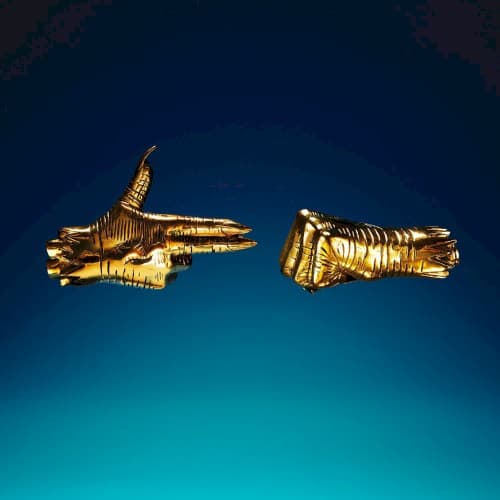
Run the Jewels 3 — When Two Angry Men Became the Revolution's House Band
No other rap duo has ever dropped their most politically charged album on Christmas morning as a gift to the world. The gesture itself carried weight — free download, no warning, just two middle fingers to the music industry on the quietest sales day of the year. But the real provocation was the music itself, forty-nine minutes of sustained fury that refused to let anyone relax into holiday cheer. The timing felt deliberate.
America had just elected a reality TV host who campaigned on building walls and banning Muslims. Black Lives Matter protests had dominated the streets for three years. Police shootings played on loop. And here came Killer Mike and El-P with an album that sounded like a brick through a precinct window.
The duo had built their reputation on controlled chaos, but Run the Jewels 3 arrived with a different edge. Where Run the Jewels 2 balanced protest with party, this one felt like a bunker record made while watching the city burn outside. The production hit harder, the hooks cut deeper, and the anger stopped winking at the audience. This was the sound of two artists who had run out of patience for clever metaphors about systemic injustice.
They named names, pointed fingers, and invited consequences.
What separates this from every other protest rap album of the 2010s? The refusal to offer hope. Most political hip-hop eventually pivots to resilience, unity, or the promise of change. Run the Jewels 3 stays in the fire from the first beat to the last.
Even the title felt like a taunt — not a reinvention, just another volume in an ongoing argument with America. The question the album posed was never about whether things would get better. It was about what you do when you know they won't.
The Sound of Burning Bridges
El-P built these beats like someone constructing barricades. The production across Run the Jewels 3 abandoned the sample-heavy maximalism of the previous records for something colder and more industrial. Synthesizers shriek and decay. Drums hit with the thud of riot shields.
The low end rumbles like distant explosions. Little Shalimar and Wilder Zoby contributed production across several tracks, but this is fundamentally El-P's vision — a sonic texture that sounds like a dystopian future that already arrived.
The vocal interplay between Mike and El reached its peak here. They no longer trade bars like competitors trying to outshine each other. They move like a single organism, finishing each other's thoughts, amplifying each other's rage, creating a unified front that feels more like a movement than a collaboration.
Mike's voice carries the weight of Southern black radical tradition — the cadence of preachers and organizers, the moral authority of someone who has studied the receipts. El-P raps like a New York cynic who has seen every scam and still cannot believe people keep falling for it.
Lyrically, the album operates in two registers simultaneously. Mike delivers manifestos about state violence, mass incarceration, and economic exploitation with the clarity of a political science lecture. El-P zooms into paranoia, personal collapse, and the psychic damage of living in a surveillance state.
The combination creates a full-spectrum critique — the systemic and the personal, the structural and the emotional. When they overlap, as they do repeatedly across the album's second half, the effect feels overwhelming. But what happens when that overwhelming force becomes the point?
The album is not flawless. The middle section sags under the weight of its own fury, and a few tracks repeat ideas already executed better earlier in the tracklist. The guest verses, while well-chosen, sometimes disrupt the momentum rather than enhance it. And the refusal to offer any light or relief becomes exhausting — a deliberate choice, but one that limits replay value for anyone not already in a confrontational mood.
The Architecture of Rage
Run the Jewels 3 does not ease you into its worldview. It opens with immediate confrontation and sustains that energy through the first half with barely a breath. The sequencing feels less like a traditional album arc and more like a sustained assault, each track amplifying the previous one's urgency. By the time the record reaches its midpoint, the listener has been bludgeoned into submission or converted into a believer.
The back half shifts tactics without softening the message. Where the opening stretch operated at maximum volume, the closing run introduces more space, more introspection, more acknowledgment of damage done and damage taken. The pacing slows just enough to let the words land harder. The production becomes more textured, less reliant on blunt force.
The guest features multiply, creating a sense of community forming in response to crisis. What holds the entire structure together is the refusal to resolve. Most albums build toward catharsis or revelation. Run the Jewels 3 builds toward exhaustion and then keeps pushing.
The final stretch does not offer answers or solutions. It doubles down on the questions, leaving the listener with a clear-eyed view of how broken everything remains. The sequencing mirrors the emotional journey of sustained resistance — the initial burst of energy, the plateau of grinding endurance, the moments of doubt, and the decision to keep fighting anyway. It is not an easy listen, but it was never meant to be.
The High-Water Mark They Could Not Escape
Run the Jewels 3 remains the duo's most complete statement and their most difficult act to follow. It sits at the top of their discography not because it is the most fun or the most inventive, but because it captures a specific historical moment with surgical precision. This is what protest music sounds like when the protests have been happening for years and nothing has changed. This is what anger sounds like when it stops performing for applause and starts preparing for war.
Who should listen to this album? Anyone who wants to understand what politically engaged hip-hop sounded like in the late 2010s, anyone studying the intersection of art and activism, anyone who needs fuel for their own sustained resistance. Who might not enjoy it? Listeners seeking escapism, fans who prefer their rap music to offer hope or humor, anyone not prepared for relentless confrontation.
The album aged remarkably well because the conditions that produced it have only intensified. Every verse Mike delivered about police violence landed harder after George Floyd. Every bar El-P wrote about surveillance and authoritarianism reads like prophecy in the age of facial recognition and January 6th.
Standout tracks for first-time listeners: Legend Has It, Don't Get Captured, Thursday in the Danger Room. For those seeking the album's spiritual core, the closing suite from Oh Mama through A Report to the Shareholders / Kill Your Masters functions as a mission statement. Similar albums that share this record's uncompromising energy: Public Enemy's Fear of a Black Planet, Dead Prez's Let's Get Free, Killer Mike's own R.A.P. Music.
The long-term influence is still unfolding, but you can hear echoes in every politically charged rap record that refuses to soften its message for commercial consumption. Run the Jewels 3 arrived as a gift nobody asked for and a warning nobody heeded. Five years later, it still sounds like the future.
Track Listing
Down
▲The opening salvo announces the album's intentions before a single word drops. El-P's production sounds like machinery failing in real time — distorted synths, industrial percussion, a bass line that feels like it is collapsing under its own weight. Mike opens with a verse about economic inequality and systemic corruption, delivered with the calm authority of someone reading indictments. El-P follows with paranoia and self-destruction, the personal wreckage caused by living in a rigged system. The hook does not offer resolution, just acknowledgment of the downward trajectory. It is a mission statement disguised as a warning: everything is broken and we are going to tell you exactly how.
Talk to Me
▲Built on a looping vocal sample that sounds like a plea and a demand simultaneously, this track showcases the duo's chemistry at its most refined. Mike's verse operates as a catalog of grievances against capitalism, institutional racism, and media manipulation. El-P responds with interior monologue, the voice inside your head when the news cycle becomes unbearable. The production stays minimal, letting the words carry the weight. The decision to keep the beat sparse was brilliant — any more ornamentation would have diluted the impact. This is the sound of two people having a conversation the rest of the world refuses to hear.
Legend Has It
▲The album's most immediate anthem and its most quotable moment. El-P constructed a beat that sounds like a marching band from hell, all brass stabs and stomping percussion. The hook is pure defiance, the kind of chant that works equally well at protests and parties. Mike's verse is a masterclass in controlled aggression, every bar landing like a body blow. El-P matches the energy with his most technically impressive performance on the album, internal rhymes stacking so fast they almost blur together. The track became a cultural moment when the music video dropped, but the song itself already contained all the kinetic energy it needed. This is the track that converted skeptics.
Call Ticketron
●The strangest and most experimental production on the album. El-P built something that sounds like a video game soundtrack colliding with a horror movie score. The drums hit off-kilter, the melody line refuses to resolve, and the whole thing feels deliberately uncomfortable. Mike and El both lean into the chaos, delivering verses that match the beat's paranoid energy. Kamasi Washington's saxophone contributions add an additional layer of unease, the jazz elements refusing to provide warmth or comfort. It is a bold choice for the album's first half, a reminder that Run the Jewels has never been interested in easy listening. Some fans skip this one. They are missing the point.
Hey Kids (Bumaye)
▲The album's most direct confrontation with police violence and state-sanctioned murder. Danny Brown's verse is unhinged and brilliant, his voice spiraling between rage and desperation. Mike delivers the album's most explicit political statement, naming systems and demanding accountability. El-P's production is relentless, a suffocating wall of sound that mirrors the lyrical content. The hook samples Muhammad Ali's iconic phrase from the Rumble in the Jungle, recontextualizing black triumph as a call to arms. This is the track that became protest music in the most literal sense, played at demonstrations and marches. It earned that status by refusing to soften its message or offer false hope. The song does not ask for change. It demands it.
Stay Gold
●The closest the album comes to introspection and vulnerability. El-P's production opens up, incorporating actual melody and warmth for the first time. Trina's verse on the hook provides a counterpoint to the duo's usual aggression, a moment of tenderness in the middle of a war zone. Mike's verse acknowledges the cost of sustained resistance, the personal toll of fighting battles you might never win. El-P follows with reflection on mortality and legacy, rare territory for an artist who usually hides behind layers of irony and sarcasm. The track functions as the album's emotional core, proof that the anger throughout the rest of the record comes from a place of genuine care. It is also the album's weakest moment sonically, too polished and radio-ready for a record that thrives on edges.
Don't Get Captured
▲A horror story disguised as a rap song. El-P built a beat that sounds like being chased through empty streets, all echoing footsteps and distant sirens. Mike's verse operates as a survival guide for black men navigating a system designed to destroy them. The specificity is devastating — instructions on what to do when pulled over, how to survive an encounter with police, the mathematics of staying alive in America. El-P's verse shifts to surveillance and paranoia, the creeping realization that privacy is a myth and resistance leaves a digital trail. The track has no hook, just relentless forward momentum. It is one of the most politically urgent songs in the duo's catalog, and also one of the hardest to listen to repeatedly. That tension is the point.
Thieves! (Screamed the Ghost)
▲Built around a sample that sounds like a voice screaming across a canyon, the production here is among El-P's most cinematic work. The beat shifts and mutates, refusing to settle into a predictable pattern. Mike opens with a verse about stolen wealth and inherited privilege, connecting historical theft to present-day inequality. El-P responds with existential dread and substance abuse, the personal strategies for coping with systemic collapse. The hook samples a choir that sounds like it is singing from underwater, a ghostly presence haunting the entire track. Trina returns for another hook contribution, her voice providing the only moment of clarity in a song deliberately designed to disorient.
2100
●A speculative fiction exercise set in a future that looks suspiciously like the present. El-P's production leans into sci-fi textures, all synthetic strings and robotic percussion. BOOTS handles the hook with a vocal performance that sounds both human and mechanized, perfectly matching the song's thematic concerns. Mike's verse imagines a future where all the current problems have metastasized, where surveillance is total and resistance is memory. El-P contributes a verse that blurs the line between prophecy and paranoia. The track works as social commentary but feels slight compared to the more immediate confrontations elsewhere on the album. It is the sound of two artists trying something different and not quite sticking the landing.
Panther Like a Panther (Miracle mix)
●The album's strangest detour, a track that feels like it belongs on a different record entirely. The production is sparse, almost skeletal, built around a single looping piano line. Trina returns again for hook duties, and her presence is starting to feel overused by this point in the tracklist. Mike and El both deliver serviceable verses, but the energy feels muted compared to the surrounding tracks. The song's title references the Black Panther Party, but the lyrical content does not engage with that legacy in any meaningful way. It functions as a brief respite before the album's final stretch, but it is also the most skippable moment on the record. Even the duo seemed to recognize this, rarely performing it live.
Everybody Stay Calm
▲A deliberately chaotic descent into paranoia and conspiracy. El-P's production is overwhelming, layering sounds until the mix feels deliberately cluttered and claustrophobic. The vocal samples are distorted beyond recognition. The drums hit at unpredictable intervals. Zack de la Rocha appears for a verse that matches the track's anarchic energy, his voice as raw and urgent as it was two decades earlier. Mike and El both sound unhinged, their verses spiraling into rants that feel one step removed from street-corner manifestos. The hook is not a hook at all, just a command repeated until it loses meaning. This is the album's most abrasive moment, and also one of its most effective. It captures the feeling of information overload, of trying to process too much horror at once.
Oh Mama
▲The album's emotional climax, a letter to mothers who have lost children to state violence. El-P's production is stripped down, almost tender, built around a simple piano loop and minimal percussion. Mike delivers the album's most personal verse, connecting his own mother's struggles to the broader experience of black women in America. El-P follows with a verse about his own mother's death and the ways grief reshapes everything. The hook is a simple repetition of the title, delivered with the weight of accumulated sorrow. This is the moment where all the anger throughout the rest of the album reveals its source — not abstract political theory, but real loss and real pain. It is devastating and necessary.
Thursday in the Danger Room
▲Kamasi Washington returns with saxophone contributions that transform the entire sonic palette. The production is looser, more organic, allowing space for the instrumentation to breathe. Mike and El both deliver verses that feel like victory laps, technical showcases that remind the listener these are two of the best pure rappers in the game. The energy is celebratory without losing the edge that defines the rest of the record. The track functions as a moment of relief, proof that the duo can still deliver the swagger and wordplay that made them famous without sacrificing the political urgency that drives their best work.