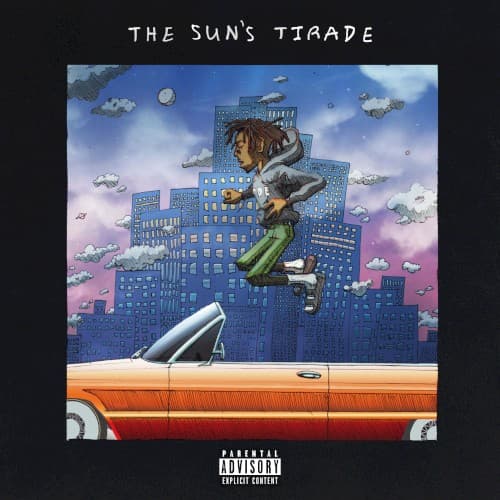
Isaiah Rashad The Sun's Tirade — The Album That Almost Didn't Exist
Three years is an eternity in rap years. Between 2014 and 2016, while his TDE labelmates conquered radio and festival stages, Isaiah Rashad disappeared. Not strategically — the way artists vanish to build mystique — but messily, fighting depression and addiction in Chattanooga while the industry moved on without him.
The Sun's Tirade arrived carrying the weight of that silence, seventeen tracks sprawling across seventy minutes, documenting what happens when a promising young voice nearly loses itself completely. This is not a comeback album in the traditional sense. It refuses the triumphant narrative, the cleaned-up redemption arc that labels prefer. Instead it offers something far more uncomfortable: a real-time document of someone trying to function while falling apart, wrapped in beats so warm and inviting they almost disguise the darkness underneath.
The contradiction sits at the heart of everything here.
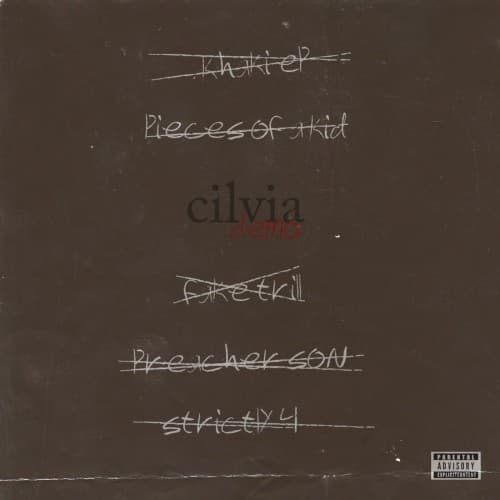
Where Cilvia Demo announced a new Southern voice with clarity and focus, The Sun's Tirade feels deliberately unmoored. The sequencing meanders. The mood shifts without warning. Rashad's delivery drifts between slurred mumbles and sharp clarity, sometimes within the same verse.
For an album this long, the lack of conventional structure feels intentional — less like poor editing and more like an accurate representation of depression's rhythm, the way days blur together when you are barely holding on. The production, handled largely by longtime collaborator D. Sanders alongside contributions from Antydote and Chris Calor, builds a sonic world that feels like late summer in the South: hazy, humid, heavy with the feeling that something needs to break. Samples float in and out of focus. Drums knock but never overwhelm.
The editorial angle here matters. This is the album that proved TDE's roster extended beyond world-conquerors and conceptual masterminds to include someone willing to document struggle without resolution. Where Kendrick Lamar's albums offer thesis statements about Black America and ScHoolboy Q delivers West Coast grit with clarity, Rashad operates in murkier territory. The Sun's Tirade asks a question most rap albums avoid: what do you make when you are not sure you should be making anything at all?
Molasses and Memory
The production on The Sun's Tirade moves like syrup — thick, sweet, slow enough that you notice every texture. D. Sanders, who built much of Cilvia Demo's sonic foundation, returns with an approach that prioritizes mood over momentum. Instead of the crisp boom-bap that defined mid-2010s conscious rap or the hard trap minimalism dominating Southern radio, these beats favor jazz-inflected loops, muted bass, and drums mixed low enough that Rashad's voice sits inside the music rather than on top of it. The result feels narcotic, tracks like 4r Da Squaw and Stuck in the Mud wrapping the listener in warmth while delivering lyrics about numbness and escape.
Antydote's work on Wat's Wrong takes a different approach, building something slightly more urgent beneath verses from Zacari and Kendrick, but even there the tempo refuses to rush.
Rashad's pen operates in the space between confession and deflection. He will give you a line about drinking too much, then immediately pivot to a flex about women or weed, as if catching himself being too vulnerable. The technique mirrors how people actually talk about depression — offering glimpses before changing the subject, testing whether the listener will follow. His voice, perpetually half-asleep, rarely strains for emphasis.
Where contemporaries like J. Cole or Chance the Rapper were clarifying their messages and tightening their flows in 2016, Rashad committed to remaining hazy. The mumbled ad-libs, the slurred syllables, the way he lets words trail off — these are features, not bugs. They communicate exhaustion in ways clean annunciation never could.
Thematically, the album circles around self-medication, failed relationships, and the gap between who people expect you to be and who you actually are. Rashad repeatedly references staying inside, avoiding responsibilities, disappointing his grandmother. The features — Kendrick Lamar, SZA, Jay Rock, Deacon Blues — mostly reinforce rather than redirect the mood. When SZA appears on Rope // rosegold, her voice blends into the haze rather than cutting through it.
The album's weakness lies in its length. Seventeen tracks across seventy minutes is a commitment, and not every moment justifies the runtime. The back half particularly drags, with several tracks feeling like half-formed ideas stretched beyond their natural conclusion. For an album this mood-dependent, the excess length tests patience, blurring what could have been a tight forty-five minutes of distinct melancholy into something occasionally monotonous — but does the monotony serve the depression narrative or undermine it?
The Long Walk Home
The album opens with a fade-in, Rashad's voice emerging slowly like someone waking from a nap they didn't mean to take, immediately establishing that nothing here will move quickly. The front half maintains the strongest momentum, Free Lunch through Wat's Wrong forming a stretch where the production varies just enough to hold attention while Rashad's pen stays sharp. Then the record does something unusual: instead of building toward a climactic statement, it drifts.
The middle section sags intentionally, tracks bleeding together in a way that mimics the experience of depressive episodes, hours passing without shape or purpose. Whether this makes for compelling listening depends entirely on whether the listener trusts the artistic intent behind the sprawl.
By the time Dressed Like Rappers arrives, the album has been playing for nearly an hour, and the sameness starts feeling less like atmosphere and more like inertia. The back stretch refuses to provide catharsis or resolution, which reads as honest but exhausting. The outro by george offers no closure, just more questions and admissions of uncertainty. This is not an album that believes in neat endings.
The sequencing resists traditional album logic — no clear single placement, no obvious peaks and valleys, just sustained mood with occasional flares of energy that never quite ignite. For the converted, this patience becomes the point. For skeptics, it confirms that Rashad values texture over structure, sometimes to the detriment of focus.
What Survival Sounds Like
The Sun's Tirade ranks as Isaiah Rashad's most complete statement, even as its length and lack of urgency keep it from reaching the heights of a truly essential project. It sits firmly in the middle of his discography between the promise of Cilvia Demo and the refined focus he would eventually find. This is an album for late nights, for long drives through empty highways, for moments when clarity feels impossible and you need someone to confirm that feeling is real.
It will not work for listeners seeking bangers or motivational anthems. The deliberate pace and pervasive melancholy require patience, and the runtime demands commitment most rap fans in 2016 were not prepared to give.
The album aged well precisely because it refused to chase trends. While trap dominance and melodic rap eventually absorbed some of what Rashad was attempting here, The Sun's Tirade still sounds distinct — too Southern to be lumped with the Soundcloud generation, too introspective to fit comfortably in mainstream Southern rap, too hazy to be considered boom-bap revival. For entry points, Free Lunch remains the most accessible track, balancing the album's core sound with enough melody and structure to hook new listeners.
Wat's Wrong works as the clearest statement of intent, featuring strong verses from Zacari and Kendrick while showcasing Rashad's ability to anchor a posse cut without disappearing. Fans of this record should explore MIKE's work in the late 2010s, Earl Sweatshirt's depression-era output, or Mick Jenkins' The Waters for similar explorations of interiority over atmosphere-heavy production. The Sun's Tirade influenced an entire wave of rappers willing to be less than triumphant, to document struggle without resolution. That it did so while nearly breaking its creator makes it both harder to recommend and impossible to dismiss.
Track Listing
where u at?
●The album opens with Rashad's voice barely audible, mixed deep into a murky loop that sounds like it was recorded underwater. No hook, no structure, just ninety seconds of scene-setting — establishing that this will not be a straightforward listen. The drowsy delivery warns you to adjust expectations immediately.
4r Da Squaw
▲D. Sanders builds a hypnotic loop from what sounds like chopped vocal samples and muted guitar, creating space for Rashad to deliver one of his most relaxed performances. The track embodies the album's core tension: production so inviting it could soundtrack a cookout, lyrics detailing behavior that would worry anyone who cared about you. Rashad's flow drifts between syllables without urgency, ad-libs slurred, the whole performance feeling like it might dissolve if he put in too much effort. SZA's hook arrives like a distant memory, her voice treated and processed until it blends into the beat. This is the template for much of what follows — warm surface, cold underneath.
Free Lunch
▲The closest thing to a single here, built around a brighter guitar loop and drums that actually knock with some authority. Rashad's pen sharpens, the writing less impressionistic and more direct about ambition clashing with self-doubt. The hook actually functions as a hook, something you could imagine radio playing if radio cared about songs this introspective. I heard this in a record store in Brooklyn the month it dropped, and the clerk turned it up during the second verse — rare for something this low-key to demand that response. Still sounds like the most accessible entry point on the album, the track that could have connected with a wider audience if anyone had been paying attention to TDE's quietest member.
Rope // rosegold
●A two-part structure that shifts gears at the midpoint, SZA's vocals anchoring both halves in different ways. The first section floats on a dusty sample and minimal percussion, Rashad barely staying awake through his verses. When the beat switches, the tempo drops further, impossibly slow, and SZA's voice becomes the focal point. The transition never quite coheres — it feels like two separate song ideas that got stitched together in the studio without fully committing to either direction. Ambitious in concept, uneven in execution.
Wat's Wrong
▲Zacari opens with a sung verse that sets the confessional tone before Rashad enters sounding more alert than usual, his flow tighter and more rhythmic over Antydote's jazzy production. Kendrick's guest verse arrives without fanfare, his voice stripped of the manic energy that defined his 2016 output, instead matching Rashad's exhausted cadence. The contrast makes Kendrick's appearance feel less like a cosign and more like solidarity — one TDE artist checking in on another. The chemistry works because nobody tries to steal the spotlight, everyone committed to the mood. This remains one of the album's strongest moments, proof that Rashad could hold his own on a posse cut without changing his approach.
Park
▼Pure atmosphere, barely a song. Rashad hums and mumbles over a loop that sounds like it is disintegrating in real time, the production decaying as the track progresses. Feels like an interlude that got stretched beyond its natural length, testing patience without offering enough reward. Skip-worthy on most playthroughs.
Bday
●A slow-burning track about relationships and regret, Rashad's pen focused on specific details — mentions of birthdays forgotten, texts left unread, the small failures that accumulate into bigger problems. The production stays minimal, just drums and a melancholy piano loop, giving the lyrics room to breathe. Jay Rock's verse arrives late, his gruffer voice providing textural contrast without breaking the mood. The track never builds momentum, content to sit in one emotional register for four minutes, which works if you are in the right headspace and feels interminable if you are not.
Silkk Da Shocka
●Named after the No Limit rapper but bearing no sonic resemblance to late-90s Southern bounce, this track finds Rashad experimenting with a slightly faster flow over choppy production. The beat stutters and lurches, drums programmed to feel deliberately off-kilter, and Rashad adjusts his delivery to match the rhythm. It stands out as one of the album's more adventurous moments, even if the experiment never fully clicks. The hook feels underdeveloped, and the track ends abruptly, as if Rashad ran out of ideas mid-session.
Tity and Dolla
▲Hugh Augustine's feature carries the emotional weight here, his verse more focused than anything Rashad delivers on the track. The production loops a soulful vocal sample beneath sparse drums, and both rappers sound exhausted, delivering bars about money problems and domestic tension with no bravado. This is the sound of being broke and depressed in your twenties, rent overdue, relationships strained, no clear path forward. Rashad's hook barely qualifies as a hook, more like a repeated observation than a melodic anchor. Powerful in its refusal to offer solutions, draining in its commitment to despair.
Stuck in the Mud
▲One of the album's most cohesive full-length tracks, built around a looped sample that sounds like it came from a forgotten Southern soul record. Rashad's writing sharpens, bars about substance abuse and stalled ambition delivered with more clarity than usual. The track justifies its five-minute runtime by varying the flow patterns and allowing space for instrumental breaks that never feel indulgent. This is the sound Rashad should have leaned into more often — hazy but structured, introspective without disappearing into opacity.
A lot
●A brief interlude, Rashad and collaborators talking in the studio, laughter and casual conversation mixed low beneath a beat that never fully develops. Functions as a breather between heavier tracks, reminding the listener that human beings made this music, but adds little to the overall arc. Could have been trimmed without loss.
AA
▲The title references Alcoholics Anonymous, and the track functions as a mission statement about self-awareness without recovery. Rashad catalogs his problems over Chris Calor's understated production, acknowledging that he knows exactly what is wrong and has no plan to fix it. The honesty cuts deeper than confessional rap that promises change. This is just documentation, no redemption arc teased. The track drags slightly in the back half, the same loop repeating without enough variation to sustain interest across four minutes, but the writing stays sharp enough to justify the length.
Dressed Like Rappers
▼By the time this track arrives, the album has been playing for over an hour, and the sameness begins to work against itself. The production remains solid — another D. Sanders loop, drums mixed low, samples chopped and flipped — but nothing here feels essential. Rashad's bars about image and authenticity land without much force, and the track fades out without leaving a strong impression. This is where the album's length becomes a liability, filler masquerading as atmosphere.
Don't Matter
●A short, skeletal track that feels like a voice memo turned into an album cut. Rashad raps over minimal production, his voice slightly off-mic, the whole thing intentionally rough around the edges. The rawness works conceptually, reinforcing the album's themes of instability, but musically it offers little to return to. Interesting once, skippable thereafter.
Brenda
▲I first heard this track on a late-night drive through Atlanta, fog rolling across the highway, and the mood fit perfectly — lonely, introspective, the kind of music that makes you think about every decision that led you to this moment. Rashad delivers some of his most vulnerable writing here, rapping about family disappointment and self-loathing over production that sounds like it is slowly fading away. The track refuses to build or climax, content to sit in discomfort for four minutes. It works as a penultimate statement before the outro, a last admission before the album ends without resolution.
by george (outro)
●The album ends the way it began, with Rashad's voice barely present, mixed into a loop that feels like it could play forever. No grand statements, no catharsis, just acknowledgment that the problems documented across seventy minutes remain unsolved. As an outro it frustrates anyone seeking closure, but as an artistic choice it feels honest. This is what unresolved struggle sounds like.
Find a Topic (homies begged)
●I played this for a friend who only knew Isaiah Rashad from features, and he asked if the album version was unfinished. That response captures the track's appeal and its problem — it sounds like a rough draft, Rashad freestyling over a skeletal beat, the hook barely developed, the whole thing ending before it fully begins. For fans deep into the album, the looseness reinforces the project's aesthetic. For casual listeners, it reads as sloppy. As the album's actual closer (following the outro), it leaves a strange final impression, neither triumphant nor defeated, just tired.