Scorecard: 7.4/10 · Good
How we score- Writing(25%)
- 7.0
Busta toggles between street reportage and big-room charisma with specificity on standout tracks, though the money-talk ideas blur together and posse cuts flatten rather than expand the writing.
- Production(25%)
- 8.0
DJ Scratch anchors the album with dense, cinematic East Coast boom bap and the Ummah cut lifts it into jazz-rap territory, but the back half loses focus with guest producer patchwork.
- Delivery(15%)
- 8.5
Busta's rapid-fire cadences and syllable-stacking are at their technical peak here, with flow control that few could match in 1997, though guest verses add little and some hooks prioritize crossover polish over the album's strengths.
- Cohesion(15%)
- 6.0
The apocalypse concept dissolves after the title track, leaving a collection of posse cuts and commercial bids; at seventy-two minutes the sequencing sags badly between tracks ten and seventeen.
- Originality(10%)
- 7.5
Busta pushes the amphetamine flow he introduced on The Coming into new rhythmic territory here, bending around DJ Scratch's frantic production in ways that set him apart from late-nineties New York peers.
- Replay value(10%)
- 7.5
The first half and the three singles remain in rotation two decades later; the filler and the guest spots have not aged as well and make the full album a chore.
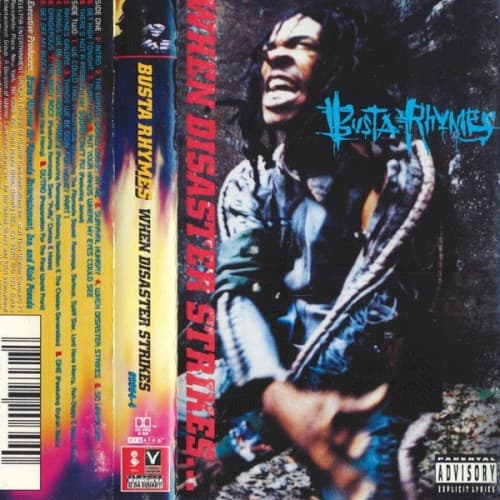
Busta Rhymes When Disaster Strikes… — The Sophomore Album That Proved the Coming Wasn't a Fluke
When Disaster Strikes… is the album where Busta Rhymes stopped being the wild-eyed Leaders of the New School graduate and became the center of his own universe. Released a year after The Coming, this record had one job: prove that the rapid-fire syllable stacking and apocalyptic theatrics were not a novelty. It succeeded loudly.
The first eight tracks deliver some of the most technically ambitious rapping of the nineties, with Busta bending his flow around DJ Scratch's filmic production like he was racing the beat and lapping it at the same time. But the album also reveals the trap that would define the rest of his career: Busta could command a track better than almost anyone in 1997, but he did not yet know when to stop.
At seventy-two minutes and nineteen tracks, When Disaster Strikes… is two albums fighting for space on one disc. The thesis holds through the title track, then the album drifts into posse cuts and crossover bids that have little to do with disaster or strikes. The apocalypse concept from The Coming returns in name only; the outro promises a final world front that never materializes.
What remains is a document of Busta at his technical peak, before the hooks got bigger and the albums got longer. The three singles justify the platinum plaque, and the deep cuts prove he could write when the concept demanded it. The filler proves he was already thinking past the album as a form.
DJ Scratch Built the Chaos and Busta Rode It Like a Downhill
DJ Scratch produces nine of the nineteen tracks here, and his sound defines the album: layered, frantic, built from chopped drums and orchestral stabs that feel like they are collapsing inward. The Whole World Lookin' at Me opens with a piano loop that doubles back on itself while Busta raps in bursts, pausing only to let the beat catch up. Survival Hungry stretches the same template across a slower tempo, giving Busta room to load every bar with internal rhymes.
The title track is where Scratch's production peaks: a siren loop, a bassline that sounds like it is climbing stairs, and Busta rapping about paranoia with the cadence of someone who has already lost the plot. It is the last moment the album feels conceptually whole.
The Ummah's So Hardcore, with its smoky jazz sample and head-nod groove, is the outlier and the highlight. Busta slows down just enough to let the pocket breathe, and the result is the album's most replayable track. The other guest producers—Easy Mo Bee, Rockwilder, Sean Combs—bring competent East Coast boom bap, but none of them build the same tension that Scratch does.
The Combs-produced The Body Rock is shiny and designed for radio; it works as a crossover play but kills the momentum the album spent eight tracks building.
Busta's writing here is economical when it needs to be and excessive when it does not. On Put Your Hands Where My Eyes Could See, he raps about wealth and presence without wasting a syllable. On the two-part Things We Be Doin' for Money, he stretches the same money-talk ideas across eight minutes without adding much after the first verse.
The posse cuts flatten Busta's personality rather than expand it. His guests do not challenge him; they wait their turn. The writing is sharpest when Busta is alone and the beat is pushing him. When Disaster Strikes… works best in the first half, where the production is consistent and Busta's rapping is the argument.
The back half is a victory lap that does not know when to end.
The Album Peaks Early and Then Wanders for Twenty Minutes
The sequencing of When Disaster Strikes… is frontloaded by design. The intro sets the apocalypse stage, and the next seven tracks deliver on it: sharp writing, DJ Scratch's claustrophobic production, and Busta rapping like the beat is chasing him. By the time the first stretch closes out, the album has made its case. Everything that follows is either a lateral move or a step down.
The middle stretch loses the plot. The runtime expands without adding insight. The Flipmode Squad features turn into six-minute tag-team sessions that say nothing the previous nine tracks did not say better.
The album only recovers when the singles arrive: one is a club track with a hook sticky enough to justify the detour, and another is a duet that lets Busta show restraint. But these tracks feel like they were sequenced to break up the monotony rather than to build toward anything. The crossover moment with its guest spots is pure late-nineties polish. It works as a single, but it belongs on a different album.
The outro teases a concept the album abandoned fifteen tracks earlier. The pacing problem is obvious: this album should have been twelve tracks. The rest is bonus material that makes the whole harder to recommend.
A Technical Peak Buried Under Too Much Album
When Disaster Strikes… ranks as Busta Rhymes's most technically accomplished album, the moment where his flow was fastest and most controlled before he started chasing pop hooks full-time. It is also too long, too unfocused, and too willing to trade momentum for market reach. In a catalog that would later include The Big Bang and Extinction Level Event, this album sits near the top for pure rapping but below what it could have been if Busta and his label had trusted the concept.
Fans of late-nineties New York rap will find the first half essential, but casual listeners should start with the three singles and work backward only if the flow grabs them. Put Your Hands Where My Eyes Could See is still the entry point: it is the most complete track here, with a beat that lets Busta show off without overwhelming the groove. Dangerous and Turn It Up work as proof that Busta could make crossover records without softening.
One with Erykah Badu is the wildcard, a duet that hints at the detours Busta would take on later albums. Skip the posse cuts unless you need to hear every Flipmode Squad member. The Whole World Lookin' at Me and the title track are the deep cuts that justify the runtime for completists.
If you came here from The Coming, this album is the confirmation that Busta could do it again. If you are starting here, know that the album is front-loaded and that the back half will test your patience. For a sense of where East Coast rap was in 1997—between the Biggie tribute and the Puffy crossover era—this album is a document. For a sense of what Busta Rhymes could do at his technical peak before the albums got even longer, it is required.
Play the first eight tracks in order, then cherry-pick the rest.
Track Listing
Intro
●The intro builds the apocalypse concept with sound effects and Busta's voice layered over drums and sirens, setting the stage for disaster. It runs nearly five minutes, which is too long for an intro that does not include a full verse, but it establishes the cinematic tone DJ Scratch will carry through the first act.
The Whole World Lookin’ at Me
▲DJ Scratch's piano loop doubles back on itself while Busta raps in rapid bursts about attention and pressure, pausing only to let the beat reset. The flow here is a flex: Busta stacks syllables at tempos most rappers would not attempt, and he does it without losing clarity. The writing is economical, every bar about perception and paranoia without wasting space on filler. This is the first full track and it announces the album's technical ambitions immediately.
Survival Hungry
▲Scratch slows the tempo and Busta uses the extra space to load every line with internal rhymes and hunger imagery. The beat is denser than the previous track, with layered drums that sound like they are marching. The rapping is still frantic but more controlled, and the writing sharpens the survival theme the album title promised. One of the best-written tracks here.
When Disaster Strikes
▲The title track is the album's conceptual peak: a siren loop, a climbing bassline, and Busta rapping about paranoia and collapse with the cadence of someone who has already lost. Scratch's production here is oppressive in the best way, and Busta matches it with writing that stays inside the apocalypse frame. After this track the concept dissolves and the album becomes a collection of songs rather than a statement. This is the last moment it feels like a unified project.
So Hardcore
▲The Ummah's production—handled by Jay Dee—gives Busta a smoky jazz loop and a head-nod groove that contrasts sharply with Scratch's chaos. Busta slows his flow just enough to ride the pocket, and the result is the album's most replayable track. The writing here is still street-focused but less frantic, and the hook is simple enough to stick without feeling dumbed down. This is the track that proves Busta could work outside his usual sonic lane.
Get High Tonight
●Scratch returns with a weed anthem that leans into the late-nineties obsession with blunt-smoking tracks. The beat is solid and the hook is functional, but the writing does not add anything new to the weed-rap canon. Busta's flow is still sharp, but the subject matter is thin and the track feels like a commercial placeholder rather than a necessary part of the album.
Turn It Up
●Busta self-produces here, and the beat is built for clubs: a simple loop, heavy bass, and a hook that repeats the title over and over. The rapping is less intricate than the earlier tracks, and the writing is pure hype without much substance. It works as a single—it charted—but it is the first sign that the album is pivoting away from the concept and toward crossover reach. The energy is high but the craft is a step down.
Put Your Hands Where My Eyes Could See
▲The album's lead single and its most complete track. The production—handled by Shamello, Buddah, and Epitome—is built around a familiar break and a bassline that bounces without overwhelming the rapping. Busta raps about wealth and presence with the same rapid-fire syllable stacking he has used all album, but here the writing is tighter and the hook is sticky enough to justify the radio push. The music video lampooned Coming to America and became a cultural moment, but the track itself holds up without the visual. This is the entry point for anyone trying to understand why Busta mattered in 1997.
It’s All Good
●A mid-tempo track about resilience and success that does not justify its place in the sequence. The production is competent but unremarkable, and the writing covers the same ground the earlier tracks already handled. Busta's flow is still sharp, but the track feels like filler.
There’s Not a Problem My Squad Can’t Fix
●Six minutes of tag-team rapping with Jamal that says nothing the previous nine tracks did not say better. The beat is solid but the back-and-forth structure flattens Busta's personality rather than expanding it. The Flipmode Squad showcases never work as well as Busta solo, and this is the longest example of that problem.
We Could Take It Outside
●Another posse cut with the Flipmode Squad, this time built around a confrontational hook and a DJ Scratch beat that tries to recapture the intensity of the first act. The rapping is solid but the guests do not challenge Busta, and the track runs nearly five minutes without adding much. It works as a crew showcase but not as an album track.
Rhymes Galore
●A short solo track where Busta raps quickly over a minimal beat, more of a freestyle showcase than a fully developed song. At two and a half minutes it does not overstay its welcome, but it also does not build toward anything. It feels like a bonus track that got sequenced into the main album.
Things We Be Doin’ for Money, Part 1
●Easy Mo Bee produces a track about money and survival that leans into boom bap without adding much to the theme. The rapping is solid and the beat is professional, but the writing does not go deeper than surface-level hustler talk. This is part one of a two-part suite that did not need to be split.
Things We Be Doin’ for Money, Part 2
●The second half of the money suite, now with Rampage, Anthony Hamilton, and the Chosen Generation. The production shifts to a more soulful sound with live vocals, and the track runs nearly five minutes. The concept is the same as part one, and the added length does not add new insight. The two parts together total eight minutes of money-talk that could have been condensed into one strong track.
One
▲A duet with Erykah Badu over a Rockwilder beat that gives Busta a chance to show restraint. The production is smoother than anything else on the album, and Badu's hook adds a soul element that contrasts with the aggressive rapping elsewhere. Busta slows his flow and focuses on relationship themes, which is a detour from the street content that dominates the tracklist. It works as a palette cleanser and hints at the more experimental directions Busta would take on later albums. One of the stronger back-half tracks.
Dangerous
▲The second single and the album's best crossover moment. The production is built for clubs, with a looping horn sample and a hook that sticks immediately. Busta raps about women and nightlife with the same technical skill he brings to the street tracks, and the result is a radio-friendly song that does not feel like a compromise. The track earned Busta another Grammy nomination, and it is easy to hear why: it is catchy without being soft, and the rapping is still sharp enough to satisfy fans of the harder material.
The Body Rock
●Sean Combs produces a shiny, radio-ready track with guest spots from Mase and Combs himself. The beat is polished and the hook is designed for crossover appeal, and it works on those terms. But the track kills the momentum the album spent the first act building, and it feels like it belongs on a different project entirely. Mase and Combs do not challenge Busta, and the result is a victory lap that celebrates success without adding anything new. It charted, but it is skippable in the context of the album.
Get Off My Block
●A confrontational track with Lord Have Mercy over a DJ Scratch beat that tries to recapture the intensity of the first act. The rapping is solid and the production is sharp, but the track arrives too late in the sequence to matter. By track eighteen the album has already overstayed its welcome, and this feels like one more posse cut in an album full of them.
Outro (Preparation for the Final World Front)
●The outro promises a final world front that never materializes, closing the album on a concept it abandoned fifteen tracks earlier. It is short and it works as a bookend to the intro, but it also highlights how little the apocalypse theme survived past the title track.