Scorecard: 6.5/10 · Good
How we score- Writing(25%)
- 6.5
Technical wordplay remains sharp on "The Ringer" and "Lucky You," but the album's fixation on critics and manufactured beefs drains the writing of substance or memorable imagery.
- Production(25%)
- 7.0
Mike Will Made It, Tay Keith and Ronny J provide aggressive trap-influenced backings that give Eminem harder modern canvases than Revival, though the beats prioritize function over innovation.
- Delivery(15%)
- 7.5
The multi-syllabic flows and rapid-fire cadences on "Greatest" and "Not Alike" demonstrate technical command, even if the breathless anger grows exhausting over 45 minutes.
- Cohesion(15%)
- 6.0
Two Paul Rosenberg skits, jarring pivots to Jessie Reyez melodrama, and the out-of-place "Venom" soundtrack cut fragment the record into uneven stretches of fury and forced vulnerability.
- Originality(10%)
- 5.0
A rage-driven response album attacking critics and newer rappers is the oldest play in Eminem's book, executed here with diminishing returns and outdated cultural references.
- Replay value(10%)
- 6.0
The technical runs and confrontational energy make the best tracks work once, but the thin subject matter and grating tone ensure most listeners will return only to the Lucas feature.
Eminem Kamikaze — When the Defense Became the Indictment
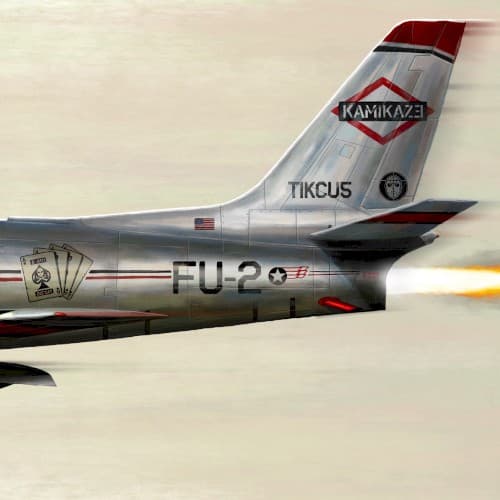
Eight months after Revival flopped with critics and divided his fanbase, Eminem rage-dropped Kamikaze with no warning and a Beastie Boys cover homage, positioning the album as a surprise-attack response to everyone who questioned his relevance. The strategy worked commercially — nine straight number-one debuts, 434,000 first-week units, best-selling hip-hop album of 2018 — but the music itself is the problem. Where Revival tried too hard to chase pop crossover and address weighty themes, Kamikaze swings to the opposite extreme: 45 minutes of technical pyrotechnics aimed at critics, mumble rappers, and old rivals, with almost nothing underneath the anger.
The thesis Eminem argues across thirteen tracks is that his technical skill still towers over the competition, which is true, but skill without purpose or insight is just exercise. The album confirms he can still rap circles around most of his peers; it also confirms that by 2018 he had run out of reasons to do so beyond score-settling and self-justification.
The surprise rollout generated hype and the diss tracks generated controversy, but once the smoke cleared the central question remained unanswered: what does Eminem have to say in the current moment beyond complaints that the current moment does not appreciate him enough?
Kamikaze is a technically impressive tantrum, the work of a generational talent who spent an entire album proving he could still rap without demonstrating why anyone should still care.
Rage on Hired Beats
Eminem executive-produced Kamikaze with Dr. Dre and recruited Mike Will Made It, Tay Keith, Ronny J and Boi-1da to provide the sonic backbone, a clear attempt to modernize his sound after Revival's rock-and-pop experiments fell flat. The production works better than its predecessor by default: the trap-influenced minimalism on "Greatest" and "Lucky You" gives Eminem harder, sparser canvases than the cluttered Ed Sheeran collaborations, and Tay Keith's skeletal bounce on "Not Alike" pulls him into 2018 without embarrassing him. But the beats are ultimately hired guns, functional backings for technical demonstrations rather than collaborations that push Eminem somewhere new.
Mike Will's work on "Fall" and "Greatest" nods to contemporary Atlanta bounce but lacks the personality of his best productions, and Ronny J's contributions are competent without being distinctive. The best production comes when Eminem and Luis Resto handle it themselves on "Stepping Stone," a reflective D12 eulogy built on piano and restraint, though even that track undermines its own sincerity with a defensive final verse.
The writing is where the album's limitations become unavoidable.
Eminem's technical skill remains absurd: the multi-syllabic internal rhymes on "The Ringer," the rapid pocket-switching on "Lucky You," the pure breath control on "Not Alike" all confirm that at 45 he could still out-rap nearly anyone in the game. But technique in service of what? The bulk of the album is score-settling — shots at Tyler the Creator, Machine Gun Kelly, Joe Budden, mumble rap as a concept, critics who panned Revival, the BET Awards cypher response to Trump, the entire changing environment of hip-hop that no longer centers him. Some of the wordplay lands and some of the insults sting, but by the album's midpoint the subject matter becomes circular and small.
There is no narrative beyond grievance, no imagery beyond self-defense, no ideas beyond "I can still rap better than you." The homophobic slur directed at Tyler on "Fall" generated justified backlash and an eventual apology, but the larger problem is not the slur itself but the emptiness it fills: when the writing has nothing substantive to say, it reaches for the cheapest provocation available.
The two Jessie Reyez collaborations attempt vulnerability but feel grafted on, late-album pivots to prove emotional range that the record has not earned. "Good Guy" samples an anime cover and aims for tenderness; "Nice Guy" flips to bitter misogyny. Neither track deepens the album or the persona — they just break up the anger for two songs before "Venom" arrives as a contractual movie-soundtrack obligation that has no thematic or sonic connection to anything around it.
The Argument That Runs Out of Steam
Kamikaze is frontloaded by design. The opening stretch sets the tone and the thesis before the album has even started arguing, delivering five and a half minutes of dense, multi-part technical flex followed by the two hardest beats and the Joyner Lucas feature. The first stretch is the only moment on the record where Eminem shares the mic with someone operating at his technical level and the competition pulls a better verse out of him. By the time the second skit arrives at track six, the album has already spent its best ammunition.
The middle stretch sags under its own length. The introspective moments slow the momentum with feelings that seem obligatory rather than earned, and the relationship-drama pivots have nothing to do with the rest of the record's argument. The aggression attempts to reignite but the disses feel minor-league, and the title track never rises to event status.
The back half works best when it condenses the album's anger into focused statements with hooks, but sequenced after weaker material these moments feel like repeats rather than climaxes. At 45 minutes Kamikaze is mercifully shorter than most Eminem albums, but it still feels padded. Cut the skits, cut the movie-soundtrack obligation, cut one of the collaborations, and you have a tight 35-minute statement. As released, the album announces its thesis in the first fifteen minutes and then circles it without deepening it.
The Least Necessary Comeback in His Catalog
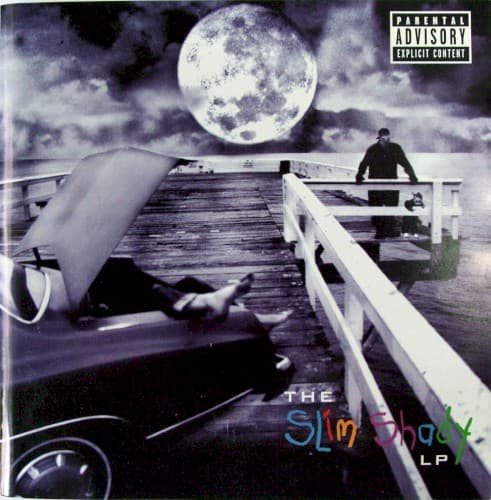
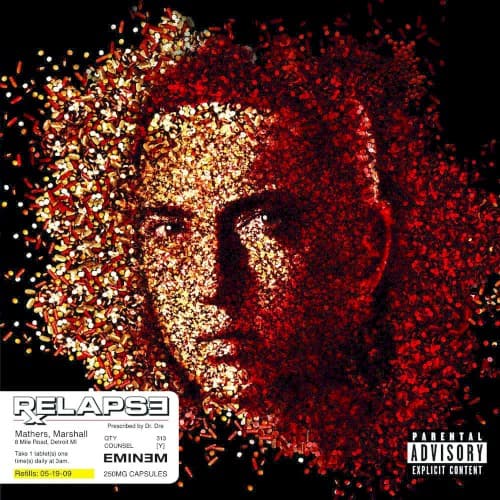
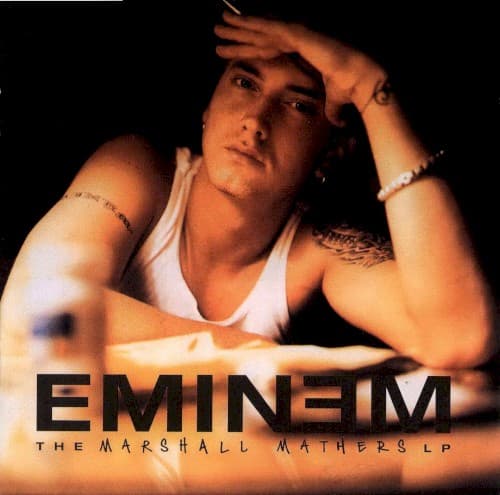
Kamikaze ranks in the bottom half of Eminem's catalog, better than Revival by virtue of tighter production and renewed aggression but weaker than The Slim Shady LP, The Marshall Mathers LP and even Relapse because it has no creative purpose beyond retaliation. Where those albums were hungry, visionary or disturbed, this one is merely defensive. It succeeded as a commercial and strategic maneuver — the surprise drop generated headlines, the diss tracks generated streams, the chart performance reasserted his dominance — but the music itself is a technical highlight without substance.
The album is for diehards who wanted proof that Eminem could still rap at an elite level and fans who enjoy beef for its own sake. Casual listeners and anyone hoping for growth or new ideas should skip it.
The record has not aged well. The beefs it documents are footnotes, the mumble-rap debate it wades into was already tired in 2018, and the homophobic controversy remains an unforced error that Eminem himself later walked back. What remains is a collection of performances: some impressive, some exhausting, none essential.
Start with "Lucky You" for the feature and the opening stretch for the technical demonstration, then move on to his earlier albums where the skill served vision. If you want to hear Eminem engage with his critics, listen to the remix he dropped eight months earlier, which made the same argument in four minutes without needing an album to justify it. Kamikaze proved Eminem could still rap; it also proved that by 2018 rapping well was no longer enough.
Track Listing
The Ringer
●Five and a half minutes of multi-part technical assault, opening with Illa da Producer's ominous build before Ronny J's part two explodes into rapid-fire grievance. Eminem announces the album's thesis in the first verse — critics are wrong, mumble rap is garbage, his skill is unmatched — and spends the rest of the track proving the skill while undermining the argument. The internal rhyme schemes are dizzying, the pocket-switching is precise, and the BET cypher reference adds context, but the writing is all defense and no offense, complaints masquerading as confidence. Best technical showcase on the record, but also the moment where the album's limitations become clear: this much talent in service of this little substance.
Greatest
●Mike Will Made It provides a sparse trap backdrop while Eminem interpolates Kendrick Lamar's "Humble" and Playboi Carti's "wokeuplikethis*" to position himself against the current generation. The flows are sharp and the wordplay is clever, but the argument is circular — claiming greatness by listing accolades rather than demonstrating it through the song itself. The Kendrick nod feels like borrowed credibility.
Lucky You
▲The album's best complete song, pairing Eminem with Joyner Lucas over Boi-1da's tense, minimal production. Lucas delivers a technically stunning opening verse that matches Eminem bar for bar, and the competition pulls a sharper, more focused performance out of Eminem than anything else on the record. The hunger both rappers bring to the technical exercise makes the song work even though the subject matter is still complaint-driven. The only track where Eminem sounds like he is rapping with someone rather than at someone.
Paul (skit)
●Paul Rosenberg's first voicemail, 35 seconds of a manager trying to talk an artist off the ledge before the album drops. Functional as a narrative device, skippable on replay.
Normal
▼A defensive pivot attempting to address criticism of Revival's pop moves and rock features, built over a Little Dragon sample. Eminem argues he has always crossed genres and experimented, which is true, but the song spends more energy justifying past mistakes than making new music worth defending. The production is fine; the writing is a think-piece comment section.
Em Calls Paul (skit)
●49 seconds of Eminem calling Rosenberg back to confirm he is dropping the album anyway. More narrative setup, less musical value.
Stepping Stone
●A somber D12 eulogy that attempts introspection and regret, with Eminem and Luis Resto's piano-driven production providing the album's only moment of sustained vulnerability. The first three verses reflect on the group's dissolution, Proof's death, and Eminem's role in both, and the writing here is specific and grounded in a way the rest of the album is not. Then the fourth verse pivots back to defensiveness, undercutting the emotional arc with more score-settling. The best writing on Kamikaze, undermined by Eminem's inability to sit in a feeling without arguing his way out of it.
Not Alike
●Tay Keith and Ronny J provide a skeletal, menacing beat for Eminem and Royce da 5'9" to tag-team a diss aimed at Machine Gun Kelly. The flows are technically sharp and the Royce feature is solid, but the beef itself feels minor-league, a manufactured controversy that generated streams without generating memorable music. The comparison to Bhad Bhabie's "Hi Bich" added an unintentional layer of embarrassment.
Kamikaze
▼The title track samples LL Cool J's "I'm Bad" for a nostalgia play that never rises to event status. Suby and Eminem's production nods to 1987 while Eminem name-checks newer rappers and reasserts his technical superiority, but the song feels like a lesser version of arguments already made earlier on the album. Sequenced too late to work as a mission statement, too thin to work as a climax.
Fall
●Mike Will Made It's production gives Eminem one of his hardest modern beats, and the song works as a single because it condenses the album's anger into a tight four minutes with a hook. The Justin Vernon vocal sample adds melodic texture, though Vernon later disavowed the collaboration. The homophobic slur directed at Tyler the Creator generated justified backlash and remains an unforced error that Eminem apologized for, but the larger problem is that the song's best moment is a technical flex and its worst moment is a lazy provocation, which sums up the album.
Nice Guy
▼The first Jessie Reyez collaboration, a caustic relationship song that pivots from tenderness to bitter misogyny in two and a half minutes. Ball and S1's production is fine, but the song has no thematic connection to the rest of the album and the writing feels like Eminem reaching for emotional range without doing the work to earn it. Skippable.
Good Guy
●The second Reyez feature, built over a sample from an AmaLee cover of "Glassy Sky" from the anime Tokyo Ghoul. The production is prettier than "Nice Guy" and the song aims for vulnerability, but it arrives too late in the album to deepen the persona or the argument. Another grafted-on attempt at emotional balance that the record has not built toward.
Venom
▼A contractual obligation soundtrack single for the 2018 film, produced by Eminem and Luis Resto with no sonic or thematic connection to the rest of Kamikaze. The song is a competent action-movie anthem with comic-book wordplay, but it belongs on a different project. Its inclusion here fragments the album's already shaky cohesion and ends the record on an irrelevant note.