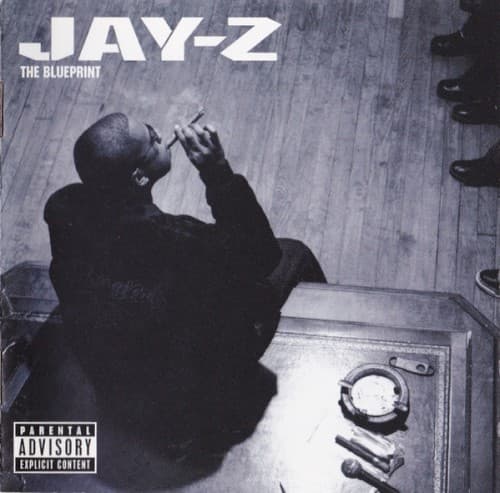
Jay-Z The Blueprint — The Day New York Stopped Being Polite
Remove this album from the timeline and the entire sound of 2000s rap changes direction. No chipmunk soul era. No Kanye West albums. No Just Blaze signature. The dominance of soul-sample production that defined the next five years starts here, September 11th, 2001, the same morning the towers fell.
That date became the album's footnote, but the music refused to be overshadowed. While New York City processed unimaginable trauma, Jay-Z delivered an album so confident in its own superiority that it spent thirteen tracks dismantling rivals, celebrating excess, and occasionally pausing to acknowledge something deeper than the braggadocio. The timing was accidental. The impact was permanent.
This was not a concept album or a sprawling opus. Thirteen tracks, sixty-one minutes, zero filler. The Blueprint arrived at the exact moment Jay needed to prove he was untouchable, commercially and lyrically, after a year of mounting challenges from Nas, Mobb Deep, and a younger generation questioning his throne. He responded with the most complete album of his career, the one where every element — production, sequencing, vocal delivery, songwriting — hit simultaneously.
The album positioned Jay as more than a battle rapper or a hustler with clever punchlines. It revealed a performer capable of emotional range without sacrificing the arrogance that made him compelling. Kanye West and Just Blaze built a sonic world where soul samples collided with hard drums, where vulnerability and chest-thumping coexisted on the same beat. That balance had been attempted before, but never executed with this level of clarity and purpose. The Blueprint did not invent introspection in rap. It proved you could be introspective and still sound like the biggest artist alive.
When Soul Became a Weapon
The production is so unified in texture that the album feels like a single extended session, even though multiple producers contributed. Just Blaze and Kanye West handled the majority, both using the same formula: sped-up soul loops chopped into jagged melodic phrases, layered over snapping snares and deep kicks. The Delfonics, the Doors, David Ruffin, Al Green — all gutted and reassembled into something that sounded nostalgic and futuristic at once. The technique was not new. It was the execution and consistency that elevated it.
Jay's flow across these beats is patient. He does not race to match the tempo or ride the pocket aggressively. Instead, he leans back into the mix, letting his voice sit just below the samples, conversational and composed even when delivering threats. The breath control and syllable placement is immaculate. Lines land exactly where they need to, no wasted space, no unnecessary ad-libs cluttering the vocal channel.
Lyrically, the album splits focus between two modes: confrontation and reflection. The first half leans heavily into disses aimed at Nas, Mobb Deep, and anyone questioning his commercial pivot. The second half shifts toward wealth, women, and brief admissions of insecurity masked as confidence. That tonal range keeps the album from becoming one-dimensional, but it also exposes a weakness. The balance tips too far toward victory laps in the middle stretch, where the subject matter starts to blur and the hooks feel less essential than the verses.
What holds everything together is the sequencing. The album moves like a boxer working through rounds — opening combinations, body shots in the middle, a knockout attempt near the end. The emotional peaks are carefully spaced. The moments of swagger never pile up back-to-back without a reset. Even the weaker moments serve a pacing function, giving the listener room to breathe before the next statement track arrives. Few rap albums from this era understood momentum this well.
The First Half Is the Fight, the Second Half Is the Aftermath
The opening stretch establishes dominance before the listener has adjusted to the album's sound. Three tracks in, Jay has declared himself a ruler, dismantled a rival, and delivered a radio smash without compromising his edge. That early momentum sets expectations the album struggles to exceed but never fully abandons.
The middle section shifts from aggression to celebration, trading battle raps for club records and braggadocio anthems. The energy stays high, but the stakes lower. These tracks function as proof of versatility, showing Jay could move between modes without losing his voice. They also prevent the album from feeling like a one-note attack record, which would have worn thin by track eight.
The back half introduces emotional complexity without announcing it. The tone darkens, the subject matter turns inward, and the production becomes more subdued. This is where the album earns its classic status — not because the rapping improves, but because the songwriting matures. The sequencing allows these moments to land with weight because they arrive after the flex, not during it.
The closing stretch disrupts the flow slightly, packing three separate ideas into one extended track that feels more like bonus material than a proper conclusion. It breaks the momentum the album spent twelve tracks building. A tighter ending would have elevated the project further, but the choice to let the album sprawl slightly at the finish line does not undo what came before. The journey matters more than the exit.
Why This One Stayed When the Others Faded
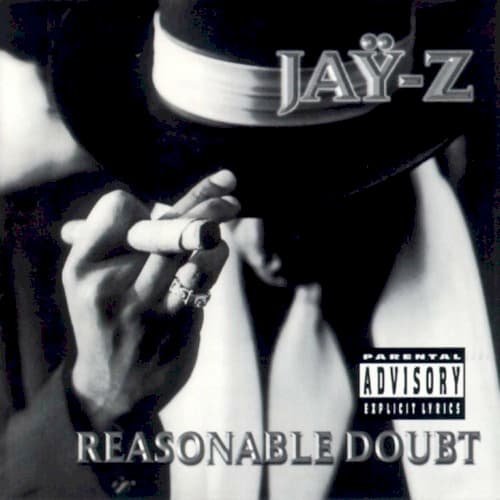
The Blueprint sits at the top of Jay-Z's discography and legacy alongside Reasonable Doubt, and depending on the day, it edges ahead. Reasonable Doubt has the lyricism and the street credibility, but The Blueprint has the confidence and the sound. This is the album where Jay stopped trying to prove he belonged and started dictating terms. The cultural impact is undeniable — it launched Kanye West and Just Blaze into superstar-producer territory, redefined what a commercial rap album could sound like, and reset the conversation around New York rap during an era when the South was beginning to dominate.
This album works best for listeners who value cohesive production and sharp sequencing over raw lyricism. Fans who prefer hard drums and street narratives may find the soul-sample approach too polished. Those who need conceptual depth or social commentary will not find it here. But for anyone interested in hearing a rapper operate at the peak of his commercial and creative powers, this is the clearest example.
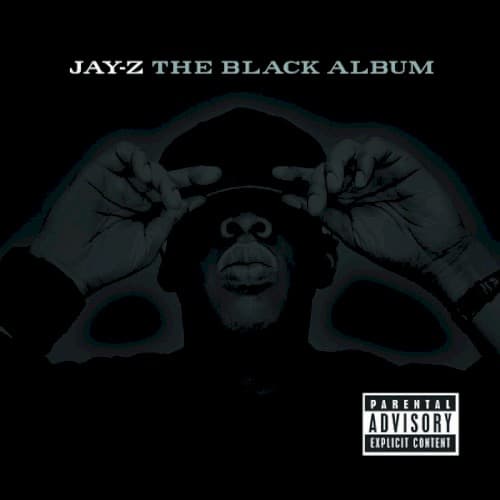
Standout tracks to start with: "Takeover" for the battle-rap thesis, "Heart of the City" for the production showcase, "Song Cry" for the vulnerability without weakness. If those three tracks connect, the rest of the album will follow. For similar sonic palettes, check Kanye West's The College Dropout and Late Registration, both direct descendants of this sound. For Jay-Z's other peaks, Reasonable Doubt offers grimier storytelling, and The Black Album provides a more varied producer roster. The Blueprint influenced too many albums to list, but its fingerprints are all over early 2000s Roc-A-Fella releases and any rapper who tried to pair soul samples with street narratives.
The album aged better than most classics from its era. The production still hits, the flows still feel effortless, and the confidence never curdles into arrogance. Twenty-plus years later, it remains the album Jay-Z fans point to when they need proof of his greatness. That is not a debate. That is just what happened.
Track Listing
The Ruler's Back
▲The Ruler's Back opens the album with immediate tension. A horn loop escalates over hard drums while Jay announces his return with the kind of authority that does not ask permission. The first verse sets the tone for the entire project: threats delivered calmly, punchlines stacked without pauses, and a refusal to acknowledge anyone as competition. The production, handled by Just Blaze, builds momentum without overcomplicating the arrangement. The horns do all the heavy lifting while the drums snap in perfect sync with Jay's cadence. The absence of a traditional hook keeps the focus on the verses, which was a risky choice for an opening track but pays off because the rapping never lets up. This is not a song designed for radio or playlists. It is a mission statement, a reintroduction after a period of public challenges. The confidence is so thick that even the ad-libs feel like threats. The sequencing decision to place this first instead of "Takeover" makes the album feel less reactive and more like a planned assault. The only weakness is the abrupt ending, which cuts off before the energy fully resolves. But that might be intentional — a way to force the listener into the next track without giving them time to process what just happened.
Takeover
▲Takeover is the most ruthless diss track Jay-Z ever recorded, and it remains one of the most effective in hip-hop history. The beat, built around a Doors sample and a relentless snare pattern, sounds like a victory march. Just Blaze constructed a production that leaves no room for retreat — every element pushes forward, every drum hit reinforces the aggression. Jay's approach is surgical. He does not yell or overemote. Instead, he delivers career-ending insults in the same tone someone might use to discuss the weather. The Nas verse is the centerpiece, dissecting his rival's catalog with such precision that it forced a response and launched a feud that defined early 2000s New York rap. The Mobb Deep section is almost as devastating, dismissing Prodigy with personal details that crossed the line from battle rap into exposure. The hook, interpolating from a KRS-One record, ties Jay's dominance to hip-hop history, positioning him as the next generation's throne-holder. The sequencing is perfect — placing this second allows the album to peak early and spend the rest of the runtime coasting on that momentum. The only criticism is that the track is so focused on destruction that it offers no emotional range. It is a weapon, not a song. But that is exactly what it needed to be.
Izzo (H.O.V.A.)
▲Izzo is the commercial breakthrough, the moment The Blueprint proved it could dominate radio without diluting its core identity. Kanye West flipped a Jackson 5 sample into a singalong hook that felt nostalgic and modern at once. The drums bounce instead of punch, and the entire production sits in a major key, giving the track an optimism that contrasts sharply with the battle raps that preceded it. Jay's verses are celebratory, full of quotable lines about success and survival. The hook is so infectious that it became a cultural moment, chanted at arenas and parties for years after release. What makes the track work beyond its catchiness is how effortlessly Jay switches from aggression to celebration without losing his voice. He sounds just as confident flexing wealth as he did dismantling rivals two tracks earlier. The structure is tight — three verses, a clean hook, no wasted space. The only flaw is that the subject matter is surface-level compared to the sharper writing elsewhere on the album. This is not a deep cut. It is a victory lap, and it does that job perfectly. The sequencing decision to place this third allows the album to breathe after two intense opening tracks, proving Jay could move between modes without losing momentum.
Girls, Girls, Girls
●Girls, Girls, Girls is the most divisive track on the album. The concept is simple: Jay catalogs his romantic encounters with women from different cities and backgrounds, reducing each to a punchline or a fleeting detail. The Biz Markie interpolation on the hook is playful, but the verses walk a line between charming and dated. Some bars land as clever wordplay, others feel reductive in ways that have not aged well. The production, handled by Just Blaze, is warm and loop-heavy, built around a Tom Brock sample that gives the track a lighthearted bounce. The drums are understated, letting the melody carry most of the weight. The track functions as a palette cleanser after three intense openers, but it also disrupts the album's momentum slightly. The subject matter feels less essential than what came before, and the writing lacks the sharpness Jay demonstrated earlier. The sequencing choice makes sense — the album needed a breather — but the execution is weaker than the surrounding tracks. The hook is catchy enough to justify its existence, and the production keeps it from feeling like filler. But this is the first moment on The Blueprint where the album coasts instead of pushing forward.
Jigga That Nigga
▲Jigga That Nigga is pure flexing, and it works because the production is so immaculate. Just Blaze sampled the Incredible Bongo Band and layered it with a distorted bassline that rattles speakers. The beat is hypnotic, looping the same melodic phrase while the drums shift slightly between sections. Jay's flow matches the production's swagger, riding the pocket with the kind of ease that only comes from complete mastery of the form. The verses are braggadocio without much depth, but the delivery sells every line. The hook is minimal, repeating the title phrase over and over until it becomes a mantra. This is not a song that will appear on year-end lyrical showcases, but it does not need to. The energy is infectious, and the production elevates what could have been a throwaway flex track into something worth revisiting. The only criticism is that the subject matter is one-note, and the track does not offer much beyond the initial vibe. But as a mood piece, it succeeds completely.
U Don't Know
▲U Don't Know is the most underrated track on The Blueprint. Just Blaze built the beat around a Nina Simone sample, chopping her vocals into a melodic loop that sounds mournful and triumphant at once. The drums hit harder here than anywhere else on the album, giving the track a weight that contrasts with its soulful foundation. Jay's verses are sharp, balancing threats with reflections on his rise. The writing is more focused than the previous few tracks, returning to the precision that defined the album's opening. The hook is simple but effective, repeating the title phrase while letting the production do the emotional heavy lifting. What makes this track stand out is how it bridges the album's two modes — the aggression of the opening and the introspection that arrives later. It feels like a transition point, a moment where Jay pauses the flexing to remind listeners why he earned the right to flex in the first place. The sequencing is smart, placing this in the middle of the album to reset the energy before the second half begins. The only flaw is that the track ends too abruptly, cutting off before the outro fully resolves. But that minor issue does not diminish what is otherwise one of the strongest songs on the project.
Hola' Hovito
●Hola' Hovito is a throwback to Jay's hustler persona, built around a Spanglish hook and a bouncing Kanye West production that samples David Bowie's "Five Years." The beat is playful, almost cartoonish in its energy, which gives the track a levity that works after the heavier moments preceding it. Jay's verses are full of drug-dealing metaphors and braggadocio, delivered with a smirk in his voice. The writing is not as sharp as the album's best moments, but the energy keeps the track engaging. The hook is catchy in a way that feels effortless, and Kanye's choice to let the sample breathe between verses gives the production room to shine. The sequencing decision to place this here makes sense — the album needed another uptempo moment before diving into the more introspective second half. But the track also highlights one of The Blueprint's minor weaknesses: the middle stretch occasionally prioritizes vibe over substance. This is not a bad song, but it is not essential either. It does its job as a palate cleanser and a mood shifter, but it will not appear on anyone's list of Blueprint highlights. The production saves it from feeling like filler, but the writing does not match the album's peaks.
Heart of the City (Ain't No Love)
▲Heart of the City is the album's best pure rap performance. Kanye West sampled "The Days of Wine and Roses" and chopped it into a bittersweet loop that sounds like nostalgia and ambition colliding. The drums are minimal, letting the melody dominate while Jay's voice sits perfectly in the mix. The verses are packed with quotable lines, covering everything from street survival to industry politics. The writing is dense without feeling overcomplicated, and the flow is so smooth that the complexity is easy to miss on first listen. This is the track where Jay sounds most comfortable, not trying to prove anything or respond to anyone, just rapping at the highest level. The hook interpolates Bobby Bland, tying Jay's story to generations of Black music history. The sequencing is perfect — placing this in the album's second half allows it to feel like a reward for making it through the flex tracks. The production showcases Kanye at his best, before he became a maximalist, when his beats still had breathing room and emotional clarity. The only criticism is that the track is so well-constructed that it makes some of the surrounding songs feel less essential by comparison. But that is not a flaw, that is just proof of how high the ceiling is here.
Never Change
●Never Change opens with a spoken-word intro from Rick James, setting a reflective tone before the beat drops. Kanye West built the production around a pitched-up soul sample that sounds wistful, almost melancholy. The drums are understated, letting the melody carry the emotional weight. Jay's verses are introspective, addressing loyalty, betrayal, and the costs of success. The writing is more vulnerable than most of the album, though Jay still maintains his guard, never fully exposing himself. The hook is simple, repeating the title phrase while the production swells underneath. This track represents the album's tonal shift, moving away from battle raps and celebrations toward something quieter and more personal. The sequencing is smart, placing this after "Heart of the City" to deepen the emotional arc. The only flaw is that the track lacks a standout moment — no single line or section that grabs the listener and refuses to let go. It is a solid album track that serves its purpose in the larger narrative, but it does not demand repeated listens on its own. The production is beautiful, and Jay's performance is competent, but the song does not reach the heights of the album's best moments.
Song Cry
▲Song Cry is the emotional centerpiece of The Blueprint, the moment where Jay drops the armor and admits vulnerability without losing his voice. Just Blaze sampled Bobby Glenn's "Sounds Like a Love Song" and built a production so lush and melancholic that it forces introspection. The drums are soft, almost apologetic, while the strings and keys create a cinematic backdrop. Jay's verses are about a failed relationship, but he frames the story through his own emotional distance, admitting fault without begging for forgiveness. The writing is some of the sharpest on the album, full of small details and honest admissions that reveal more than the braggadocio tracks ever could. The hook is understated, letting the production do most of the work while Jay repeats the central idea: his inability to express emotion in real time. The sequencing is perfect, placing this late in the album after Jay has established his dominance and ego, allowing the vulnerability to land with more weight. This is the track that elevated The Blueprint from a great rap album to a classic, proving Jay could operate in emotional registers beyond arrogance and aggression. The only minor criticism is that the outro feels slightly rushed, ending before the emotional resolution fully arrives. But that might be intentional, a way of showing that some wounds do not close cleanly. This is essential listening.
All I Need
●All I Need continues the introspective stretch, though with less emotional depth than "Song Cry." Kanye West sampled Aretha Franklin and built a warm, soulful production that feels comfortable and lived-in. The drums are steady, never overpowering the sample, and the bassline adds a subtle bounce. Jay's verses are about loyalty and gratitude, addressing the people who supported him before the fame. The writing is solid but not exceptional, lacking the quotable lines that defined earlier tracks. The hook is functional, repeating the title phrase while the production carries the emotional weight. The track works within the album's arc, providing a moment of appreciation after the regret expressed in "Song Cry." But it also feels slightly redundant, covering similar emotional ground without adding much new insight. The sequencing makes sense, but the execution is weaker than the surrounding tracks. This is not a bad song, but it is the first moment in the album's back half where the momentum dips slightly. The production is beautiful, and Jay's performance is competent, but the track does not justify its place on an album this tightly constructed. It feels like a solid album cut that could have been replaced with something sharper.
Renegade
▲Renegade is the album's most controversial track, not because of its content, but because of what happened after. Eminem's guest verses are so sharp and technically precise that they sparked a decade of debates about whether he outshined Jay on his own album. The production, handled by Eminem, is built around a rock guitar loop and crashing drums that give the track an arena-ready energy. Jay's verses are strong, addressing criticism and defending his career choices, but Eminem's performance is undeniable. The first guest verse is good, the second is better, and by the end, the conversation shifted from the album's content to the guest spot itself. That debate overshadowed what the track actually accomplishes: two of the best rappers alive trading verses at the peak of their powers. Jay holds his own, delivering quotable lines and maintaining his voice, but Eminem's technical wizardry and emotional intensity create a contrast that highlights their different approaches. The sequencing decision to place this near the end is smart, giving the album a final surge of energy before the closing stretch. The only criticism is that the track feels slightly disconnected from the rest of The Blueprint's sonic palette. The rock-influenced production stands out, not in a bad way, but in a way that reminds the listener this was originally recorded for a different project. Still, this is essential listening, a rare collaboration that lived up to the hype.
Blueprint (Momma Loves Me) / Breathe Easy (Lyrical Exercise) / Girls, Girls, Girls (Part 2)
●The closing suite packs three separate ideas into one extended track, and the execution is uneven. "Blueprint (Momma Loves Me)" is the strongest section, featuring Just Blaze production that is tender and understated, with Jay reflecting on his mother's influence and his own growth. The writing is vulnerable without being maudlin, and the performance feels genuine. "Breathe Easy" shifts into a lyrical showcase, with Jay delivering rapid-fire punchlines over a sparse beat. The flow is impressive, but the content is surface-level compared to the emotional depth established earlier. "Girls, Girls, Girls (Part 2)" revisits the earlier track's concept with diminishing returns, offering a few clever punchlines but feeling redundant after everything that came before. The decision to combine these three tracks into one extended closer disrupts the album's momentum. A tighter, more focused ending would have elevated the project, but instead, the album sprawls slightly at the finish line. The first section is strong enough to justify the track's existence, but the latter two sections feel like bonus material that should have been sequenced differently or cut entirely.