Scorecard: 6.5/10 · Good
How we score- Writing(25%)
- 6.5
The confessional subject matter is bold but West defaults to declarations over developed ideas, and moments like the rambling homicide opener feel more provocative than earned.
- Production(25%)
- 7.5
Mike Dean and Pi'erre Bourne deliver cohesive soul chops and distortion across 23 minutes, with Ghost Town's layered vocals and Yikes' Ogada flip standing out, though Wouldn't Leave sounds undercooked.
- Delivery(15%)
- 6.0
West's flow is functional but rarely commanding; the guest vocals from 070 Shake and Kid Cudi on Ghost Town carry more weight than his own performances.
- Cohesion(15%)
- 7.0
Seven tracks in 23 minutes means no obvious filler, and the album moves from confession to paranoia to family anxiety with clear intent, though the abrupt ending suggests more edit than arc.
- Originality(10%)
- 5.5
The bipolar disclosure is new territory lyrically, but musically this consolidates techniques from 808s, Yeezus and The Life of Pablo rather than inventing a new sound.
- Replay value(10%)
- 5.0
Ghost Town and Yikes hold up, but the album feels designed for a single moment in 2018 rather than sustained listening, and the unfinished edges become more distracting over time.
Kanye West ye — The Album He Made After He Erased the First One
Kanye West remade ye in two weeks. Not revised it or tightened it, but erased the board and started over, according to longtime collaborator Mike Dean, after a TMZ interview in May 2018 where West said slavery sounded like a choice and watched the room turn on him. The album that resulted from that reset is 23 minutes of confessional fragments, structured as a mental health disclosure but delivered with the same impulsiveness that created the need for it.
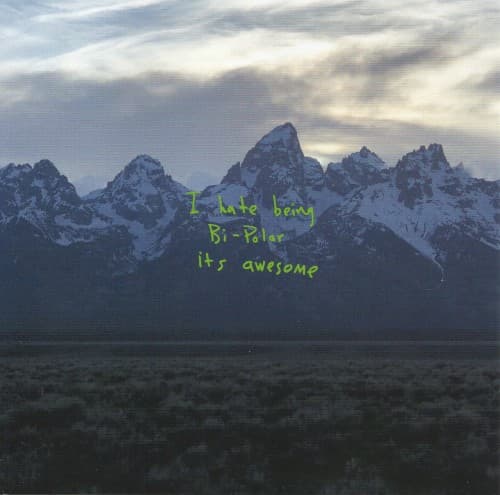
The opening line is a spoken-word confession about homicidal thoughts; the closing track is about fearing he will fail his daughter. In between, West names his bipolar disorder on the cover art, calls it a superpower on Yikes, and otherwise toggles between self-justification and scattered apologies.
The thesis West offers is that this is what unfiltered honesty looks like when you stop performing competence, but the album that makes the case is so visibly unfinished that it raises the question of whether the chaos is the subject or just the circumstance. Is this vulnerability or just lack of revision?
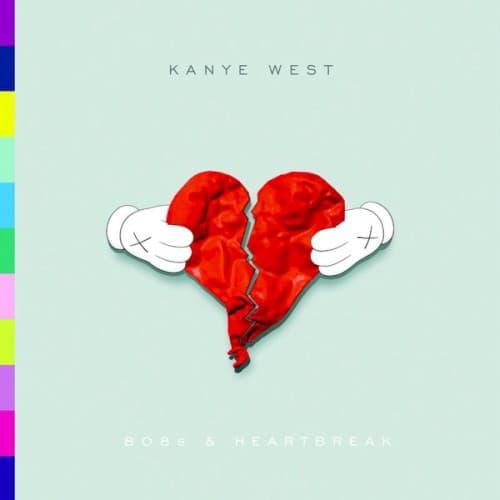
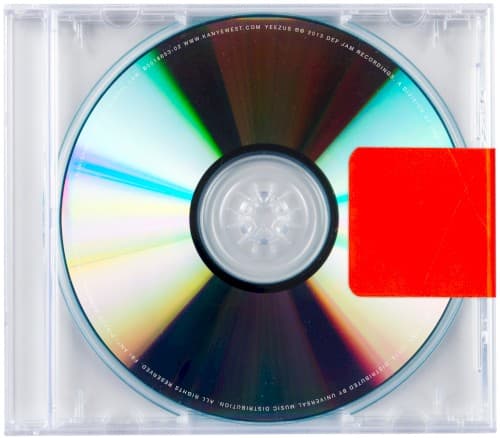
By 2018 West had pioneered blog-era maximalism on The College Dropout, refined it on Late Registration, gone plastic and triumphant on Graduation, stripped to drum machines and AutoTune on 808s, built his magnum opus on My Beautiful Dark Twisted Fantasy, and weaponized noise on Yeezus. ye does not extend any of those arcs. It borrows the soul chops from his early work, the distortion from Yeezus, the song-suite structure from The Life of Pablo, and wraps them around a set of admissions that would matter more if the music around them felt less like a rough draft.
When Two Weeks in Wyoming Sounds Like It
The production on ye is handled by West with Mike Dean, Pi'erre Bourne, Francis and the Lights, and a rotation of collaborators working at Monster Lake Ranch in Jackson Hole during the Wyoming Sessions that yielded five albums in five weeks. The sound is recognizably West: soul samples processed into atmosphere, live vocals layered into the mix, drums that snap or distort depending on the song. Yikes flips a sample of Ayub Ogada into a paranoid crawl with 808s that hit like a panic attack. No Mistakes loops Edwin Hawkins Singers over a Slick Rick nod and delivers two minutes of self-righteous declarations.
Ghost Town builds from a near-whisper into a climax carried by 070 Shake and Kid Cudi, with guitars, vocal loops, and a sample of Shirley Ann Lee creating the album's most complete moment.
The issue is not the toolkit but the time spent with it. Wouldn't Leave, which samples a baptism and addresses Kim Kardashian standing by West after the TMZ incident, feels like a demo: the idea is there but the arrangement never develops. All Mine pairs a slick bassline with bars about sexual options that sound more distracted than provocative. I Thought About Killing You opens with two minutes of spoken word over a static hum before the beat switches into something that might have been a song with another week.
The album's brevity means there is no obvious filler, but it also means several tracks feel like sketches waiting for a second pass. Dean and Bourne deliver strong textures throughout, and the sequencing from confession to mania to domesticity is deliberate, but the execution wavers. Ghost Town aside, these are not beats that rewrite the genre or even West's own playbook; they are solid backdrops for lyrics that needed more time. The production never embarrasses itself, but it never compensates for the writing either.
The Shape of an Album Made in Real Time
ye moves through its seven tracks in the order West recorded them, which means the pacing is less an arc than a document of two weeks spent reacting. The album opens with the most confrontational material: a spoken-word provocation, then a diagnosis, then a tonal reset that never quite lands. The middle softens with gestures at accountability before puffing the chest back out.
The back half contains the only track that feels finished, and it arrives late enough to work as a climax even if the writing around it has been uneven. The closing run addresses fatherhood and anxiety, but the Nicki Minaj voicemail tacked onto the end makes the ending feel abrupt rather than resolved.
At 23 minutes the album does not sag, but it also does not build. There is no room for filler, but there is also no room for the peaks to breathe. The sequencing makes sense as a narrative of West's mindset in May 2018, and the length keeps the listener from checking out, but the album plays more like a playlist than a composition. Only one song would survive as a single outside this context; the rest depend on the frame.
A Disclosure That Outpaced the Album Around It
ye ranks in the back half of West's catalog, below the run from The College Dropout through Yeezus and above Donda, which suffered from similar issues of sprawl and undercooked ideas. The difference is that ye is too short to collapse under its own weight; it just never gets off the ground. The album succeeds as a confession, and the willingness to name bipolar disorder and suicidal ideation on a major label release in 2018 was significant in a genre that rarely makes space for that vulnerability. The problem is that confession is not the same as composition, and ye offers more of the former than the latter.
The moments that work, Ghost Town especially, prove West and his team can still build a song that justifies repeated listens, but most of the album sounds like it was recorded in the time it takes to play it. For listeners who followed the TMZ controversy and wanted to hear West process it in real time, ye delivers exactly that. For anyone looking for an album that stands next to My Beautiful Dark Twisted Fantasy or even The Life of Pablo, this is not it.
The catalog context matters: this is the artist who made Late Registration and Yeezus working at a fraction of his usual rigor, and the gap is audible. Start with Ghost Town and Yikes. If those tracks justify the investment, the rest of the album will make sense as the scaffold around them. If they feel slight, skip this and go to Kids See Ghosts, which West and Cudi released a week later and which executes a similar sound with better songs.
ye is not a disaster and it is not filler, but it is the sound of an artist making an album because the calendar said it was time, not because the music was ready.
Track Listing
I Thought About Killing You
●The opener devotes two minutes to West speaking over a low hum, confessing to thoughts of killing himself and then killing someone else, before the beat finally switches and he raps about self-doubt and ego for another two minutes. As a provocation it works, but as a song it never coheres. The spoken-word section drags without the lyrical density to justify the runtime, and when the beat finally arrives it sounds like the start of something rather than a developed idea. The sentiment is genuinely uncomfortable, which is clearly the intent, but the execution suggests the discomfort is more in the recording process than the composition.
Yikes
▲The best pure rap performance on the album. West flips an Ayub Ogada sample into a claustrophobic beat with distorted 808s, and the writing is specific enough to land: he calls bipolar disorder his superpower, references tweaking off the meds, and compares political beefs to nuclear tension. Pi'erre Bourne's production gives the paranoia a physical texture, and West's flow locks into the pocket without overthinking it. The hook is repetitive but functional, and the track works as both a single and a thesis statement for the album's mental health theme. It holds up better than most of the tracklist because it sounds like a finished thought.
All Mine
▼West pivots from mental health to sexual options, rapping about dating multiple women over a bassline and a spare beat that would work better if the bars were sharper. The writing is more distracted than explicit, and the track never builds momentum. Ty Dolla Sign and Ant Clemons add vocal texture, but the song feels like a tonal reset that the album did not need and West did not fully commit to. It charted as a single and it is not unlistenable, but it is filler in a tracklist too short to afford one.
Wouldn’t Leave
●West addresses the TMZ slavery comments and thanks Kim Kardashian for standing by him, sampling a baptism and bringing in PartyNextDoor for the hook. The subject matter is the most directly autobiographical moment on the album outside of the opener, but the production sounds unfinished. The beat never develops past the loop, the vocal mix feels thin, and the song ends before it establishes a groove. As a sketch it makes sense in the context of an album recorded in two weeks; as a completed track it does not.
No Mistakes
●Two minutes of self-justification over an Edwin Hawkins Singers loop and a Slick Rick sample. West raps from the perspective of a multimillionaire who has made errors but refuses to apologize for them, which is consistent with the album's themes but not particularly compelling as writing. The production nods to his early soul-sample work, and the brevity keeps it from overstaying its welcome, but the track offers no insights that the rest of the album has not already covered. Solid enough to not skip, slight enough to forget.
Ghost Town
▲The only song on ye that sounds like it received a second draft. The track builds from a near-whisper into a stadium-sized climax, anchored by 070 Shake's performance on the outro and a Kurt Cobain interpolation from Kid Cudi. The production layers guitars, vocal loops, and a Shirley Ann Lee sample into something that feels genuinely expansive, and the writing about feeling mentally unmoored is vague enough to let the music do the work. PartyNextDoor appears on the credits but the song belongs to Shake and Cudi, who deliver the album's most memorable vocal moments. This is the track that justifies the album's existence and the only one that holds up outside the context of the Wyoming Sessions.
Violent Crimes
●West closes the album with anxieties about raising his daughter, fearing he will fail her and that she will face the same objectification he has perpetuated. The sentiment is genuine, but the execution is clumsy: the writing toggles between protectiveness and discomfort, and the Nicki Minaj voicemail tacked onto the end feels like an afterthought. The beat, produced by Irv Gotti and 7 Aurelius, is understated and effective, but the song itself never finds a resolution. As a closer it works thematically, following the album's arc from suicidal ideation to domestic anxiety, but it ends too abruptly to feel satisfying.