Scorecard: 7.1/10 · Good
How we score- Writing(25%)
- 6.5
The breakup lyrics are direct but thin: "coldest story ever told" and "spoiled little L.A. girl" lack the specificity that made earlier West albums quotable, and the repetition across twelve tracks wears the concept bare.
- Production(25%)
- 8.5
The 808 programming and pitch manipulation create a genuinely alien sound: step-sequenced drums, droning synths, somber piano and minimal arrangements that strip modern pop to iconic rudiments, executed with brutal discipline.
- Delivery(15%)
- 5.0
The flat, nearly unmelodic singing through Auto-Tune conveys detachment by design, but the performance itself offers little besides the robotic effect: no melodic hooks that land without the processing, no vocal range to explore.
- Cohesion(15%)
- 7.5
Twelve tracks of the same emotional register and sonic palette risk monotony, but the sequencing earns the length: the album moves from desperation through paranoia to grief without a single track that breaks the spell.
- Originality(10%)
- 9.0
In 2008 no rap album sounded like this: West abandoned his chipmunk-soul signature for drum-machine electropop and Auto-Tune crooning, a decade before it became the default, and did it on a major-label release after three straight commercial wins.
- Replay value(10%)
- 6.0
The starkness that made it shocking wears differently now that every SoundCloud page has borrowed the formula: the mood is still potent but the melodic thinness and vocal monotony make full playthroughs a commitment.
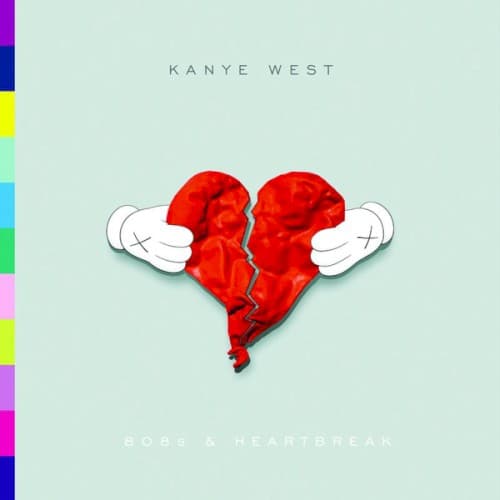
Kanye West 808s & Heartbreak — The Blueprint Every SoundCloud Rapper Borrowed
808s & Heartbreak is the album that cost Kanye West his rap credibility in 2008 and bought the next decade of hip-hop its sound. After three albums of chipmunk-soul samples and punchline raps that made him the genre's most commercially reliable auteur, West recorded twelve songs of drum-machine electropop sung through Auto-Tune about a breakup and the death of his mother, released it the week of Thanksgiving, and watched hip-hop fans call it a betrayal. The backlash was immediate: fans mocked him for going soft, rappers compared it to Common's career-stalling Electric Circus, and the album undersold Graduation by 200,000 copies in its first week despite an extra sales day and a holiday weekend. What no one predicted was that within two years the album's aesthetic would be everywhere, that by 2015 its influence would be more audible than any of his previous records, or that the same sparse 808 programming and Auto-Tune melancholy would define the sound of rap in the streaming era.
The thesis is simple: 808s & Heartbreak is a more important album than it is a good one. The production is a landmark, a ruthlessly minimalist approach to pop construction that stripped the genre to beats, processed voices and negative space. The songwriting, however, is the weakest of West's first four albums. The breakup material is repetitive and thin, the melodies are more conceptual than memorable, and the vocal performance offers detachment by design but little else. It ranks in the middle of his catalog not because it failed but because it succeeded at something smaller than what West had already done: it is an effective mood piece that trades the narrative ambition and lyrical density of his previous work for a single emotional note held across forty-five minutes. The influence it cast is plain, but influence and quality are not the same measurement.
The 808 as an Instrument of Detachment
The production on 808s & Heartbreak is built almost entirely from the Roland TR-808 drum machine, step-sequenced synth-bass parts, and Auto-Tune vocals processed to sound robotic and affectless. West, working with No I.D., Jeff Bhasker, Plain Pat and Mr Hudson, wanted the 808 to evoke emotion through its limitations: he pitched the drum sounds up and down to create what he called a "heartbreak" effect, a distorted electronic timbre that sits somewhere between a kick drum and a synthesizer. The result is a record that sounds like nothing else in his catalog and very little else in 2008 rap.
The step-input sequencing, a relic of 1980s production that limits patterns to sixteen individual notes, gives the drums a stiff, metronomic quality. The synth-bass drones. The arrangements are austere: lengthy strings, somber piano, almost no melodic decoration. Several tracks have more in common with the post-punk bleakness of New Order's Movement than with contemporary rap or R&B, and that cold, negative-space approach is the album's greatest achievement.
West drew from 1980s synth-pop acts like Phil Collins, Gary Numan and Tears for Fears, and the influence is obvious: the drum programming is minimal, the melodies are simple, and the overall palette is narrow by design. The Auto-Tune is omnipresent, used not for pitch correction but as a vocal effect that flattens West's voice into something approaching the artificial intelligence character HAL 9000. The effect is intentional detachment, a robotic sound that underscores the lyrics' themes of isolation and emotional numbness. It works as a production concept.
The problem is that the concept does most of the work. Strip the Auto-Tune and the 808 programming and what remains are melodies that rarely justify the minimalism. The vocal performances are flat and nearly unmelodic, offering little melodic range or phrasing that would hold up without the processing. The hooks are more slogans than earworms: "Love Lockdown" repeats its title over a one-note vocal, "Heartless" rides the same melodic idea for three and a half minutes, and "Paranoid" leans entirely on the groove.
West is singing because rapping could not express the melodies in his head, but the melodies themselves are thin.
The album's weakness is in the writing. Most of the lyrics are directed at an ex-lover, and the specificity that made West's earlier albums quotable is absent here. On "Heartless" he calls her treatment of him "the coldest story ever told," a phrase that sounds dramatic but says nothing concrete. On "RoboCop" she is "a spoiled little L.A. girl" compared to the villain in Misery, a reference that does no work beyond name-checking a movie.
"Paranoid" describes a lover who "worries about the wrong things," and "Love Lockdown" discusses "the aftermath of a failed romantic relationship" without a single image that could not apply to a thousand other breakups. The repetition across twelve tracks wears the concept bare: by the time "Bad News" arrives with another vague lament, the album has nothing left to say about heartbreak that it has not already said three times. The exceptions are "Welcome to Heartbreak," which at least offers a specific scene of West sitting alone on a flight with a laughing family behind him, and "Coldest Winter," which shifts focus from the breakup to grief over his mother's death. The latter is the album's most affecting song because it is the only one about something other than romantic disappointment.
Producers Jeff Bhasker, No I.D. and Plain Pat share credits across the tracklist, and Kid Cudi co-wrote four songs including the chorus for "Heartless." According to West, Cudi's writing was "pure and natural and important," and his influence is audible in the album's stark, brooding sound. The pair worked in Hawaii with films like Close Encounters of the Third Kind playing silently in the background, and the result is a record that sounds like a transmission from another planet.
The problem is that the transmission is saying the same thing on every song. The album is ruthlessly consistent in mood and tone, which is both its strength and its limitation: it holds a single emotional note for forty-five minutes and never breaks character, but it also never deepens or complicates the feeling it establishes in the first three tracks.
A Sequenced Descent from Heartbreak to Grief
808s & Heartbreak moves in a deliberate arc from romantic desperation through paranoia and numbness to mourning, and the sequencing is precise enough that no single track disrupts the spell. The opening stretch sets the emotional temperature at freezing and never warms up. The first half introduces Kid Cudi's background vocals and delivers the closest thing to a traditional single: a simple, repetitive hook over minimal 808s. The opening run peaks with the album's most era-defining moment, a one-note vocal chant over tribal drums that sounds like nothing else on pop radio in 2008.
The middle section sags under its own consistency. The only uptempo groove offers a brief respite that feels like a concession to the need for variety rather than an earned shift in mood. The center stretch is somber but says nothing new.
The back half includes competent but redundant material. The album earns its length only with the closing run: one track interpolates Tears for Fears' "Memories Fade" and shifts the subject from the breakup to West's grief over his mother's death, and the finale is a freestyle recorded live in Singapore that was included at Beyoncé's request. The latter is the only moment about what is really bringing West down, a raw meditation on fame and loss that breaks the album's icy production with a live vocal performance. It is also the only moment where the songwriting matches the ambition of the concept.
The album's length is both earned and exhausting. At twelve tracks and forty-five minutes, 808s & Heartbreak is shorter than any of West's previous albums, but the sameness of tone makes it feel longer. The sequencing is strong: the record moves through its emotional arc without a jarring transition, and the sparse production never clutters or distracts. The problem is that the arc is shallow.
The first stretch establishes the mood, the middle six repeat it, and only the closing run deepens it. For an album that abandoned West's signature sound in favor of minimalism and emotional directness, 808s & Heartbreak is remarkably thin on emotional specificity. It is a mood piece that succeeds at evoking a mood but offers little beneath the surface.
The Album That Mattered More Than It Satisfied
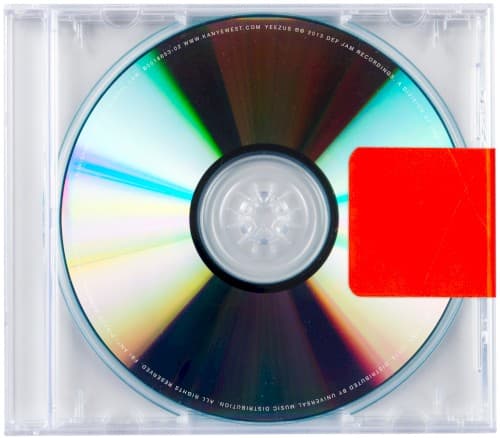
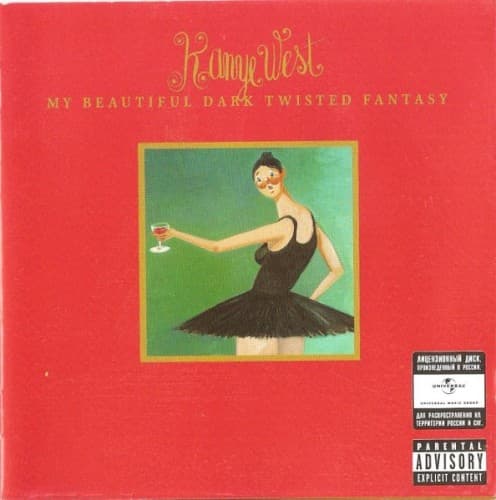
808s & Heartbreak sits in the middle of Kanye West's catalog, more influential than The College Dropout or Late Registration but less accomplished than either. It is a better album than Yeezus in execution but smaller in ambition, and it is nowhere near the achievement of My Beautiful Dark Twisted Fantasy, which West made two years later as if to prove he could still do everything this album did not attempt. The production is a genuine landmark, a ruthlessly minimal approach to pop construction that anticipated the sound of the next decade. The songwriting is the weakest of his first four albums, repetitive and thin where earlier West records were dense and quotable.
The vocal performance is a concept more than a performance: the Auto-Tune detachment works as an effect, but the melodies underneath are rarely strong enough to justify the processing. The album works as a mood piece and fails as a song collection. It is essential listening for anyone interested in how hip-hop production evolved in the 2010s, but it is not an album that rewards repeated listens the way West's best work does.
The case for the album is its influence. By 2010 the sparse 808 programming and Auto-Tune melancholy were everywhere: Drake's Thank Me Later, Kid Cudi's Man on the Moon, and a generation of SoundCloud rappers all borrowed the formula. The album pioneered emo rap and experimental R&B, and its impact on pop and hip-hop is larger than any of West's previous records. The case against it is that influence and quality are different measurements.
The starkness that made it shocking in 2008 has aged into a genre convention, and what remains is a thin breakup album with a few great production moments and a lot of repetition. The melodies are more conceptual than memorable, the lyrics are vague where West's best writing is specific, and the vocal performance offers detachment by design but little else. It is an important album that is not quite a good album.
This is an album for fans of production innovation and for anyone studying the genealogy of modern rap. Skip it if you are looking for West's best songwriting or his most ambitious work: for that, start with My Beautiful Dark Twisted Fantasy or The College Dropout. For the canonical West run, play those two first, then Late Registration, then come to 808s & Heartbreak as the transitional record that cleared the path for everything that followed. After this, listen to Kid Cudi's A Kid Named Cudi and Drake's So Far Gone to hear where the sound went next, and then return to My Beautiful Dark Twisted Fantasy to hear West prove he could still make a complete album.
808s & Heartbreak is the blueprint every SoundCloud rapper borrowed, but it is not the album West needed to make to stay West."},
Track Listing
Say You Will
●Six minutes of droning synths, barely-there 808s and Auto-Tune repetition that sets the emotional temperature at freezing and holds it without variation. The length is punishing and intentional: West opens the album with a song that refuses to resolve or develop, and the effect is hypnotic detachment. The production is stark and effective, but the song has no melodic payoff and no lyrical specificity beyond the repeated plea of the title. It works as an opening statement, a declaration that this will not sound like anything West has made before, but it is not a track anyone returns to on its own.
Welcome to Heartbreak
▲The first track with a concrete image: West sitting alone on a flight with a laughing family behind him, lamenting the cost of fame and the emptiness of his life. Kid Cudi provides background vocals and co-wrote the song, and his influence is audible in the melancholy tone. The production is minimal, built from step-sequenced drums and somber synths, and the scene West describes is specific enough to give the breakup concept some weight. It is one of the album's stronger moments because it offers a situation rather than a slogan, though the melody itself is thin.
Heartless
▲The album's most successful single, certified septuple platinum, and the track that introduced the wider public to the Auto-Tune experiment. No I.D. co-produced, and according to him West stopped a session for Jay-Z's The Blueprint 3 to claim the beat for himself. The hook is simple and repetitive, riding the same melodic idea for three and a half minutes, and the lyric about "the coldest story ever told" is dramatic without being specific. The song works as a single because the production is clean and the Auto-Tune effect is used with discipline, but it is not deep. Kid Cudi co-wrote the chorus.
Amazing
●Young Jeezy contributes a rap verse, the only traditional verse on the album, and the contrast with West's Auto-Tune crooning makes both approaches sound weaker. The production is built from heavy drums and droning synths, and the song aims for anthemic but lands closer to generic. Jeff Bhasker co-produced, and Mr Hudson and Tony Williams provide background vocals. The track was nominated for Best Rap Performance by a Duo or Group at the 52nd Grammy Awards, but it is one of the album's least distinctive moments, a concession to the expectation of a rap single that neither West nor Jeezy fully commits to.
Love Lockdown
▲The album's defining track, the one that debuted at number three on the Billboard Hot 100 and became the highest debut of West's career. The production is tribal drums and a one-note vocal chant, step-sequenced and minimal, and the effect is immediate and alien. West premiered the song at the 2008 MTV Video Music Awards with twenty taiko drummers, and the performance was divisive: fans were taken aback by the uncharacteristic sound, and the backlash intensified when West revealed the entire album would be sung rather than rapped. The song still sounds like nothing else on pop radio in 2008, and the starkness is its strength. The melodic thinness is also its limitation: the hook is a slogan, not a melody, and the song has no development beyond the initial idea. Jeff Bhasker co-produced.
Paranoid
●The album's only uptempo track, a concession to the need for variety that feels more like a requirement than an earned shift in mood. Mr Hudson is featured, and Kid Cudi provides background vocals. The production is built from a bouncing synth-bass and stiff drums, and the lyric describes a lover who worries about the wrong things and pushes West away with distrustful thinking. The song is competent but slight, and it breaks the album's spell without replacing it with anything stronger. A remixed version with Rihanna was reported but never materialized. Jeff Bhasker and Plain Pat co-produced.
RoboCop
●West calls the ex-lover "a spoiled little L.A. girl" and compares her to the antagonist in the 1990 film Misery, a reference that does no work beyond name-checking a movie. The song leaked early in an unfinished version and West was upset, saying it was expected to receive additional treatment by Herbie Hancock before release. The final version is polished but thin, with Tony Williams and Jeff Bhasker on background vocals. The production embodies portions of "Kissing in the Rain" by Patrick Doyle, and the song has somber piano and droning synths, but the writing is vague and the melody is forgettable.
Street Lights
●Somber and pretty, built from minimal synths and Auto-Tune vocals, with background vocals by Esthero and Tony Williams. Mr Hudson co-produced. The song is one of the album's most melodic moments, and the production is restrained and effective, but the lyric says nothing new about heartbreak or isolation. It is a competent mood piece that fits the album's arc without deepening it.
Bad News
▼Another vague lament about a failed relationship, built from minimal drums and a sample of Nina Simone's "See Line Woman." The production is stark and the vocal performance is flat, and by this point in the album the repetition is exhausting. The song has no specific images or lines that distinguish it from the six tracks before it, and it feels like padding.
See You in My Nightmares
▼Lil Wayne is featured, and the pairing is awkward: his rap verse sits uneasily next to West's Auto-Tune crooning, and neither artist seems interested in making the collaboration work. No I.D. co-produced. The song debuted at number 21 on the Billboard Hot 100 despite not being released as a single, riding the momentum of the album's release. The production is competent but the song is redundant, another breakup lament with no new information.
Coldest Winter
▲The album's most affecting song, the one where West shifts focus from the breakup to grief over his mother's death. The production interpolates Tears for Fears' "Memories Fade," a desolate 1983 synth-pop track, and the result is the album's coldest and most beautiful moment. No I.D. and Jeff Bhasker co-produced. The song is brief, two minutes and forty-four seconds, and it says more in that time than the previous six tracks combined. It is the only moment where the subject deepens and the writing matches the ambition of the production concept.
Pinocchio Story (freestyle live from Singapore)
▲A freestyle recorded live in Singapore, included as a hidden track at Beyoncé's request. The performance is raw and unprocessed, with no Auto-Tune and no polished production, and it is the only track about what is really bringing West down: not the breakup but the death of his mother and the alienation of fame. West's voice is unsteady and the performance is fragile, but the honesty is bracing after eleven tracks of icy detachment. It is the album's best piece of writing, a meditation on the cost of stardom that breaks the spell of the programmed production and reminds you that a human made this record. The song does not fit the album's sonic palette, but it earns its place by saying something the rest of the album avoided.