The scorecard
6.5/10 · Good
- Writing25%
- 6.5
- Production25%
- 6.5
- Delivery15%
- 7.0
- Cohesion15%
- 6.0
- Originality10%
- 6.5
- Replay value10%
- 6.5
Bedroom bragging and money-and-enemies boasts fill the trap songs with standard material, and only the lighter moments add a personal turn.
Big Energy flips a Tom Tom Club sample into pop-rap and Sunshine pairs trap drums with gospel vocals, though the straight trap cuts are generic.
Latto sounds equally secure on hard bars, sung R&B hooks and bright pop, and she shares songs with Lil Wayne, 21 Savage and Lil Durk without being overshadowed.
A brisk thirty-three minutes keeps things moving, but jumping between pop, R&B and trap makes the sequence feel assembled from singles.
Her pivot into pop-rap and gospel-tinged trap is a deliberate widening, even if the individual ideas lean on familiar samples and formulas.
As a projection, the pop-leaning hits will keep circulating while the straight trap songs fall away.
Latto 777: A Hard Rapper Bets on Pop and Mostly Wins
The most interesting thing on 777 is how little of it sounds like a rapper afraid to leave her lane. Latto spends a third of the album on the hard-edged trap she built her name on and the rest on pop hooks, sung R&B and a gospel-tinged detour, and she handles the switches with surprising ease. The record plays like a pitch for a bigger audience, and for the most part the pitch works.
The thesis is that 777 is a better pop-rap record than a rap album, and that is a compliment as much as a criticism. Her strongest material comes when she leaves the standard braggadocio behind and lets a hook do the work, while the straight trap songs, competent as they are, feel like obligations. The album's ambition is real, and so is its unevenness. It shows an artist willing to take risks, even if the risks are not all equally rewarded.
The stakes are about what a second album is supposed to do. Her debut proved she had a voice; this one had to prove she had range, and the answer is a qualified yes. A rap record that wants radio and still keeps one foot in Atlanta is a hard thing to balance, and Latto mostly pulls it off. Critics noted the same split, praising the daring and the diversity while observing that she has not yet locked down a single winning sound.
It also lands squarely in the streaming era, where an album is partly a delivery system for singles and a display of the artist's breadth. Almost every song here could be pulled out and played alone, and some of them were. That is both the album's strength and its limit: it is easy to enjoy, easy to shuffle and hard to hear as a single piece. The rest of this review looks at where the risks pay off and where they do not.
Pop Hooks, Gospel Choirs and a Trap Floor
The sound of 777 is split between a trap foundation and a set of experiments around it. The straight trap songs rely on hard-hitting drums and a clipped, forceful delivery, the style that made Latto's reputation, and they are solid but predictable. The experiments are what give the record its character: a gospel vocal laid over trap drums, an R&B song built for a sung hook, and two pop-leaning songs designed for radio. Producers including Sonny Digital, Dr. Luke, FnZ, jetsonmade, D.A. Got That Dope and Pharrell Williams share the work, and the range of names shows in the range of sounds.
Delivery is the album's anchor. Latto is a confident, rhythmically precise rapper who can cut a line short or stretch it as the beat needs, and she carries the same assurance into singing. She does not sound like a rapper borrowing a pop voice; she sounds like someone who has decided the voice is hers. The guest verses are handled with the same ease, and she never lets a bigger name set the terms of a song.
The writing is where the record is thinnest. On the trap songs the topics are the standard range: bedroom bragging, making money and demolishing enemies, with few surprising images or turns of phrase. The more interesting writing comes when she slows down and shows some vulnerability, and a couple of the lighter songs reward the attention. But those moments are scattered, and most of the album trades on attitude instead of detail. A listener who wants something to quote will find little.
The sample work gives the record some of its best ideas. A flip of a Tom Tom Club classic turns a pop-rap single into a singalong, an interpolation of a Vanessa Carlton hit and a sample of a Twista song add familiar texture, and the reissue brings in a Mariah Carey sample. These choices are crowd-pleasing, and they are also smart, because they give the songs a hook that is already in the listener's head. The danger is that the album leans on recognition more than invention, and the ideas feel borrowed.
The overall effect is a polished, major-label record that knows what it wants. It is entertaining and professionally built, with real moments of charm. It is also a record with a clear commercial purpose, and that purpose shapes every decision, which is why some of it feels more like product than expression.
Short Songs, Sharp Turns, One Long Pivot
The pacing of 777 is the pacing of a singles collection. Most songs run under three minutes, the opening is a brief two-part intro that sets the mood, and the record moves from one idea to the next without lingering. At about thirty-three minutes before the reissue, nothing overstays, and that discipline is one of its better features.
The sequence is built around contrast. A hard trap song is followed by a pop hook, which is followed by something sung, and the shifts keep the album from becoming monotonous. The peak arrives in the middle, where Sunshine brings gospel vocals and two guests into the mix and gives the record its biggest change of scale. It is the one moment when the experiments feel like a plan instead of a sampler.
The weakness of that approach is that the sequence has no real arc. The transitions are abrupt, the moods change from track to track, and the record never builds toward anything. A listener shuffling the songs would not lose much, and some of the trap tracks in the second half are interchangeable. The late-album lift is Soufside, a short regional song that returns to the sound she came from, and it works because it is brief and direct.
The length is earned in the sense that the record respects the listener's time, but not in the sense that every song earns its place. A shorter, sharper version would lose a few trap cuts and keep the pop and R&B experiments. In playlist terms the album functions as a menu, and that is a limit as much as a strength.
A Confident Second Album That Still Hasn't Picked a Lane
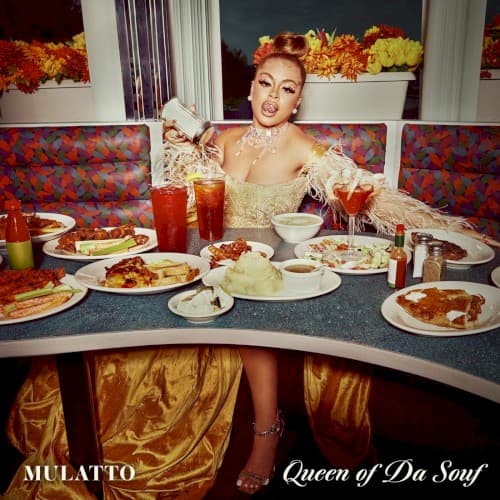
No other Latto albums are rated on this site yet, but the context is clear: this is a better and more ambitious album than Queen of da Souf, with stronger production and a wider range, even if it still lacks a single signature sound. It is the record where the pop instincts become visible, and it earns a good rating on the strength of the singles and the confidence of the delivery. The scores reflect a record that improves on its predecessor without fully solving its problems.
It is for listeners who want a woman rapper with real pop instincts, for fans of Atlanta trap who are open to genre-hopping, and for anyone who enjoyed the lead single and wants to hear what else she can do. It is less for listeners who care most about lyricism, since the writing is the weakest part, and less for anyone who wants a record with a strong arc. Critics were mostly positive about the ambition and mixed on the execution, and both views are fair.
On aging, the pop-leaning songs have the best chance of lasting because they are built around hooks that are already familiar. The straight trap songs will probably fade, since they depend on a sound that many other rappers share. The album's real test will be whether her next record can find the single voice that this one is still looking for.
Start with Big Energy for the pop-rap formula at its most polished, then Sunshine for the gospel detour and the guest list, and Soufside for the regional edge. If you want to hear where she started, go back to Queen of da Souf, which has a more traditional sound and a weaker set of beats, and if you want a contrast, try a rapper who has made the same pop pivot with a stronger lyrical identity.
The most useful thing about 777 is that it shows Latto can make a hit and a detour in the same record, and it leaves the harder question of what her signature sound is for the next one.
Track by track
Track Listing
777 Pt. 1
SolidA brief opening that sets the album's mood in under a minute and a half. It works as an introduction and nothing more.
777 Pt. 2
SolidThe second half of the opening move, running a little over two minutes. It gives Latto room to establish her confidence and sets up the first big single. Solid, though more of a launch pad than a standalone song.
Wheelie
StandoutThe third single, featuring 21 Savage, is the record's most direct trap song and a vehicle for the bedroom bragging that critics described as standard for the genre. Latto's delivery is sharp and rhythmic, and the guest adds a colder, flatter counterpoint to her energy. The beat is hard-hitting and functional, and the hook is easy to remember. It is a competent, replayable single that delivers what it promises, though it does not push past the formula that the album elsewhere tries to leave behind. A reliable, loud highlight rather than a surprising one.
Big Energy
StandoutThe lead single and the album's biggest idea. It flips a Tom Tom Club classic into a pop-rap singalong, and the sample gives the song an instant familiarity that carries it through the repeated listens a hit requires. Latto's delivery is bright and playful rather than aggressive, and the result is the clearest sign of where she wanted the album to go. The hook is immediate, the groove is easy, and the song balances radio appeal with a clear personality. It is a calculated move that works because the execution is sharp, and it is the song most responsible for the album's reach. The only reservation is that its success invites imitation inside the record itself.
Sunshine
StandoutThe most ambitious song on the album, with Lil Wayne and Childish Gambino as guests and gospel vocals laid over trap drums. The mix of choir and hard beat gives the track a sense of scale that the rest of the record lacks, and Latto adapts to the shift without losing her footing. The guests bring different textures, which keeps the song from becoming a standard feature track. It is the clearest case that her experiments can produce something distinct, and the closest the album comes to a centerpiece. It was released as the final single, which makes sense given how much it stands apart from its neighbors.
Like a Thug
StandoutAn R&B-leaning track with Lil Durk as a guest, built around a more sensual mood and a sung hook. It is a welcome change of pace and a good use of her singing voice, and the pairing with a rougher guest voice adds some contrast. It is pleasant, if not memorable.
It’s Givin
WeakA mid-album cut that settles into the record's standard trap setup. Competent and confident, but it does not stand out from the songs around it. Filler by the standard of the singles.
Stepper
SolidNardo Wick joins on a short, attitude-driven track that is built for energy more than melody. It works as a quick change of voice, and the guest adds a little grit. A decent but forgettable stretch of the middle.
Trust No Bitch
SolidA standard trap song about getting money and demolishing enemies, in the words of one critic. Latto delivers it with conviction, but the material is the most familiar on the album and the track adds little to what the earlier songs have already done. It is loud and functional without being distinctive.
Bussdown
StandoutKodak Black guests on a track that interpolates a Vanessa Carlton pop hit, an odd pairing that gives the song a distinctive hook. The familiar melody adds a playful contrast to the harder delivery, and the idea is clever. It is a good example of the album's willingness to take a chance on an unlikely reference, even if the result is more of a curiosity than a classic.
Soufside
StandoutThe second single, a short and direct song that returns to the regional sound that made her name. At under two minutes it gets in and out quickly, and the lack of a guest keeps the focus on her. It is a tight, confident track and a relief after the more crowded middle.
Sleep Sleep
StandoutBuilt on a sample of a Twista song, the track brings a faster, more rhythmic delivery that suits her cadence. The sample adds extra speed to her Southern sound, and she handles it well. A solid late-album track that does not overstay.
Real One
SolidA pop-leaning closer to the standard edition that leans into melody and a more open mood. It is a clear attempt at a crossover moment, and it works well enough, though it is slight compared with the lead single. An easy, pleasant finish.
Big Energy (remix)
StandoutThe reissue adds Mariah Carey and DJ Khaled and brings in a sample from one of Carey's best-known songs on top of the original's Tom Tom Club flip. The additions raise the stakes and the glamour, and the track works as a victory lap. It adds little that the original did not already have, but the star power makes it a fun bonus.
Frequently Asked Questions
Is Latto's 777 a good album?
What are the best songs on 777?
Who is featured on Latto's 777?
Styles