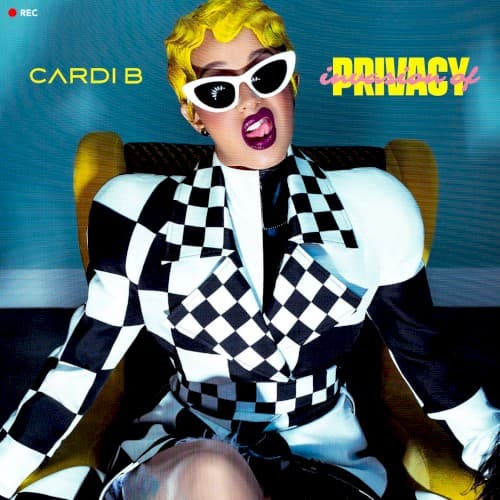
The scorecard
7.9/10 · Great
- Writing25%
- 7.5
- Production25%
- 8.0
- Delivery15%
- 8.5
- Cohesion15%
- 8.0
- Originality10%
- 7.5
- Replay value10%
- 8.0
Be Careful and Thru Your Phone turn private hurt into clear, specific storytelling, while Money Bag and She Bad settle for generic flex talk.
The many producers work in service of her voice, with I Like It, Be Careful and Bodak Yellow each getting a distinct, memorable beat.
Her nasal, off-kilter cadence and comic timing carry Bodak Yellow and Bickenhead, and the soft hook on Be Careful shows range.
Thirteen compact tracks with no skits keep the pace brisk, though Money Bag and She Bad slow the middle.
A bilingual, confessional, party-first rap debut that does not sound like its peers, even if the individual genres it borrows are familiar.
Nearly every song works as a standalone hit, which suggests strong staying power across repeat listens and the years since release.
Cardi B Invasion of Privacy: The Funniest Confession in Rap
Invasion of Privacy is built on one argument: a rapper who speaks for working women, immigrant kids and strip-club veterans does not have to pick between being the funniest person in the room and being the most exposed one. Cardi B makes both claims at once, often inside the same verse, and the album works because she never lets either one go slack. The party records carry confessions, and the confessions are delivered with the timing of a stand-up comic. That is the thesis, and the record defends it for most of its length.
The stakes are bigger than a debut's usual ones. When this album arrived, Cardi was already known for a chart-topping single, and the obvious fear was a record padded around it. Instead she uses the singles as proof of a persona and then spends the rest of the sequence complicating that persona. The opener, Get Up 10, frames her rise as something earned against doubt, and the bragging that follows is credible because the record keeps returning to what the success cost and who it was for. She raps for women who count their own money, for lovers who have been lied to, and for listeners who want a Bronx accent and a Spanish hook on the same radio station.
Identity here is a technique, not a slogan. Her voice is nasal, quick and slightly off the beat in a way that makes punchlines land like asides, and her bilingual switches are used for rhythm as much as heritage. The album also breaks a familiar trope: the woman rapper as a single sexual provocateur. Cardi is crude, tender, jealous, generous and proud, sometimes in under three minutes.
The case against it is just as concrete, and the later sections name it. Several guests take over their own songs, and a few mid-album tracks are sturdy rather than memorable. But as a statement of who a pop-scale rap record can speak for, few debuts of its decade make the argument this clearly or this entertainingly.
A Voice Doing the Heavy Lifting
The writing is where the identity argument gets practical. Cardi's best lines are specific and domestic: bills, cars, jewelry, ex-boyfriends, the awkward arithmetic of a former dancer who now decides what the club pays. She builds punchlines from plain speech and then lets the next bar undercut her own boast. That habit gives the album its humor, and it also makes the vulnerable songs believable, because the same narrator who jokes about money admits fear on Be Careful and Thru Your Phone. The feminist thread is mostly implied rather than lectured, which suits her. Bickenhead treats women who hustle as the default, not the exception, and nobody on the record pauses to explain why that matters.
Delivery is the second pillar. Her rasp and her accent are the signature, and she knows how to ride a beat so that the ad-libs sound like part of the arrangement. She sings the hook on Be Careful in a soft register that suggests exhaustion more than technique, and the choice pays off. On the Latin-leaning material she moves between English and Spanish without translating herself for anyone, which is itself a position about who the audience is.
Production is varied by design, and the credits are long: the fact sheet lists Boi-1da, Frank Dukes, Vinylz, J. White Did It, Tainy, Needlz, Murda Beatz, DJ Mustard, Benny Blanco and Andrew Watt among others. The consistent thing is that nearly every beat leaves room for her voice. Trap drums, a Latin boogaloo sample, Mustard bounce and smooth R&B keys all get used, and the transitions rarely feel forced because her personality is the through line. The sound is polished and radio-ready, but it avoids the flatness of a record assembled by committee.
The weaknesses are real. A big producer list and a big guest list mean that the album sometimes sounds like a series of strong pitches. Money Bag and She Bad are competent club tracks without the sharp turns that make the singles stick, and a few verses by guests are more memorable than hers. The ballad end of the album can also feel safe, with melodies that trust her charisma to do work the writing does not. Her rhyme craft is effective rather than intricate: the bars are punchy, but they rarely build multi-line schemes or sustained narratives, so the record leans on voice and personality more than on technique.
None of this breaks the album, because what it sets out to do is sound like a person, and the sound is distinctive. The producers serve that aim, and the writing, for all its plainness, is quotable in conversation. A debut that mixes confessional records, trap and a Latin crossover without losing its center is rarer than it should be, and the mix works because the narrator stays consistent from track to track.
Thirteen Tracks, Few Wasted Minutes
Sequence is one of the quieter strengths. Thirteen tracks, most under four minutes, means the album never outstays its welcome, and the order is smarter than a singles collection usually gets. The first stretch is declarative: the opening track sets the terms, a Migos feature gives the second song a trap gloss, and the next two keep the tempo and the confidence high. Then the first ballad-leaning single turns the temperature down at the right moment, and the record spends the middle of its running order alternating between the club and the bedroom.
The pacing choice that matters most is where the vulnerability goes. Instead of saving the soft songs for a final act, the album seeds them through the middle, so the party tracks are heard in the shadow of the confessional ones. That makes the middle stretch the most interesting part of the sequence and also its softest. Two generic club cuts arrive close together, and the momentum slackens before a phone-snooping revenge song resets the mood. A tighter shuffle there, or one fewer club cut, would make the sag disappear.
The closing section recovers. The last two songs reframe the record as a victory lap, with a guest turn that fits the mood and a final track that sounds like someone looking back over a long climb. Ending on triumph instead of a single, heavy ballad is a defensible choice, since the album's whole case is that the hustle was worth it.
The length is earned. At roughly forty-eight minutes, there is no point where the album asks for patience it has not paid for, and the skits and filler that pad many major-label debuts of the streaming era are absent. The sequence is not flawless, since the best material is bunched in the first half and a few cuts are interchangeable, but the album rarely loses the thread. Anyone listening front to back gets a coherent portrait with enough contrast to avoid fatigue, and anyone shuffling gets a good singles run with a few guaranteed surprises. The one place the order truly stumbles is the pair of club tracks, which could swap places with almost any other mid-tempo cut and change nothing.
A Debut That Still Sounds Like Someone
Invasion of Privacy sits at the top of Cardi B's catalog as it currently stands on this site, which is a thin comparison because no other album of hers is rated yet. Against the rest of rap in its moment, it is a strong, accessible debut that rewards repeat plays more than the singles alone would suggest. The fact sheet notes critical acclaim, a Best Rap Album Grammy and enormous commercial reach, and those facts match what is audible: the record is built to be heard everywhere and holds up when it is heard closely.
It is for listeners who want rap with pop reach but real personality, for people who prefer a narrator over a technician, and for anyone curious about how a woman rapper can be funny, sexual and wounded without being forced into a single lane. It is also a good first record for friends who do not usually listen to rap. Skip it if you are mainly after dense rhyme schemes, conceptual structure or sustained storytelling, because those are not what this album prioritizes. Listeners who value tight lyricism over charisma will find several verses plainer than the hype suggests.
It has aged well because the songs are tied to a voice, not a trend. The trap and Latin textures sound less like a moment than they might have, and the confessional material has only gotten more relevant as rap has grown more open about feeling. The weaker mid-album tracks sound the same as they did on release: fine, forgettable, forgiven by the better songs around them.
Start with Bodak Yellow for the swagger, Be Careful for the surprising softness, and I Like It for the pop-and-Latin crossover that shows how far her appeal reaches. From there, Lauryn Hill's The Miseducation of Lauryn Hill is the natural companion if the emotional honesty hooked you, and a Cardi B project like Am I the Drama? is the follow-up if you want to hear where the persona went next. What lasts from this debut is not any one verse but the way the album sounds like a person who has decided to be fully seen, and then turned that exposure into a very good time.
Track by track
Track Listing
Get Up 10
StandoutThis is the mission statement, and it plays like an autobiography with the receipts attached. Cardi walks through her rise as something earned against doubters, and the tone is tired and combative rather than celebratory. The writing is more plainspoken than clever, but the conviction carries it, and it sets up the album's central trick: braggadocio that carries a cost. As a first track it is confident and slightly long on grievance, yet it earns its place by telling listeners exactly who they are dealing with.
Drip
SolidThe Migos feature gives this its trap sheen, with a bouncy beat and a hook that does what the group does best. Cardi holds her own and sounds comfortable in the pocket. It is a good party record, though the jewelry-and-status subject matter is standard for the genre, and her guests are more distinctive than the song is. Solid, enjoyable, not essential.
Bickenhead
StandoutShort, loud and funny, with a title that nods to a classic Southern hustler anthem and then flips the perspective to women who work for theirs. The beat is bare and aggressive, which leaves room for her delivery to do the arguing. It works as a quick, rowdy statement of the feminist subtext that runs under the record, and it is one of the better uses of her personality as a weapon.
Bodak Yellow
StandoutThe one that changed her career, and still the clearest demonstration of her delivery. The beat is sparse and menacing, the cadence is slow and flat on purpose, and she turns doubters into punchlines while keeping the tempo low. What makes it special is not the boast but the rhythm of the boast: she lets silence do half the work. The song also reads as a former dancer taking back the narrative about her past. It remains the sharpest example of an artist turning a limited technical toolkit into a signature.
Be Careful
StandoutThe album's best argument that she is more than a hit-maker. The beat is laid back and glassy, her sung hook is soft and weary, and the verses address infidelity with a mix of threat and hurt. It is believable because she lets herself sound tired instead of furious. A sampled reference to a famous R&B breakup song is handled with restraint, and the melody does not oversell itself. This is the track that gives the rest of the record emotional weight and shows how much range she has.
Best Life
SolidChance the Rapper's guest spot brings gospel lift, and the song is a gratitude record with a bright, sunny beat. Cardi sounds happy, which is a welcome change, but the hook and the message are a little generic compared with the specificity elsewhere. Chance sounds more at home than she does, and the guest takes more of the spotlight than the song needs. A pleasant breather rather than a high point.
I Like It
StandoutThe album's biggest crossover, and a master class in how to use collaborators. Bad Bunny and J Balvin bring the Latin trap energy, the boogaloo sample gives the beat instant joy, and Cardi plays the host without letting the guests swallow her. The bilingual flow matters because it is not a gimmick; it asserts who the song is for. Her verse is quick, exuberant and full of timing. It is a pop-rap peak, built for stadiums and still full of personality, and it deserves its place near the middle of the record as the party hits its loudest point.
Ring
SolidA slow, R&B-leaning duet with Kehlani that shows Cardi's jealous, insecure side. The chorus is melodic and the beat is spare, which makes her vulnerability easy to hear. The writing is simple and sometimes repetitive, but the plainness suits the subject: a woman who cannot stop checking. It is not the most inventive song here, yet it adds variety and justifies the album's emotional range.
Money Bag
WeakA functional club track with a hard beat and a familiar subject. Her cadence is lively, but the writing does not offer the surprise of the singles, and the song blends into the stretch around it. It is the kind of record that works well in a playlist and disappears in a front-to-back listen. Mostly filler, though energetic filler.
Bartier Cardi
StandoutA trunk-rattling flex built around luxury and attitude, with a 21 Savage verse that sets a calm, deadpan counterweight to her volume. The beat is menacing and minimal, and her delivery has the slightly unhinged confidence that makes her stand out. The subject matter is standard, but the chemistry between the two voices lifts it. Strong single, even if it is more about attitude than ideas.
She Bad
SolidYG brings a West Coast bounce through a Mustard beat, and Cardi adapts well, yet the song feels like a guest-driven cut that she visits more than leads. The hook is catchy and the production is crisp, but the lyrics are generic and the record never builds a hook as sticky as the singles. A decent club track that adds little to the album's argument.
Thru Your Phone
StandoutThe most intimate song on the record, a revenge story told through a lover's messages. The melody is smooth and the beat is spare, and Cardi lets anger and hurt share the same breath. The writing is direct, specific and emotionally clear, which makes it one of the best examples of her more personal side. A sequencing win, too: it arrives right when the club material starts to sag and resets the tone.
I Do
StandoutSZA's guest hook is smooth and the beat has a victorious bounce, which makes this a fitting closer. Cardi sounds relaxed, almost amused by her own success, and the final stretch plays like a victory speech. It is not the album's deepest song, but it ends the story on the right note: a person who has earned the party and knows it.