Scorecard: 7.5/10 · Great
How we score- Writing(25%)
- 6.5
Familiar luxury flexes delivered with sharper wit than usual, like the Honda Accord diss on Baby Pluto, though themes rarely venture beyond brands and heartbreak.
- Production(25%)
- 8.5
Working on Dying and Brandon Finessin craft glitchy sci-fi beats with pinball samples and video game textures that sound like nothing else in 2020 trap.
- Delivery(15%)
- 8.0
Uzi switches effortlessly between rapid syllable-stacking on Silly Watch, melodic crooning on Venetia, and piercing ad-libs, showcasing improved technical control across all three personas.
- Cohesion(15%)
- 7.0
The three-act structure with Baby Pluto, Renji, and Uzi personas creates intentional shifts in energy, though the 60-minute runtime lets some adjacent tracks blur together.
- Originality(10%)
- 7.5
The space opera production aesthetic and three-persona concept push melodic trap into more ambitious conceptual territory than peers were attempting in early 2020.
- Replay value(10%)
- 7.5
The futuristic production and hook-heavy writing hold up across multiple listens, though back-to-back plays reveal how much territory Uzi covers with variations on the same subject matter.
Lil Uzi Vert Eternal Atake — The Album That Earned a 900-Day Wait
After two and a half years of label standoffs, deleted Instagram posts, and promises that the album was finished, Eternal Atake arrived in March 2020 carrying expectations that would have crushed most records. Uzi had teased it since mid-2018, then threatened to quit music entirely in early 2019, leaving fans to parse cryptic tweets about alien abductions and Heaven's Gate logos while the SoundCloud era that made them famous receded further into the past. The question was whether an artist who built their reputation on loose, ephemeral loosies could deliver a cohesive hour-long statement.
The answer: Uzi came back with their most ambitious and sonically adventurous project, one that justified the hype by doubling down on what they do best while wrapping it in a futuristic concept that actually serves the music.
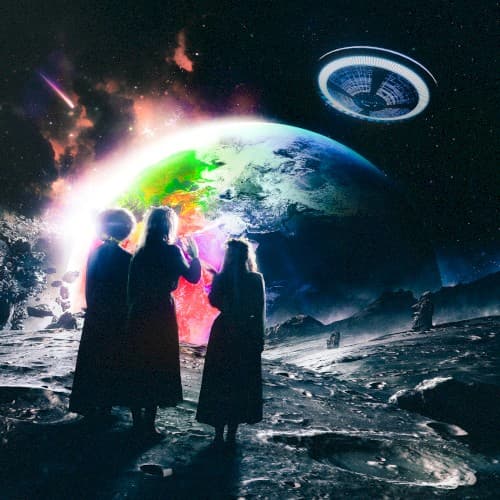
This is not Uzi chasing trends or playing it safe after a long absence. It is Uzi leaning into glitchy, video-game-textured production that was ahead of the melodic trap curve in 2020, organizing 18 tracks into three distinct movements tied to alter egos, and rapping and singing with more technical precision than they had shown before. The sci-fi theme is not just window dressing: the beats sound like a spaceship taking off, and the sequencing moves through clearly defined phases of aggression, vulnerability, and reflection. The result is a record that works both as a high-energy playlist and as a deliberate album experience, a combination Uzi had never fully pulled off.
The Sound of a Spaceship Taking Off in a Pinball Machine
The production, led by the Philly collective Working on Dying alongside Brandon Finessin, Bugz Ronin, and Oogie Mane, is what separates Eternal Atake from standard 2020 melodic trap. These are not minor Metro Boomin variations or recycled Pierre Bourne formulas. The beats are wired with glitchy synths, laser sound effects, and samples from Full Tilt Pinball and old video games, creating a futuristic atmosphere that feels genuinely alien rather than generically spacey.
The production is dense and busy without feeling cluttered, a hard balance to strike across an hour.
Lyrically, Uzi stays in their comfort zone: designer brands, expensive cars, fleeting relationships, and the spoils of fame. The writing is not breaking new thematic ground, but it is delivered with more wit and specificity than before. The emotional range is narrower than on Luv Is Rage 2, and most of the tracklist is either high-energy flexing or melodic reflection on the same subjects. While Uzi executes both modes well, the writing does not reveal much depth beyond what is already audible in the hooks.
The performances, though, are what carry the hour.
Uzi moves between rapid-fire syllable runs, high-pitched melodic crooning, and ad-libs that punctuate rather than distract. The three-persona structure gives Uzi license to shift gears without it feeling random: Baby Pluto is aggressive and boastful, Renji is introspective, and the Uzi section is more reflective and varied. The sequencing makes these shifts feel intentional rather than like whiplash.
The biggest weakness is that the album does not take enough risks with the formula. At 60 minutes, a few tracks could have been cut without losing the arc. The album never drags badly enough to become a chore, but it does not leave you wishing it were longer either.
An Album Built to Move, Not to Stand Still
Eternal Atake works because it is paced like a journey rather than a pile of singles. The opening stretch hits fast and hard, with the sequencing tight and each track moving into the next before the last one has time to settle.
The middle section downshifts into more melodic and introspective territory. These are the album's most subdued moments, placed deliberately to create breathing room after the frenetic opening. The hooks return without losing the reflective tone, and the transition back into uptempo energy bridges into the final third.
The closing run is the most varied, mixing emotional weight with fan-service and bonus tracks. The two bonus tracks feel like exactly what they are: singles appended to the album rather than part of the original vision. The decision to end the album with them weakens the closing statement, but it does not ruin the sequencing that came before.
The album sags slightly in the middle section, where certain tracks do not quite match the energy of what surrounds them, but the sag is brief. For the most part, Eternal Atake keeps moving, and that forward momentum is what makes the 60-minute runtime work.
The Album That Proved Uzi Could Go Long Without Losing the Plot
Eternal Atake is Uzi's most complete project, the one where the ambition matches the execution and the concept enhances rather than distracts from the music. It is not flawless: the subject matter is narrow, a few tracks could have been trimmed, and some moments feel like retreads. But the production is bold and futuristic production in a way that separated it from every other melodic trap album in early 2020, the three-act structure works, and Uzi raps and sings with more control and versatility than they had shown before.
This is the album that answered whether Uzi could deliver a cohesive hour-long statement after building a career on loosies and shorter projects. The answer is yes, with caveats. Fans who loved Luv Is Rage 2 for its emotional rawness will find this more polished and less vulnerable. Fans who wanted futuristic production and high-energy rapping over a sustained runtime will find exactly that.
This is Uzi at their most confident and technically sharp, even if it is not their most emotionally revealing work. If you need bars with weight or storytelling with stakes, skip this; Uzi is not trying to do either. If you are coming off this and want to hear where Uzi came from, go back to Lil Uzi Vert vs. the World to hear the raw energy before the ambition scaled up. Eternal Atake is the sound of an artist who took the time to figure out how to make a futuristic trap album that could sustain an hour and came back with the receipts.
Track Listing
Baby Pluto
▲The opening shot fires immediately: Uzi comes in with the Honda Accord insult and does not let up for three and a half minutes, establishing the Baby Pluto persona as the most aggressive and boastful of the three. Brandon Finessin and Bugz Ronin build a beat that feels like a launchpad, all low-end rumble and sharp hi-hats, giving Uzi room to set the tone for the entire album. The writing is pure flex, but the specificity of the disses and the energy in the delivery make it land harder than generic braggadocio. This is the strongest possible way to open the album, a track that makes a claim and dares you to keep listening.
Lo Mein
▲The same production duo keeps the momentum going with a beat that is somehow both smooth and frantic, letting Uzi ride the pocket while delivering rapid syllables about designer brands and women. The hook is immediate and sticky, the kind that gets stuck in your head after one listen. The track does not try to do too much: it is a flex song executed at a high level, with enough melodic variation to keep it from feeling like a retread of Baby Pluto. The sequencing here is smart, keeping the energy high without repeating the exact same approach two tracks in a row.
Silly Watch
▲Supah Mario's production gives Uzi space to show off the technical improvements in their rapping: the syllable-stacking here is tighter and faster than almost anything on Luv Is Rage 2, with pop culture references to Blue Eyes White Dragon and Microsoft Zune that feel like genuine Uzi quirks rather than forced attempts at personality. The beat is cleaner and less glitchy than the opening two tracks, which creates variety in the Baby Pluto section without breaking the flow. This is one of the best pure rapping performances on the album, proof that Uzi can keep up with faster tempos without losing clarity.
POP
▲Brandon Finessin and Oogie Mane construct a beat that feels like it is bouncing off the walls, all sharp snares and booming bass, giving Uzi room to deliver one of the album's most energetic performances. The hook is simple and effective, and the verses stay locked into the pocket without trying to overcomplicate things. This is a straightforward banger, the kind of track that works in a playlist or in the context of the album, and it keeps the Baby Pluto section moving forward without introducing any lulls.
You Better Move
▲The pinball machine samples from Full Tilt are the star here, giving the beat a video game texture that is both playful and futuristic. Brandon Finessin and Nick Seeley layer laser sound effects under the drums, creating a soundscape that is busier than most trap production but never cluttered. Uzi matches the energy with a performance that is half rapping, half melodic chanting, riding the beat's strange rhythm without fighting it. This is one of the album's most distinctive productions, the kind of track that only Uzi could make work because of how fully they commit to the absurdity of the concept.
Homecoming
▲Bugz Ronin closes out the Baby Pluto section with distorted percussion and synthesized horns that sound like a malfunctioning space opera soundtrack. Uzi's delivery here is slightly more melodic than the previous five tracks, signaling the transition into the Renji section without losing the energy entirely. The beat is dense and layered, with enough going on that it rewards repeat listens, but it is not as immediately catchy as Lo Mein or POP. This is a solid closer to the first third of the album, setting up the shift in tone without feeling like a jarring gear change.
I’m Sorry
▲The Renji section opens with the album's most introspective moment, a track where Uzi reflects on failed relationships and the isolation that comes with fame. Brandon Finessin and Starboy's production is subdued, with a melancholic melody that gives Uzi space to sing rather than rap. The writing is more vulnerable than the Baby Pluto section, though it does not dig as deep as the best moments on Luv Is Rage 2. This is the kind of track that provides necessary contrast after six high-energy songs in a row, and it works because Uzi does not oversell the emotion. The sentiment is genuine even if the specifics are familiar.
Celebration Station
▲Brandon Finessin and Outtatown sample Ariana Grande's Raindrops and build a beat that is lighter and more playful than I'm Sorry, giving Uzi room to deliver one of the album's most quotable hooks. The line about pants from France is absurd on paper but works because Uzi sells it with complete sincerity. The track does not try to be profound, and that is its strength: it is a fun, melodic interlude that keeps the Renji section from becoming too heavy. The production is crisp and the hook is infectious, making this one of the album's more replayable deep cuts.
Bigger Than Life
●Oogie Mane and Dez Wright Beats construct a beat that balances smoothness with frenetic energy, giving Uzi room to deliver a hook that is both catchy and slightly manic. The verses are solid without being exceptional, flexing on luxury and success with the same specificity that defines the rest of the album. This is a good song that does not quite reach the heights of the Baby Pluto section or the emotional weight of I'm Sorry, landing somewhere in the middle as a track that works in context but does not demand to be pulled out for playlists.
Bust Me
●Bugz Ronin brings the energy back up with a beat that is more uptempo than the previous few tracks, signaling the transition out of the Renji section's introspection. Uzi delivers a melodic performance that is solid without being exceptional, flexing on success and relationships with the same themes that dominate the rest of the album. This is a functional track that works as a bridge between the Renji and Uzi sections, but it does not stand out on its own. It does its job without demanding much attention.
Prices
▼Harper's production interpolates Travis Scott's Way Back and Hickory Dickory Dock, creating a beat that is more subdued and reflective than the surrounding tracks. Uzi's delivery is slower and more melodic, giving the track a late-night vibe that works in small doses. The problem is that Prices covers the same thematic ground as several other tracks on the album without adding much new, and at nearly four minutes it feels longer than it needs to. This is one of the album's weaker moments, a track that could have been cut without losing anything essential.
Urgency
▲Syd's feature is the album's only guest appearance, and her smooth, soulful delivery provides a perfect contrast to Uzi's chaotic energy. Wheezy and Bobby Raps' production is understated, giving both artists room to breathe and letting the vocal interplay drive the track. Uzi's verses are more reflective and less boastful than usual, touching on regret and failed relationships without overplaying the emotion. This is one of the album's best songs, a moment where the collaboration enhances rather than distracts, and the sequencing is smart, placing it at the start of the final section where the shift in tone feels earned.
Venetia
▲Brandon Finessin and Outtatown craft one of the album's smoothest beats, a melodic backdrop that lets Uzi deliver one of their best hooks. The writing is simple but effective, flexing on success and relationships with a confidence that feels effortless rather than forced. The vocal performance is polished, with Uzi switching between singing and rapping without losing the pocket. This is one of the album's standout tracks, the kind of song that works in any context and holds up across multiple listens. It is the culmination of everything Uzi learned about hook writing since 2016, executed at the highest level.
Secure the Bag
●Bugz Ronin's production is solid but familiar, a beat that feels like a slightly lesser version of ideas executed better elsewhere on the album. Uzi's performance is energetic and the hook is catchy, but the track does not add much that the previous 14 songs have not already covered. At nearly four minutes, it feels like it could have been trimmed or cut entirely without weakening the album's arc. This is filler by Eternal Atake's standards, a track that works fine in context but does not demand attention.
P2
●TM88's production directly recalls XO Tour Llif3, and Uzi's performance is a clear attempt to recapture that song's magic. The problem is that P2 does not add much new: it is the same melodic approach, the same emotional themes, and a similar structure without the element of surprise that made the original work. This is fan service that will satisfy listeners who wanted more of that sound, but it is also the album's most obvious retread. It is not bad, but it does not justify its existence beyond giving fans what they expected.
Futsal Shuffle 2020
●The first bonus track was released months before the album as the lead single, and it shows. Brandon Finessin, Starboy, Mayyzo, and Loesoe build a beat that is lighter and more playful than most of the album, with audio samples from Nardwuar and Tyler, the Creator giving it a quirky energy. The track works as a single, but it does not fit the album's arc, feeling like it was appended for commercial reasons rather than artistic ones. It is a solid song on its own, but its placement at the end of the album weakens the closing statement.
That Way
●The Backstreet Boys interpolation is fun and executed well, with Supah Mario, Felipe Spain, and Yung Lan transforming a pop classic into a trap banger. Uzi's delivery is playful and confident, and the hook is immediate. The problem is that this track, like Futsal Shuffle 2020, feels like it belongs on a different project. It is a good single that does not serve the album's narrative or sonic arc, and its placement as the final track undermines the cohesion that the previous 16 songs built. It is enjoyable but unnecessary.