Scorecard: 7.2/10 · Good
How we score- Writing(25%)
- 6.5
Repetitive phrasing and narrow subject range, but the Brooklyn drill imagery is vivid and the hooks land.
- Production(25%)
- 8.5
808Melo's UK drill template hits harder than almost anything in American rap at the time, sparse and menacing.
- Delivery(15%)
- 7.5
The growl is immediately distinctive and the ad-libs punch through the beats, but the single mode stretched across sixteen tracks tests the patience.
- Cohesion(15%)
- 5.5
Sixteen tracks blur together with little dynamic range; the Dior remix and freestyles feel tacked on.
- Originality(10%)
- 7.5
Transplanting UK drill to New York creates a regional sound that did not exist in American rap before this run.
- Replay value(10%)
- 7.0
The best tracks stay in rotation, but the album's length and redundancy make full listens a chore after the first few spins.
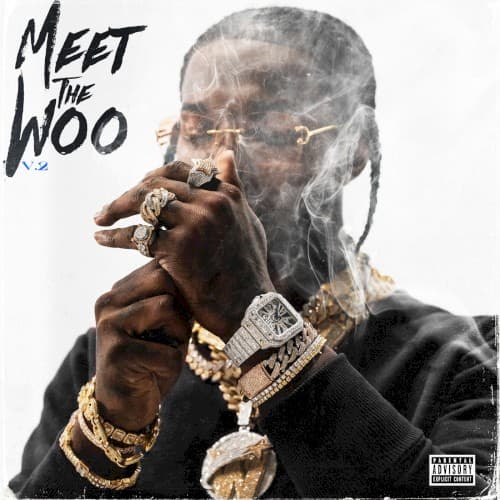
Pop Smoke Meet the Woo, V.2 — The Sound That Ate New York in Three Months
Meet the Woo, V.2 is the moment Brooklyn drill stopped being a YouTube phenomenon and became the city's dominant sound. Released in February 2020, it doubled down on everything the first installment started: 808Melo's skeletal UK grime beats, Pop Smoke's signature growl, and a refusal to dilute the formula for crossover potential. The thesis is simple and the album proves it across sixteen tracks: this minimalist, bass-heavy template works better than the sample-heavy boom bap revivalism or the melodic trap that dominated New York rap in the late 2010s. The aggression is the point, and the repetition is the aesthetic.
The stakes were regional. New York had spent a decade chasing sounds from Atlanta and Chicago, and the drill wave gave the city a lane that felt native again even though the production came from London. Pop Smoke's voice made it New York: the ad-libs punched harder than the rapping, the imagery stayed in Canarsie and Flatbush, and the hooks were built for car systems, not playlists. The album's main weakness is also its gamble: it rarely shifts gears, and by the back half the beats and flows start to sound interchangeable. But in early 2020, before the rollout could finish, the sound had already won.
Minimalism as Maximalism: How Less Became More
The production commits entirely to 808Melo's UK drill framework: sliding 808s that move in half-step intervals, hi-hats that stutter and snap, and melodies stripped to two or three notes. Tracks like Invincible and Christopher Walking let the bass do most of the work, with barely any midrange and no attempt to fill the space. The sparseness makes the growl more prominent and the ad-libs louder. When the beat drops out for four bars and comes back with just the 808, the impact is physical. This is not boom bap worship and not minimalist trap maximalism; it is closer to grime's functional brutalism, adapted for New York's slower tempos and heavier low end.
The writing stays narrow by design. Pop Smoke's subject matter is motion, threats, and women, delivered in short declarative phrases with minimal storytelling. The imagery is tactile—cars, blocks, opps—but the verses do not develop ideas past a few bars before looping back to the hook. Shake the Room and Get Back work because the hook is the whole song, and the verses are just variations on the same energy. Tracks like Sweetheart and She Got a Thing attempt melody without switching the delivery, and the results feel like the same flow stretched over a gentler beat. The lyrics do not have the density of New York's technical tradition, but the bluntness is deliberate: this is music built for impact, not close reading.
The delivery is what separates the album from the UK originators. Pop Smoke's voice sits lower than most American rappers, and he uses it like a percussive element: the growl lands on the downbeat, the ad-libs hit between bars, and the hooks get shouted rather than sung. Foreigner and Mannequin show the range within that constraint—he can ride a faster flow without losing the pocket, and the ad-libs carry as much weight as the verses. Guest features are minimal and the few that appear do not shift the energy; this is a one-voice album by design. The main flaw in the delivery is also the main flaw in the writing: he has one mode, and sixteen tracks of it test the patience.
The Playlist Problem: When Every Song Is the Peak
The sequencing does almost nothing to build dynamics. The album opens with three of the hardest tracks, stays in the same tempo range for the next ten, and then adds a freestyle and a remix that feel like bonus cuts rather than part of the arc. There is no intro that sets up the thesis and no outro that resolves it; the tracklist could be shuffled without losing much. The Dior remix placement at track fifteen makes the original at track twelve feel redundant, and Armed n Dangerous breaks the flow without adding enough to justify the change in style.
The length is the problem. At sixteen tracks, the album asks for forty-five minutes of the same energy, and the beats are too similar to sustain it. Tracks like Element and Wolves are solid but not essential, and they start to feel like filler by the second half. The best sequence is the opening run through Christopher Walking, where the momentum has not yet turned into monotony. A ten-track version with the weaker cuts removed would have made the case more efficiently. As it stands, the album works better as a folder of singles than as a front-to-back listen, which is probably how most listeners encountered it anyway.
The Blueprint That Outlived Its Architect
Meet the Woo, V.2 is the stronger of the two installments in the series and the clearest statement of what Brooklyn drill sounded like before it became a formula. It ranks as the definitive document of Pop Smoke's approach: no crossover pandering, no sample nostalgia, just the sound that worked. Fans of aggressive, bass-heavy rap will find more to revisit here than on most 2020 releases, but casual listeners should start with a six-track playlist built around Shake the Room, Christopher Walking, Invincible, Dior, Foreigner, and Mannequin. The rest fills out the picture without adding new dimensions.
The album has aged into a template. Every element here—the 808 slides, the growl, the ad-lib as hook—became the standard for New York drill in the two years that followed, which makes the original feel less distinctive now than it did on release. That is not the album's fault, but it does mean the replay value has settled into archival importance rather than current rotation. Listeners curious about where the sound came from should hear this before the dozen imitators.
Listeners who want the best Pop Smoke material should play this alongside Shoot for the Stars Aim for the Moon and decide whether they prefer the purity or the range. Start with the first five tracks. If the formula works, the rest is more of it. If it does not, nothing past Christopher Walking will change the verdict.
Track Listing
Invincible
▲The album opens with the thesis fully formed. The 808 slides in before anything else, the hi-hats snap on the offbeat, and Pop Smoke's growl lands exactly where the bass drops out. The hook is three words repeated until they become a chant, and the verses are just connective tissue between ad-libs. This is the template at its most effective: no wasted space, no attempt to be anything other than heavy. The energy peak happens in the first ninety seconds, which is both the point and the problem—nothing that follows will hit harder than this.
Shake the Room
▲The Quavo feature does not shift the energy; it just trades bars over the same sliding 808 pattern. The hook is designed for arenas that Pop Smoke never got to play, and the minimal melody in the background gives the ad-libs room to punch through. The structure is pure repetition—the verses do not develop, they just restate the hook from different angles—but the momentum never sags. This became one of the defining tracks of the Brooklyn drill wave, and the reason is in the execution: the formula works when the delivery is this locked in.
Get Back
●The beat strips out even more midrange than the previous two tracks, leaving just the 808 and the hi-hats to carry the rhythm. Pop Smoke's flow stays in the same pocket he has used since Invincible, and by the third track in a row the redundancy starts to show. The hook is functional but not memorable, and the verses blur into the same threats and boasts that define the rest of the album. Solid in isolation, but sequenced this early it exposes the lack of dynamic range.
Christopher Walking
▲The best track on the album. The 808 pattern finally shifts to a different rhythm, the melody has an actual arc instead of a two-note loop, and the hook has enough space to breathe. Pop Smoke sounds more comfortable here than anywhere else in the first half, riding the beat instead of fighting it. The ad-libs are placed with more precision, and the verses have a clearer structure even though the subject matter is the same. This is the track that proves the formula can have range without abandoning the core sound. Every element is still minimal, but the execution is sharper.
Foreigner
▲The tempo slows slightly and the 808 sits lower in the mix, which gives the track a heavier feel without changing the structure. The hook is another chant, the verses are short, and the ad-libs carry the energy. The main difference from the previous four tracks is the vocal placement—Pop Smoke lets the beat breathe for a few bars before coming back in, and the contrast makes the hook land harder. Still within the same template, but the small adjustments keep it from feeling like pure repetition.
Sweetheart
●The first attempt at a softer sound, and it does not quite work. The beat is gentler, with a melody that tries to create space for a sung hook, but Pop Smoke does not adjust his delivery to match. The growl sounds awkward over the lighter production, and the verses feel disconnected from the beat. The track is not bad, but it exposes the limits of the one-mode approach: when the production shifts, the voice does not follow, and the result is neither hard enough to bang nor melodic enough to work as a change of pace.
Element
●Back to the core sound, but without a strong enough hook to justify the return. The 808 pattern is familiar, the hi-hats snap in the same places, and the verses deliver the same imagery. The energy is there, but the execution feels like a lesser version of Invincible or Shake the Room. Functional filler that would work fine in a playlist but adds nothing new to the album.
Armed n Dangerous (Charlie Sloth Freestyle)
●A freestyle over a different type of beat, faster and busier than the 808Melo productions that define the rest of the album. Pop Smoke's flow adjusts to the tempo, and the verse has more internal rhymes than most of the other tracks. The shift in style is interesting for about ninety seconds, but the track feels tacked on rather than sequenced deliberately. It breaks the album's flow without adding enough to justify the interruption.
Mannequin
▲One of the hardest tracks in the back half. The 808 slides are more aggressive, the hi-hats have a sharper snap, and Pop Smoke's delivery locks into the rhythm with more precision than the previous few songs. The hook is minimal but effective, and the ad-libs are placed to maximize impact. This is the template executed well: nothing fancy, just the core elements working in sync. The track proves that the formula still has gas left, even this deep into the album.
Dreaming
●Another attempt at melody, and like Sweetheart it does not quite land. The beat has a lighter touch, with a synth line that tries to create atmosphere, but Pop Smoke's delivery stays in the same growl. The hook aims for catchy but ends up repetitive, and the verses do not develop past the first few bars. The track is not a failure, but it is not memorable either—just another entry in the middle section where the album starts to sag.
She Got a Thing
▼The second softer track in a row, and the sequencing makes the lack of momentum worse. The beat is slower, the melody is more prominent, and the hook tries for sing-along appeal. Pop Smoke's voice does not suit the production, and the result feels like a miscalculation: not hard enough to fit the album's core identity, not melodic enough to work as a genuine departure. Skippable.
Dior
▲The breakout single and the track that defined Pop Smoke's commercial peak before his death. The beat is pure 808Melo minimalism: sliding bass, sharp hi-hats, and almost no melody. The hook is a perfect distillation of the ad-lib-as-song approach, and the verses are just setup for the next repetition of the chant. The track works because it does not try to be more than it is—no crossover softening, no feature to dilute the energy, just the formula at its most refined. This became the blueprint for Brooklyn drill's commercial breakthrough, and the original still hits harder than most of the imitators.
War
●Solid but unremarkable. The beat follows the same 808 slide pattern, the hook is functional, and the verses deliver the expected imagery. By this point in the tracklist the redundancy is hard to ignore: the execution is competent, but the track does not have a strong enough identity to stand out. It would work fine as a deep cut, but sequenced this late it just feels like more of the same.
Wolves
▼Another mid-tempo track with the same sliding 808s and minimal melody. The hook tries for menace but does not land with enough force, and the verses blur into the background. The energy is there, but the execution is weaker than the first half of the album. Filler.
Dior (remix)
▼A remix with an added feature that does not improve the original. The new verse is competent but unnecessary, and placing it after the original at track twelve makes both versions feel redundant. The remix belongs on a deluxe edition or a playlist, not in the main album sequence. Its inclusion here is a sequencing mistake that weakens the tracklist.
Like Me
●The album ends with another mid-tempo track that follows the same template: sliding 808s, minimal melody, short verses, repetitive hook. The execution is fine, but there is no sense of conclusion or escalation. The track just stops, and the album is over. A stronger closer would have brought the energy back up or provided some kind of thematic resolution, but Like Me does neither. It is just another song in a tracklist that has already made its case and overstayed it.