The scorecard
5.7/10 · Mixed
- Writing25%
- 5.5
- Production25%
- 6.5
- Delivery15%
- 6.5
- Cohesion15%
- 4.5
- Originality10%
- 5.0
- Replay value10%
- 5.5
The diary-style flexes and relationship asides have a believable flatness, but the same few subjects repeat across twenty-four songs without a single story that develops.
The gauzy, slow-moving beats suit the murmur and keep the album in one consistent mood, though few of them have a hook or a turn that makes them memorable.
Lucki's drowsy, half-sung drawl is unmistakable and easy to like, but he rarely changes pace or pitch, so the voice blurs together over the full running time.
Twenty-four tracks, two of them tacked on as bonus singles, is far too much for songs that rarely pass the two-and-a-half-minute mark and share one tempo.
The sleepy cloud-rap voice is his own, but the formula is a close cousin of melodic trap and gains nothing new across a long debut.
A handful of songs will return to playlists, while the long middle is built for background listening; this is a projection for a recent release.
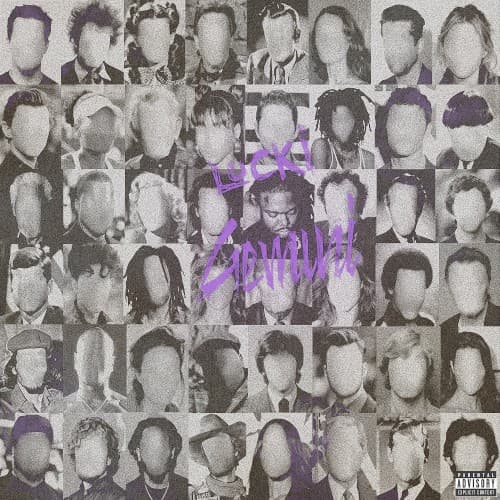
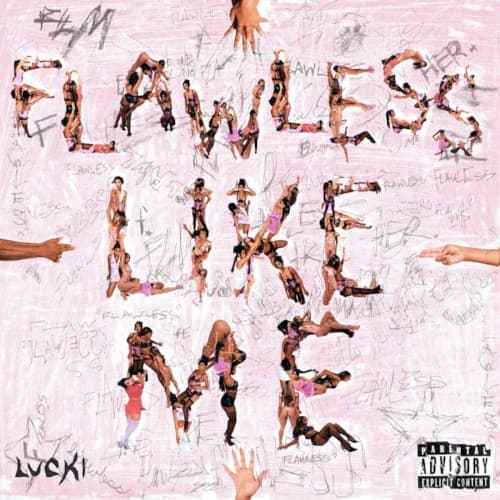
Lucki Flawless Like Me: A Voice Like Smoke Stretched Across Twenty-Four Tracks
Lucki's voice is an instrument that sounds as though it has just woken up. He sings and raps in the same hazy drawl, ends lines on a falling note, and lets the beat do the waking. On a single track, or an EP of six, that approach is hypnotic. Flawless Like Me asks it to carry twenty-four songs, and the strain shows from the first quarter onward. The record is a mood, and a good one, but a mood is not an album.
That is the thesis, and the numbers support it. The tracklist is enormous, with most songs ending before the two-and-a-half-minute mark, which means the album is made of twenty-odd short sketches that share a tempo, a vocal tone and a set of subjects. Two of the songs are listed as bonus tracks, and both were released as singles ahead of the album, so the project begins and ends with material that was already in circulation. The reception was lukewarm, with one outlet giving it two and a half stars out of five and another calling it uninspired. Those verdicts are a little harsh, because the record has real charm, but they are pointing at something real.
The West Coast lens makes the gap easy to describe. That tradition, from G-funk to the modern LA and Bay Area scenes, built its best albums on pocket and personality: a producer who sets a groove, a voice that rides it, and a hook that sticks. Lucki has the voice and the vibe. What he lacks, on this record at least, is the structural discipline that makes a long tape feel inevitable, and the sense that each track exists to do something the last one did not.
It reached number 12 on the Billboard 200, so there was an audience for the sound. The question is how much of the album they will keep.
Sleepy Cadences, Stock Subjects and Beats Without a Hook
The writing lives in the register of a text message sent late at night. Lines about money, jewelry, designer clothing, women and being tired of the same cycle come in short bursts, and what makes them work is not wit but tone: the flatness reads as honest. When the album lands a line that sounds genuinely lived-in, the effect is stronger than a punchline would be. The problem is that the same material returns on almost every track. There is no narrative that develops, no change of perspective, and no verse that reveals something the previous verse had not, so the album reads as one long entry rather than a book.
Delivery is the asset. Lucki's voice sits low and soft, somewhere between a rap and a hum, and the ad-libs sit underneath it like a second layer of fog. Compare the way a West Coast rapper such as Snoop Dogg uses a lazy drawl: it is a pose, but the lines are tightly written and the pocket is exact, so the laziness is a form of control. Lucki's version is closer to actual drift, and that is both its charm and its limit. On the best songs, the drift feels intentional. On the weaker ones, the vocals blur into the beat and the words stop mattering.
The production matches the voice: slow, gauzy, spacious and cool. Synths shimmer instead of hit, and drums arrive softly enough that the vocal is always the loudest element in the mix. This is the album's strongest decision, since it keeps the sound consistent and gives the listener a clear world to live in, but it carries a quiet problem. A West Coast record of the G-funk era used a melody as a hook, a bass line you could hum or a synth lead that identified the song within four bars. Here, few beats offer that. They are atmospheres rather than songs, and atmospheres are hard to tell apart on the fifteenth listen of the day.
The two guests, Future and Babyface Ray, offer a little contrast and are the only moments where another voice interrupts the haze. They are used sparingly, which is smart, but the album could have benefited from more of it. The concrete weakness is a lack of friction. Nothing in the writing, the beats or the performance pushes against anything else. The record is smooth, and the smoothness is the point, but over an album-length stretch it becomes the problem as well.
Twenty-Four Songs, One Tempo, and the Case for an Editor
As a sequence, the album works like a long drive at night: pleasant, steady and with very little to separate one mile from the next. The first third establishes the mood well. The opening songs introduce the drawl, the production and the subjects efficiently, and the earliest singles give the stretch some structure. After that, the energy settles into a plateau, and the plateau lasts for most of the running time.
Pacing is the central problem. There is almost no change of tempo, no sketch that gets longer than the rest, and no skit or break that lets the ear reset. The shortness of the songs works against the length of the album: each track is gone before it makes a case, so there is no sense of rising or falling action. The second half contains several stretches where three or four songs in a row could be shuffled without anyone noticing.
The closing section is the one place where the structure changes. The final song combines two titles and runs more than four minutes, which makes it the longest track on the album by a wide margin, and the added room is a relief. After that, two bonus tracks appear, both older singles, which is a reminder that the album could have ended earlier and been better for it. Cutting the record to fourteen or fifteen songs, keeping the best of the early run and the stronger late material, would have produced a tighter, more convincing debut. The length is not earned. It is the clearest evidence that the project was assembled to deliver content rather than designed to deliver an arc.
A Likeable Mood in Search of a Smaller Record
No other Lucki albums are rated on the site yet, so the ranking cannot be set here. As a debut studio album it is a mixed one: the voice is established, the world is clear, and the editing is not. It sits in the middle of the scale because the strengths and weaknesses cancel each other out, with a distinctive vocal tone on one side and an exhausting amount of sameness on the other.
The record is for people who already like this kind of sound: drowsy, melodic, minimal rap that works as background or as late-night company. It is a good record to leave on while doing something else, and a few songs will return in playlists. It is not for listeners who want songwriting, storytelling or the sharp structure of a West Coast album, and it is not for anyone looking for a first introduction to Lucki. The album has not aged yet, but it already feels like one that will be remembered through a handful of tracks rather than as a whole.
Start with Super Urus and Y Not?, the two songs that were released first and were later attached as bonus tracks, and add Kapitol Denim for the Future feature. Those three give a fair picture of what the artist does well. Then, if the sound appeals, move to Lucki's earlier Freewave tapes, which suit the format better, since shorter projects give a drawl like his room to be distinctive without being repetitive.
Flawless Like Me is a record whose best moments would have sounded better on a shorter one, and the clearest compliment it can be paid is that fourteen of its twenty-four songs would make a good album.
Track by track
Track Listing
MADE MY DAY
StandoutA soft, unhurried opener that introduces the drawl and the mood in just over two minutes. It is not a showpiece, but it sets expectations accurately.
GEEKED N BLESSED
SolidReleased as the last single, four days before the album. The vocal sits comfortably low in the mix and the hook is easy to hum, but the song does not add anything the opener had not said.
KAPITOL DENIM
StandoutThe first of two features, with Future on the credits. The guest brings a brighter, more melodic pitch than Lucki's drift, and the contrast helps. At 1:57 it moves quickly and is one of the more memorable early tracks.
COINCIDENCE
SolidA pre-release single from August. The mood is relaxed, the writing is plain and the pacing is steady, which makes it a decent representative of the album at its most average.
BEEN A MINUTE
SolidThe shortest song on the record at 1:40. It is a sketch more than a song and leaves before it has said anything.
WHITE HOUSE
StandoutBabyface Ray is the second guest, and his heavier, more clipped delivery gives the sequence a rare change of texture. It runs 1:47 and does not overstay, which is the right call. A small highlight of the middle stretch.
13
SolidA longer cut at 2:36, with room for the voice to wander. It is atmospheric and slightly more personal than its neighbors, though the writing does not escape the album's usual subjects.
ARCHIVE CELINE
SolidA brief designer-brand flex at 1:43. It is smooth, short and disposable.
HOW TF?!
SolidThe title promises disbelief, and the delivery stays as drowsy as ever. It is fine, but the gap between title and performance shows how rarely the album changes energy.
DNA
SolidA mid-album track with a hazy synth bed and a relaxed hook. It is pleasant filler: nothing is wrong, and nothing stays in the head afterward.
GOODFELLAS
SolidThe title suggests a crime story, but the song does not develop one, which is typical of the record: the references are decoration and not narrative. The mood is cool and it ends in 2:15.
I GET IT, TWIN
SolidA short, conversational cut at 1:55, with a loose, friendly tone. It is filler of the likeable kind.
VVS KEYSKI
WeakA jewelry-and-money flex at 2:32 with a hazy, steady beat. The theme is the most generic on the album and the performance does not lift it.
BRAZY WEEKEND
SolidA lighter, party-leaning cut at 1:59 that tries a slightly brighter mood. The change is small, but it is welcome in the second half.
DROUGHTSKI
WeakAnother 2:22 sketch built around a repeated phrase. Plainly filler, and a good example of the middle stretch where tracks are interchangeable.
LIFE MOCKS ART
StandoutThe title is among the more reflective on the album, and the song leans toward a more introspective tone at 2:16. It does not develop the idea very far, but the intent is clear and the mood is one of the better ones.
NOTICED YA
SolidA romantic, drifting cut at 2:32. The vocal melody is pleasant and the pacing is slow, but the track blends into the ones around it.
10 P.M IN LNDN
SolidThe title puts a place and a time stamp on the mood, which gives the track a small sense of setting that most of the album lacks. It is short at 2:04 and atmospheric.
OUT OF LVE
SolidA breakup-leaning song at 2:25 that gives the album one of its few openings for vulnerability. The vocal is warm and sad, and it works, but the writing stays on the surface.
ON POINT
SolidA short, clean track at 2:17. It is another case where the quality is fine and the memorability is low.
FREE SEX!
WeakA brisk 1:55 cut with a title that is louder than the song. It is pleasant and forgettable, and it is placed late enough to feel like filler.
MY WAY / CODEINE COWBOY
StandoutThe longest track on the record at 4:16 and a two-part suite. The change of beat is a relief after twenty songs in one groove, and the added room lets the voice sound more spacious and less rushed. It is the closest the album comes to a finale, and it shows what the project could have done with more structural variety.
Super Urus
StandoutA bonus track, and the earliest single, released in February. It remains one of the album's strongest arguments: the vocal is catchy, the beat is clean, and it ends before it wears out. Better placed here than not at all, but it feels like an addition and not part of the arc.
Y NOT?
StandoutThe second bonus track and the June single. It is easy and melodic, with a simple hook that works as well now as it did on its own. Ending the album on an older single underlines how much of the project was assembled rather than built.
Frequently Asked Questions
Is Lucki's Flawless Like Me a good album?
Who is featured on Flawless Like Me?
How did Flawless Like Me do on the charts?
What are the best songs on Flawless Like Me?
Styles