The scorecard
6.7/10 · Good
- Writing25%
- 6.0
- Production25%
- 7.0
- Delivery15%
- 7.0
- Cohesion15%
- 6.5
- Originality10%
- 7.0
- Replay value10%
- 7.0
Short, diary-flat verses about nights, money and loose relationships stay narrow in subject, but the plain tone reads as honest and the lines are economical.
A deep bench of producers, from ChaseTheMoney to Earl Sweatshirt on All In, still delivers one dim, drifting sound that gives the voice a consistent frame.
The murmured, half-sung drawl is distinctive and confident, and the short running times stop it from wearing out.
Fifteen songs and about half an hour move without a dead stretch, though the pace rarely shifts and the interlude is the only real change of texture.
The cloud-rap drawl over cold, spare trap beats feels like a clear signature rather than a copy, even if the building blocks are familiar.
Short songs and a consistent mood make it easy to restart, and the best tracks hold up as a late-night playlist.
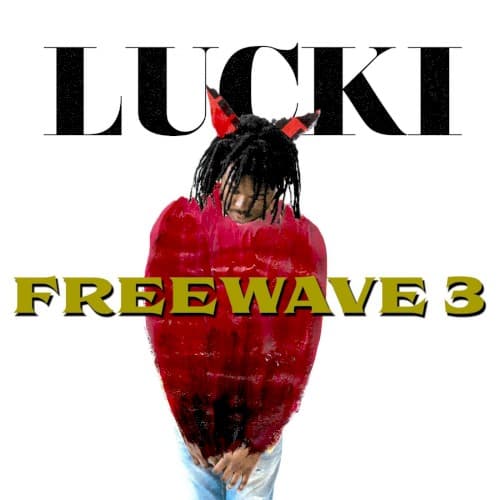
Lucki Freewave 3: Fifteen Short Songs That Know When to Leave
Freewave 3 understands something that many cloud-rap tapes do not: a voice this drowsy is best served in small amounts. Lucki sings and raps in a half-awake murmur, and the fifteen tracks here, the longest of which runs under three minutes, never give that murmur time to wear out. The record is dim, quiet and strangely confident, and its best quality is its sense of proportion. When a song has said what it has to say, it ends.
That is the thesis: Freewave 3 works because it is compact. It is the debut commercial mixtape in a run that was already five projects deep, and it reads like a confident artist who had found his sound and refused to dilute it. The producers change from track to track, yet the tone does not. Each beat is cold, spare and slightly blurred at the edges, and Lucki's voice sits in the middle of it with a calm that never rises into bravado. The result is a project that feels like a single night rather than a collection of singles.
Through the West Coast lens the record is easy to place, although it is not a West Coast record in the usual sense. The lineage of G-funk and gangsta rap valued pocket, storytelling and bass weight. Freewave 3 offers pocket and mood, a little bass and almost no storytelling. It is closer to the introspective strand of the modern LA scene, where the gloom is the content, and Earl Sweatshirt's credit on a beat is a reminder of that connection. What is earned here is atmosphere. What is borrowed is the melodic template of trap, and the album does not hide it.
It is also an independent release, and it sounds like one in the best way: unforced, quick and unconcerned with radio.
Cold Beats, Warm Mumble and Nothing Wasted
The writing is simple and mostly effective. Lucki keeps his sentences short, repeats key phrases, and writes about nights out, money, disloyal friends and distant partners in a flat, unhurried tone that makes the lines sound lived-in rather than composed. There are few punchlines and almost no storytelling, so the album does not reward close reading in the way a lyricist's record would. What it offers instead is consistency of voice. The same unbothered narrator appears on every track, and over fifteen short songs that is enough to feel like a character.
Delivery is the other half of the appeal. The vocal sits low in the mix, often melodic without quite becoming singing, and the ad-libs work as a second layer of haze. Compare a West Coast figure such as Snoop Dogg, whose lazy drawl is a controlled instrument with an exact pocket. Lucki's version is blurrier, closer to actual drift, and the shortness of the songs is what keeps the drift from becoming a problem. A review of the project from Pitchfork gave it a high score and described its production as a logical mutation of the sound of his earlier tape Alternative Trap, which fits what the record does: it refines a sound rather than reinventing it.
The production is the project's strongest card. ChaseTheMoney produced three tracks, including the two with the most room to breathe, and Art Gallery produced a pair of the more distinctive beats in the middle of the tape. Cash Cobain, Oxy, 100bandxan, Mulatto Beats, StoopidXool, Marcusbasquiat, Brent Rambo and Wiardon fill out the credits, and Earl Sweatshirt produced All In. That is a lot of names for a record under half an hour, yet the results feel like one palette: low synth pads, dry, sparse drums and bass that sits underneath the vocal rather than competing with it. A producer-heavy credit sheet usually creates a patchwork, and here it does not, which says as much about Lucki's ear for selecting beats as about the producers.
The weakness is range. Almost every track shares the same tempo, the same emotional temperature and the same few subjects, so the album's cohesion is also its ceiling. Nothing here is angry, nothing is joyful, and nothing is surprising enough to break the mood. If a listener does not connect with the drawl in the first three songs, nothing later in the record will change their mind, because the album never shifts its approach to win anyone over. That is a deliberate choice, and an honest one, but it narrows the audience.
Half an Hour, No Dead Stretch, One Long Exhale
The sequencing is the quiet success of Freewave 3. The tape opens with a short, low-key song that sets the tone without announcing itself, and the first run of tracks establishes the vocal, the beat palette and the subjects in a few minutes. There is no big opener, no single placed to catch attention, and no sense of an artist trying to start with a statement. The record begins the way a late-night conversation begins: quietly, and already in the middle of something.
The pacing is steady rather than dynamic. Songs arrive and leave within two or three minutes, and the shortest of them end almost before they have settled. This works because the album never asks for more than the listener can give. A skit-like piece in the middle breaks up the run and works as a pause rather than a joke, and it is the only moment where the structure changes in an obvious way. After it, the second half returns to the same temperature, with a few songs that feel slightly warmer and a few that feel slightly colder.
The length is earned. At around half an hour, the project does not outstay its welcome, and the sense of drift never turns into the sense of repetition that longer sets of this kind tend to produce. There are no weak stretches that demand to be skipped, only a handful of songs that are less memorable than the best. The close, a short outro, leaves the album in the same mood in which it started, and the final impression is of a record that did exactly what it intended. Its flaw is that it did only that.
The Short Version of the Lucki Sound
No other Lucki albums are rated on the site yet, so there is no ranking to set, but there is a clear case to make. Freewave 3 is the cleanest introduction to the artist's sound: it is short, focused and consistent, and it shows the voice, the mood and the producer taste without excess. The independent release and the generally positive reception both match what the music delivers. It is a good record rather than a great one, because the narrow range limits how high the scores can climb.
The tape is for listeners who like hazy, melodic, minimal rap and want it in a compact form. It works well for late-night playlists, for background listening and for anyone curious about the cloud-rap strand that grew out of trap. It is not for listeners who want lyrical density, narrative or variety. If the drowsy drawl does not appeal in the first few minutes, the album will not change its approach.
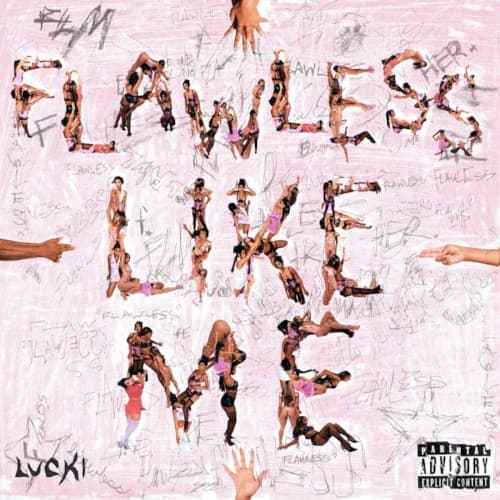
Start with More Than Ever, which has the room to show the voice at its most relaxed, then move to Peach Dream and All In, the second of which carries the Earl Sweatshirt production credit. Those three give a fair view of the project's range, which is narrow but well chosen. If the sound appeals, the next step is Lucki's later debut studio album Flawless Like Me, which is longer and shows what the same approach looks like when stretched.
The most accurate way to describe Freewave 3 is as the rare cloud-rap tape that ends before the mood runs out, and that restraint is the thing to remember.
Track by track
Track Listing
Politics
StandoutThe opener, produced by Oxy, runs just over two minutes and sets the whole project in miniature: a dim beat, a murmured vocal and no attempt to impress. It works because it does not try. The vocal enters without a hook to announce it, and the lack of an obvious chorus tells the listener at once that this record prefers texture to payoff.
Out My Way
SolidThe shortest of the full songs at 1:20, produced by 100bandxan. It is a sketch more than a song and leaves quickly, which suits the tape's rhythm. Its brevity makes it feel like a fragment of a longer thought, and the abruptness is part of the charm.
More Than Ever
StandoutChaseTheMoney supplies one of the roomiest beats on the tape, and at 2:41 it is the longest song on the record. That extra space lets Lucki's voice settle into a slow, slightly melancholy melody rather than a quick burst of bars. The writing remains simple, built from short phrases and repeated lines, but the delivery is the most relaxed on the project and the mood is the clearest. If a listener wants a single track that explains the whole appeal of the tape, this is the one to play first.
Of Course You Won’t
SolidAnother ChaseTheMoney beat, nearly as long as the previous song. It is steady and cool, with a vocal that sits comfortably low, though it stays close enough to its neighbor that the pair almost run together. The writing leans on a repeated phrase, and the repetition is more hypnotic than lazy because the beat stays so quiet beneath it.
Believe the Hype
StandoutArt Gallery's production gives this one a slightly more defined shape, and the title promises a mild flex that the delivery keeps understated. It is solid, short and assured, a good example of the tape's ability to sound confident without raising its voice.
Geek Monster
StandoutA second Art Gallery beat, brisk at under two minutes. The vocal is clipped and the hook is simple. It is a better-than-average mid-tape cut because it keeps the pace up.
Interlude
SolidChaseTheMoney again, at 1:07. A short break that lets the ear rest between halves. It is not memorable, but it does what an interlude should. The beat is gentle enough that it barely interrupts the flow, which is the right use of a break on a tape this short.
Peach Dream
StandoutCash Cobain is credited with the beat, and the song has a slightly more dreamlike, melodic feel than much of the tape. At 2:07 it gives Lucki a chance to sing more than rap, and the shift in color is welcome. One of the project's stronger tracks, and a clear indicator of the voice's melodic ceiling.
Glory Boy
SolidMulatto Beats produced it. The track is brief and clean, with a confident, mildly boastful tone, and it is carried by the delivery more than the writing. The boast is gentle and almost sleepy, which fits the record better than a harder version would.
Let’s See
SolidStoopidXool's beat is spare and steady, and the vocal matches it. It is a fine mid-tape track that does not stand out but never drags. It is the kind of track a playlist can run past without notice, and the tape has enough of them to show its limits.
2012 Summer
StandoutMarcusbasquiat produced this 1:38 piece, one of the shortest on the tape. The title suggests nostalgia and the mood backs it up, with a wistful tone that gives the record one of its few backward glances.
2 Easy – Give Up
StandoutBrent Rambo is credited with the beat on this two-part track. The structure gives the vocal a slight change of mood halfway through, which is rare on the tape. Short and effective.
All In
StandoutEarl Sweatshirt is credited with the production, and the track is the clearest link between Lucki and the murkier, interior strand of the modern LA scene. At 1:46 it is compact, with a beat that feels slightly more skeletal and disorienting than its neighbors, and Lucki fits into it without strain. It is brief and does not outstay its idea, which is the best compliment for a track in this style.
4 – U – City Girl
StandoutA second two-part track from Brent Rambo, this one a little more romantic in tone. It gives the late stretch a small change of mood, and the melody is among the most memorable in the closing run.
3D Outro
SolidWiardon produced the closer, which runs 2:20 and brings the tape back to the dim, quiet mood in which it began. It is a fitting, low-key ending and not a statement. There is no summing up and no final statement, only a fade back into the same fog, and for this record that is the correct ending.