The scorecard
6.4/10 · Mixed
- Writing25%
- 6.0
- Production25%
- 6.5
- Delivery15%
- 7.0
- Cohesion15%
- 6.5
- Originality10%
- 5.5
- Replay value10%
- 6.5
The pivot from pain to optimism is sincere and clearly structured, but hope is written in broader, safer language than the specific wounds of his earlier work.
NF's own production with Tommee Profitt, Saint X, Jeff Sojka and David Garcia is glossy, dense and uniformly clean, with cinema-sized strings and drums that carry the vocal.
His rapid, breathy, emotionally pitched flow stays intense without strain, and Cordae and Julia Michaels slot in with clear contrast.
Thirteen tracks averaging a little over three and a half minutes keep the arc tidy, though the middle stretch repeats the same build-and-release shape.
The confessional, orchestral, pop-friendly rap format is his established formula, and the album refines it rather than expanding it.
Consistent mood and strong hooks suit repeat listening and playlists, though the sameness of the build will limit the deeper cuts; this is a projection for a recent release.
NF Hope: The Sadness Specialist Learns to Write About Light
The standard complaint about NF is that he writes only about pain. Hope is the record that tests whether the complaint was ever the problem. After four years away from studio albums, he returns with a project whose title is a promise and whose premise is a change of weather: the same intense, breathless delivery, now pointed toward the possibility of feeling better. The question is whether optimism can be written with the same specificity as misery.
The answer is partly. Hope is a very well-made album and a slightly less convincing one. The craft is beyond dispute: the production is huge but never messy, the flow is quick without being rushed, and the thirteen-track length is better judged than most of what the streaming era produces. Where it falls short is in the writing of the hope itself. His earlier records dwelt on particular wounds. Here the light arrives mostly as a general principle, in lines and hooks that sound true and could belong to any inspirational record.
That is the contrarian point: the shift in tone is not a gimmick and not a betrayal, as some of his critics suggested. It is a perfectly honest development for an artist whose public identity was built around struggle. The problem is that the album asks the listener to feel the relief without showing the thing the relief is from. A reviewer at Clash called it perhaps his most personal document, and a reviewer at The Diamondback found it a little disorganized, and both are right in different ways.
Commercially the argument was settled quickly. It debuted at number two on the Billboard 200 with 123,000 units, blocked from the top only by a country juggernaut, and most of those units were pure album sales.
Huge Strings, Honest Hooks and a Hope That Stays General
The writing is the album's most debatable part. NF remains a precise technician: he stacks syllables, switches cadences mid-verse and keeps the internal rhyme dense enough that the verses reward a second listen. The subject matter, however, has changed from self-laceration to self-encouragement, and the second is harder to write specifically. Lines about believing in yourself, getting through the dark and appreciating small mercies are sincere, but they are also the kind of statements that appear on a poster. Compare them with the bleak, concrete confessions of his earlier records, and the optimism feels thinner, even when it is clearly meant.
Delivery is where the record is strongest. NF's voice is quick, breathy and pitched at a constant emotional edge, and he controls it carefully across the whole run, moving from near-whisper to full-throated push without losing the beat. The two guests are well chosen. Cordae brings a calmer, more conversational flow that contrasts with the headliner's urgency, and Julia Michaels brings a pop-melodic hook that lifts a track toward the radio. Neither feels like a favor or a marketing add-on, which is a notable thing to say in the era of feature-padded albums.
Production is the other major asset. NF is credited as a producer on every track, with Tommee Profitt, Saint X, Jeff Sojka and David Garcia among the collaborators, and the sound is polished, layered and consistent: orchestral swells, hard-hitting drums and a bass that gives each chorus a floor. It is built for the headphones and the arena in equal measure, and it is mixed so cleanly that every syllable is audible. The sound is effective and also predictable. Songs follow a shape of restrained verse, building second verse, huge chorus, and by the third or fourth the trick is visible.
The concrete weakness is that predictability. Over thirteen tracks, the build-and-release pattern becomes a template, and the emotional peaks arrive at the same points in every song. The album is well sequenced in moods, but not in energy, and the middle stretch in particular sounds like variations on a single idea, with four or five songs that could be reordered without anyone noticing. Even the guest verses and bridges tend to arrive on schedule, so the album feels assembled with care and little improvisation. It is a strong record that rarely takes a risk, and that is the main reason it earns a good score and not a great one.
Thirteen Tracks, One Arc and Very Few Detours
As a sequence, the album is disciplined. The title song opens with the thesis, the next few tracks establish the mood and the guest slots arrive at sensible intervals, and the run time stays tight enough that the listener never feels trapped. At thirteen songs and an average length a little over three and a half minutes, the project avoids the bloat that afflicts so many records built for streaming. There is no filler stretch and no obvious dead weight, which is itself a form of editing.
The pacing follows the story. The first half moves from statement to confession, the middle gives the tone a chance to lighten, and the final stretch returns to the weightier material before closing on a hopeful note. That structure makes emotional sense and gives the record a clear arc. It also makes the project feel a little engineered. Each peak is where a peak should be, each guest is where a guest should be, and the sequence lacks the small surprises that make a record feel lived-in.
The length is earned, but only just. A few tracks in the center share a tempo and a build, and the record would hold together better with one fewer. The closing stretch is the best part of the sequence, with its longest cuts and its most developed arrangements, and it ends the album with more restraint than the loud middle suggests. The result is a record that is easier to admire than to be surprised by, and the pacing is the reason: everything is under control, including the emotions. A sequence that allowed one real digression, a quiet song or a rougher beat, would have lifted the whole project.
A Very Good NF Album That Plays It Safe
No other NF albums are rated on the site yet, so the ranking cannot be set here, but the picture is clear from the context. Hope is the work of an artist at the top of his craft, returning after four years with a polished, coherent record that did exactly what it was meant to do. It sits in the good range on the scale: the performance and the production are strong, the writing is solid and the risk level is low.
The album is for fans of confessional, melodic rap with big production, and for listeners who want a record that is emotionally direct, tightly sequenced and easy to replay. It is a strong fit for playlists about motivation, difficult periods and recovery, and its sound should hold up well because it is built from conventional, durable pieces. It is not for listeners who want lyrical surprise, formal experiment or a darker, more ambiguous view of the subject, and it may feel too tidy for anyone who prefers an artist's rough edges.
The record has not aged yet, but its structure suggests it will wear well as a mood piece. The weakness is that it gives few reasons to dig deeper, because the best lines and the best hooks are on the surface.
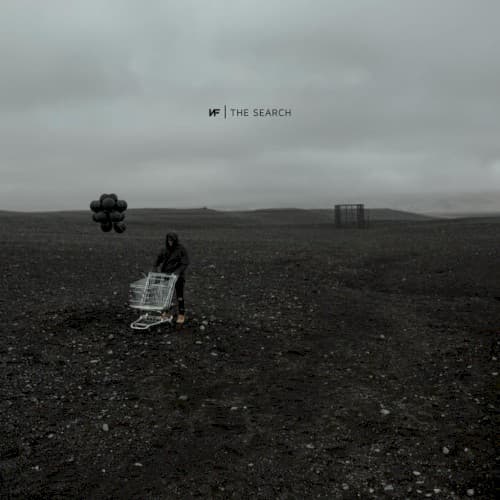
Start with the title track, then the Cordae collaboration Careful and the Julia Michaels duet Gone, which are the three best examples of how the album uses its guests and its arrangements. If the sound appeals, the next album to hear is The Search from 2019, which is the earlier record the critics most often compare this one with, and which shows the same voice on a darker set of subjects.
Hope is the record where NF proved that he can sound happy without sounding careless, and it is the clearest evidence that the next step is to write about the light as precisely as he once wrote about the dark.
Track by track
Track Listing
HOPE
StandoutThe title track opens the album at 4:24, with Tommee Profitt and Jeff Sojka among the producers. It sets out the premise: a patient, orchestral build, a controlled verse and a chorus that lifts the whole arrangement. NF's delivery is the draw, pitched between exhaustion and determination, and the song states the album's theme more clearly than it develops it. It was released as the first single, and it works as a thesis statement, though the specifics are less striking than the sound.
MOTTO
StandoutThe second single, at 3:37, built around a hook meant for repetition and verses that stay tight and clipped. Profitt and NF give the drums more weight than the title track did, and the song feels more direct as a result. It is one of the album's most effective statements of purpose, and it is easy to see why it was chosen to lead the rollout alongside the title song. The writing is plain, a call to keep moving and ignore the noise, but the delivery sells it, and the chorus does the job it was designed to do.
CAREFUL
StandoutCordae is the first guest, and his calmer, more conversational flow provides the album's first real contrast. NF and Cordae trade verses with different energy, one urgent and one relaxed, and the exchange keeps the song from feeling like a duet on autopilot. David Garcia shares the production credit, and the beat is slightly more spacious than most of the record. At 3:29 it is among the most balanced tracks on the project.
MAMA
StandoutA personal track with Saint X among the producers, and a warmer, more direct tone than the preceding songs. The writing stays at the level of sincere statement rather than detail, but the emotional pitch is steady and it gives the first half a human center.
HAPPY
SolidThe third single, released alongside the album with a music video. Its title announces the record's turn toward lighter feeling, and the arrangement lightens accordingly, with a brighter hook and a more open chorus. It is a pleasant, effective track that also shows the album's limit: the happiness is stated rather than dramatized, and the song lacks the sharp detail that made his darker material hit.
PANDEMONIUM
StandoutOne of the shorter tracks at 3:17, with Profitt, Sojka and NF credited. The title promises disorder, and the production gets a little rougher around the edges, which is a welcome change after the first half's polish. The structure still follows the album's usual build, so the chaos is more a matter of tone than of form. A modest highlight.
SUFFICE
SolidAt 4:25 this is the longest cut on the record, with Profitt and Saint X producing. The build is patient and the vocal is controlled, but the arrangement follows the same shape as the earlier songs, and the length is felt in the final minute, where the second chorus repeats without adding anything.
GONE
StandoutJulia Michaels sings the hook on this 4:06 track, and her pop-melodic voice gives the middle of the album its softest moment. The contrast with NF's driven verses is effective, and the song is one of the project's most radio-ready. It is also one of the clearest examples of the album's balance between emotion and polish, and it works because the guest is used for color and not as filler.
BULLET
SolidFour producers share credit on this 3:42 track, the most crowded credit on the record. The title suggests menace and the arrangement is dense, with a delivery that sits at the harder end of his range, though the build-and-release structure is by now familiar and the track does not stand apart from its neighbors.
TURN MY BACK
SolidA mid-album track at 3:36 with a darker, heavier mood than much of the record. The writing circles familiar themes of doubt and distance, and the performance is steady rather than surprising.
MISTAKE
SolidA subdued track at 3:35 with Profitt as co-producer. It is reflective and well controlled, with a quieter vocal than the louder songs around it, but it repeats the album's usual structure and does not add a new angle on self-doubt.
LET EM PRAY
StandoutA defiant, forceful cut at 3:33 with Sojka among the four producers. The beat has more bite than most of the late-album material, and the delivery is among the most aggressive on the project. A useful jolt before the closer.
RUNNING
StandoutThe closer, produced by NF and David Garcia, with Garcia also handling guitar. At 4:13 it brings the album down into a quieter, more open arrangement, and the restraint is the point: the ending sounds earned rather than inflated. It is one of the better-judged tracks on the record and leaves a more lasting impression than the louder songs that precede it.
Frequently Asked Questions
Is NF's Hope a good album?
Who is featured on NF's Hope?
How did Hope do on the charts?
What are the best songs on NF's Hope?
Styles