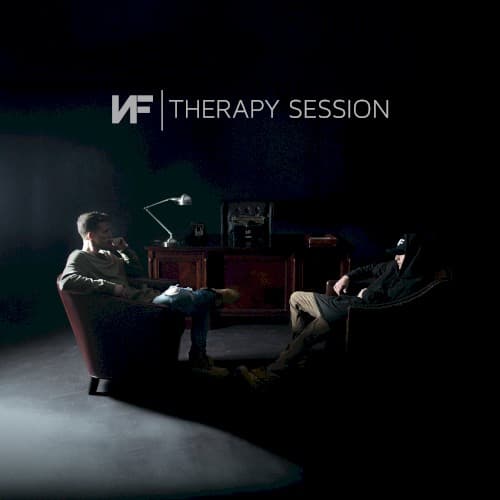
The scorecard
6.5/10 · Good
- Writing25%
- 6.5
- Production25%
- 7.0
- Delivery15%
- 7.0
- Cohesion15%
- 6.0
- Originality10%
- 5.5
- Replay value10%
- 6.5
The album commits to grief, regret and anger without a protective persona and the plain directness is affecting, but the lyrics rarely move beyond declared feeling into concrete imagery, which holds the writing at good rather than great.
Tommee Profitt, Garcia and Ingram supply dramatic, theatrical arrangements that give each track weight, though the palette is narrower than the ambition.
NF bellows with real control and builds momentum within verses, but the pitch of the performance leaves little room for softer contrast.
The unified mood, strong title-cut spine and manageable fourteen-track length help, but a middle stretch of near-identical builds and pitch blurs together enough that the sequencing strengths and weaknesses roughly cancel out.
The confessional therapy-session framing and raw honesty stand out somewhat among rap of its moment, but the execution stays within one lane of build-and-burst arrangements and limited variation, so the distinctiveness is balanced by sameness.
The best tracks reward repeat plays, while the full running order is heavy enough that it works better in sections.
NF Therapy Session — Raw Confession on a Compact Frame
Therapy Session is the NF album that proves the formula before it hardens into habit. Its argument is simple and stated at the top: a rapper can make a whole record out of grief, regret and anger, keep it to fourteen tracks, and let the rawness do the work that cleverness usually does. The risk is that a mood this consistent becomes a single note. For most of its running time the record avoids that, mainly because it is shorter, sharper and less padded than the long albums that would define later rap releases.
It arrived in April 2016 through Capitol Christian Music Group as the second studio album, only a year after its predecessor Mansion. That short gap shows in some of the criticism: one reviewer said the album did not seem quite ready for release, while crediting NF with talent and creativity and noting that he had blown past the sophomore slump. The pushback is useful, because it points to the real tension in the record, between an artist with a lot to say and a producer-driven sound that wants to say it all at full volume.
The commercial picture is modest by streaming-era standards and impressive for the lane. The album reached number twelve on the Billboard 200 with 29,184 album-equivalent units in its first week, topped both the Christian Albums chart and the Rap Albums chart, and was later certified platinum. As of October 2017 it had sold 122,000 copies in the United States. That is a long-tail result, built on fan loyalty and word of mouth in an era when playlists were beginning to decide which records mattered.
The case made here is that Therapy Session is a strong, honest record whose best quality is its discipline. The reviews are mostly warm, with several four-star notices from Christian-press outlets and a four-out-of-five from AllMusic. The canon of rap tends to value cleverness over confession, and a skeptical listener should test that assumption against what this album actually delivers. What it delivers is conviction, a clear theme and a compact sequence, with a few weak points in repetition and range.
Theatrical Beats Under Plain Speech
The writing is the album's first strength and its main limit. NF writes about loss, family pain and the weight of other people's judgments in plain, direct language, and the plainness is the point. There is no pretense that the pain is a character, and the album's reviewers praised exactly that honesty: one described it as dark and intense but real, another as rewarding and refreshingly honest for listeners willing to engage with it. That directness gives the record an emotional clarity that more ornamented rap often lacks.
The limit is that the writing rarely moves beyond statement. The lines favor declared feeling over concrete detail, so the emotional weight comes from the delivery and the arrangement rather than from the imagery. A verse might tell you how the speaker feels in strong terms without placing you in a room, a car or a conversation. That is a real weakness for a record this focused on one subject, and it is the reason the album is more persuasive in its first half than in its repetitive middle.
The production is the other defining strength. Tommee Profitt handled most of the early and late material, Garcia produced a run of mid-album tracks, and Ingram appears on two. The result is what AllMusic called theatrical production and what other reviewers described as simple yet dramatic: big drums, string-like swells and builds that make each song feel like it is moving toward a climax. The approach suits NF's delivery well, and it gives the album a sonic identity that was distinctive for its moment.
The weakness in the production is range. The arrangements follow a limited set of patterns, usually a restrained opening that builds into a full-scale chorus, and across fourteen tracks the pattern becomes predictable. A little more variation in texture or tempo would have made the high points higher. The guest slots, Marty of Social Club on Grindin' and Jonathan Thulin on Lost in the Moment, are small additions to a record that is overwhelmingly one voice.
Delivery is the third strength. NF bellows with real force, builds momentum over a verse and sustains energy through long tracks without losing clarity. The same reviewers who found the record raw also noted that the performance projects a clear path and a refusal to accept being dismissed. It is a committed, physical performance, and in a genre where many records coast on charisma it is a notable strength. What the delivery lacks is contrast: the register is high from the first verse, and the album rarely drops low enough for a hook to land by contrast.
Fourteen Tracks and a Strong Spine
The sequence opens with a clear plan. A short introduction sets the tone, and the title track follows at over five minutes to establish the concept in full. That pairing gives the album a strong spine, because the listener hears the premise stated and then argued at length before the record moves on. The first third is the most dramatic and the most varied stretch, with the production at its most confident and the writing at its most focused.
The middle of the album is where the pacing starts to depend on the listener's patience. Several songs follow the same build, the same emotional pitch and similar tempos, and a run of four or five tracks can blur together on a casual listen. Streaming-era habits make this more noticeable, because a listener can skip forward at the first sign of repetition. The album's saving grace is that it is short enough that the sag never lasts long, and a playlist-style listener will find a strong track again within a few minutes.
The late stretch recovers some energy. The guest appearances and a few shorter tracks arrive in the last third and give the ear a change of voice, and the closing track brings back the scale of the opening. The production credits shift slightly through the second half, and that variety helps. By the end, the album has told its story clearly enough that the closing feels like an arrival and not an afterthought.
The length is mostly earned. At fourteen tracks and well under an hour, the record asks for a manageable commitment and mostly pays it back. A tighter edit might have cut one or two of the mid-album songs, but the project does not suffer from the bloat that affects many longer rap albums. If the question is whether a confessional record of this kind can hold an audience's attention across a full sequence, this one mostly proves that it can, and the platinum certification suggests that listeners agreed.
A Compact, Honest Record That Still Holds
Nothing else by NF is rated on the site yet, so the ranking that matters is against the genre. Therapy Session sits in the good range, with real strengths in conviction, delivery and production and noticeable weaknesses in range and imagery. The scores put it just under the great band, and the verdict agrees with the warmer reviews that called it a strong step forward without agreeing that it is flawless.
The album is for listeners who want rap as emotional honesty. If you like records that commit to one theme and refuse to soften it, this one delivers, in a compact format that respects the listener's time. It is a good entry point for anyone curious about NF's approach, because the album states its method clearly and the best tracks make the case without much help. It is also for people who value restraint of length, since fourteen tracks is a manageable sequence by any standard.
People who come to rap for wordplay, humor, scene-setting storytelling or musical variety should look elsewhere. The album is serious from start to finish, and its production, while dramatic, rarely changes its basic shape. Listeners who find a high-intensity delivery tiring will probably tire of it quickly.
How it has aged is a fair question. The commercial result, a number twelve debut, a platinum certification and long-tail sales, shows that the audience kept coming, and the honesty of the record has not dated in the way that more topical rap has. The sound is distinctive enough that it still reads as its own, and the best songs are as effective now as they were on release. Start with the title track, I Just Wanna Know and Lost in the Moment for the clearest picture. For what to hear next, try Perception, NF's later album, to hear how the same approach moves toward a wider, more polished sound. The sharpest way to sum it up is that Therapy Session is a record that earns its seriousness by keeping its length under control.
Track by track
Track Listing
Intro 2
StandoutA short opener at just over three minutes, produced by Tommee Profitt. It sets the tone with a measured build and prepares the ground for the title track. Effective as scene-setting.
Therapy Session
StandoutThe title track runs over five and a half minutes and is the concept of the album in full. The framing of the record as a session in which the speaker works through pain is stated here, and the arrangement builds toward a large final section. It gives the album its spine and is one of the clearest examples of how the production and the delivery support each other. The writing favors statement over detail, but the length gives the idea room to develop, and the performance is committed from the first verse to the last.
I Just Wanna Know
StandoutA mid-length track at under four minutes that keeps the album's momentum going after the title cut. It is focused and direct, with a clear hook and a performance that stays tight. A strong early entry point.
How Could You Leave Us
StandoutAt over five minutes this is one of the album's longest songs, and the title points to the grief and family pain that run through the record. The slow build gives the track a heavy emotional shape and the delivery matches it. It is among the album's most affecting tracks, though its length asks for patience, and the arrangement follows the familiar pattern of restrained opening and full-scale finish. The commitment of the performance is the main reason it works, because the writing mostly tells the listener how the speaker feels.
Breathe
SolidA four-minute track from Profitt that continues the record's mood. The performance is strong, but the structure is predictable, and it feels like part of a run rather than a standout.
Real
StandoutThe first track produced by Garcia, and it shifts the sound slightly. The production is leaner and the delivery sharper, a useful change after the long tracks that came before. A solid, focused mid-album cut.
Oh Lord
StandoutA short Garcia production at just over three minutes, and one of the tighter songs on the record. The brevity helps, and the track is direct and efficient without losing the album's intensity.
I Can Feel It
SolidBack to Profitt for a four-minute track in the album's usual register. It is well made and energetic but does not add a new idea, and it sits in the middle stretch where the repetition is most noticeable.
Got You on My Mind
SolidA four-minute Garcia production that keeps the middle of the album moving. The delivery is strong and the hook is clear, but the song does not stand out from its neighbors.
Grindin’
StandoutA four-and-a-half-minute track with Marty of Social Club as the guest, one of the few places where a second voice enters the album. The change of texture helps the record breathe, and the track has a more outward-facing energy than the confessional material around it. It is a welcome variation and a good example of what a little more variety could do.
Wish You Wouldn’t
SolidProduced by Ingram, a different name in the credits, and it runs nearly five minutes. The sound is slightly distinct and the pacing is deliberate. It is solid, though the length stretches the idea.
Statement
StandoutThe shortest full-length track on the record at barely over three minutes, with Garcia and Ingram sharing the production. It is brisk, direct and effective, a compact piece of rapping that works because it does not overstay.
All I Do
SolidA Garcia production at just under four minutes with a clear structure and a hook that sticks. A competent late-album track that keeps the energy up without adding a new angle.
Lost in the Moment
StandoutThe closer, at four minutes, with Jonathan Thulin as the guest and Profitt back on production. The sung presence gives the album its softest and most reflective ending, and the arrangement returns to the large scale of the opening. It works as a closing track because it brings the record to a feeling of release and not just a final push. It is one of the album's best moments and a good place to finish.
Frequently Asked Questions
Is NF Therapy Session a good album?
How did NF Therapy Session perform commercially?
Who produced NF Therapy Session?
What are the best songs on NF Therapy Session?
Styles