The scorecard
6.2/10 · Mixed
- Writing25%
- 6.0
- Production25%
- 6.5
- Delivery15%
- 7.0
- Cohesion15%
- 6.0
- Originality10%
- 5.0
- Replay value10%
- 6.0
The confessional focus on self-doubt and outside judgment gives the album an identity, but thin scene-setting detail and a run of tracks restating the same grievance in similar terms leave the lyrics about even in strengths and weaknesses.
Tommee Profitt and David Garcia build big, orchestral-leaning arrangements with real hooks that give tracks weight and a consistent sonic identity, though few of them change shape between verse and hook.
NF's fast, forceful cadence is committed and clear, with real breath control and a hold on the pocket, even if it stays at one pressure level for most of the hour.
Sixteen tracks with several above five minutes and a near-uniform mood make the middle stretch feel long.
The pairing of emotional rap and heavy pop-leaning production was already his template, so this album extends it instead of changing it and adds little new for its moment.
The singles repay repeat plays, but the album-length listen turns into cumulative fatigue, so it is better sampled than swallowed whole.
NF Perception — One Volume Setting, Sixteen Tracks
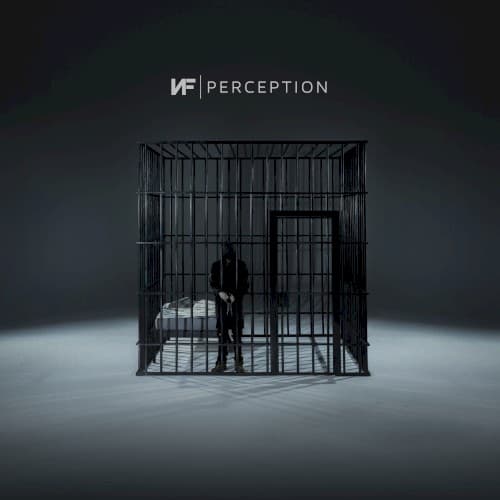
Perception is an album built around a single volume setting, and the argument of this review is that the setting is both its signature and its ceiling. NF spends sixteen tracks describing how other people see him and how he sees himself, and he does it at nearly the same pitch of urgency from the first verse to the last. The production rarely lets a song breathe, and the rapping rarely asks it to. Heard against the West Coast tradition, which has always known how to vary tension, that sameness is the main thing the record has to answer for.
West Coast rap, from G-funk through the gangsta records and into the modern LA and Bay Area scenes, taught listeners that a grim album does not have to sound grim in one way. A bass line can bounce, a hook can loosen the room, a guest can change the temperature, and the pressure can drop for a track before it climbs again. Perception borrows its seriousness from the confessional end of rap and its scale from big, polished pop arrangements, and it has very little of that looseness. What it earns instead is commitment. NF never hedges, never winks, and never hides behind a persona, and the album is more honest about its subject than most records that sell as many copies.
The context explains the shape of it. This is the third studio album, released in October 2017 on Capitol alongside Caroline and NF's own newly launched label, and it was produced entirely by Tommee Profitt and David Garcia. It also moved away from the Christian hip-hop framing of its predecessor Therapy Session toward secular material, which is why the album talks about perception in the widest possible terms. It debuted at number one on the Billboard 200 with 55,000 units, including 38,000 in pure sales, and that result tells you the audience was already built and loyal before the first single landed.
The record that audience got is consistent to a fault. The best moments are the ones where the arrangement and the performance meet in the middle and the hook carries real melody. The weakest are the ones where a heavy beat and a strained verse simply repeat an idea already made two tracks earlier. One reviewer called the album very one-dimensional, another found it redundant, and both are describing something audible. It is a serious, well-made record for people who want intensity, and a tiring one for everyone else.
Built to Hit Hard, Built to Stay There
The first thing to say about the writing is that it has a subject and keeps to it. NF returns again and again to how he is viewed, what he fears about being misjudged, and the gap between public image and private doubt. That focus gives the album an identity that a looser record would not have, and it is why the title is not decoration. The fact sheet notes that he described the album as being about his perception, with the point of view open to anyone in the world, and the writing does try to widen out from the personal.
The weakness is that the writing does not widen out as far as it intends. Scene-setting detail is thin, and the lines lean on abstract nouns, statements of feeling and direct address to the listener, where a West Coast storyteller would use a street name, a car, a name or a small domestic detail to make a feeling land. When NF turns to boasting about his own ability, the effect is closer to defensiveness than to swagger, and the same grievance and the same reassurance come back in changed words. The critical complaint that the album pairs insecurity with bragging in the same breath is fair, and it is the main reason the lyrics feel narrower than the production around them.
That production is the strongest part of the record. Tommee Profitt and David Garcia handled all of it, and the result is a consistent sonic identity: large drums, string and choir-style swells, piano figures and hooks that are built for stadium-sized singalongs. The arrangements are thought through, and tracks such as Green Lights and Let You Down show how well that formula serves a pop-leaning hook. Against the sample-based soul of Bay Area rap and the synth and bass architecture of G-funk, this is a different kind of craft, closer to a film-score and pop-rock approach than to a producer building a beat. It is cleaner and louder than the West Coast tradition, and much less sly.
The delivery is where the album is most divisive. NF raps quickly and forcefully, with clear diction and real breath control, and he can hold a long verse together without losing the pocket. The problem is range. The pushed, raised cadence is applied to almost every verse, so the contrast that should make a quieter hook land never fully arrives. Compare this with the way Kendrick Lamar shifts voice and register within a single song, or the way older West Coast records let a drawl relax a hard line, and the limitation is easy to hear.
The one guest appearance is a restrained choice. Singer Ruelle appears on 10 Feet Down and provides the album's main change of texture, a sung counterpart to the rapped verses. A little more of that variety would have helped. The record is credible, committed and professionally built, but it is also a record that rarely surprises its own listener.
Sixteen Tracks, One Emotional Temperature
As a sequence, Perception opens with a clear plan. A long introduction sets the tone, and the album moves quickly into material built for singles, so the first third gets the strongest hooks and the clearest sense of direction. The pacing in that stretch works. A listener who stops after the first five or six tracks has heard the record at its best, with the production at its most varied and the delivery still fresh.
The middle is where the sequencing gives way. Several tracks run past five minutes, the mood does not change, and the arrangements follow a repeating pattern of quiet verse, rising chorus and full-force final section. By the time the album reaches its second half, the rhythm of each song is easy to predict, and the effect is cumulative fatigue instead of cumulative power. The West Coast habit of placing a loose, funk-leaning interlude or a lighter guest feature in exactly this position, to reset the ear, is the thing the record lacks most.
The late-album singles, including If You Want Love, help in a limited way, because their tighter structures and clearer hooks come as a welcome change after the longer tracks. The final stretch then closes with tracks that feel more like an echo of points already made than a new conclusion. The fact that Outro was the first single, released ahead of the album when it was still unnamed, also gives the ending a strange weight, since the song is both the opening move of the campaign and the last word of the record.
Whether the length is earned is a fair question with a mixed answer. Sixteen tracks give the album room for variation it never uses, and a version trimmed to around twelve would have kept nearly all of the best material and lost most of the repetition. The streaming-era habit of building an album as a long playlist helps explain the choice, but it does not excuse it. The strongest case for the full running order is that it gives devoted listeners more of what they want, and the audience that put the album at number one clearly wanted exactly that.
A Loud, Sincere Record With a Narrow Range
Within NF's own catalog on this site there is nothing yet to rank it against, so the useful comparison is with the genre and with where he stands in it. Perception is a strong album for what it attempts and a limited one for what it leaves out. It sits in the good range, with real strengths in production and commitment and noticeable weaknesses in variety and writing detail. The scores reflect that: the production is the highest mark, originality the lowest, and the overall number lands between solid and mixed.
The album is for listeners who want rap as emotional release. If you like intense confessional records and heavy, polished arrangements, this one delivers on that promise with almost no filler in the sense of throwaway tracks. It is also an easy entry point to NF's approach, since the singles are clear about who he is and what he is doing. People who come to rap for the West Coast's bounce, humor and variety, or for dense scene-setting storytelling, should skip it or take it in small doses, because the album works against those pleasures.
It has aged as a record of its moment more than as a template for others. The first-week sales, a number one debut with 55,000 units, and the later two-times platinum certification show that the audience stayed with it, and Let You Down gave him his first Hot 100 entry. Those facts matter because they confirm the sound found a large, loyal listenership without radio-rap conventions. The critical reception was split, with some praising the maturity and experimentation and others finding it redundant, and that split still describes the record accurately.
Start with Green Lights, Let You Down and Outcast, which together give the clearest picture of what the album does well. If the formula works for you, the next step is The Search, the follow-up album, which pushes the same approach further and gets a harsher critical response. If you want contrast, go to Kendrick Lamar for the way a West Coast writer varies voice and structure inside a serious album. The sharpest fair summary is that Perception is a record about being seen that spends most of its time on how loudly its maker can say so.
Track by track
Track Listing
Intro III
SolidA long opener at nearly four and a half minutes that sets the emotional frame before the first full-length rap track arrives. It works as scene-setting and gives the album its seriousness, though it asks for patience.
Outcast
StandoutThe first real statement of purpose, and at over five minutes it carries the album's central idea of being misjudged from the outside. The delivery is forceful and the arrangement builds in stages toward a heavy final section. It is among the clearest examples of what the album does best and also of how its songs tend to be shaped. The writing leans on declared feeling over concrete detail, but the commitment of the performance is real and gives the track weight.
10 Feet Down
StandoutRuelle's sung presence gives the album its main change of texture, and the contrast between her voice and NF's pushed rapping helps the track breathe. It is one of the few songs where the arrangement leaves space, and the album would have benefited from more moments like it.
Green Lights
StandoutOne of the album's tightest songs, running only three minutes, with a clear hook and a verse structure that moves without excess. It was a single, and the focus shows. The production gives the chorus real lift, and the length keeps the energy from tipping into the repetition that affects longer tracks. If you want a first impression of the record's strengths, this is the place to begin, because it combines the sincerity of the album with a pop-aware sense of economy.
Dreams
SolidA mid-album track that continues the mood without adding much. The performance is competent and the production is full, but the idea is one the record has already stated.
Let You Down
StandoutThe album's biggest breakout and NF's first song to chart on the Billboard Hot 100, released three days before the album. It is a more melodic, hook-forward track than most of the record, and the structure serves a broad audience without losing the personal tone. The vocal performance feels more varied here, with the chorus giving the verse a real destination. It is the strongest argument that the album's formula can reach beyond its core fans, and it remains the most replayable song on the record.
Destiny
SolidSolid and competent, with a familiar build and a hook that fits the album's themes. It does not add a new angle, and it sits in the stretch where the record's sameness starts to show.
My Life
SolidA track in the album's usual register, with strong delivery and big arrangement but little that distinguishes it from the songs around it. Good in isolation, forgettable in sequence.
You’re Special
SolidAt just over five minutes this is one of the longest cuts, and it turns the album's perspective outward toward the listener. The direct address is the point, and the track is more reassuring than most of the record. It runs a little long for its single idea, but it adds a useful change of direction in the second half.
If You Want Love
StandoutA single with a tight three-minute-plus structure and a clearer hook than the tracks around it. It gives the second half a lift and shows the pop-aware side of the production.
Remember This
SolidA four-minute track that follows the album's familiar template. The delivery is strong, but the track does not stand out from its neighbors.
Know
SolidAnother heavy, urgent cut that covers ground already covered. It is competently made but adds little, and it is where the album's repetition is most noticeable.
Lie
StandoutA single, and one of the better-focused songs in the back half, running under three and a half minutes. The hook is clear and the tension between the verses and the chorus works. The track shows the album's themes of self-image and honesty in a compact form, and it earns its place more than the longer tracks around it. It feels like a song written to be heard on its own, which is a strength here.
3 A.M.
SolidA late-album track with a mood suited to its title and a performance that stays within the record's usual intensity. It is atmospheric enough to be worth a listen but lacks the hook of the singles.
One Hundred
SolidShort at just over three minutes and one of the more direct tracks near the end. It is a brisk change of pace, but not a memorable one.
Outro
StandoutThe first single, released in August 2017 before the album had a name, and it closes the record as a bookend to the campaign. It has the album's full-scale production and a hook built for large rooms. It works as an ending because it restates the album's emotional intensity in a concise three and a half minutes. It also shows why the project could be built around one tone: when the song is this focused, the tone is an asset instead of a limit.
Frequently Asked Questions
Is NF Perception a good album?
Who produced NF Perception?
How did NF Perception perform on the charts?
What are the best songs on NF Perception?
Styles