The scorecard
6.8/10 · Good
- Writing25%
- 6.5
- Production25%
- 7.5
- Delivery15%
- 7.0
- Cohesion15%
- 6.5
- Originality10%
- 6.0
- Replay value10%
- 6.5
The title track and How Did I Get Here turn the verses toward family and accountability, but the generic trapping on tracks like Lick and Made Men dilutes the narrative.
Metro Boomin and Southside supply dark, expensive-sounding beats, with strings and a choir on North Star adding real variety, though the downtempo mood gets uniform.
Offset's triplet-heavy cadence is still the most distinctive thing on the record and pops on Quarter Milli, even when his tone sounds tired elsewhere.
A clear arc in the first third gives way to a bloated run of sixteen tracks where the back half repeats the same mood.
The confessional angle is unusual for a trap album of its moment, but the sound itself stays inside the Atlanta template.
The singles and a handful of album cuts hold up in a playlist, while much of the middle is easy to skip, which fits a streaming-era album that is bigger than it needs to be.
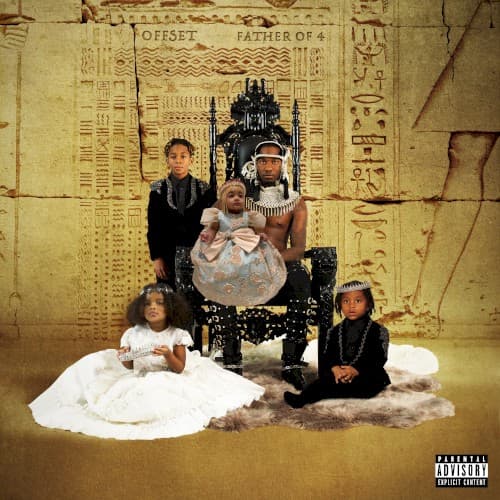
Offset Father of 4: A Trap Album With Something to Answer For
Father of 4 works best when it stops pretending to be a normal trap album. The first stretch of the record is built as a statement about family, accountability and a marriage under public pressure, and it holds together because the music takes the subject seriously. Then the album remembers that it is a major-label solo debut from a member of Migos, and it fills the rest of its sixteen tracks with the kind of trapping and flexing that any playlist could supply. The thesis is that Offset has a better album in him than the one he released, and that the best half of this one proves it.
That tension is the point of listening. Offset was the last of the three Migos members to release a solo project, after Quavo and Takeoff had each put out their own, and he had the advantage of arriving last. He used it by leaning on a narrative frame, which the HipHopDX review in the fact sheet noted as rare in the current climate. The album is built around a rollout that included a documentary teaser and a delayed release date, so the story is baked into the product. The question is whether the music can carry it.
Mostly it can. The beats, handled by Metro Boomin and Southside, are dark and spacious, with strings and live instruments in places where a typical trap record would use another hi-hat roll. Offset's voice is the other main asset. His cadence is still unmistakable, a stuttering, triplet-heavy bounce that sounds like no one else in the genre. When it meets a lyric that cuts close to home, the combination is more persuasive than the usual Migos formula.
The problem is the editing. This is a streaming-era album, sized to maximize playlist exposure and total streams, and it sounds like one. The strongest ideas come early, the weakest filler comes late, and the record never decides whether it is a confession or a victory lap. That indecision costs it a higher score, but the best songs are good enough to make the effort worth the time.
Dark Beats, Triplet Flows, and Where the Writing Slips
The production is the most consistent part of the album, and it follows a clear plan. Metro Boomin appears on most of the record in some capacity, with Southside handling a smaller share, and the shared mood is slow, murky and heavy on low-end weight. The fact sheet credits live strings on a few tracks and a choir on North Star, and those touches matter more than they would on a typical trap album because they break up the drum programming. When the arrangement opens up, the record sounds ambitious. When it does not, the beats can run together, which the Exclaim! review in the fact sheet described as same-y by the end.
Offset's delivery is the second strength. He does not rely on a wide range of voices; instead, he works a narrow band of pitch and rhythm, stretching phrases across the beat and using ad-libs as punctuation. It is a style that sounds effortless, and on the better tracks it carries real momentum. The weakness is that the same cadence, applied across sixteen songs, sometimes sounds tired. Reviewers noted a drained quality in his tone, and on the quieter tracks that is audible: the performance flattens out exactly where the subject matter calls for more emotional range.
The writing is where the album is least reliable. At its best, the album takes on family and accountability with more candor than most trap records attempt, and the first third of the track list is built to make that case. But the confessional material is mixed with a lot of standard material about money, cars and status, and the two modes do not blend. A song about responsibility is followed by one about spending, and the whiplash makes the sincere moments feel less earned. Several tracks, such as Lick and Made Men, are competent and forgettable, built from stock phrases and a hook that exists to be repeated.
Guests are used with some discipline. The fact sheet lists J. Cole, Cardi B, Travis Scott, 21 Savage, Gunna, CeeLo Green, Quavo and Gucci Mane, which is a long list for sixteen tracks, but most appearances are short and purposeful. The better ones push Offset into a different register, and the weaker ones simply add a famous name to a beat that did not need it.
The overall picture is a record with a clear sonic identity, a distinctive lead voice and a narrower set of ideas than its length suggests. It rewards a listener who wants the album's emotional through-line and punishes one who expects the trap-album formula to carry every track. The writing needed more discipline, and the mood needed more variety.
A Strong Opening Third and a Back Half That Drifts
The sequencing is the clearest sign of how the album was made. The opening run is deliberate: the title track and the song that follows it set the tone, lay out the themes, and establish the pace. It is the most focused stretch of the record, and it gives the listener a reason to believe the album is going somewhere. The orchestral touches and the slower tempos in these early songs suggest a plan, and the plan works.
The middle of the record begins to lose that shape. After the opening, the track list alternates between ballads and trap tracks without a clear logic, so the emotional thread is picked up and dropped repeatedly. The pace is also uneven. Some songs are short, sharp and over quickly, while others stretch past four minutes on a single idea. A tighter selection would have kept the narrative visible; instead, it gets buried under songs that could be moved around without anyone noticing.
The back half is where the length starts to hurt. The Rolling Stone review quoted in the fact sheet called out the bloat that characterizes Migos projects, and this album is not exempt from that. By the time the singles arrive, the listener has already heard a lot of similar-sounding beats, and the hits do not stand out as much as they should. A shorter sequence that put them closer to the opening would have given the record a stronger shape.
One structural choice works well: the album avoids front-loading all of its guests. They appear throughout, so the middle of the record has a few jolts of energy that keep it from stalling completely. It is not enough to fix the pacing, but it helps. The overall effect is of an album that peaks early, holds a reasonable level for a while, and then runs on momentum to the finish. It would be a better listening experience at twelve tracks than at sixteen, and the cuts would be easy to make.
The Best Offset Solo Argument Is Still Half an Album
Father of 4 is a good record with a great record's ideas trapped inside it. The catalog context here lists no other Offset albums, so the ranking is against the genre: it sits in the upper-middle of a crowded field, ahead of most solo debuts from group members and behind the albums that sustain a single idea from start to finish. The critical response in the fact sheet, with a Metacritic average of 72, matches that placement.
The record is for listeners who like the Migos sound and want to hear what happens when one member slows down and tries to say something. It is also a good entry point for anyone curious about how a trap album can use a personal story without abandoning the genre's rules. It is less suited to listeners who want a consistent, lyrically sharp project, and it will frustrate anyone who expects the confessional material to continue through the whole run. If you only want the hits, a short playlist will serve you better than the full album.
The album has aged reasonably well. The production still sounds current, and the best tracks hold up as examples of how to blend trap with live instrumentation. The filler has not improved, but the record's best qualities have not faded either, which is more than can be said for many streaming-era releases built around a single moment.
Start with Red Room, Quarter Milli and Legacy, which together show the dark, polished sound at its most effective and the range of Offset's voice. For a next step, try Quavo Huncho by Quavo, the other Migos solo project that came before this one, and compare how each member handled the move away from the group. Father of 4 ends up as a promising debut that shows what Offset can do when he edits himself, which is the clearest argument for a tighter second album.
Track by track
Track Listing
Father of 4
StandoutThe title track opens with Big Rube and a string arrangement that signals the album's more serious intentions. Offset takes the subject of fatherhood and responsibility head-on, and the production gives the verse room to land without crowding it. It is the clearest statement of the album's concept, and it works because the beat stays out of the way. A strong opener that sets a higher bar than much of the record meets.
How Did I Get Here
StandoutA reflective collaboration with J. Cole that gives the album its most direct moment of self-examination. Cole's verse adds a different cadence and a more measured tone, which makes Offset's own delivery sound more urgent by comparison. The beat is spare and the writing is plainer than usual, which suits the mood. It is one of the few places where the confessional approach is fully realized, and the track is a highlight of the opening third.
Lick
SolidA competent trap cut with a bouncy hook and little else. It is built for playlists, and it returns the album to familiar territory after the heavier opening. Enjoyable in isolation, interchangeable in context.
Tats on My Face
SolidA short, punchy track produced by the So Icey Boyz that leans on Offset's rhythm more than his words. The hook is repetitive by design, and the flow is playful enough to carry it. Fun, light and not much more.
Made Men
SolidA Southside beat with a heavy low end and a standard set of lines about status. Offset's delivery is energetic, but the writing is generic and the track never builds to a distinct moment. Another example of the album's stock material.
Wild Wild West
StandoutGunna adds a smooth, melodic counterpoint to Offset's choppier flow, and the pairing works better than expected. The beat is moody and the hook is catchy, though neither verse says much beyond boasting. A solid, listenable cut that benefits from the contrast between its two voices.
North Star
StandoutThe most musically ambitious track on the record, with CeeLo Green, a choir and an interpolation of a Duran Duran song giving it a grander scale than anything around it. The arrangement builds in a way the rest of the album avoids, and Offset rides it with more emotional range than usual. It is a risk that mostly pays off and the clearest example of what the album could have been with more of this kind of ambition. The sheer difference from the trap tracks around it is part of the appeal.
After Dark
SolidA short, moody track with strings and a late-night feel. It keeps the album's mood intact and gives the sequence a small rest, but the writing is thin and the track fades quickly.
Don’t Lose Me
SolidA melodic, guitar-tinged track that returns to the album's personal themes. The hook is more sung than rapped, and the arrangement is warm and relaxed. It is a pleasant change of tone, though the lyric does not go much deeper than the title suggests.
Underrated
SolidA brief track that makes a familiar argument about being overlooked. The beat is tight and the delivery is confident, but the idea is underdeveloped and the song is over before it makes a case. Filler with a good rhythm.
Legacy
StandoutTravis Scott and 21 Savage join Offset on a Southside beat that is among the heaviest on the record. Each guest brings a distinct texture, with Scott's effects-laden hook and Savage's flat, menacing delivery making Offset's own verse feel like the connecting piece. The production is big and dark, and the song moves with real confidence. It is one of the album's strongest pure trap moments and shows the formula working at full strength.
Clout
StandoutThe second single, with Cardi B, trades verses in a playful, high-energy exchange that is the most overtly commercial moment on the album. The chemistry between the two is obvious, and the beat is built to be played loudly. It is not deep, but it is catchy and well-made, and it gives the sequence a needed jolt of energy. The context of their relationship adds a layer that the lyrics themselves do not.
On Fleek
SolidA Quavo collaboration with Zaytoven among the producers, which gives it a lighter, more bouncy feel than the rest of the record. It is a Migos-style track with the group's familiar interplay, and it is enjoyable without being surprising.
Quarter Milli
StandoutGucci Mane arrives on a Metro Boomin and Pyrex beat that is tight and rhythmic, and Offset's flow is among the sharpest on the album. The track is short and focused, and the hook is simple but effective. Gucci's verse adds a veteran's looseness that contrasts well with Offset's tight pocket. A strong late-album pick that shows what the trimmed version of this record would sound like.
Red Room
StandoutThe lead single, produced by Metro Boomin, is a dark, hypnotic track that blends a menacing beat with a melodic hook. Offset's delivery is controlled and confident, and the production leaves enough space for the vocal to dominate. It is the clearest example of the album's sound at its most polished, and it works as a standalone single and as part of the larger record. It deserves its place as the album's calling card.
Came a Long Way
SolidA short closer that looks back and takes stock. It is a modest, reflective ending that fits the album's themes, though it lacks the impact of the opening tracks.
Frequently Asked Questions
Is Offset's Father of 4 good?
What are the best songs on Father of 4?
How did Father of 4 perform commercially?
Genres
Styles