The scorecard
5.6/10 · Mixed
- Writing25%
- 5.0
- Production25%
- 6.5
- Delivery15%
- 6.5
- Cohesion15%
- 5.0
- Originality10%
- 4.5
- Replay value10%
- 5.0
Flexes on money, loyalty and women recycle the same few images across nineteen songs, and the hooks carry more weight than the verses.
Glossy, bass-heavy beats from a long roster of producers keep the sound expensive, and Zaytoven's keys on Roadrunner give the record its most distinct texture.
The triplet hand-offs between Quavo, Offset and Takeoff are still rhythmically sharp, and Takeoff stays the most economical rapper of the three.
Nineteen tracks with a soft middle stretch around Modern Day, Vaccine and Why Not means the album sags well before it ends.
Straightenin and a couple of guest pairings try something new, but most of the record repeats the group's own template.
As a projection, the highlights will live on playlists while the full sequence will rarely be played start to finish.
Migos Culture III — A Great Playlist Trapped Inside a Long Album
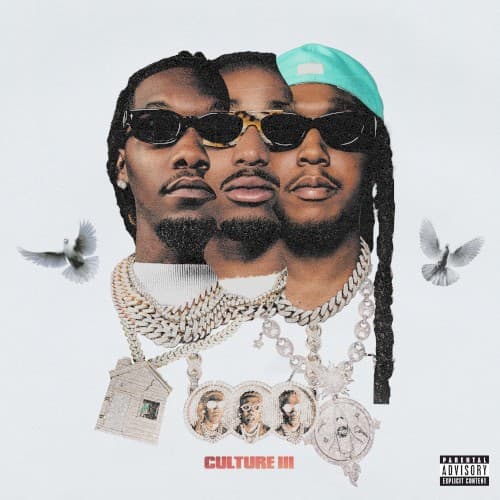
Culture III works best as a playlist and worst as an album, and that split is the whole story of Migos at this stage. Pull “Straightenin” out of the sequence and it is a tight, rubbery piece of triplet engineering that still sounds like nobody else in rap. Leave it inside the tracklist and it becomes one of nineteen songs asking for the same kind of attention, many of them built from the same parts. The record closes the trilogy, and it behaves like a closer: it is more interested in confirming the formula than in testing it.
The thesis is simple. In 2021 the group is still exceptional at the level of the song and merely competent at the level of the album, and the length of this one is a streaming-era habit rather than an artistic need. A rollout stretched by the pandemic, a title change along the way and a long wait between releases produced a record with plenty of material and not much editing pressure. Offset, Quavo and Takeoff remain a three-man rhythm section, trading ad-libs, finishing each other's lines and using their voices as percussion. What the album lacks is a reason to sit through the gaps between the highlights.
That matters because the group's reputation was built on efficiency. Its predecessor ran to 24 tracks, and cutting that to nineteen is an improvement in the way a smaller bill is still a bill. The guest list is enormous, with Drake, Cardi B, Polo G, Future, Justin Bieber, Juice Wrld, Pop Smoke and YoungBoy Never Broke Again all appearing, and it is the clearest sign of where the priorities sit. Some of those cameos are the freshest moments here. Others read as chart strategy, a way of making sure every listener's favorite artist is represented somewhere in the first hour.
Whether the album is worth your time depends on how you listen. Treated as a source of five or six very good songs, it pays off. Treated as a front-to-back statement, it is a case for a shorter tracklist and a firmer hand in the sequencing room.
Rhythm Over Rhyme: Where the Formula Still Pays Off
The writing on Culture III is built for the mouth rather than the page. Migos have always treated syllables as drum hits, and the verses here are strongest when the pocket is the point: a clipped phrase repeated, a word stretched across a bar line, an ad-lib landing exactly where a hi-hat would. The subject matter is the familiar mix of wealth, loyalty, nightlife and romance, and it is delivered with confidence rather than detail. That is the album's central weakness on the page. Across nineteen songs the imagery rarely sharpens into a scene or a story, and when a verse is stripped of its flow there is not much left to remember. The group lets the cadence do the work that a specific image would do for a different rapper.
Production is the record's real asset. The credits read like a committee, with songs carrying as many as six names, and the roster pulls from the usual Atlanta and Toronto trap pipeline: Murda Beatz, Tay Keith, DJ Durel, Zaytoven, Buddah Bless, 808Melo and others. The result is polished and expensive-sounding, with deep low end, crisp snares and a steady supply of dark synth and piano figures. The danger of that approach is sameness. When a dozen producers are asked to supply the same flavor of bounce, the beats start to blur together, and only a few of them leave a fingerprint. Zaytoven's contribution stands out because it sounds like a person playing an instrument, which is rare on a record this smooth.
Delivery is where the trio earns its keep. Quavo remains the hook specialist, bending melodies in ways that make even throwaway choruses stick. Offset brings the rough edge and the most aggressive pocket. Takeoff is the most compact of the three, getting in and out of a verse with less filler than either partner.
When all three share a beat, the hand-offs have a mechanical grace that cannot be faked, and it is the single strongest argument for the group as a unit. The weakness is that the same three or four flow templates recur. By the second half, the listener can predict where the triplets will fall and where the ad-libs will answer them.
The features are a mixed proposition. Some are well matched to the beat and push the trio into slightly different shapes, while others feel stapled onto songs that would have worked without them. The most pop-leaning pairings aim at radio and mostly land flat, because the group's strengths do not translate to a ballad-adjacent tempo. The cleanest conclusion is that Culture III is a record of high craft and low risk. Everything is competently made, little of it is surprising, and the best songs are the ones where the group sounds like it is playing rather than defending a brand.
Front-Loaded Hits, a Soft Middle, a Late Recovery
As a sequence, Culture III is a shallow curve with a strong start. The opening run puts the most energetic material up front, and the album behaves like a playlist built for a first-week streaming push: lead with the singles, spread the collaborations early, and trust the casual listener to stop paying attention at some point. The first six or seven songs move quickly, and the guest slots arrive often enough to keep the energy up. If the album ended around that point, it would read as one of the group's tighter statements.
The sag arrives in the middle. A stretch of mid-tempo, mid-intensity trap fills the center of the tracklist, and the songs there rarely announce themselves. Beats change, the hooks change, and the vocal approach barely does. This is the section where a stricter edit would pay the biggest dividend, since several tracks occupy space without adding a new idea. The pop-leaning Justin Bieber pairing, short as it is, interrupts the momentum rather than extending it, and it is the clearest example of an album chasing a second audience at the expense of the first.
The recovery in the final third is real. Longer tracks stretch the group's chemistry across a full running time, and a pair of late guest appearances bring a different energy to the closing minutes. The finale is a return to the single that anchored the rollout, which is a sensible way to end a record that spent so long being assembled.
Still, the pacing as a whole feels more like a collection than a designed arc. There is no point where the album changes shape or raises the stakes. The length is not earned by variety, only by quantity, and a listener who skips the middle stretch loses very little. The question the sequence cannot answer is why nineteen songs were necessary when the best ten would have produced a stronger record.
A Respectable Finale That Does Not Raise the Bar
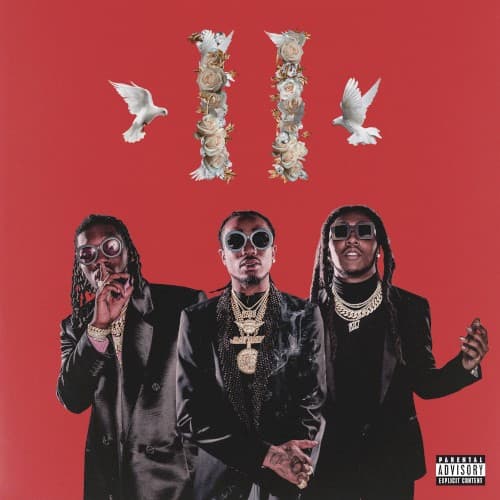
Culture III is a good album with excellent songs and an overextended running time. Its position in the catalog is easy to state: it sits comfortably below the group's breakthrough and level with or slightly above its bloated predecessor. The difference between this and that predecessor is a modest gain in focus and a small loss in ambition. Critics at the time were split, with the aggregate leaning positive but several reviewers pointing at the same issue of bloat, and that split feels fair. The record does not damage the group's legacy, but it does not add much to it either.
It is for listeners who already enjoy the trio's cadence and want a polished, high-budget version of it. It is also for anyone building a playlist who wants a strong set of current-era trap singles. It is not for someone who wants lyrical depth, stylistic range or an album that rewards a front-to-back listen. If you wanted a final chapter that rethinks the group's sound, this is not that record.
How it will age depends on what you are measuring. The singles and a few of the guest collaborations will likely hold up, because they were built to work in isolation and they do. The album as a unit will probably be remembered as the end of a trilogy rather than as a document in its own right. It is also now tied to an unavoidable sense of loss around the group, which gives the final run of songs a weight that the music alone might not carry.
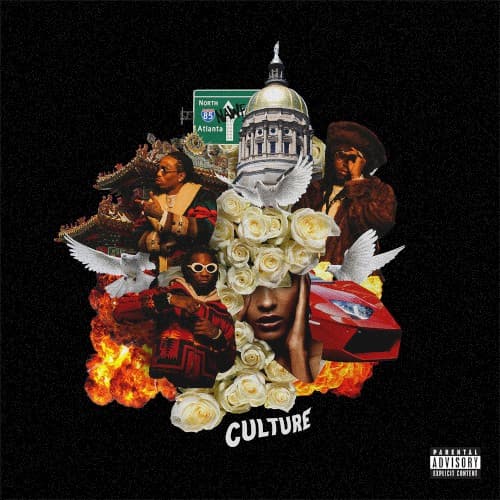
Start with “Straightenin”, “Need It” and “Type Shit”, which are the clearest demonstrations of what the group does well. Then explore “Roadrunner” if you want a texture that breaks the pattern. For what to hear next, go to the group's earlier Culture album for the same style in a leaner package, and to Future's catalog for a rapper whose melodic approach has shaped much of what is happening on the more atmospheric tracks here. The strongest argument for this record is that its best three songs would stand up on any Migos list, and the strongest argument against it is the fifteen others that surround them.
Track by track
Track Listing
Avalanche
StandoutA theatrical opener with dark, widescreen production by DJ Durel and Quavo that sets the album's polished tone. It works as a statement of intent, if a slightly generic one, and the group sounds locked in from the first bar.
Having Our Way
SolidThe Drake collaboration is smooth, melodic and clearly built for radio-friendly rotation. The beat is spacious enough to let the guest breathe, and the chorus is easy to remember. The group sounds slightly in service of the song's mood rather than driving it, which makes this a pleasant but not essential entry.
Straightenin
StandoutThe album's best argument for the group's formula. The six-producer credit list would suggest a mess, yet the beat is tight, springy and perfectly matched to the trio's triplets. The hook is sticky, the verses trade off with real chemistry, and the song feels like a single from the moment the drums enter. Its chart peak at number 23 on the Hot 100 is earned. It is also the track that exposes how much of the rest of the record is working at a lower temperature.
Type Shit
StandoutThe Cardi B collaboration is one of the most energetic cuts on the record, driven by heavy production from Murda Beatz and Tay Keith, among others. Cardi's presence gives the song a sharper, more confrontational feel than most of the tracks around it, and the trio responds by tightening up. A clear highlight and the right choice of guest.
Malibu
SolidA mid-tempo track with Polo G that leans on melody more than bounce. It is smooth and competent, with a guest verse that fits the mood, but nothing about it is hard to forget once it ends.
Birthday
SolidA breezy celebratory track with bright, bouncy production. It is easy to enjoy on first listen and slides easily into the middle of a playlist, though it does not build much beyond its initial groove.
Modern Day
SolidA confident, rhythmically busy cut produced by Murda Beatz and Fox. The group sounds comfortable, and the verses flow well, but the song is typical of the album's middle stretch: fine in isolation and indistinguishable from its neighbors in sequence.
Vaccine
SolidBuddah Bless supplies a dark, stripped-down beat, and the group delivers a workmanlike performance. The title ties it to its moment, but the music itself does not do much with that hook. Competent filler.
Picasso
StandoutThe Future collaboration is a more melodic, hazy piece in which the guest's sing-song delivery contrasts well with the trio's staccato approach. It is a welcome change of texture and a stronger pairing than several of the album's other features. The production, from Pvlace and DJ Durel, gives both sides room to work.
Roadrunner
StandoutZaytoven and Trauma Tone bring a more organic, keyboard-led sound that stands out against the digital sheen elsewhere. It recalls the group's earlier approach, and it is the album's most distinctive beat. The trio responds with loose, playful verses and sounds more relaxed than at almost any other point. One of the record's real highlights, and a reminder of how much a different producer palette could have helped.
What You See
WeakThe Justin Bieber collaboration is the album's clearest play for a pop audience. It is brief and polished, and the group's strengths barely register in the softer arrangement. It interrupts the album's momentum more than it adds to it.
Jane
StandoutHeavy, aggressive production from Tay Keith, Cubeatz, Carnage and Nils gives the group a harder surface to rap over, and they respond with more bite. A welcome jolt of energy after a few softer tracks, and a good example of the trio working best when the beat pushes back.
Why Not
SolidA solid but unspectacular track from DJ Durel and Quavo. The verses are fine, and the hook is catchy enough to do its job, but it sits in the album's soft center without making a strong case for its place.
Mahomes
SolidThe longest song on the record at just over five minutes, and the extra time is not clearly earned. The production from DJ Durel and BGudini is smooth and confident, and the trio's chemistry carries it, but the song overstays its welcome and would have been stronger trimmed.
Handle My Business
StandoutOz produces a more atmospheric, restrained beat that gives the group a different pocket to work in. The verses are more reflective in tone than most of the album, which makes this a modest standout in the closing stretch.
Time for Me
WeakCompetent trap with Murda Beatz, Mars and Sonic behind the boards. It is polished, forgettable and easily skipped, which makes it a clear candidate for the cuts a tighter edit would have made.
Light It Up
StandoutThe Pop Smoke collaboration brings a harder, drill-influenced energy courtesy of 808Melo and company. The guest's gravelly voice cuts across the trio's smoother delivery, and the contrast is the point. A strong late-album pickup that changes the temperature at exactly the right time.
Need It
StandoutThe lead single, with YoungBoy Never Broke Again and production from Buddah Bless, peaked at number 62 on the Hot 100. It is moodier and more melodic than most of the album, and the guest's raw, pleading delivery gives the chorus real feeling. It works as a closer because it sounds like a different kind of song than the rest of the record, and it is a reminder of how much better the album could have been with more of that willingness to change direction.
Frequently Asked Questions
Is Migos Culture III good?
What are the best songs on Culture III?
Is Culture III better than Culture II?
Who is featured on Culture III?
Genres
Styles