The scorecard
7.3/10 · Good
- Writing25%
- 6.0
- Production25%
- 8.0
- Delivery15%
- 8.0
- Cohesion15%
- 7.0
- Originality10%
- 7.5
- Replay value10%
- 7.5
Hooks and one-liners carry the record, and "Deadz" and "Brown Paper Bag" show wit, but the subject matter stays inside luxury and bravado.
Zaytoven, Metro Boomin, Murda Beatz and Purps deliver stickier melodies than the group had ever had, and "Bad and Boujee" and "Get Right Witcha" sound expensive without losing the bounce.
The triplet runs, handoffs and ad-libs on "T-Shirt" and "Slippery" are the tightest the trio has sounded, with each member's voice distinct.
Thirteen tracks is a sane length and the sound is consistent, but "Kelly Price" and the late stretch stretch the runtime past what the ideas support.
The flow was not new, but the combination of hook-first writing and polished Atlanta beats gave trap a pop-ready template at the exact moment streaming rewarded it.
As a playlist of singles it has held up very well, and the best five or six songs still sound current years on.
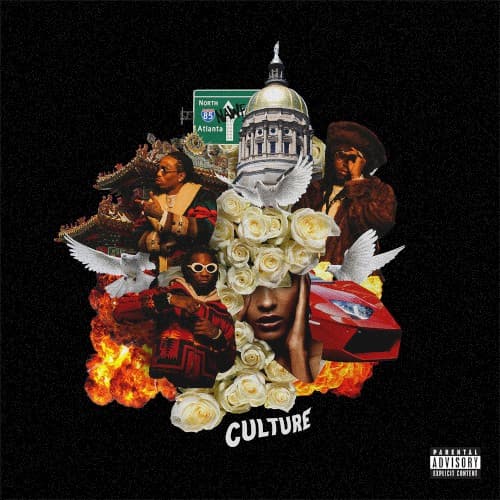
Migos Culture: The Album That Turned a Playlist Into a Pop Event
Culture is a very good album, but the best argument for it is as a playlist, and the record is more interesting for that than the praise it received. The thesis here is that Migos made the rare rap album that sounds finished as a set of singles and slightly padded as a continuous listen, and that this is a feature of when it arrived as much as a flaw.
The timing is the story. The lead single, "Bad and Boujee," came out in October 2016 and went to number one on the Billboard Hot 100 before the album existed in any final form. By the time Culture landed in 2017, the group had a streaming hit with Lil Uzi Vert, two more singles lined up and a promotional single that had already made the Hot 100. The album did not introduce its best songs; it collected them, and that changes how it should be judged.
The numbers confirm the model. It debuted at number one on the Billboard 200 with 131,000 album-equivalent units, only 44,000 of them pure sales, and was certified platinum within months. That ratio, with streams doing most of the work, is the clearest sign that this was a record built for the way people listened then: one song at a time, shuffled into a feed. The Grammy nomination for Best Rap Album the following year was the official acknowledgment.
What the record has, beyond that structure, is real craft. The trio's rhythm is sharper than it had been on earlier releases, the beats are cleaner and more melodic, and the hooks are built for repetition. Critics split on whether this counts as innovation. One reviewer argued that if you judge by novelty, you can filter the best songs into a playlist and be done; I would add that the album's weaknesses are exactly the parts that fail the playlist test. The first half is excellent, and the second half slackens. It is a strong record, but a smaller one than the reaction suggested.
Stickier Melodies, Tighter Handoffs, Thinner Ideas
The most important change from the group's earlier work is the sound. The producer list reads like an Atlanta roll call: Metro Boomin, Zaytoven, Murda Beatz, Purps, Cardo and others. The beats are cleaner than the mixtape era, with more melody and more space, and they give the three rappers room to work. The melodies are the biggest improvement. Where earlier records leaned on bare drums and a hook, these tracks have a tune under the rhythm, and the effect is a group that sounds comfortable in a pop context without abandoning its Atlanta roots.
Delivery is the second strength. Quavo, Offset and Takeoff trade lines with a precision that reads as choreography, and the triplet cadence that defined their earlier releases is now refined into something closer to a house style. Each member has a recognizable role: Quavo as the melodic hook-maker, Offset as the energetic storyteller, Takeoff as the compact, rhythmic finisher. One critic singled out Offset's improvement as a storyteller, and that is audible on the strongest tracks. The ad-libs are used as percussion, and when the three of them lock together, as on "T-Shirt" and "Slippery," the effect is hard to resist.
The writing is more limited. The subject matter stays narrow: luxury, status, success, the vocabulary of arrival. Within that range there are good lines and funny turns, and the humor keeps the record from becoming a catalog of purchases, but there is little attempt to go beyond the established vocabulary. Compared with the autobiographical turn of the previous album, this is a step back toward pure style. It works because the style is so well executed, and a stricter critic could reasonably call it thin.
The guests are chosen with care and used well. Gucci Mane, 2 Chainz, Travis Scott and Lil Uzi Vert each fit the track they are on, and the album avoids the problem of letting guests overshadow the trio. DJ Khaled appears on the title track in a brief, ceremonial role that frames the album as an event.
The weakness is the second half. After a strong opening run of singles, the record settles into a more routine stretch where the beats are still polished but the hooks are less sharp. Several songs run long, and the final tracks lack the urgency of the early ones. The sound is consistent, but consistency without variation starts to feel like repetition by the end.
Front-Loaded Hits and a Back Half That Coasts
Culture is a front-loaded record, and that structure is the clearest evidence of how it was built. The opening stretch is the album at full strength: a short ceremonial title track, then a run of singles and near-singles that keeps the energy high and the hooks coming. Three of the first six songs were released ahead of the album, and the sequencing leans on that familiarity. By the time the first half has played, the listener has heard most of what the record is going to offer.
The pacing after that is more uneven. The middle of the album mixes strong album cuts with a few songs that feel like they were included to fill space, and the transitions between them are smooth rather than purposeful. The tempo stays in a narrow band, the production palette does not change much and the subject matter repeats. None of the songs is bad, but few of them demand attention, and the pattern is easy to recognize from other major-label rap albums that were built around a few singles.
The closing stretch is where the length begins to show. The longest song on the album, a six-minute collaboration with Travis Scott, is the clearest example of a track that stretches an idea past its natural size, and the final songs do not rebuild the momentum of the opening.
Thirteen tracks and roughly an hour is a reasonable length for a major-label album, and it is shorter than the bloated releases that were common in the streaming era. The length is mostly earned in the first half and partly earned in the second. A tighter ten-song version would be a better album, but the playlist model makes that less of a problem than it would have been a decade earlier: listeners who want only the best songs know where to find them.
A Streaming-Era Landmark That Works Better as a Mixtape of Hits
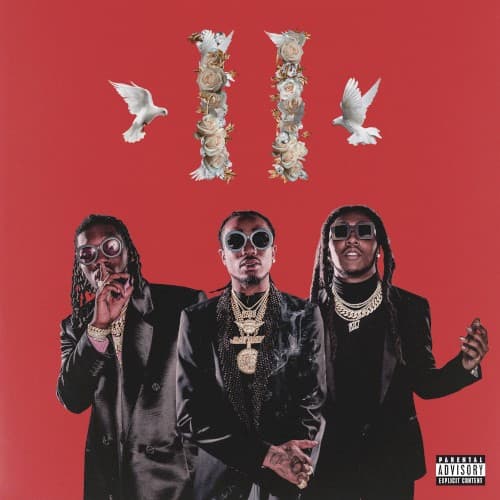
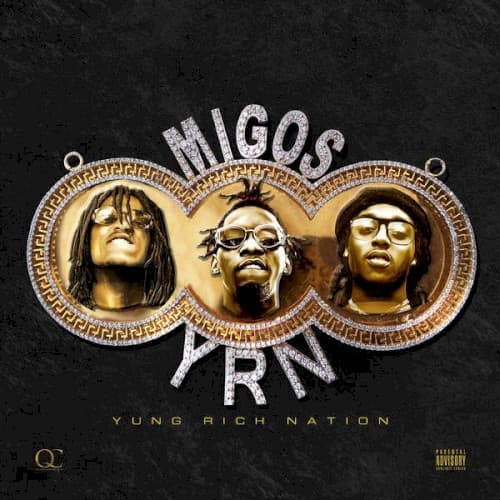
Culture is a great record by the standards of its moment and the best place to start with Migos on this site, where it stands as the group's strongest entry so far. Compared with the debut Yung Rich Nation, which polished the group's style without finding its edge, this album has the hooks, the melodies and the confidence that record lacked. Compared with the longer follow-up Culture II, it is tighter and more consistent, with a better ratio of highlights to filler. The ranking is clear: this is the group at its peak, but not the flawless statement some critics described.
It is for listeners who want modern Atlanta trap at its most polished, for anyone curious about how streaming reshaped the album format, and for fans of melodic, hook-driven rap. It is also an easy recommendation for a first Migos record. Listeners who want lyrical depth or thematic range should look elsewhere, and so should anyone who needs an album to build and release tension across its length. This is a record for playlists, not for sitting through.
It has aged well. The best songs still sound current, the production holds up and the group's rhythmic approach became the template for a generation of imitators. The record's limitations, the narrow subject matter and the soft second half, are more visible now, but they do not undermine the highlights. In a few years it will probably be remembered as the album that carried trap into the pop mainstream, and that is a fair legacy.
For a first listen, start with "Bad and Boujee" for the hit that set the record in motion, "T-Shirt" for the group's tightest handoffs and "Get Right Witcha" for a strong deep cut. After that, try Culture II to see what happens when the same formula is stretched to twenty-four tracks, and Yung Rich Nation to hear where the sound began. The best sentence this album offers is a hook, and it has dozens of them.
Track by track
Track Listing
Culture
SolidA short, ceremonial opener with DJ Khaled that frames the album as an event. It is more of an announcement than a song, and it does its job in under three minutes.
T-Shirt
StandoutProduced by Nard & B and XL Eagle, and the album's second single, this is the clearest showcase of the trio's rhythmic choreography. The handoffs are tight, the ad-libs land like drum hits and the hook is simple enough to stick after one listen. It reached number 19 on the Hot 100, and the song shows how well the group's style could translate to radio without losing its edge. A key track for understanding what makes the record work, and one of the best songs to try first.
Call Casting
StandoutA Buddah Bless production that was released ahead of the album as a promotional single. The beat is polished and the hook is catchy, though the song is slightly less distinctive than its neighbors. A strong album cut that does not quite reach single level.
Bad and Boujee
StandoutThe album's lead single, with Lil Uzi Vert, produced by Metro Boomin and G Koop, and the song that made the record a phenomenon. It topped the Billboard Hot 100 and was certified four-times platinum, and the reasons are audible: a menacing, minimalist beat, a hook that is almost impossible to shake and a group at the peak of its confidence. Lil Uzi Vert's verse adds a different color without breaking the song's mood. At nearly six minutes it is one of the longest tracks on the record, yet it never drags, and it stands as the clearest example of how trap became a pop language. If you hear one Migos song, this is the one.
Get Right Witcha
StandoutProduced by Murda Beatz and Zaytoven, this is one of the best album cuts on the record. The beat is bouncy and melodic, the flows are sharp and the song has the energy of a single without the radio polish. A good example of what the album has beyond its hits.
Slippery
StandoutGucci Mane joins the trio on a Deko and OG Parker production, and the album's third single. The beat has a slinky, dark groove, and Gucci's presence gives the song a lineage moment, a veteran of Atlanta trap sharing the booth with the group that carried the sound forward. It reached number 29 on the Hot 100. The song is a clear highlight and a good bridge between the album's opening run and its middle section.
Big on Big
SolidA Zaytoven production with a warm, piano-driven feel. The song is smooth and pleasant, but it is more of a mood piece than a standout, and it marks the point where the album's momentum begins to level off.
What the Price
SolidReleased as a promotional single ahead of the album, produced by Ricky Racks, Keanu Beats and 808Godz. It has a steady, confident groove and a strong hook, and it works well as an album cut. A solid song that does not stand out from its neighbors.
Brown Paper Bag
StandoutA Zaytoven production that gives the trio a looser, more playful setting. The delivery is relaxed and the humor comes through, which makes it one of the better mid-album songs.
Deadz
Standout2 Chainz guests on this Cardo production, bringing a veteran's wit to the album's second half. The beat is crisp and the verses are sharp, and the song is among the better late-album cuts. A good change of voice at a point where the record needs one.
All Ass
SolidA Purps production with a steady, functional groove. It is competent and energetic, but the subject matter is basic and the song blends into the stretch around it.
Kelly Price
SolidAt over six minutes, this Travis Scott collaboration is the longest track on the album, produced by Cash Clay Beats and Deraj Global. It has a hazy, atmospheric feel that differs from the rest of the record, and Travis Scott's presence adds texture. The song is interesting but it overstays its welcome, and it is the clearest example of the album's length problem.
Out Yo Way
SolidThe closer, produced by Purps and Cassius Jay, ends the album on a steady, confident note. It does not match the energy of the opening, but it gives the record a clean finish.
Frequently Asked Questions
Is Migos' Culture a good album?
How well did Migos' Culture perform?
What are the best songs on Culture?
Who produced Migos' Culture?
Genres
Styles