The scorecard
5.5/10 · Mixed
- Writing25%
- 5.5
- Production25%
- 6.0
- Delivery15%
- 6.5
- Cohesion15%
- 4.5
- Originality10%
- 4.5
- Replay value10%
- 5.0
Father's Day and Angels in the Sky reach for loss and family, but most verses recycle pain, loyalty and street-credential language with few new details.
Southside and Allen Ritter keep the beats clean, dark and radio-ready, yet the same palette runs through nearly every song and few beats leave an impression.
Polo G's rasp still gives the hooks on Barely Holdin' On some weight, but on much of the album he sounds like he is coasting through familiar cadences.
Eighteen songs in about 50 minutes, with a long, interchangeable guest-feature run through the middle, leaves the album without a clear arc.
It repeats his own template almost note for note, and the guest verses from Future, Offset and Lil Durk follow their own well-worn patterns.
A few singles and the personal closing stretch will survive playlists, but as a full album it offers little to return to; this is a projection for a recent release.
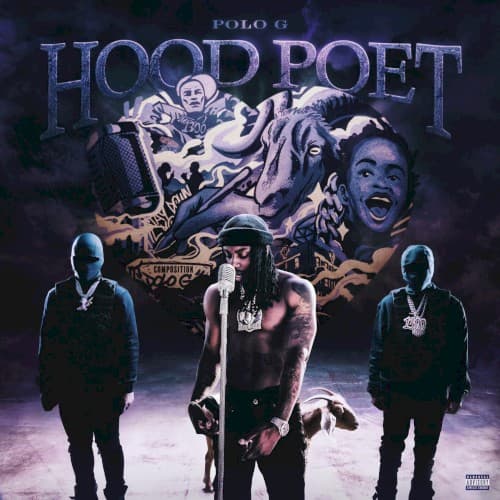
Polo G Hood Poet — A Poet Repeating His Best Lines
Hood Poet is a record that sounds like an artist waiting for permission to change. Polo G arrives at his fourth album with a full set of Southside-led beats, a guest list full of recognizable names and the same rasping, half-sung delivery that made him a streaming-era star. What he does not bring is a reason for this particular album to exist beyond the fact that it was delayed and finally released.
My argument is that Hood Poet is a competent holding pattern, and that competence is the problem. The songs are clean, the hooks are listenable and nothing is embarrassing, but the album asks nothing new of its maker or its audience. The backronym in the title, a statement about overcoming obstacles through pain and emotional trauma, promises a story of struggle and growth. The music delivers the first half of that, in a register of pain that Polo G has used for years, and almost none of the second.
The context makes this sharper. The album had been teased for a long stretch before release, and by the time it arrived the reaction was cold. It debuted at number 28 on the Billboard 200 with about 24,000 units, far below his previous peaks, and both fans and critics received it negatively. Slant's review, in a paraphrase that fits the record, argued that Polo G shows little interest in pushing himself out of his comfort zone. That reading holds up on the first listen and gets stronger on the second.
The record is not a disaster. There are real melodies, a few songs that carry emotional weight and moments where the old hunger flickers. But it is a long, safe album by an artist who built his reputation on emotional directness, and the safety shows. This review looks at where it works, where it stalls and what a listener should take from it.
Southside Gloss on a Familiar Wound
The production leans heavily on Southside, Allen Ritter and Smatt Sertified, with a long list of co-producers and additional hands, including Dr. Luke, Cubeatz and TM88. The sound they build is dark, clean and smooth, with sparse piano and guitar-like loops, hard-hitting drums and a low end that stays tight. It suits Polo G's voice, and it is expensive-sounding, but it is also generic. A listener could drop in almost any mid-tier trap vocalist and the beats would work just as well.
The writing remains the album's central weakness. Polo G's best material has always come from concrete detail, the people, places and decisions that make pain specific. On Hood Poet, those details are rare. Most of the verses retreat into broad statements about survival, loyalty, paranoia and wealth, which sound like the opening paragraph of every modern rap album. There are exceptions, especially near the end, where family and loss take over, but they arrive late and do not change the album's overall impression.
His delivery is still effective in short bursts. The rasp gives hooks an edge, and his rhythmic patience keeps verses from collapsing. The problem is range. Over eighteen songs he rarely changes pace or tone, and the hooks that once felt like confessions now sound like templates. He can still carry a chorus, but he no longer sounds challenged by one.
The guest list is long and mostly forgettable. G Herbo, 42 Dugg, Fridayy, Offset, Lil Durk, The Kid Laroi, Hunxho, GloRilla and Future are credited, and few of them leave a mark. Most deliver verses that fit the beat without altering the song's shape, which is a sign of a record assembled for playlist placement rather than conversation. The features reinforce the album's anonymity instead of broadening it.
The structural problem is bloat. Eighteen tracks with similar tempos and similar moods produce a plateau, not a journey. The best songs, the ones with a clear hook or a personal subject, would be stronger in a shorter, sharper tracklist. As it stands, the album mistakes quantity for ambition, and the mistake costs it momentum from the first quarter onward.
What is missing, finally, is risk. Nothing on the record sounds like it could have gone wrong, and that is why little of it feels alive. Even the slower songs keep to a safe emotional range, and the album never lets a verse run long, drop the drums or try a different voice.
Eighteen Songs, One Long Plateau
The album opens with a short, reflective song that sets expectations reasonably well, then settles quickly into a run of guest-driven tracks. The first third has some energy, partly because the singles are placed early and partly because the guests are still fresh. By the time the fifth song arrives, the pattern is clear: a Southside-style beat, a rasped hook, a guest verse and a three-minute runtime.
The middle is where the pacing collapses. Songs begin to share the same tempo and the same mid-register melody, and the guests become interchangeable. There is no peak, no surprise and no change of texture to reset the listener's attention. A few songs have catchy hooks, but they sit in a sea of lookalikes, and the stretch feels longer than its runtime. This is the clearest case for a shorter tracklist: ten or twelve songs would have kept the momentum and protected the better material.
The late album recovers some ground. The closing stretch moves toward family, loss and personal reflection, and the tone shifts from boasting to something more vulnerable. Angels in the Sky is the clearest example of that shift, and it gives the record a more human center than anything in the middle. The final songs are brief and quiet, and they end the album on a more honest note than it began.
Is the length earned? No. At about 50 minutes the album is not unusually long, but it carries too much sameness to justify its eighteen tracks. The best case for it is as a source of playlist material: take the singles and the personal songs at the end, skip the middle, and the experience improves noticeably. As a sequence, it does not build and it does not surprise.
A Weak Fourth Album From a Strong Voice
Hood Poet is a weak-to-mixed album that confirms how much Polo G's earlier work depended on specificity and momentum. The catalog context lists no other Polo G albums on this site yet, so the ranking is against the genre: it sits at the lower end of mainstream melodic trap from an established artist, with polished production and clear hooks undermined by repetition and a lack of ideas. Compared with his earlier records, it is the least focused and the least surprising.
It is for existing fans who want more of the same sound and are happy to build their own playlist from it. It is also a reasonable record for listeners who enjoy Southside-style production and are less concerned with lyrics. Skip it if you are new to Polo G, if you want a coherent album statement or if you care about writing; his earlier work makes a stronger case for why he matters, and this record does not add to it.
Its reception suggests it will age poorly. The reaction was cold at release, and the album's sameness is more noticeable on repeat listens than on the first. The best songs will survive in playlists, and the personal closing stretch may earn it a few defenders, but as a full record it lacks a distinctive identity.
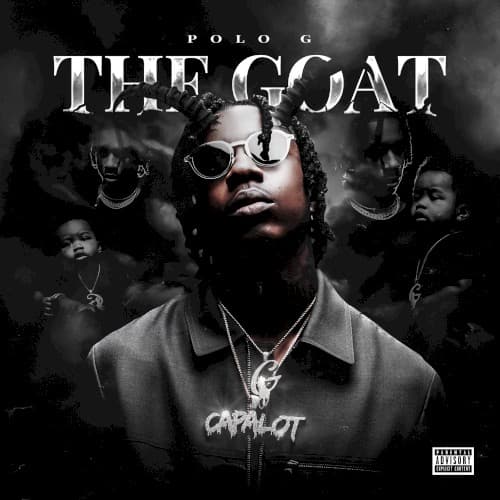
For first plays, start with Barely Holdin' On for the hook, Angels in the Sky for the emotional center and Father's Day for the album's most personal moment. For what to hear next, The Goat shows Polo G at his most focused, with shorter songs and a stronger sense of purpose, while Hall of Fame shows the same formula with bigger hooks and a more ambitious guest list. If this album is your introduction, treat it as a footnote: the better case for him starts earlier, and the last song here is the only one that makes you want to hear what he does next.
Track by track
Track Listing
God’s Favorite
SolidA short, reflective opener with a soft beat and a confident posture. It sets the tone clearly but does not offer much beyond atmosphere. At barely over two minutes, it is over before it can make a case.
No Recruits
SolidG Herbo brings a harder edge and the Southside-led production hits with some force. It is a competent Chicago pairing, though the song stays on a familiar track about loyalty and toughness.
Barely Holdin’ On
StandoutThe album's most effective single. The production is polished and heavy on mood, and Polo G's hook captures a tired, worn-down feeling that suits his voice. It is also the song that comes closest to the emotional directness of his earlier work, and its title is a fair summary of the album's mood. A clear highlight and a good entry point.
Only Gang
SolidA 42 Dugg collaboration with a hard beat and a crisp hook. It is competent and loud, but the loyalty theme is generic and the song leaves little trace. Its best feature is its brevity relative to the surrounding tracks.
Same Me
SolidFridayy's melodic presence gives this song a softer texture than its neighbors. The hook is pleasant, but the writing stays on the surface. It offers a change of texture, not a change of subject.
Detox
SolidA short, clipped track with a smooth beat and a steady flow. It is serviceable and forgettable, a clean example of the album's middle-tier output. The title promises a turn that the song never delivers.
Thorns
SolidA mid-tempo cut that leans into pain imagery, with a reasonable hook and a dark beat. Nothing stands out, but it holds the mood. It would pass unnoticed in any other position in the sequence.
G63
WeakOffset's guest verse adds a different cadence, but the song is a standard luxury-and-flex number. It fills a slot rather than adding to the story.
We Uh Shoot
SolidLil Durk joins for a hard-edged single that leans into street imagery. The beat is aggressive and the chemistry is clear, but the song is a familiar piece of material that adds little to either artist's catalog.
Rain Fallin
StandoutThe Kid Laroi brings a melodic hook that matches the title's mood. It is one of the better collaborations because both voices share a register, even if the writing is standard. The mood is gloomy but never heavy, which is the album's usual compromise.
Distraction
StandoutAn earlier single that arrives late in the sequence and still sounds like one of the stronger hooks on the record. The Southside and Cubeatz production is clean and compact, and the song is easy to play on repeat.
No Turning Back
SolidHunxho's guest spot adds some melodic variety, but the song is a typical determination anthem with limited memorable detail. It is the kind of song a playlist absorbs without anyone noticing.
Angels in the Sky
StandoutThe emotional center of the album and its most affecting song. The mood turns from posturing to grief, and Polo G sounds more present and less guarded than elsewhere. The beat gives the vocal room, the hook is simple and sincere, and the song proves that his strength remains direct feeling expressed in plain language. It is the clearest sign of what the album could have been with more of this and less filler.
Darkside
SolidA moody track with a steady beat and a reflective hook. It is one of the better late-album cuts, though it does not rise above the record's general sameness. The music video the song later received gave it more attention than its writing earns.
Bad Kids
StandoutGloRilla's energy brings a welcome jolt, and her verse is one of the few guest turns that changes the album's temperature. The song is a bit of a stylistic outlier, but a pleasant one.
Survival of the Fittest
SolidFuture appears on a hard track about endurance. The pairing is sensible and the beat is heavy, but the song follows both artists' familiar patterns and does not push either one.
Father’s Day
StandoutA personal, quieter song that moves away from boasting and into family. It is one of the few moments with specific emotional stakes, and it is stronger for the restraint of the production and the plain delivery.
From the Heart
StandoutA brief closer that ends the album on a sincere note. It is short and unadorned, and it leaves a better final impression than the middle of the record earns. Even at under two and a half minutes, it says more plainly than most of the record what the album is trying to do.
Frequently Asked Questions
Is Polo G Hood Poet a good album?
What are the best songs on Polo G Hood Poet?
Who produced Polo G Hood Poet?
How did Polo G Hood Poet perform on the charts?
Styles