The scorecard
6.9/10 · Good
- Writing25%
- 7.0
- Production25%
- 7.0
- Delivery15%
- 7.0
- Cohesion15%
- 6.5
- Originality10%
- 6.5
- Replay value10%
- 7.0
Polo G writes about loss, survival and distrust in plain, specific terms, and the best verses on Deep Wounds and Dyin Breed are confessional without turning into self-pity.
Ayo and Jtk build most of the record from piano and guitar loops with trap drums, a sound that is melodic and mournful without becoming sticky.
His sing-song, slightly strained cadence turns hooks into laments, and Pop Out and Finer Things show how well he rides a melody without losing the street edge.
Fourteen tracks in about forty minutes with almost no skits keep the mood unified and the pacing tight.
The fusion of Chicago street rap and melodic pop-leaning hooks was already in circulation, and Polo G executes it more than invents it.
The short songs, strong hooks and consistent mood make it easy to play start to finish, and the long chart run supports that.
Polo G Die a Legend — A Streaming-Era Debut That Sounds Like a Funeral and Plays Like a Playlist
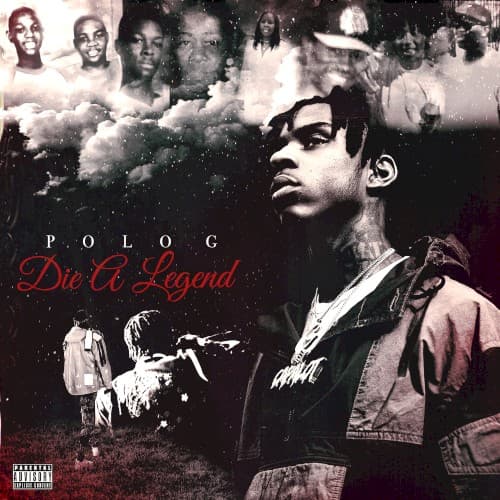
Die a Legend is a debut that understands exactly how it will be heard. It runs about forty minutes, nearly every song is under three and a half minutes, there are no skits, and each track is built around a hook that works whether you start at the top of the album or land on it in the middle of a playlist. That description sounds like a cynical product, and the surprising part is that the record is not. The thesis of this review is that Polo G found the one place where streaming logic and genuine feeling overlap: short, melodic, mournful songs that are easy to loop precisely because they sound like someone working through grief, not selling it.
The context explains the construction. By the time the album appeared, several of its songs had already been released as singles, and the biggest of them, Pop Out with Lil Tjay, had reached the US top 20 before the album was even sequenced. The record then debuted at number six on the Billboard 200 with 38,000 units, held in the top ten for three weeks, and went on to reach platinum. That slow, steady climb is the signature pattern of a streaming-era hit: an album that is not a spike but a long tail, sustained by songs people return to.
What separates it from the many similar records of its moment is the voice. Polo G does not rap like a man trying to fit in a playlist. His delivery is slightly strained, closer to singing than to rhythm-first rapping, and it carries a weariness that makes the melodies feel earned. The subject matter is familiar, loss, violence, survival and mistrust, but he treats it with a plainness that gives it weight. Pitchfork named the album Best New Music and described it as meticulously crafted and honestly told, and that is a fair summary of what holds it together.
The record is not a revolution. It refines an existing sound rather than inventing one, and some of its ideas are repeated more than they need to be. But as an argument that a streaming-friendly album can still be a coherent, personal one, it is more persuasive than almost anything else from its year.
Loops, Laments and the Economy of a Three-Minute Song
The writing is the album's anchor. Polo G keeps his language plain and his images concrete, and that restraint is what makes the heavier songs hit. He writes about friends lost, a childhood in a hard neighborhood, the pressure of sudden attention and the suspicion that comes with it, and he does so without the swagger that often accompanies such material. Critics highlighted the combination of honesty and tragedy, and it is the right description: the verses read as confessions delivered at street level rather than performances aimed at a camera. The weakness is repetition. A number of songs return to the same set of themes in similar terms, and a record this consistent in mood sometimes sacrifices variety of idea.
The production does most of the emotional work. Ayo and Jtk produce a large share of the record, with additional contributions from Iceberg, JD On Tha Track and others, and the sound is built on piano and guitar loops, rolling trap drums and dark, melodic bass. The result is a palette that is mournful without being muddy, and which sets the voice at the center of the mix. In streaming terms, the beats are well designed: they establish a mood in the first ten seconds, they do not outstay their welcome, and they leave a space for the hook to land. That economy is a skill, and the record shows it consistently.
Delivery is where Polo G most clearly stands apart. His cadence is melodic but not smooth, with a slight crack that gives the hooks a lament-like quality. He moves easily between rapping and singing and the transitions are rarely visible. The hooks stick because they are performed as feelings, not as slogans. The guests are kept to a minimum, which is itself a streaming-era decision with an artistic payoff: the record sounds like one person's story instead of a playlist of cameos. The two collaborations that exist are the album's biggest singles, and both lean toward the pop end of his sound.
The main limitation is range. The album's mood is nearly uniform, and while the production is varied enough to avoid monotony, the overall emotional palette is narrow. There are few moments of humor, few shifts in perspective and little that surprises. This is a record that does one thing very well, and it does it for forty minutes. A listener who wants contrast will find the sequence samey, and a listener who wants a mood will find it close to perfect.
The result is a debut that makes a compelling case for craft over novelty. It is not trying to reinvent anything, but it is carefully built, honestly performed and unusually coherent for a project with this many singles attached to it.
Forty Minutes, No Skits, No Wasted Motion
As a sequence, Die a Legend is notable for what it leaves out. There are no skits, no sketches and no filler interludes, and the opening track is a two-minute introduction that sets the mood and gets out of the way. The album then moves through its fourteen songs with a steady rhythm: a few harder tracks to establish the street side of the story, a run of melodic songs that carry the emotion, and a couple of guest-driven singles placed where they can offer a change of pace. The flow is smooth, and it is easy to hear the album as a continuous piece.
The peaks are distributed evenly. The record does not build to a single climax. Instead it offers a series of songs of similar quality, and the highest points are close in height to the average. That is both a strength and a limitation. It makes the album easy to play from start to finish, and it keeps the listener from feeling a drop in quality. It also means there is no single moment where the record becomes extraordinary, and some listeners will want one.
The sag, such as it is, comes in the middle. A run of songs in a similar mood and tempo blends together, and the individual ideas are less distinct than in the early and late stretches. Nothing here is weak, but nothing is memorable enough to disrupt the pattern. The sequence recovers in the closing third, where the writing turns more personal and the production gets slightly darker.
Is the length earned? Yes, easily. Forty minutes is the right size for a record with this much mood and not much variety, and no song feels padded. If anything, the compactness is the album's best structural decision. In an era when many rap albums stretch to an hour or more to chase streaming numbers, Die a Legend shows that a short record can generate the same numbers with fewer tracks, and a better chance of being heard as a whole.
A Short Debut That Earned Its Long Tail
There is no other Polo G album rated on this site yet, so the placement is a matter of context. Die a Legend is his debut, and it works as a blueprint for the sound that made him one of the major melodic rappers of the period. It debuted at number six on the Billboard 200, spent three weeks in the top ten, and reached platinum in 2020, and critics gave it strong notices, including a Best New Music designation from Pitchfork. The reception is consistent with what the record delivers: a focused, honest, well-made debut that does not stretch beyond its strengths.
It is for listeners who like melodic rap with a street-level edge, and for anyone who wants an example of how a streaming-era album can be coherent. It is also a good starting point for fans of Chicago rap who want to hear the genre's melodic side. It is not for listeners who want lyrical variety or technical showmanship, and it will not satisfy anyone looking for a dense, concept-driven record.
It has aged well. The mood is consistent, the hooks have held their appeal, and the production has not dated, mostly because it is built on simple, emotional loops rather than trend-driven effects. The album's popularity has also grown steadily, which suggests that the audience found the songs for reasons beyond a single hit.
Start with Pop Out, the single that brought the album its first wide audience, then the melancholy Finer Things, and Deep Wounds, which is the clearest example of the record's confessional side. After that, listen to the Lil Baby and Gunna sequel, Pop Out Again, to hear how the sound plays with a more commercial approach, or look for Polo G's later work to see how he expanded the formula.
Die a Legend proves that a compact, melodic record can be both a streaming success and an honest piece of writing, and its best songs are the reason it still plays.
Track by track
Track Listing
Lost Files
StandoutA two-minute opener that sets the mood with a dark, melodic loop and a confessional verse. It works as an introduction and gets out of the way quickly.
Dyin Breed
StandoutA hard-edged, confessional track about survival and a world where trust is rare. The delivery is strained and weary, and the beat is built on a mournful loop that gives the voice room. It establishes the album's emotional register and shows the writing at its plainest and most effective. A strong early statement of purpose.
Through da Storm
StandoutA melodic song with a sung vocal from Leia Monroe that deals with hardship and perseverance. The hook is warm and the production is spacious, and the song gives the album a note of hope. Slightly more conventional than the tracks around it.
Effortless
SolidA smoother, more confident track that lets the melodic side of his delivery lead. The beat is clean and the hook is easy to remember, though the writing does not break new ground. A solid, easy listen.
Pop Out
StandoutThe breakout single with Lil Tjay, and the clearest example of the album's pop-leaning side. The production by Iceberg and JD On Tha Track is bright and bouncy, the hook is instantly memorable, and the two voices complement each other well. It reached the US top 20 for good reason, and it works as an entry point to the record. It is lighter than most of the album, which is its appeal and its limitation, but the performance is polished and the song has not worn out its welcome.
Battle Cry
StandoutA defiant, forward-moving track with a hard hook and a determined delivery. The beat has momentum and the writing is direct, and it works as a counterweight to the softer songs around it. Released ahead of the album, it holds up in context.
BST
SolidA mid-tempo track that stays in the album's established mood, with a melodic delivery and a dark loop. The writing is solid but not distinctive, and the song blends into the middle of the record.
Finer Things
StandoutA melancholy, melodic single about wanting more than the life around you offers. The production is wistful and the hook is the most affecting on the album, and the delivery has just the right amount of strain. It is the clearest example of the sound that made the record work, and it holds up on repeat listens. One of the best songs here.
Picture This
StandoutA reflective, storytelling track that slows the pace and gives the writing more room. The beat is minimal and the delivery is measured, and the song benefits from the contrast with the harder tracks around it.
Chosen 1
SolidA short, confident track with a hard beat and a boast-driven verse. At just over two minutes it makes its point and moves on, though it adds little new.
Deep Wounds
StandoutA raw, confessional song that is the clearest expression of the album's emotional core. The delivery is vulnerable and the writing deals with loss and pain in plain terms, which gives it a weight that the glossier singles lack. The production is restrained enough to keep the focus on the voice, and the hook lands without sentimentality. It is among the strongest songs on the record and the best argument for the critics who praised its honesty.
Last Strike
StandoutA tense, rhythmic track with a darker production and a more aggressive delivery. It gives the closing stretch a bit of edge and a change of pace, and the writing is sharper than on some of the middle songs.
A King’s Nightmare
StandoutA reflective, personal track that turns the album's themes inward, with a melodic delivery and a hazy beat. The writing deals with doubt and pressure, and the mood is quiet and effective. A strong late entry that gives the record emotional depth.
Pop Out Again
SolidThe sequel to the earlier single, with Lil Baby and Gunna, and the album's most commercial closing statement. The production is glossy and the hook is catchy, and the guests bring a different texture, though the song is more about repeating a formula than extending it. Entertaining, if less personal than the rest of the record.
Frequently Asked Questions
Is Polo G Die a Legend a good album?
What are the best songs on Die a Legend?
How did Die a Legend perform commercially?
Styles