The scorecard
6.2/10 · Mixed
- Writing25%
- 6.0
- Production25%
- 6.5
- Delivery15%
- 7.0
- Cohesion15%
- 5.5
- Originality10%
- 5.5
- Replay value10%
- 6.0
The writing is split: the generic flexing, loyalty talk and general perseverance lines of the star-driven middle weigh as much as the real grief and story in Heart of a Giant and Bloody Canvas.
The glossy, melodic beats from E. Bankz, WizardMCE and Wheezy are polished and radio-ready, and the acoustic-leaning RAPSTAR is a genuine hook, but the polish breeds sameness and many beats are interchangeable.
Polo G's rasped sing-rap carries the hooks on RAPSTAR and the clipped, hard rapping on GNF (OKOKOK) shows real range, though uneven guest verses keep the performance from being consistently strong.
The strong front half gives way to a flat, guest-heavy middle with no peak, and twenty songs in about 54 minutes ask for more attention than the material earns.
It pushes the pain-rap template toward pop without reinventing it, and the guest-heavy structure follows the standard streaming-era blueprint, so the gains and the familiarity roughly cancel out.
The singles and a handful of album cuts hold up, but the guest-driven middle has gained nothing from time and at twenty tracks most listeners will build a playlist rather than replay the full record.
Polo G Hall of Fame — Too Many Guests at a Sad Man's Party
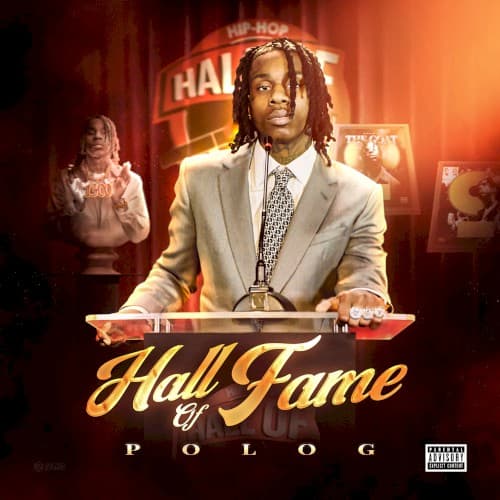
Hall of Fame is the sound of Polo G being handed a bigger room and deciding to fill it. The album opens with an acoustic-flavored hook, climbs to the first number-one single of his career, and then keeps adding voices: Lil Wayne, Nicki Minaj, Young Thug, DaBaby, Roddy Ricch, Pop Smoke and more. The result is a record that sounds like success, and sometimes only like success.
My argument is simple. This is the album where the formula that made Polo G effective, a rasping, half-sung hook over a minor-key bed, becomes mainstream-friendly at the expense of intimacy. When it works, the songs are tighter and more melodic than anything he made before. When it does not, the album sounds like a well-produced compilation that could be shuffled with no loss. The best moments are small: the shortest, hardest songs and the ones where a collaborator shares his emotional register rather than simply adding a verse.
The stakes were real. It debuted at number one on the Billboard 200 with 143,000 units, his first and only number-one album, and RAPSTAR reached the top of the Hot 100. Critics noted the move toward pop-minded production, with Pitchfork describing an ultimately hopeful exploration of how trauma manifests and AllMusic observing that the album swims further into the mainstream. Both readings are accurate. The pain remains the subject, but the packaging has changed.
Twenty tracks is a lot for a rapper whose strengths are compression. The album works best when it respects that, and worst when it follows the streaming-era instinct to add songs for volume. What survives is a handful of excellent singles, a few unexpectedly strong album cuts, and a long stretch in which the record is merely competent.
Glossy Beats, Loyal Pain, and a Growing Guest List
The production credits are wide, with E. Bankz, Synco, WizardMCE, Wheezy, Taz Taylor and CashMoneyAP among many others, and the sound is consistently polished. The signature texture is a clean melodic loop, guitar-like or piano-led, with sharp drums and a low end that never crowds the vocal. RAPSTAR sets the standard with an almost singer-songwriter hook, and the best of the production stays in that mode: restrained, warm and slightly mournful. The weakness is that polish produces sameness. Many of the beats could be swapped between songs without anyone noticing.
The writing has two modes. In one, Polo G writes about loss, trauma and survivor's guilt with real feeling; Heart of a Giant, a pairing with Rod Wave, is the clearest example, two rappers who share a register and let it breathe. In the other, he falls back on flexing, loyalty declarations and general statements of perseverance that appear on almost every modern rap album. The first mode is why people care about him. The second fills the second half of the record and makes it feel generic.
His delivery remains the album's strongest asset. The rasp gives even simple hooks a ragged edge, and his flow, clipped, patient and rhythmic, keeps verses from drifting. The shortest tracks are the most interesting for this reason: GNF (OKOKOK), under two minutes, shows him rapping harder and faster than his melodic reputation suggests, and the contrast is welcome. There is more range here than on his earlier work, and the album is better when it uses it.
The features are the most uneven element. Some, like Rod Wave, match the emotional tone and deepen the song. Others, like Party Lyfe with DaBaby, bring energy that feels imported from another album, and the song never decides whether it belongs to Polo G or to its guest. The Nicki Minaj and Roddy Ricch collaborations are polished but interchangeable, and they read as chart strategy more than creative choice.
The larger weakness is the structure. A twenty-track album with a deluxe edition behind it is built for streaming, not for sequence, and the record shows it. The strongest songs are short, focused and emotionally direct. The weakest are the ones that exist to fill a playlist slot.
There is also the matter of tone. The album wants to be hopeful, and the best songs earn that by letting the sadness stay visible while pointing past it. The weaker ones announce the hope in the hook and then rap about money, which makes the emotional arc feel pasted on. A record built around survival needs the survival to cost something on the page, and here it too often costs only a chorus.
Fifty-Four Minutes, and Where the Momentum Goes
The front of the album is its best stretch. It opens quietly, lands its biggest single within two songs, and moves through a run of tracks that balance melody and aggression. By the time the first quarter ends, the record has presented its strongest case: a weathered voice, a mainstream sheen and an obvious sense of direction. The sequencing here is smart, spending the commercial capital early and letting the album settle into its emotional core.
The middle thins out. Guests arrive at a steady clip and the energy flattens, with several songs sharing the same tempo and the same mid-register melody. Individually they are fine, but the stretch has no peak, no clear change of pace and no song that justifies its length. A trimmed tracklist, perhaps twelve or fourteen songs, would have protected the momentum of the first half and made the album feel more purposeful.
The late tracklist recovers partly through a few emotionally direct songs and a long closer that gives the record a more personal ending. Bloody Canvas, at more than four minutes, is the longest song on the album by a wide margin, and the extra time is well spent: it lets Polo G slow down and give a story room to develop, which is something the shorter songs rarely allow. It is the only moment where length feels earned rather than inflated.
As a whole, the album's length is not earned. At about 54 minutes it is not excessive in absolute terms, but it asks for more attention than its material deserves. The deluxe edition, which added fourteen more tracks, extends that problem. This is a record best enjoyed as a curated playlist: take the singles, the short aggressive cuts, the Rod Wave collaboration and the closer, and the rest becomes optional.
A Chart-Topping Record That Works Best as a Playlist
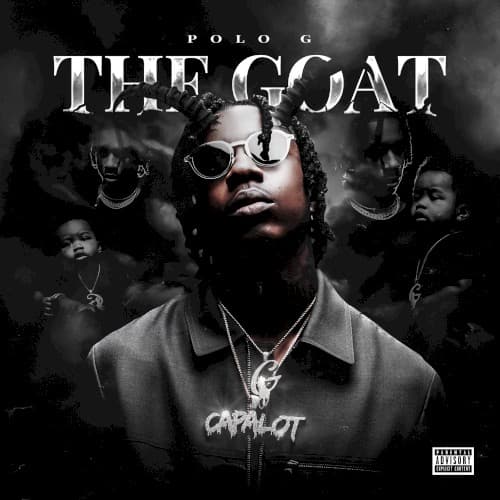
Hall of Fame is a good album that is more successful as a collection of songs than as a record. The catalog context lists no other Polo G albums on the site yet, so the ranking is against the genre: it sits above the average major-label rap release in craft and hooks, and below the records that justify their length. Compared with his previous album, The Goat, it is bigger, more melodic and more guest-heavy, and it trades some of the earlier record's focus for reach.
It is the right album for listeners who want to hear Polo G at his most commercial, with clean production, famous guests and a handful of excellent singles. It is also a fair starting point for newcomers curious about why he reached number one. Skip it if you want a tight, cohesive statement; the 20-song structure and interchangeable features work against that, and the earlier, shorter record makes a better case for his strengths.
It has aged reasonably well. The singles still sound strong and the best album cuts have held up, but the guest-driven middle has not gained anything from time, and it now reads as a snapshot of streaming-era rap strategy rather than a record that stands out. The pain at its center is still real, and that is what keeps it listenable.
For first plays, start with RAPSTAR for the hook, Heart of a Giant for the emotional core and GNF (OKOKOK) for the sharpest rapping. For what to hear next, The Goat is the better-sequenced record and shows the formula in a more focused form, while Rod Wave's catalog is the natural next stop for anyone who connected with the pain-rap register on the collaboration. A good measure of whether this album is for you is to play the first three songs and the last one: if those work, the middle is skippable, and if they do not, the rest will not change your mind.
Track by track
Track Listing
Painting Pictures
SolidA short, melodic opener that sets the mood with a soft beat and a reflective hook. It works as an introduction and not much more, but it establishes the album's emotional baseline cleanly.
RAPSTAR
StandoutThe album's calling card and its best song. The acoustic-leaning production gives Polo G's hook a singer-songwriter feel, and the lyrics balance fame and doubt without tipping into bragging. It is easy to see why it became a number-one single: the melody is memorable and the delivery is honest. It is also the clearest argument for the album's pop-minded direction.
No Return
SolidA three-way collaboration with the Kid Laroi and Lil Durk, built for radio and polished enough to work there. The voices blend well, but the song prioritizes smoothness over feeling.
Toxic
StandoutA brief, tight cut with a clipped flow and a moody beat. At barely over two minutes it makes its point and leaves, which is the right instinct.
Epidemic
StandoutAn earlier single that sits comfortably in the album's melodic lane. The hook is strong and the delivery confident, though it feels closer to his previous album's sound than to this one's pop direction.
GANG GANG
SolidLil Wayne's guest turn gives this single some veteran weight, and the production is clean and bouncy. It is a reliable radio cut that adds energy without adding depth.
Boom
SolidA very short, energetic track that leans on rhythm over melody. It is a quick change of pace and a decent reminder that Polo G can rap without a hook leading the way.
Black Hearted
SolidA darker, more introspective track with a steady flow. The mood is effective, but the writing is generic enough that it fades from memory quickly.
Broken Guitars
SolidScorey joins for a melodic, guitar-tinged song about emotional damage. The title matches the sound, and the shared hook is pleasant, but it stays in familiar territory.
GNF (OKOKOK)
StandoutThe sharpest rapping on the record and its shortest song, at under two minutes. Polo G drops the melody and delivers hard, clipped verses with real force, and the brevity makes it hit harder. It is a useful reminder that he can do more than sing about pain, and it is the track that most deserves a place on a short playlist.
Go Part 1
StandoutG Herbo brings a Chicago connection and a tougher edge, and the two rappers trade bars with obvious chemistry. A solid collaboration that fits the album's more aggressive side.
Heart of a Giant
StandoutThe album's emotional high point and the best collaboration. Rod Wave shares Polo G's strained, melodic register, and the two sound like they are commiserating rather than trading verses. The production gives them space, the hook is simple and sincere, and the song leans into pain without any commercial packaging. This is where the album's title promise, a rapper who has earned a place among the greats by writing from experience, comes closest to being true.
Zooted Freestyle
WeakA throwaway freestyle that adds length without adding anything else. It reads as filler and could be removed without a loss.
Party Lyfe
WeakDaBaby's energy feels like it belongs to another album, and the song never settles on a tone. It is competent but disconnected from the album's emotional core.
Losses
SolidYoung Thug's guest verse adds a distinctive vocal texture, and the production is among the more interesting on the album. The song is a good example of how a collaborator can shift the mood without breaking it, though the writing remains standard.
So Real
SolidA mid-tempo reflection with a steady hook. It sits comfortably in the album's sound and does not stand out, which makes it typical of the back half.
Fame & Riches
SolidRoddy Ricch brings a melodic hook that matches the beat, and the song is smooth and well made. It reads as a chart-minded collaboration and is more polished than personal.
For the Love of New York
SolidNicki Minaj's guest appearance gives the song star power, but the track feels like a collaboration built for visibility. It is professionally done and a little impersonal.
Clueless
SolidA posthumous Pop Smoke appearance alongside Fivio Foreign gives this song a drill-flavored energy that contrasts with the melodic material around it. It is a welcome change of texture, though it feels more like a guest showcase than a Polo G song.
Bloody Canvas
StandoutThe longest track on the album by far, and the one that earns its time. The pacing is slower, the story has room to develop, and Polo G's delivery is more reflective than on the shorter cuts. As a closer it gives the record a personal, unhurried ending after a long run of compressed songs, and it hints at what the whole album might have been with fewer guests and more patience.
Frequently Asked Questions
Is Polo G Hall of Fame a good album?
What are the best songs on Polo G Hall of Fame?
Did Polo G Hall of Fame reach number one?
How long is Polo G Hall of Fame?
Styles