The scorecard
6.9/10 · Good
- Writing25%
- 7.0
- Production25%
- 7.0
- Delivery15%
- 7.5
- Cohesion15%
- 6.5
- Originality10%
- 6.0
- Replay value10%
- 7.0
Martin & Gina and Wishing for a Hero turn grief and loyalty into specific scenes, but the album keeps returning to the same loss-and-grind vocabulary and few verses push past it.
Melancholy loops from Mustard, Hit-Boy, WayneOnABeat and Nick Mira share one mood without sounding cloned, and Go Stupid proves the palette can bang when asked.
Polo G's strained, half-sung voice makes the hooks on Heartless and DND stick, and he rides short bars cleanly at 2:45 and under.
Sixteen songs in about 47 minutes with nothing over 3:24 keeps momentum, though the middle stretch from Be Something to Relentless blurs together.
The sing-rap pain template was already working in Chicago and Atlanta; Polo G's contribution is consistency and a more weathered tone, not a new sound.
The singles and the closer hold up well, and short runtimes make full-album replays easy, but the weaker middle tracks are the first to fall out of rotation.
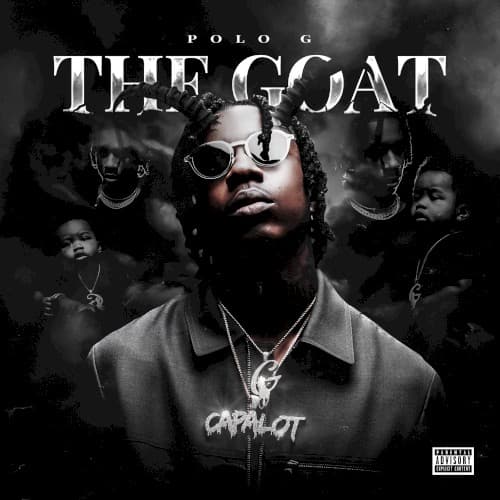
Polo G The Goat — A Sad-Song Formula That Learned to Bang
The Goat is not as confident as its title, and that is exactly why it works. Polo G sounds most convincing when he is wounded, tired and slightly suspicious of his own good luck, and this album is built around that voice. Over sixteen songs he trades in a particular kind of trap record: minor-key loops, a hook half sung and half groaned, and verses that move quickly because nothing runs past the three-and-a-half-minute mark.
My argument is that The Goat is the record where Polo G stopped sounding like a promising newcomer and started sounding like a brand. The formula is audible within the first two songs. A downcast melody sits under dense, clipped rapping, the chorus lands before you have settled, and the song is over before the mood curdles. That consistency is the album's greatest strength and its ceiling. Almost every track is a variation on one emotional register, and the writing rarely gets more surprising than the production does.
The release timing matters for how it plays. Three singles were already circulating when the album arrived, which means the record opens with listeners already humming half of it. Heartless, Go Stupid and DND carry the tracklist the way singles are supposed to, and the rest of the album has to justify itself next to them. Pitchfork called the record proof of an adaptable star working inside a major-label system, and that framing is fair: the polish is real, the songs are tight, and the pain is delivered in a form built for playlists.
What keeps it above ordinary streaming-era melodic trap is the voice. Polo G does not oversing the hooks and he does not hide behind Auto-Tune the way the genre sometimes does. He sounds like a person describing a bad week in a sad voice, and that gives even the formulaic songs a pulse. The question the rest of this review answers is how far that voice can carry a record that rarely changes tempo.
Grief Over Guitar Loops, Delivered at Speed
The production credits read like a committee, with Mustard, Hit-Boy, Mike WiLL Made-It, Tay Keith, Murda Beatz, Nick Mira and WayneOnABeat among the names, yet the album sounds like one room. The common thread is a restrained, melodic bed: guitar-like plucks, soft pianos, and drums that thump without crowding the vocal. Even Go Stupid, the loudest moment, keeps the low end tight enough that Polo G's voice stays in front. It is a mix designed to make a strained tenor feel intimate, and it succeeds.
The writing leans on a small set of themes: loss, loyalty, paranoia, money as a poor consolation, and a faint suspicion that success is borrowed time. When Polo G gets specific, as in Martin & Gina, a sour relationship story told with real narrative momentum, the results are strong. When he reaches for general statements about pain and perseverance, the verses blur into one another. There is a reason the best songs are the ones with a scene, a person or a decision at their center. The weaker ones substitute mood for incident.
Delivery is where the album separates itself from its imitators. His flow is clipped and rhythmic, and he stacks rhymes with a patience that keeps verses from sounding like hooks in disguise. The hooks themselves are sung with a rasp that gives them weight, which is a real skill in a genre where melody often comes at the cost of feeling. The weakness is range. Over sixteen songs he almost never changes register, and the cumulative effect is a record that is consistently pleasant and rarely startling.
The guest list is mostly well chosen but uneven in impact. Juice Wrld on Flex adds a melodic counterweight that suits the sound, and BJ the Chicago Kid gives the closing track its emotional lift. Lil Baby on Be Something is more functional than inspired, a verse that fits the beat but does not alter the song's direction. The features reinforce the album's identity, but they do not widen it.
There is also a structural trade-off hiding in the short runtimes. Brevity keeps every song focused, yet it also means few songs develop. A track ends just as an idea has settled, and the album sometimes feels like a series of strong first drafts rather than finished arguments. That is a modern virtue in the playlist economy and a limitation if you want a record to build over time.
Forty-Seven Minutes That Never Waste Your Time, Until the Middle
The opening stretch is the album at its most efficient. It leads with a statement of intent, moves quickly into the first big single, and by the time the fifth song arrives you have heard the whole range of what the record can do: the melancholy hook, the relationship narrative, the guest turn and the loud posse cut. Sequencing the singles early was the right call, because it lets the album spend its credit before the quieter songs arrive.
The middle is where the pacing sags. From the run of songs around the halfway mark, the tempos and moods start to repeat, and several tracks pass without leaving a distinct memory. None of them is bad, and each is competent in isolation, but together they form a plateau where the album stops moving. A shorter tracklist, or one that placed a tempo change in this stretch, would have protected the momentum the front half built.
The recovery is real. The last third reintroduces melody and narrative, and the ending finishes with a song that reaches beyond personal hardship to something more communal. That choice gives the album a thematic arc it otherwise lacks, and it is the closest The Goat comes to a statement beyond mood. The closing sample also provides a recognizable emotional anchor, which is a smart way to end a record that has stayed in a narrow lane.
On length, the album is earned but not perfect. At about 47 minutes it respects the listener, and no song overstays its welcome. The only real argument for trimming would be the middle plateau, where two or three tracks could have been cut without anyone noticing. As a sequence it is more consistent than most major-label rap debuts and follow-ups of its era, and it makes a solid case for the short-song model, even if it stops short of using that model to say anything new.
A Great Singles Record and a Good Album
The Goat is a good album with great singles, and that distinction matters. The catalog context lists no other Polo G albums on this site yet, so the ranking here is against the genre rather than his own discography. Measured that way, it sits comfortably above the average major-label melodic trap release: more disciplined, better sung, and more emotionally legible. It falls short of the albums that change how a genre sounds, because it refines a template rather than extending one.
If you already like the sad-trap register, this is an easy recommendation. It is a strong starting point for anyone who wants to understand why Polo G became one of the most streamed rappers of his generation, and it pairs well with a commute or a late-night playlist. If you want dense lyricism, structural ambition or sonic risk, skip it; you will hear the same idea in different clothes for 47 minutes.
The album has aged well in one respect. The tight runtimes and melodic consistency make it more replayable than louder, longer releases from the same year, and the singles still sound fresh. Where it has aged less well is in the sheer volume of imitators that followed, which makes the formula feel more familiar now than it did on release. The Goat was a leader in this style, but it is now one of many.
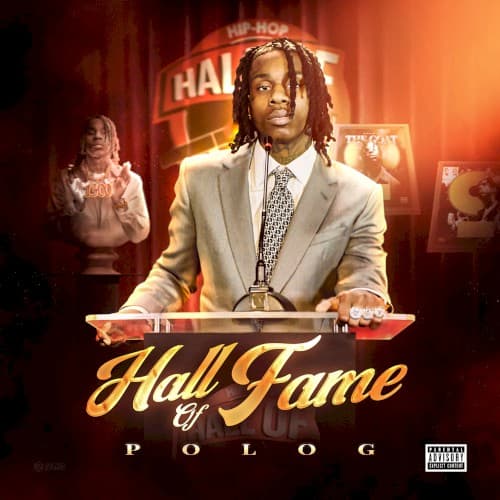
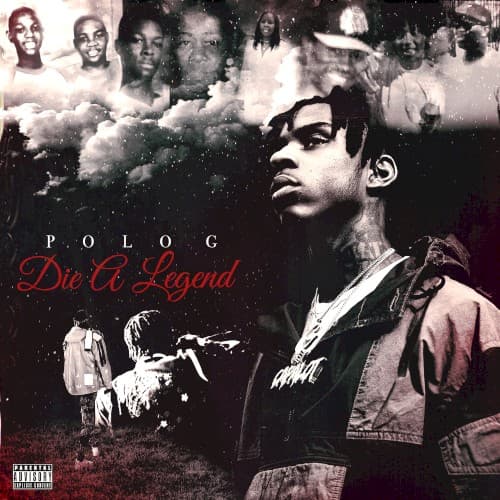
For first plays, start with Heartless for the template, Martin & Gina for the writing, and Wishing for a Hero for the moment the album steps outside itself. For what to hear next, Polo G's debut Die a Legend shows where the sound began, while Hall of Fame pushes the same approach toward bigger hooks and a wider guest list. A good test of whether this record is for you is the closer: if the final song lands, the album has done its job, and if it does not, the rest will not change your mind.
Track by track
Track Listing
Don’t Believe the Hype
SolidA confident opener that sets the tone: melodic bed, clipped flow, and a defensive posture toward doubters. It is functional rather than special, but it establishes the album's voice quickly. It is the first of several tracks that use a defensive stance toward critics as a starting point, and it does so without much heat.
Heartless
StandoutThe template song. Mustard's production gives the chorus a downcast, instantly memorable shape, and Polo G's grainy half-sung hook carries the whole thing. The verses are about emotional numbness as a survival tool, and the pairing of that theme with a warm, melodic beat is exactly why the song lasted. It is the best argument for the album's approach and a fair introduction to what the record offers.
Martin & Gina
StandoutA short, sharp relationship song with a real narrative thread. Polo G describes a volatile pairing with more specificity than most of the album, and at 2:12 it never overstays. One of the clearest examples of his writing when he commits to a scene.
Flex
StandoutJuice Wrld's melodic hook fits the beat naturally, and the two voices complement each other's strained tone. It is a smooth, replayable collaboration that adds texture without changing the album's course.
Go Stupid
StandoutThe loudest song on the record and a useful stress test. Stunna 4 Vegas and NLE Choppa bring raw energy, and the production leaves room for all three voices to hit hard. It breaks the album's melancholy for a few minutes and proves the formula can handle aggression. The cost is that it feels slightly separate from the rest of the tracklist.
21
SolidA reflective mid-tempo cut about growing up quickly. The writing leans toward generalized statements, and the melody is pleasant but not memorable. A solid entry that blends into the album's center. The beat gives Polo G space to talk, but the verses stay at the level of summary, and the hook is the only part that sticks.
33
SolidA companion piece to the previous track in mood and structure, and a little more clipped in delivery. It is competent and forgettable, mainly useful for keeping the sequence moving. It is the kind of song that works as a bridge between two stronger ones and would not be missed if cut.
I Know
SolidPolo G's flow tightens here and the hook has a decent melodic lift, but the song covers familiar emotional ground. Good craft, limited surprise. Polo G sounds comfortable, perhaps too comfortable, and the verse lacks a detail you would repeat to a friend.
Beautiful Pain (Losin My Mind)
StandoutOne of the more melodic moments, with a sung hook that leans into vulnerability. The title is accurate: it is a pretty song about an ugly feeling. It stands out as one of the album's more emotionally direct statements.
No Matter What
SolidA loyalty-and-perseverance song with a smooth beat and a decent hook. It is pleasant but sits squarely in the plateau where the album's moods begin to repeat. Nick Mira's production keeps it smooth, and the hook is the best part, but nothing in the verses separates it from its neighbors.
Be Something
SolidLil Baby's guest verse is competent, but it adds little beyond a different voice. The song is a fair example of the album's guest strategy: reliable fit, limited impact. Polo G's own verse is the stronger of the two, and the hook has a pleasantly grim lift, but the song never builds past its first idea.
Relentless
WeakA determined, motivational track with a steady flow. Its message is clear but its melody and writing are among the album's least distinctive, and it reads as a filler cut in the middle stretch. Skip it without guilt; the album loses nothing by having it fade into the background.
DND
StandoutA late-arriving single with a glossy, hook-first design. WayneOnABeat's production is clean and the chorus is among the most singable on the record. It feels slightly lighter in emotional weight than the early singles, but it is effective and well placed to lift the pacing after the sag.
Chinatown
StandoutA bouncy, rhythm-driven track that gives the back half a change of texture. The flow is playful and the hook is simple, which makes it one of the easier songs to return to. It is also the rare song where Polo G sounds like he is having fun, which makes a welcome contrast in this tracklist.
Trials & Tribulations
StandoutA weighty, reflective song about the cost of survival, with a cohesive beat and a steady, sincere delivery. It sets up the closer well and is one of the stronger entries in the final third.
Wishing for a Hero
StandoutThe album's best moment and its most ambitious. Built on a sample of a Tupac classic and anchored by BJ the Chicago Kid on the hook, it widens the album's focus from personal pain to the absence of role models in a community. Polo G's verses are more outward-looking than anywhere else on the record, and the sample gives the song an emotional resonance that the original beats cannot match. It also works as a thesis for the album: sadness here is a response to a lack of guidance, not just a mood.
Frequently Asked Questions
Is Polo G The Goat a good album?
What are the best songs on Polo G The Goat?
Who produced Polo G The Goat?
How long is Polo G The Goat?
Styles