slowthai Nothing Great About Britain — The Council Estate Kid Who Told the Truth Too Loud
Remove this album from UK hip-hop's timeline and the whole conversation about British class rage loses its sharpest blade. Before slowthai dropped Nothing Great About Britain, British rap had two speeds: grime MCs flexing over war dubs or roadmen documenting trap house economics. Nobody was screaming about council estate childhoods over punk-adjacent production that sounded like it was recorded in a squat. Nobody was naming an album after the exact opposite of patriotic and daring England to come for them.
The Northampton MC arrived with a mission statement so provocative it felt illegal to stream on royal wedding day. This debut landed during Brexit chaos, austerity Britain, and a culture war about what it meant to be British. slowthai positioned himself as the council estate truth-teller who refused to code-switch for posh festival crowds. Every interview became confrontation.
Every performance felt like protest.
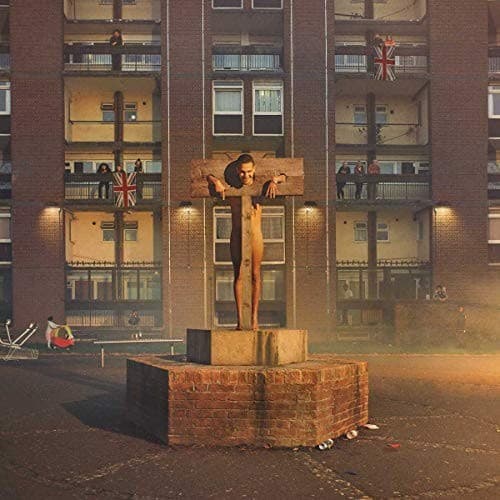
The album art — slowthai crouching in front of 10 Downing Street holding a fake severed head of Theresa May — told you everything about his relationship with authority. What makes this album dangerous is how it weaponizes working-class trauma without asking for sympathy. slowthai does not want your pity. He wants you to feel the concrete under Northampton tower blocks, taste the tobacco and cheap cider, hear the rage of watching your town get gutted by Tory cuts while London pretends the rest of England does not exist.
The production — helmed by Kwes Darko with assists from SAMO and others — sounds like grime colliding with punk rock in a basement where the ceiling is too low and nobody cares about radio play. Could British rap contain this much venom and still find an audience?
Concrete Drums and Council Estate Punk — The Sound of Britain Burning
Kwes Darko built these beats like ammunition. The production philosophy rejects the clean 808 patterns dominating American trap and the eski clicks of London grime. Instead you get distorted bass that sounds like it is clipping intentionally, drums that hit like fists on plaster walls, recalling the industrial aggression of Yeezus but filtered through council estate fury rather than Calabasas excess. Samples from British punk and garage never announce themselves politely.
Nothing sounds expensive here.
The sonic palette mirrors slowthai's lyrical mission: expose the rot underneath Britain's polite surface. He spits with a Northampton accent he refuses to flatten, delivers bars in a rasp that sounds like cigarettes and screaming matches. His vocal delivery rejects technical perfection. Some bars land off-beat, some phrases get swallowed by distortion, and it all sounds intentional.
Everything sounds urgent.
Lyrically this album dissects British class structure with scalpel precision. slowthai raps about growing up poor without romanticizing struggle or performing trauma for middle-class guilt. He talks about his mum, about Northampton, about watching gentrification swallow working-class neighborhoods. The references are hyper-local — British landmarks, UK political figures, council estate geography — in a way that makes the album feel like a postcard from the England nobody wants to acknowledge exists.
But does the album have a flaw that keeps it from perfection? slowthai's one-note intensity occasionally works against him. By the back half some tracks blur together in their aggression. A few more dynamic shifts or unexpected production choices would have elevated the listening experience without compromising the rawness.
Rage to Reflection — How the Album Moves Through Working-Class Fury
The album opens with its title track, immediately establishing slowthai as an antagonist to British nationalism. The first stretch functions as a declaration of war — nothing polite, nothing apologetic, just concrete facts about growing up poor in a country that abandoned your town. The sequencing feels deliberate: hit them with rage first, context later.
The middle section introduces emotional texture without sacrificing intensity. The pacing slows just enough to let you breathe before the album ramps back up. Peace of Mind offers the closest thing to introspection, a moment where slowthai stops shouting at Britain and starts processing his own survival guilt.
The back half moves between confrontation and reflection, never fully committing to either mode. The album saves its most vulnerable moment for the finale. Northampton's Child functions as the emotional anchor — a love letter to the town that shaped him and a goodbye to the version of himself who thought he would never leave. The sequencing ensures you leave the album not with rage but with something closer to understanding, the realization that all the anger comes from a place of deep, complicated love for a home that never loved you back.
The Council Estate Classic That Redefined British Rap Ambition
In slowthai's discography Nothing Great About Britain remains the definitive statement, the album where anger and artistry fused into something hard to argue with. His follow-up TYRON showed range and maturity, but nothing he has made since carries this debut's raw ideological fury. This is the album slowthai needed to make before he could make anything else, the exorcism of council estate trauma that allowed him to explore other emotions later.
Who should listen: anyone exhausted by apolitical rap, fans of grime who want something angrier, people who grew up working-class anywhere and recognize the specific rage of being invisible to your own country. Who might struggle: listeners expecting traditional song structure, anyone looking for party tracks, Americans unfamiliar with British class politics who might miss half the references. This album demands you meet it where it lives — no concessions, no explanations, no glossary provided.
How it aged: better than anyone expected. Brexit collapsed, austerity Britain got worse, the culture war intensified, and Nothing Great About Britain sounds more relevant in 2026 than it did in 2019. The production still feels urgent, the anger still feels justified.
Essential tracks: start with Doorman for the full aggression, Dead Leaves for the punk energy, Northampton's Child for the vulnerability. Similar albums: Skepta Konnichiwa for grime's crossover moment, Idles Joy as an Act of Resistance for British punk anger, The Streets Original Pirate Material for working-class British storytelling. Long-term influence: slowthai opened the door for UK rappers to make explicitly political albums without sounding preachy, proved British accents and local references could translate globally, showed that rage is a valid artistic response to systemic inequality.
Nothing Great About Britain is the sound of a council estate kid refusing to be polite about his country's failures. That refusal remains its greatest strength.
Track Listing
Nothing Great About Britain
▲The title track opens the album with a thesis statement delivered over distorted bass and minimal drums. slowthai spits about British colonialism, council estates, and national identity with zero filter. The production from Kwes Darko strips away all excess — just blown-out low end and slowthai's rasp cutting through like broken glass. Lyrically he dismantles British exceptionalism line by line, pointing out the hypocrisy of a country built on empire that now abandons its working class. The hook is confrontational by design, daring England to defend itself. No other debut track in UK hip-hop history has announced its intentions this bluntly. This is not an introduction. This is a threat.
Doorman
▲Doorman functions as the album's sonic mission statement — aggressive grime stabs, relentless pacing, slowthai rapping like he is trying to kick down a locked door. The beat hits with claustrophobic intensity, drums that feel like they are closing in rather than opening up. He raps about class barriers and social gatekeeping, using the doorman as metaphor for every institution that kept him out. His flow switches between rapid-fire syllables and punctuated shouts, refusing to stay in one pocket. The energy never dips. This is the track that proved slowthai was not interested in being Britain's next polite export. He wanted to be the brick through the window of British respectability politics. Essential listening for understanding his entire artistic mission.
Dead Leaves
▲Dead Leaves strips the production down to eerie minimalism — skeletal drums, a ghostly sample, slowthai's voice sitting uncomfortably close in the mix. He raps about Northampton like it is a town slowly dying, watching opportunities evaporate and people give up. The imagery is vivid and depressing: empty high streets, boarded-up shops, mates who never made it out. Vocally he sounds exhausted rather than angry here, delivering lines with the weariness of someone who has watched his hometown get gutted by austerity. The track works as a counterbalance to the opening fury — this is what the rage is protecting, the place that shaped him even as it crumbled. The melancholy hits harder because slowthai refuses to dress it up with nostalgia.
Gorgeous
▲Gorgeous flips into unexpected territory with a beat that feels almost celebratory, built around a hypnotic loop and bouncier drums. slowthai uses the space to flex without losing the edge, rapping about success and self-worth while acknowledging the instability of both. The hook is catchy in a way nothing else on the album attempts, proof he can write for memorability when he wants to. Lyrically he balances confidence with self-awareness, acknowledging he is gorgeous while also admitting the validation feels hollow sometimes. The production from Kwes Darko gives slowthai room to breathe, and he uses it to show range. This is the closest the album gets to a single without compromising its mission. Not essential but effective as palette cleanser before the darkness returns.
Crack
▲Crack shifts into deeply personal territory, examining how poverty warps childhood and leaves scars that success cannot heal. The production is sparse and haunting, built around a looped sample that sounds like a nursery rhyme turned sinister. slowthai raps about his family with painful honesty, referencing his mother's struggles and the instability of council estate life. His delivery is quieter here, less shouting and more confessional, which makes the content hit harder. He talks about drug use and desperation not as moral failures but as survival mechanisms in a system designed to crush working-class families. The emotional weight is overwhelming. This is the track that proves slowthai is not just angry but deeply wounded, that all the rage comes from a place of trauma he is still processing.
Grow Up
▲Grow Up tackles arrested development and the psychological cost of poverty with uncomfortable specificity. The beat feels claustrophobic, drums that sound like they are trapped in a small room with you. slowthai raps about the impossibility of maturing when your environment keeps pulling you backward, about watching mates stay stuck in the same cycles while he tries to escape. His flow is tense and urgent, syllables piling up like accusations. The hook is simple but devastating, a repeated phrase that sounds like self-criticism and societal judgment colliding. This track does not offer solutions or hope. It just documents the reality of trying to grow when your roots are planted in concrete. One of the album's most lyrically dense moments, proof slowthai is a better writer than he gets credit for.
Inglorious
●Inglorious brings the aggression back with a vengeance, built on distorted bass and drums that hit like riot gear. slowthai spits with renewed fury, targeting British nationalism and the lie of meritocracy. The production from SAMO feels intentionally abrasive, designed to make you uncomfortable rather than nod along. Lyrically he connects personal struggle to systemic failure, pointing out how Britain celebrates empire while ignoring the working-class people it left behind. His delivery is relentless, barely pausing for breath between lines. The track functions as the album's second wind, reminding you this is protest music disguised as rap. Not the strongest moment but necessary for maintaining momentum through the middle section.
Toaster
●Toaster might be the most sonically adventurous track on the album, built around a minimalist beat that feels more experimental than anything else here. The production is sparse to the point of unsettling — just a clicking rhythm and slowthai's voice, no bass to anchor you. He raps about violence and survival with disturbing casualness, delivering lines about weapons and confrontation like he is reading a shopping list. The emotional detachment is the point. This is slowthai showing you what happens when rage becomes routine, when aggression stops being a choice and becomes a reflex. The track is short and punchy, never overstaying its welcome. It works as a sonic interlude that keeps the album unpredictable.
Peace of Mind
▲Peace of Mind offers the album's first real moment of vulnerability without anger as armor. The production is softer, built around a melancholic melody and slower drums that finally let you exhale. slowthai raps about mental health and the cost of success, admitting that escaping Northampton did not fix the damage it left. His delivery is subdued, almost conversational, like he is talking to himself rather than performing for an audience. The honesty is brutal: he admits to depression, survivor guilt, the fear that he does not deserve what he has achieved. This track is essential for understanding that Nothing Great About Britain is not just a political statement but a personal exorcism. The vulnerability makes everything that came before it land harder.
Missing
▲Missing pulls back into melancholy territory, built around a haunting sample and minimal percussion. slowthai reflects on absence and loss, both personal and communal. He raps about people who did not make it out, opportunities that never came, the weight of representing a town that feels forgotten. His flow is looser here, less aggressive and more reflective, letting lines breathe instead of rushing through them. The production gives him space to sit in the sadness without forcing resolution. This is slowthai at his most introspective, acknowledging that anger is easier than grief. The track works as emotional preparation for the finale, a gradual descent into the vulnerability the album has been building toward.
Northampton's Child
▲Northampton's Child closes the album with slowthai's most emotionally raw performance. The production is stripped back — just a simple guitar loop and subtle drums, nothing to hide behind. He raps about his hometown with love and pain tangled together, admitting that Northampton shaped him even as it tried to break him. His delivery is vulnerable to the point of uncomfortable, voice cracking in places, lines delivered with the weight of someone saying goodbye. The lyrics are a love letter and an eulogy, acknowledging that he had to leave to survive but will never fully escape. This is the moment the entire album has been building toward — the realization that all the rage comes from deep, complicated love for a place that could not love him back. The perfect closer, proof slowthai is a more complete artist than the aggression suggests.