The scorecard
7.1/10 · Good
- Writing25%
- 6.5
- Production25%
- 8.0
- Delivery15%
- 7.0
- Cohesion15%
- 7.5
- Originality10%
- 6.0
- Replay value10%
- 7.0
The braggadocio is playful and fits the club energy, offering vibe over substance but delivering the fun it promises across twenty-eight minutes.
Tyler flips bounce, jungle and bass with real skill and cratedigging sophistication, the Ray Parker Jr. loop on "Ring Ring Ring" and the Crime Mob sample on "I'll Take Care of You" showing the range.
Pharrell and the singers bring welcome texture, but Tyler himself stays in a single gear of boastful chanting, rarely shifting flow or attack.
The runtime is ruthless and the bounce-to-jungle-to-bass shifts are clearly sequenced, cutting filler and maintaining momentum even where the arc stays flat.
Applying rap house and jungle to his catalog is new for Tyler, but the moves are well-worn in club music and he adds little to the blueprints.
The brevity and focused energy help the album hold up on repeat, though most tracks do one thing and stop rather than deepening over time.
Tyler, The Creator Don't Tap the Glass — The Dance Floor Experiment That Forgot the Songs
Don't Tap the Glass is the sound of Tyler, the Creator chasing the feeling of bodies moving in a room, willing to strip everything else away to get there. Twenty-eight minutes, ten tracks, no skits, no interludes that announce themselves as interludes, just rap house and bounce and jungle drums programmed for maximum sweat. The thesis is stated in the rollout: he wanted to be silly again, to make people dance who were afraid of being filmed, to write inside jokes for his friends and talk big fly shit at full volume. The album is faithful to that mission, sometimes to a fault. What it gains in focused energy it loses in depth, offering beats built for the moment and rapping that rarely justifies revisiting them afterward.
This is Tyler at his most single-minded since Goblin, but where that album was seventeen tracks of one suffocating mood, Don't Tap the Glass is the opposite problem: ten beats that work in the club but do not build to anything once the lights come up. The production is the most adventurous part, borrowing from New Orleans bounce, Miami bass, UK jungle, and Zambian rock art in ways that feel genuine rather than tourist. The rapping, though, is Tyler in his most monotonous mode, chanting boasts and taunts over tracks that deserve more than one idea repeated for two minutes. Pharrell shows up on the opener as both himself and his Sk8brd alias, Madison McFerrin and Yebba bring warmth to the back half, but none of the guests rescue tracks that are more loops than songs. The album works exactly as intended if you are driving or running or dancing and do not want to think. It fails the moment you sit still and ask what any of it is saying.
The Beats Do the Work the Raps Don't Finish
Tyler produced all ten tracks himself and the sequencing makes the range clear: "Big Poe" opens with a sample from Shye Ben Tzur and the Rajasthan Express before flipping into the Busta Rhymes "Pass the Courvoisier" drums, bounce energy with global texture. "Don't Tap That Glass / Tweakin'" is pure New Orleans, the second half riding a Too Short and Tommy Wright III sample that nods to bounce and Memphis without copying either. "I'll Take Care of You" takes jungle and amen breaks, looping Tyler's own "Cherry Bomb" and Crime Mob's "Knuck If You Buck" into something that sounds like 1995 UK pirate radio beamed into a 2025 LA warehouse. The Miami bass on "Don't You Worry Baby" and the Ray Parker Jr. loop on "Ring Ring Ring" show Tyler is not just chasing club music broadly but specific regional pockets of it, the kind of cratedigging that made Flower Boy and IGOR feel lived-in.
The problem is the songs do not develop past the first loop. "Sugar on My Tongue" has a slick vocoder hook but no verse that matches it. "Sucka Free" rides one synth stab for two minutes and forty-one seconds. "Mommanem" samples Gorilla Aktiv for seventy-five seconds and ends before it can justify existing.
Tyler has always been a maximalist producer, stacking horns and strings and background vocals until the mix feels three-dimensional, but here he strips everything to kick, snare, bass and one melodic element. That discipline serves the dance floor and murders the album experience. The beats are loops, not arrangements, and the rapping treats them accordingly.
Pharrell brings the closest thing to a performance on "Big Poe," his Sk8brd voice cutting through with a singsongy hook that sticks, but the feature is more texture than collaboration. Madison McFerrin on "Don't You Worry Baby" and Yebba on "I'll Take Care of You" offer vocal runs that give those tracks emotional centers Tyler does not provide himself, but they are floating over beats that never shift to accommodate them. The mixing by Neal H Pogue is clean and loud, every element punching exactly where it should for a speaker system or headphones at full volume, but that clarity exposes how thin most of these tracks are once the initial dopamine hit fades. This is not lazy production; it is production in service of a goal that does not need complexity. Tyler wanted beats you can move to immediately, and he made them. He did not make beats that hold up when the party ends.
A Sprint With No Peaks Because There Are No Valleys
The album is so short and so even in energy that it barely has an arc. The first stretch announces the vibe and locks it in, the middle drops to seventy-five seconds of nothing, and then the back half rides the same bounce-to-bass tempo range without a true climax or cooldown. "Don't Tap That Glass / Tweakin'" is the only track that shifts gears internally, the first half a strut and the second half harder and faster, but even that lands in the middle of the runtime where it does not reorient the album so much as provide a moment of structure in a tracklist that otherwise feels like a shuffled playlist.
The sequencing does no favors. The most interesting production and the best guest vocal land second-to-last where they read as an afterthought rather than a centerpiece. The closing track ends the album on a shrug, no callback, no final statement, just another loop that fades out.
The brevity keeps weak tracks from overstaying, but it also means nothing has time to grow. Flower Boy earned its fifty-minute runtime with pacing that knew when to build and when to breathe; IGOR ran forty minutes and still found room for dynamics. The lack of filler is an achievement, but so is the lack of anything that rises above the baseline.
Where It Ranks and Who It's For
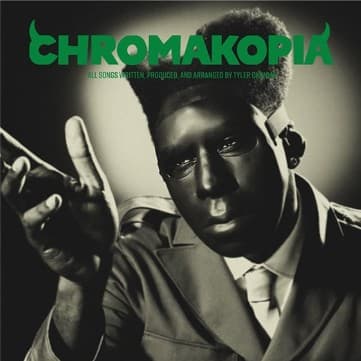
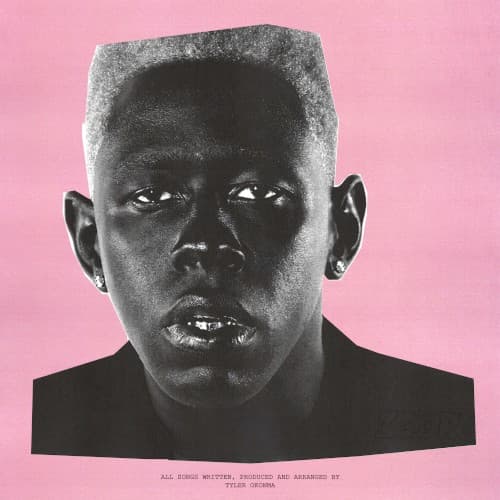
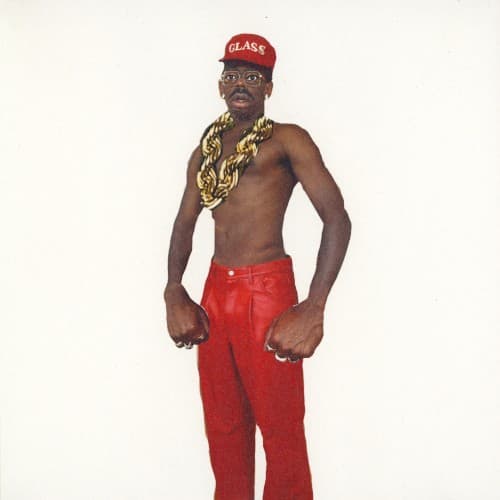
Don't Tap the Glass is Tyler's weakest studio album since Goblin, not because it fails at what it attempts but because what it attempts is so modest. Flower Boy and Chromakopia are both 8.3s because they balance ambition and execution across full-length statements; IGOR is an 8.0 because it commits to a concept and sees it through. Don't Tap the Glass is a 6.6 because it is ten well-produced beats with adequate rapping and no songs that justify returning once the novelty wears off. It sits above Goblin's 6.4 only because the production is miles more sophisticated and the runtime does not trap you in one suffocating mood for an hour.
This is for Tyler fans who want him to have fun and do not need him to say much, for people who liked the Chromakopia tour and want a souvenir, and for anyone looking for a half-hour of beats to run or drive to without lyrics demanding focus. Skip it if you are here for the writing or the storytelling or the orchestration that made Flower Boy and IGOR essential. The club energy is real, but it does not translate to headphones in a quiet room, and that is where albums live long-term.
Start with "Ring Ring Ring" for the Ray Parker Jr. flip, "I'll Take Care of You" for the jungle production and the Yebba feature, and "Big Poe" for Pharrell's hook. If those three do not convince you to stay, the rest will not either. Next, go back to Flower Boy to hear Tyler making dance music that also functions as songwriting, or to IGOR to hear him committing to a lane this fully but building a world inside it. Don't Tap the Glass is a fun experiment that he finished too quickly to test whether it could support an album's weight.
Track by track
Track Listing
Big Poe
StandoutPharrell's Sk8brd hook is the catchiest moment on the album, a warped playground chant over Tyler flipping the Busta Rhymes "Pass the Courvoisier" drums and a Shye Ben Tzur sample that brings texture before the bounce kicks in. Tyler's verses are competent braggadocio with no quotable lines, the kind of talk-big rapping that works in the club and evaporates afterward. Pharrell's presence elevates this above most of what follows, but the track still does not develop past the opening minute. The mix is bright and punchy, every element crisp, but the song structure is just loop and hook, no bridge, no switch, no reason to come back for a fourth or fifth listen once the initial fun wears off.
Sugar on My Tongue
SolidThe vocoder hook is slick and the groove is tight, but Tyler's verse is one idea stretched thin, chanting about excess and flexing without a single image or turn of phrase that sticks. The production does the heavy lifting, the bassline and the vocoder melody carrying the track where the rapping does not. This is the first sign that the album will prioritize vibe over substance, a choice that works for a single but stacks up poorly over ten tracks.
Sucka Free
WeakOne synth stab, one drum pattern, one flow from Tyler for two minutes and forty-one seconds. The confidence in the delivery is real but the writing is generic taunting, nothing specific enough to separate this from a hundred other braggadocio tracks. The brevity keeps it from becoming annoying, but it also keeps it from becoming memorable. This is filler dressed up as a club record, functional in the moment and forgettable the second it ends.
Mommanem
WeakSeventy-five seconds of Tyler rapping over a Gorilla Aktiv sample and then the track ends. No hook, no structure, no reason for this to exist as a separate track rather than an intro to the next one. It is the shortest song on the album and feels like proof that Tyler did not have enough material to fill even twenty-eight minutes with developed ideas.
Stop Playing With Me
SolidThe music video brought out Clipse, LeBron James, and Maverick Carter, which suggests Tyler thought this was a single, but the track itself is another two-minute loop with bragging that does not go anywhere. The bounce energy is there, the beat is crisp, but the rapping is Tyler on autopilot, saying nothing that justifies the star power in the video or the promotional push. Solid for a workout playlist, invisible in the catalog.
Ring Ring Ring
StandoutThe Ray Parker Jr. sample from "All in the Way You Get Down" is the best flip on the album, a warm funk loop that gives the track a groove the rapping does not earn. Tyler's verses are more talk-big shit with no specificity, but the production and the bassline make this one of the more replayable cuts. The song still does not develop, just rides the loop for three minutes and twenty-one seconds, but the foundation is strong enough that the lack of growth is less damaging here than on weaker tracks. This is the one to show someone who wants to know what the album sounds like at its best.
Don’t Tap That Glass / Tweakin’
StandoutThe two-part structure is the closest thing to dynamic sequencing on the album. The first half is a strut, Tyler's flow locked into the bounce pocket, the second half harder and faster with the Too Short and Tommy Wright III samples pushing the tempo into pure chaos. The shift works, giving the track a sense of escalation the rest of the album lacks, but even here the rapping is more vibe than content, Tyler saying outrageous shit for the sake of saying it rather than building to a point. The production is pure New Orleans bounce filtered through Tyler's taste, respectful of the source but not derivative. This is the most complete song on the album, the only one that feels like it has a beginning, middle, and end rather than just a loop that stops.
Don’t You Worry Baby
SolidMadison McFerrin's vocal runs are gorgeous, bringing warmth and melody to a track that would otherwise be another Atlanta bass loop. Tyler's rapping is minimal here, letting McFerrin carry the emotional weight, and the choice works because his verses have not been doing much heavy lifting anyway. The bass is thick, the mix is clean, but the track still does not go anywhere, just floats on the groove and McFerrin's voice. This is pleasant background music, which is damning for an artist who made IGOR.
I’ll Take Care of You
StandoutThe jungle drums, the amen breaks, the Crime Mob and "Cherry Bomb" samples, and Yebba's vocal all combine into the most texturally interesting track on the album. Tyler is flipping UK rave culture and Southern crunk into something that feels new for him even if it is not new to those genres, and Yebba's runs give the track an emotional anchor the rapping does not provide. This should have been the centerpiece, the track that shows what Tyler can do when he pushes past the loops and builds a real arrangement, but it is buried second-to-last where most casual listeners will never make it. The production is an 8; the placement and the writing drag it down.
Tell Me What It Is
WeakThe album ends on a shrug, another bounce loop with Tyler chanting over it, no callback to the intro, no thematic resolution, just a fade-out. This is the weakest closer in Tyler's discography, a track that could have been sequenced anywhere or cut entirely without changing the album's shape. It does not fail so much as it does nothing, which after twenty-eight minutes of doing very little feels appropriate but unsatisfying.