The scorecard
4.8/10 · Weak
- Writing25%
- 4.5
- Production25%
- 5.0
- Delivery15%
- 5.5
- Cohesion15%
- 4.0
- Originality10%
- 5.0
- Replay value10%
- 4.5
Most tracks stop before a second verse can add an image or a turn, and while songs like what are you so afraid of and difference (interlude) state heartbreak and dread plainly, the bluntness without development becomes repetition.
The mixes feel rough and BAD! and Staring at the Sky end before their arrangements develop, even though the guitar, drum and piano palette across the Cunningham-produced tracks has moments of real affect.
The switch from hushed singing to a ragged shout on BAD! is genuinely physical, and the voice keeps its identity through most genre swerves, though One Minute leaves the lead voice lost between its two guests.
Ten tracks in under twenty minutes, with an opener of about thirty seconds and several songs that stop mid-thought, make the sequence read like a folder of drafts rather than a finished album.
Folding screamo, nu metal and acoustic emo into trap-era rap was already his habit, and Skins pushes the blend only slightly without sharpening it or offering much that feels fresh for 2018.
The connective material rarely invites a second front-to-back run, and while the best four or five tracks will keep surfacing on playlists, the album as a whole grows thinner with repeated exposure.
XXXTentacion Skins: Nine Minutes Short of a Record, Ten Tracks Long on Nerve
Skins is built for a playlist more than for a living room, and that is both its defense and its indictment. At just under twenty minutes, with an opener that lasts about half a minute and a closer that fades out of an acoustic guitar, it plays like a handful of strong songs surrounded by sketches. The argument of this review is simple: Skins works as a set of exposed nerves and fails as an album, and the distance between those two verdicts explains why it opened at number one while critics landed on a Metacritic average of 44.
The circumstances are impossible to ignore, but they should not be an excuse. The record was assembled and released after XXXTentacion's death, and the fact sheet notes it leaked three days before the official date. The team had to ship something, and the result is honest about being a partial document. Slant described the stronger songs as feeling more like demos than finished tracks, and that is a fair reading, though it also cuts the other way. The demo quality is where the best moments live: a voice close to the microphone, a guitar that sounds like it was played in the same room, a melody that has not been polished into a hook.
That tension runs through the whole project. The sound pulls from lo-fi, emo, screamo, punk rock, nu metal and trap, and the shifts between them are fast enough that no single mood gets room to settle. Next to 17, which at least committed to a gloomy bedroom-pop palette, Skins is scattered; next to the mixtape-level ambition of his earlier work, it is smaller. Where the project lands is in the middle of the catalog's weak side: moving in flashes, unconvincing as a whole, and best sampled one track at a time on XXXTentacion's artist page rather than front to back.
Acoustic Guitars, Distorted Guitars, and the Mix That Cannot Hold Both
The production credits are dominated by one name. John Cunningham is listed on almost every track, with Robbie Soukiasyan on BAD! and what are you so afraid of, Potsu on Guardian angel, and Cubeatz on I don't let go. That consistency shows up in the instrumentation: guitar, bass, live-sounding drums and piano sit in front of the programmed elements instead of behind them. It gives Skins a physical, band-in-a-garage quality that most trap-adjacent records of its era lacked, and when the arrangement locks in, as it does on the louder tracks, the effect is strong.
The problem is the mix. The same fact sheet that credits two mixing engineers also carries the XXL line that the songs are not mixed particularly well, and the ear confirms it. Quiet acoustic passages and abrupt electric guitar crashes are placed against each other without much transition, so the loud moments feel like jump scares rather than builds. Vocals move between a whisper and a scream inside a single song, and the levels do not always follow. A record this short cannot afford many rough patches, and Skins has them in nearly every other song.
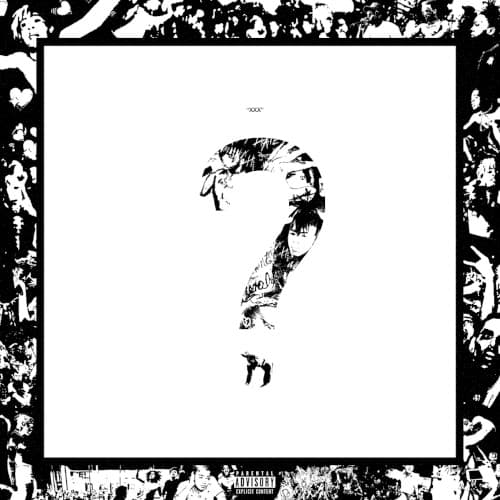
The writing is blunt, which suits the subject. Heartbreak and mental turmoil are stated outright instead of dressed in metaphor, a quality The Independent read as catharsis, and there is real force in lines that refuse to be clever about pain. The weakness is that bluntness without development turns into repetition. Verses tend to restate a feeling and then stop, hooks lean on a single phrase, and few songs reach a second image that deepens the first. Compared with ?, which at least stretched across styles with more variety in how it phrased its sadness, the writing here is thinner.
Delivery is the strongest element. The voice is the one instrument that keeps its identity through every genre swerve: flat and murmured in one song, strained and cracking in the next, with a rap cadence that reappears when the beat turns to trap. That commitment is why even the sketches hold attention for a minute and a half. It is also why the failures sting. When a guest or a guitar line interrupts the voice, as on One Minute, the album loses the one thing it was built around.
As genre fusion, Skins is ambitious without being fresh. Rap-rock and emo-rap blends were already common by 2018, and what XXXTentacion brings is sincerity, not a new formula. That is worth something, but at under twenty minutes it is not enough to carry the whole record.
Ten Tracks, Twenty Minutes, and a Sequence That Never Settles
The running order is where the streaming-era logic is most visible. The opener, Introduction, is a thirty-second gesture rather than a song, and the album then moves through short pieces that rarely last longer than a standard radio edit. Nothing here is built to be heard as a continuous argument. It is built so that any one track can be pulled into a playlist and play on its own terms, and the sequencing reflects that instead of any narrative.
The peaks come early and in the middle. The first half moves quickly from quiet to loud, and the run around BAD!, the lead single that reached number 16 on the Billboard Hot 100, is the sequence at its most convincing: short, aggressive and unafraid of a hook. Then the energy drains. By the time the album reaches its second half, the shifts between acoustic and electric feel like a pattern rather than a decision, and several tracks end before the idea has been tested.
Length is the central issue and deserves a direct answer. A brief album is not a flaw in itself; plenty of great records run under half an hour because every minute is used. Here the brevity is not a design choice but a symptom, and the songs that come in under two minutes mostly sound abbreviated instead of compressed. The closing stretch is stronger than the middle because it slows down and lets an acoustic guitar carry the weight, which is where the record sounds most settled.
The sag is not dramatic; it is a steady thinness. A listener who treats Skins as a ten-song album will notice that very few tracks end with the sense of a finished thought. A listener who treats it as a short list of good songs, plus a few interludes, will get more out of it. The sequence is closer to the second reading than the first, and that is the clearest sign that this is a collection assembled after the fact.
A Third Album Left in Rough Draft
In the catalog, Skins sits below both of the other albums rated here. 17 scores 6.5 and ? scores 6.0, and Skins lands at 4.8 because it has less of what made those records work: sustained mood, enough runtime to build one, and songs that finish. Its best material compares well with the best of ?, but the average track is slighter, and the mix does not do the performances justice. A lower rank is not a dismissal. It is a call that the highs are real and the floor is too close.
The album is for listeners who already care about XXXTentacion and want the version of his voice that sounds least produced. It is also useful for anyone curious about how rock instrumentation can sit inside a rap-era release without sounding forced. Skip it if you want a finished statement, a complete verse from a guest, or a record you can put on and forget about for an hour. Collaborators like Kanye West and Travis Barker add names to the sleeve, but the track they share does not repay a long detour.
How it ages depends on how it is consumed. As a front-to-back album it will keep sounding unfinished, and the context that once excused that, a rushed posthumous release, will fade, leaving only the audio. As a set of individual songs, a few of them will last. Start with BAD! for the fastest and most focused three minutes of the project, then what are you so afraid of for the quiet side, and difference (interlude) for how little a song needs when the voice is carrying it.
If you want to hear what Skins is reaching toward, go to ?, where the same mix of acoustic sorrow and noisy outbursts has more room to develop. For the version that skips the genre chaos and stays in one mood, return to 17. The most useful way to think about Skins is as a sketchbook from an artist who was still working out where the sketches should go.
Track by track
Track Listing
Introduction
SolidA thirty-second opener that sets a tone more than it delivers a song. It is closer to a title card than a track, and it tells you early how much of the record is gesture.
Guardian angel
SolidA restrained start with Potsu and XXXTentacion at the controls. The arrangement is spare and the voice sits close, which suits the vulnerability of the subject. It is a mood piece more than a full song, and at under two minutes it ends right when it should open up, but the restraint is welcome after the opener.
Train food
StandoutLonger than most of the record and built around a rock-leaning arrangement that pushes the tempo. The structure holds together better than the shorter tracks, and the shift between a muttered verse and a louder hook gives it some drive. It does not quite escape feeling like an extended demo, but it makes a good case for the project's formula when the song has the room to breathe.
whoa (mind in awe)
StandoutA melodic trap track with a hook that does the work of a mood. The vocal is the draw, rhythmic and stretched, and the beat leaves enough space for it. Good for a playlist, forgettable as a sequence position, and one of the cleaner examples of the record's trap side.
BAD!
StandoutThe lead single and the record's clearest argument. In under two minutes it goes from a quiet, nearly conversational setup to a shouted, punk-fast attack with guitars pushed forward, and the contrast is physical. Cunningham and Soukiasyan keep the arrangement tight, with no wasted bar, which is exactly what most of the other songs lack. It is brief, abrasive and built for repeat plays, and it explains the chart position. If a newcomer hears one song from Skins, this should be the one.
STARING AT THE SKY
SolidA short, hazy piece that sits closer to a sketch than a song. The mood is pleasant but the structure is thin, and it ends just as its melody becomes familiar.
One Minute
SolidThe headline collaboration, with Kanye West and Travis Barker both credited. Barker's drums give the track the most live feel on the record, and the production is the fullest on the album. The problem is the arrangement: the guest contributions crowd the central voice instead of building around it, and at over three minutes it is the longest song here without a clear payoff. It matters more as an event than as a performance.
difference (interlude)
StandoutA spare acoustic guitar piece that Slant singled out as haunting, and the description holds. It is barely over a minute and feels unfinished, yet that unfinished quality is the effect. A good argument for why the rough edges are not always a defect.
I don’t let go
SolidA turn back toward trap with Cubeatz credited alongside Cunningham. The beat is heavier and more conventional than anything around it, and the song reads as a bridge between the project's two halves. Solid, quick and not memorable once the next track begins.
what are you so afraid of
StandoutThe closer and one of the most complete moments on the album. An acoustic guitar leads, the vocal is plain, and the arrangement lets a single emotion carry the full two and a half minutes without cutting away. Soukiasyan is credited alongside Cunningham, and the pair keep the production uncluttered. It lands the way the opener could not, ending the album on a quiet admission instead of a chorus, and it is the clearest sign of what a finished version of this record might have sounded like.
Frequently Asked Questions
Is XXXTentacion Skins good?
How long is XXXTentacion Skins?
Who is featured on XXXTentacion Skins?
Genres
Styles