The scorecard
7.5/10 · Great
- Writing25%
- 6.5
- Production25%
- 8.5
- Delivery15%
- 7.0
- Cohesion15%
- 7.0
- Originality10%
- 8.5
- Replay value10%
- 8.0
The verses on "So What'cha Want" and "Pass The Mic" are loose and funny, but too many songs coast on shouted back-and-forth that lacks the dense wordplay of the group's previous record.
A live-in-the-room drum kit, fat bass, and Money Mark's organ and clavinet on "Lighten Up" and "Something's Got To Give" built a groove-first sound that few rap records of 1992 even attempted.
Three voices trade lines with natural timing on "Pass The Mic," and the distorted shouting suits the punk numbers, though the vocals sometimes sit murky in the mix.
Twenty tracks that swing from hardcore blasts to jazz-funk instrumentals give the record range, but the long back half gets patchy and some instrumentals feel like jams left in.
A rap group playing its own instruments, covering Sly Stone and then rapping over live funk had almost no precedent in 1992 and became a template for later band-rap hybrids.
The singles and the funk cuts hold up decades on, while the weaker hardcore tracks and instrumentals are easier to skip on repeat.
Beastie Boys Check Your Head: The Rap Group That Learned to Jam
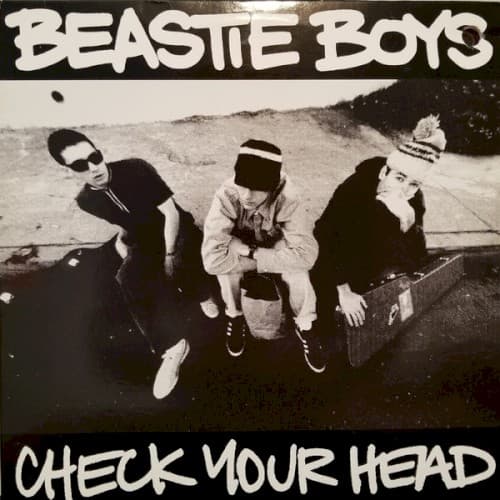
The easy story about Check Your Head is that the Beastie Boys quit rapping and became a band. That story is wrong, and the record disproves it within a few songs. The three of them still trade verses like a block-party crew, and the rapping is the thing every other texture is built around. What changed in 1992 is that Mike D, MCA and Ad-Rock sat down at drums, bass and guitar and made the beat in the room, with keyboardist Money Mark thickening the groove from the side.
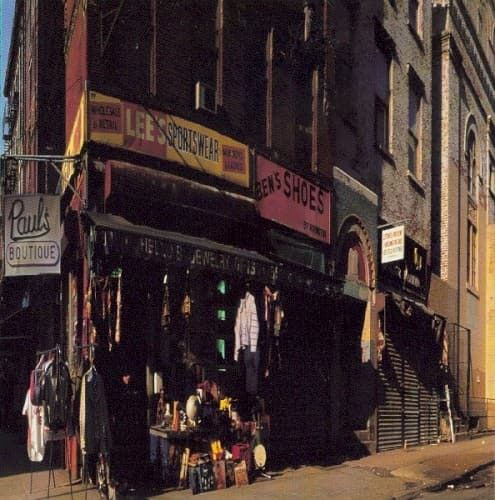
The argument here is that this is the Beastie Boys' boldest record and not their best one: a brilliant, shaggy draft of the sound they would tighten on Ill Communication. It was also a direct answer to the commercial failure of Paul's Boutique, the sample-dense record that critics now rank among the genre's best and that buyers ignored in 1989. Where that album was assembled from other people's records, this one was played by the group, and the shift in method changed their whole voice.
What makes the move important in hip-hop history is who it answered and who it eventually influenced. In an era when rap was building toward the polished sample collage of the early 1990s, the Beastie Boys went the other way, back to the punk and funk bands that shaped them, and made a rap record that sounds like a basement jam. Bands that pair rappers with live rhythm sections and the alt-rock crowd that adopted this album as a touchstone both trace part of their lineage here.
The critics were split in public. One major magazine gave it a D and called it sophomoric, while the Village Voice poll placed it fifth for the year. Both camps have a point about the sloppiness, but the sloppiness is also the sound. The case for the record is simple: when the Beastie Boys are good here they are as good as they have ever been, and when they are bad they are at least having a good time.
Fuzzy Bass, Loose Verses, and a Room You Can Hear
Start with the production, because that is where the album earns its reputation. Mario Caldato Jr. co-produced with the group, and the shift to playing their own instruments gives the music a physical presence. The drums sound like a kit in a room, the bass is thick and slightly distorted, and Money Mark adds keyboards that give the funk cuts a warm, lived-in wobble. The sound is less sample-driven than the group's last record, and where samples do appear, as on "Jimmy James" with its Hendrix material or "Pass The Mic," they are used as seasoning rather than as the foundation. The result is a record with air in it, which was rare in rap at the time.
The band approach also changes how the vocals behave. Many of the lead voices run through a harsh, distorted treatment that makes them sound like a bullhorn in a garage, and that suits the group's wiseacre persona. It also buries some of the words. The Entertainment Weekly line about underwater recording is overstated, but there is a real point under it: the mix sometimes favors texture over clarity, and the jokes land less cleanly than they did on the previous two albums.
That leads to the weakness. The writing is the loosest the trio had delivered. The NME complaint that the lyrics regressed into improvised shouting is partly fair. Much of the record trades the dense, referential wordplay of the group's earlier work for banter and attitude, and on weaker songs the verses feel like warm-ups rather than finished rhymes. The rapping is still charming, and the group's timing is better than ever, but the pen is not as sharp as the groove it rides on.
The larger point, and the one the consensus gets wrong, is about genre. One retrospective claims rap was no longer the foundation of the music. That undersells it. Take away the rapping from the best songs and there is little left, because the grooves are built to support three voices passing a microphone. This is a rap record that learned to play, not a rock record with a rap habit, and what it adds to the lineage is a way to keep hip-hop's rhythmic call-and-response while swapping the sampler for a band. The hardcore blasts and Sly Stone cover are a reminder of where the three came from, and the funk and jazz-leaning numbers point to where they were going.
Twenty Tracks, Three Moods, One Long Jam
As a sequence, Check Your Head behaves like a mixtape made by three friends with different tastes, and it is better at the start than at the end. The opening stretch is the strongest: it leads with a hard, hooky single, moves quickly into the album's best rap performances, and gives the funk cuts room to breathe before the first wave of punk arrives. The pacing is surprisingly deliberate. Each style gets enough space to register before the next one cuts in.
The punk songs are the point of greatest friction. A cover like "Time For Livin'" is a loud, short reminder that the group came up in hardcore, and it works as a palate cleanser. When the hardcore bursts arrive back to back, though, they stop reading as surprise and start reading as obligation, and the momentum stalls. The instrumentals have a similar effect. A stretch of wordless funk and jazz jams late in the running order is pleasant, and it shows how well the band plays, but it also means the second half contains much less of what people came for.
The record recovers near the end, and the closing track, "Namasté," lets the group wind down in a looser, more reflective mood. Twenty tracks is too long for this material. A tighter fourteen, with the strongest rap songs, the funkiest numbers and one or two punk blasts, would have been a better album and a clearer statement. As it is, the length gives the record a sprawling, hang-out feel that is part of its charm and also the reason it does not rank higher in the group's catalog.
The Rough Draft That Changed the Rules
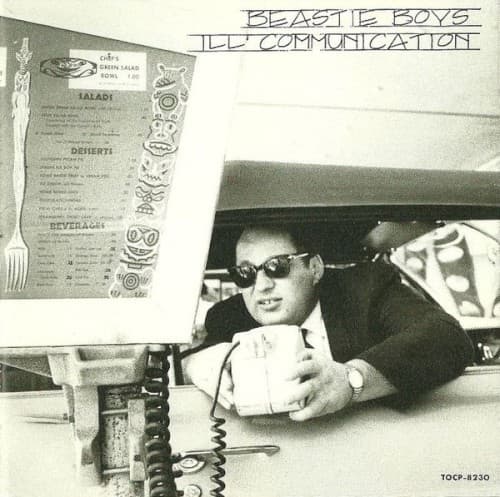
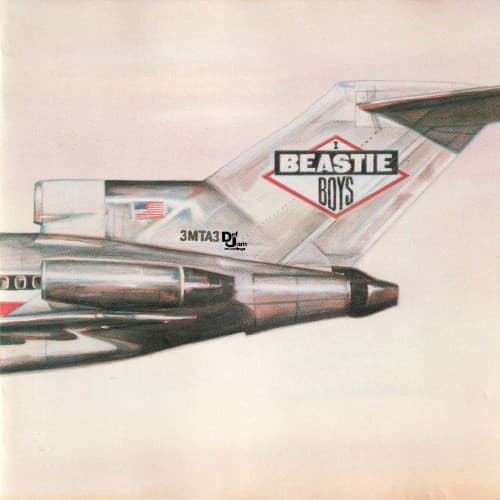
In the Beastie Boys catalog, Check Your Head sits just behind Ill Communication, which takes the same band-plus-rap idea and delivers it with sharper songs and more rapping. Paul's Boutique remains the group's best record, a dense, endlessly rewarding sample collage, and Licensed to Ill is the tighter and funnier of the early pair. Check Your Head ranks fourth by a narrow margin because it is the loosest of the four, and also the one with the most influence. Its importance in the lineage is bigger than its score: this is where a rap group made the case that hip-hop could be played live without losing its swing.
It is for listeners who like their rap with a rhythm section, for fans of the funk-and-punk crossover of the early 1990s, and for anyone who wants to understand how the alt-rock era absorbed hip-hop. It is also for people who found the group's earlier work too jokey and want a record with more groove. Skip it if you need dense, quotable lyricism, or if you want a front-to-back rap album with no instrumentals and no hardcore detours. The album has aged well on its strengths, with the funk cuts and singles sounding warmer today than most 1992 rap records, while the filler sounds as filler always does.
Start with "Pass The Mic" for the group at full rap strength, then "So What'cha Want" for the hook that sold the record, and then "Something's Got To Give" for the funk-jazz side. If you want the sample-collage extreme that this album reacted against, go to Paul's Boutique next. If you want the same live approach with sharper songs, Ill Communication is the logical sequel.
Check Your Head is the sound of three men deciding that having a good time with their own instruments mattered more than being right, and the strange part is that they were.
Track by track
Track Listing
Jimmy James
StandoutThe opener is a loose, fuzzy tribute to Hendrix, built on samples of three Jimi Hendrix recordings. The guitar-heavy groove establishes the album's new identity right away: this is a rap group with a live feel, and the Hendrix material is used as flavor over a rhythm the trio plays themselves. It was one of the five singles, and it works as a mission statement even if the rapping is more mood than substance.
Funky Boss
SolidA short, gritty groove that keeps the party going and adds percussion by James Bradley Jr. It is more atmosphere than song, but the bass is nasty enough to hold attention.
Pass The Mic
StandoutThe record's best rap performance and one of the group's best singles. A sample from James Newton's "Choir" supplies a sharp, eerie loop, and the trio trade verses like a relay team, each handing off with perfect timing. This is what the live-instrument approach buys you when the rhymes cooperate: space, bounce, and a groove that lets three voices sound distinct. The song proved that the shift to instruments had not cost them the rapping, and it is the clearest answer to anyone who says the album abandoned hip-hop. A cleaner, tighter mix would have made it even better, but the roughness is part of the appeal.
Gratitude
StandoutA heavy, riff-driven single that leans into the rock side of the record. The guitar and drums are big and sloppy in the right way, and the shouted delivery suits the thick sound. It is the clearest bridge between the group's punk roots and the alt-rock audience that adopted the album, and it was released as a single. More energy than invention, but the energy is real.
Lighten Up
StandoutOne of the funk and jazz-inspired songs singled out in the fact sheet, and it earns the description. Money Mark's keyboards give the track a smooth, warm swing that contrasts with the hard numbers around it. The rapping is relaxed rather than showy, which is the right choice, and the song shows how comfortable the group had become with a groove-first approach.
Finger Lickin' Good
SolidA bluesy, off-kilter rap built on a Bob Dylan sample, with the trio sounding relaxed to the point of slack. The sample choice is playful and unexpected, which fits the group's approach, though the song does not build to much.
So What'cha Want
StandoutThe record's biggest hook and its most direct hip-hop moment. The beat is stripped down and hard, the chorus is chantable, and the vocal distortion turns the verses into a collective bark. It is also one of the album's sharpest uses of its sound: the drums hit with room ambience, the bass is blunt, and the three voices fit together like a crew on a street corner. As a single it earned its place, and as a template it shows how a band-built rap record could still bang.
The Biz Vs The Nuge
SolidBiz Markie guests with vocals on a goofy, spirited track that leans on his comic timing. It is a pleasant detour that shows the group's rap-world connections, but it is lightweight and does not stay in the memory the way the singles do.
Time For Livin'
StandoutA hardcore punk blast covering Sly and the Family Stone's 1974 song. The cover is the clearest statement of lineage on the album: it ties the trio's punk beginnings to the funk tradition they were about to explore, and does it in under a few minutes of noise. It is more stunt than song, but it is a good stunt, and it gives the record its loudest moment.
Something's Got To Give
StandoutA funk and jazz-inspired groove that closes out the first run with a slow, confident swing. The band plays it loose, the keyboards hover over the rhythm, and the vocals are mellow and unhurried. It is the album's best demonstration that the trio could make the music as well as rap over it, and it holds up on repeat because nothing in it is forced.
The Blue Nun
SolidA shorter, moodier cut that works as a breather after the first ten tracks. It is atmospheric and pleasant, but there is not much to grab onto.
Stand Together
SolidA fast, shouty hardcore track that returns to the punk side. It is energetic but brief, and it feels more like a reminder of the group's roots than a full song.
Pow
SolidAnother quick burst of noise, with percussion by James Bradley Jr. It adds to the record's chaotic feel without adding much memorable content.
The Maestro
StandoutA laid-back groove with background vocals by Xan Cassavetes, credited as Nax Setevassac, giving the song a slightly different texture. The rapping is easygoing and the beat is smooth, a pleasant late-album change of pace.
Groove Holmes
SolidAn instrumental built on a jazz-funk groove, showing off the band's playing. It is warm and tasteful, but without vocals it is background music, and it is easy to skip when you are in the mood for the group's voices.
Live At P.J.'s
SolidA relaxed instrumental interlude with a loose, live feel. It is more of a vibe than a song, and it makes the late stretch of the album feel slower than it needs to.
Mark On The Bus
SolidA short instrumental that gives the keyboardist some room. It is pleasant filler: nothing here is bad, and nothing demands a second listen.
Professor Booty
StandoutThe late single that gives the second half a lift. The beat is funky and bass-forward, the vocals return to the front, and the humor feels closer to the group's best work. It was released as one of the five singles, and it is the strongest argument for the back half of the record. Not quite on the level of the early hits, but a welcome return to form after a run of instrumentals.
In 3's
SolidAn instrumental in a loose, jazzy mood that showcases the band's groove. It is easy to enjoy in context and easy to forget afterward.
Namasté
SolidThe closer winds the record down in a looser, more reflective mood, bringing the album to a calm end after a long, scattered run. It does not rank among the highlights, but it is a fitting sign-off for a record that never took itself too seriously.
Frequently Asked Questions
Is Check Your Head a rap album or a rock album?
What are the best songs on Check Your Head?
How does Check Your Head compare to Paul's Boutique?
How did Check Your Head perform commercially?
Styles