The scorecard
6.2/10 · Mixed
- Writing25%
- 6.0
- Production25%
- 5.5
- Delivery15%
- 7.5
- Cohesion15%
- 6.0
- Originality10%
- 6.5
- Replay value10%
- 6.0
The pain narratives are specific in places but the imagery repeats across tracks and the hooks rarely add new angles to the verses
TnTXD and Yung Tago build workable trap-soul beds but the somber pianos and guitars blur together across fourteen tracks with few memorable instrumental moments
Rod Wave's vocal range and melodic choices carry the record, moving fluidly between singing and rapping with genuine emotional weight even when the writing is thin
Fourteen tracks of similar tempos and moods create a slog in the second half with no clear arc and no strong closer after the remix feels tacked on
The melodic pain-rap formula was well established by 2019 but Rod Wave's vocal instrument and the specificity of his Florida struggle give it a fresh perspective
Heart on Ice and Cuban Links have hooks that stick but the middle stretch of the album offers little reason to return once the emotional pitch is familiar
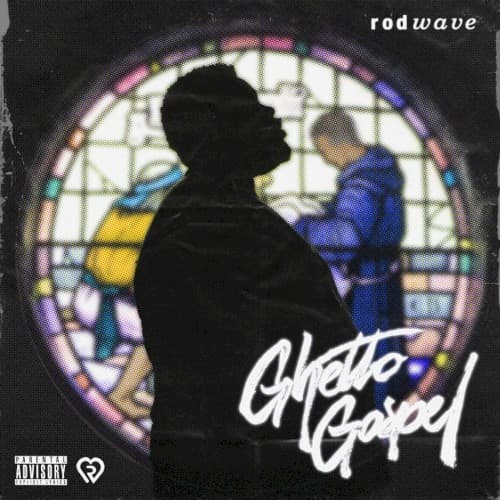
Rod Wave Ghetto Gospel — When the Hook Is the Whole Song
Rod Wave's debut album arrived in late 2019 with a thesis already proven: melodic pain sells when the voice behind it sounds like it means every word. Heart on Ice had gone viral months earlier, its somber piano and keening hook turning a Florida rapper with five prior mixtapes into a streaming phenomenon. Ghetto Gospel builds an entire album around that formula, fourteen tracks of sung struggle over trap-soul production that prizes emotional volume over variety. The gamble is whether Rod Wave's voice, a genuinely compelling instrument that moves between singing and rapping with more fluidity than most of his peers, can carry an hour of similar moods and tempos without a strong concept or sequencing to guide it.
The answer is halfway. The album works in bursts, whenever Rod Wave finds a specific image or a melodic idea sharp enough to justify another round of heartbreak and hardship. It sags when the writing settles for generalities and the production, handled primarily by TnTXD and Yung Tago, offers little to distinguish one piano ballad from the next. Kevin Gates executive produced the project and appears on two tracks, but his presence does not shape the sound in any audible way. What Ghetto Gospel proves is that Rod Wave has a lane and a fanbase; what it does not prove is that he has enough ideas yet to fill an album that demands to be heard front to back.
The Voice Outpaces the Pen
Rod Wave's vocal performance is the reason Ghetto Gospel functions at all. His range is wide, his melodies are natural, and he understands how to modulate his delivery so that a verse feels conversational and a hook feels urgent without overselling either. On Dark Conversations, he moves from a spoken-word confessional tone into a sung bridge that earns its emotional weight because the vocal sounds lived-in rather than performed. On Abandoned, which stretches past four minutes, his voice carries the repetition of the concept because the melody shifts just enough to keep the listener engaged. This is not a rapper who learned to sing for hooks; this is a singer who can rap when the verse calls for it, and that distinction matters across an album this melodic.
The production does not match that level of craft. TnTXD, Yung Tago and AceLexOnDaTrack build somber, mid-tempo beats that serve the vocals without challenging them. Pianos, minor-key guitars, and sparse melodic trap drums appear on nearly every track, and while the formula works on individual songs, it creates a same-ness across the album that no amount of vocal charisma can fully overcome. Close Enough to Hurt, produced by Ashton Sellars and Drum Dummie, offers a slightly brighter palette, but even that track settles into the same reflective mood as the rest of the project. The lack of tempo variation or instrumental ambition makes the second half of the album feel longer than it is.
The writing is the clearest weakness. Rod Wave is specific when he wants to be: the image of counting steps on Counted Steps, the brace face detail on the track of the same name, the sinking metaphor on Titanic. But too often the verses and hooks describe pain in broad strokes without the imagery or wordplay to make the individual track feel necessary. The hooks on Green Light and Extra state their premises but do not develop them, and by the time the album reaches Chip on My Shoulder, the shortest track at under two minutes, the emotional pitch has been made so many times that the brevity feels like a missed opportunity rather than a purposeful interlude. The Kevin Gates features on Cuban Links and Titanic add energy but not thematic depth; Gates raps with his usual intensity and then the songs return to Rod Wave's melodic territory without any real conversation between the two styles.
An Album Built for Playlists, Not Sequences
Ghetto Gospel does not earn its fourteen-track length because it has no real arc. The opening statement of arrival works as a first track, but after that the sequencing feels arbitrary. The early stretch could be rearranged without changing the experience, and the same is true of most tracks in the middle section. The album peaks in its first third with two hooks sharp enough to justify their streaming numbers, but after that the pacing flattens. There is no build, no tension, no sense that the tracklist was arranged to take the listener somewhere specific.
The inclusion of a remix as the final track is the clearest sign that this album was assembled for streaming rather than for sequential listening. The remix is a solid update, but it does not close the album in any meaningful way. It is a bonus track placed last because it is a bonus track, and the result is that the album simply stops rather than ending. The minute-fifty track that precedes it would have made a strange closer too, but at least its brevity might have felt like a statement. As it stands, Ghetto Gospel plays like a collection of songs that share a mood rather than an album with a shape.
A Debut That Proves the Voice, Not the Vision
Ghetto Gospel is a streaming-era debut that prioritizes emotional immediacy over artistic ambition, and the choice makes sense given Rod Wave's strengths and the audience he was building in 2019. His voice is the rare instrument that can carry a one-note concept farther than it has any right to go, and tracks like Heart on Ice, Cuban Links, and Abandoned justify the album's existence even when the rest of the tracklist feels like filler. But this is not an album that rewards front-to-back listening, and it is not an album that suggests Rod Wave was thinking about legacy or catalog at this stage of his career. It is a debut that does what debuts are supposed to do: it establishes a sound and a persona, and it leaves room to grow.
The album is for listeners who discovered Rod Wave through Heart on Ice and wanted more of the same, and it delivers that without pretending to be anything else. It is not for anyone looking for variety, sharp writing, or production that takes risks. Start with Heart on Ice, Cuban Links, and Dark Conversations to understand what Rod Wave does well, then decide whether that is enough to carry you through the rest. If you want to hear where this sound could go with more ambition, the albums that followed Ghetto Gospel offer clearer answers. If you want to hear where it started, this is the document: raw, repetitive, and carried entirely by a voice that sounds like it has more to say than it knows how to write yet.
Track by track
Track Listing
Sky Priority
StandoutA strong opener that frames Rod Wave's rise as hard-earned rather than sudden. The vocal melody on the hook is one of the album's catchiest, and the verse details the grind with enough specificity to avoid feeling like a generic success story. The production, handled by FJ and Mook on the Beat, keeps the energy higher than most of the album, which makes the transition into the slower middle section feel like a drop rather than a flow.
Dark Conversations
StandoutOne of the album's sharpest vocal performances, with Rod Wave moving from a near-spoken confessional into a sung bridge that feels genuinely vulnerable. The production from TnTXD and Reuel Ethan is minimal in a way that serves the delivery, and the two-and-a-half-minute runtime keeps the concept from overstaying. The writing is more impressionistic than specific, but the emotion lands because the vocal sells it.
Close Enough to Hurt
StandoutThe album's third single and one of its few moments of melodic brightness, though the mood is still reflective. Ashton Sellars and Drum Dummie build a piano-driven beat that gives Rod Wave room to stretch his range, and the hook is strong enough to justify the single push. The verse does not add much beyond the hook's premise, but the song works as a three-minute capsule of what Rod Wave does well.
Green Light
SolidA short, underwritten track that states its concept in the hook and never develops it. The production from Nashi is fine but forgettable, and at just over two minutes the song feels like an idea that needed another verse or a bridge to justify its place on the album. It is not bad, but it is filler.
Brace Face
SolidThe title detail is specific and memorable, but the rest of the track does not build on it. Trillo Beatz and Ill Will Beatz provide a mid-tempo beat that blends into the rest of the album's somber palette, and the hook repeats without adding new layers. A solid deep cut for fans, but not essential.
Poison
SolidYung Tago and Tyler Javeon build one of the album's more textured beats, with a guitar line that adds some sonic variety to the piano-heavy tracklist. Rod Wave's vocal performance is committed, but the writing is vague, describing a toxic relationship in broad strokes without the imagery or narrative detail that would make it stick. The song works in the moment but does not leave much behind.
Cuban Links
StandoutThe album's most obvious single, with a Kevin Gates feature that adds energy and a hook that is built for streaming playlists. TnTXD, Yung Tago, and Tre Gilliam craft a beat that is slightly harder-edged than the rest of the album, and Rod Wave's melodic instincts are sharp enough to make the hook feel earned rather than calculated. Gates delivers a solid verse that complements rather than overshadows Rod Wave's performance, and the track has enough replay value to justify its chart success. One of the album's clear highlights.
Soldier Life
SolidAceLexOnDaTrack provides a beat that does not deviate from the album's established sound, and the track suffers for it. The hook is serviceable but not memorable, and the verse covers familiar ground about struggle and perseverance without finding a new angle. It is competent but dispensable, the kind of track that disappears in the middle of a playlist.
Counted Steps
StandoutThe image of counting steps gives the track a specific visual anchor, and Rod Wave's vocal melody on the hook is one of the album's better moments. The production from TnTXD, Yung Tago, Tahj Money, and SephGotTheWaves is layered enough to keep the track from blending into the surrounding songs, and the writing, while still impressionistic, feels more purposeful than some of the weaker deep cuts. A solid mid-album track that deserved more attention.
Titanic
StandoutThe second Kevin Gates feature, built around a sinking-ship metaphor that Rod Wave and Gates both use to describe doomed relationships and street pressures. Yung Tago and BJ Beatz provide a beat that gives the track some breathing room, and at nearly four minutes it is one of the album's longer cuts. Gates brings intensity but the two artists do not really interact; they trade verses without building a conversation. The hook is strong enough to carry the track, but it is not as immediately catchy as Cuban Links.
Extra
WeakAnother short, undercooked track that states its premise and then ends before it can develop. Consent2k and Motif Alumni build a beat that is fine but unremarkable, and the hook does not have enough melodic or lyrical weight to justify repeated listens. Filler.
Abandoned
StandoutThe album's longest track at just over four minutes, and one of its most emotionally committed performances. AceLexOnDaTrack provides a minimal, piano-driven beat that gives Rod Wave room to showcase his range, and the vocal performance is strong enough to carry the repetition of the concept. The writing is still more emotional than specific, but the melody and delivery make it one of the album's better deep cuts. A track that rewards patience but could have used tighter editing.
Chip on My Shoulder
SolidThe album's shortest track at under two minutes, and it feels like a fragment rather than a complete song. Blake Slatkin and Iceberg Beatz provide a beat that is slightly different from the rest of the album, but the track ends before it can establish itself. It works as a brief interlude but not as a penultimate track, and its placement makes the transition to the remix feel even more abrupt.
Heart on Ice (remix)
SolidThe Lil Durk remix of the song that made Rod Wave a streaming phenomenon, and it is a solid update that does not improve on the original in any meaningful way. Durk's verse fits the mood and adds a Chicago perspective to Rod Wave's Florida pain, but the remix does not reimagine the song or close the album with any sense of finality. It is here because it is a streaming play, not because it serves the album as a piece of sequencing. A bonus track that should have been labeled as such.
Frequently Asked Questions
Is Rod Wave Ghetto Gospel worth listening to?
What is the best song on Ghetto Gospel?
How did Ghetto Gospel perform commercially?
Genres
Styles