
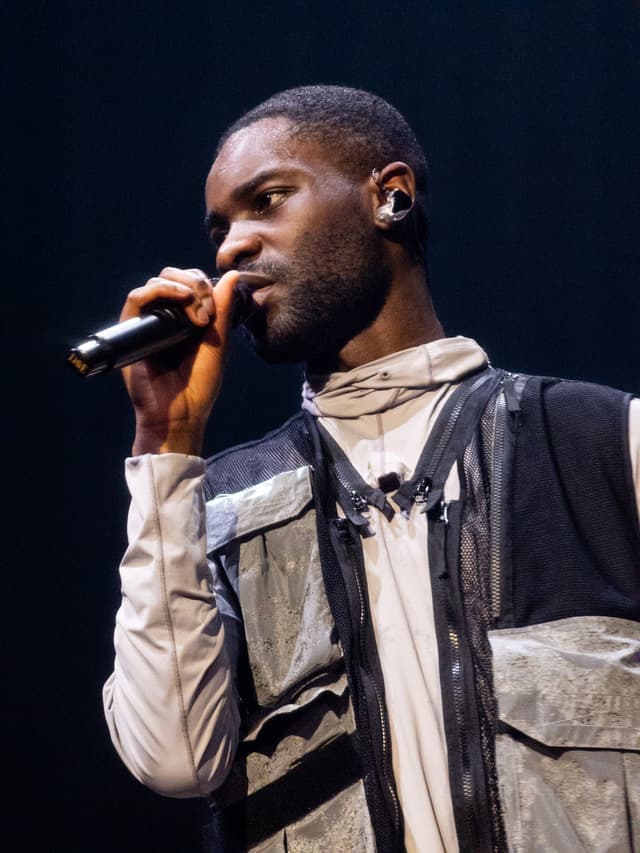
From Streatham to the Mercury Prize: Dave's Redefining of British Hip-Hop
David Orobosa Omoregie — known professionally as Dave — emerged from South London's Streatham with a style that redrew the boundaries of British rap. Where UK hip-hop had often borrowed American templates or leaned heavily into grime's aggression, Dave carved out territory that felt distinctly his own: introspective, cinematic, politically conscious, yet grounded in the lived reality of Black British youth. His 2019 debut Psychodrama didn't just win the Mercury Prize — it announced a new kind of UK rapper, one who could move between vulnerability and social commentary with the same fluency.
Born in 1998 to Nigerian parents, Dave grew up navigating the tension between aspiration and environment. He began making music as a teenager, initially gaining attention through YouTube freestyles and Fire in the Booth sessions that showcased technical skill beyond his years. But what separated Dave from his peers wasn't just his ability to rap — it was his willingness to treat hip-hop as a vehicle for genuine introspection and social observation. His music doesn't posture. It thinks aloud.
By his early twenties, Dave had become one of the most critically lauded voices in British music, period — not just hip-hop. His work sits at the intersection of UK drill's stark minimalism, conscious rap's lyrical depth, and a kind of cinematic storytelling that feels closer to film than traditional verse-chorus structures. He's an artist who refuses easy categorization, which is precisely why his influence has spread so widely across the UK scene.
Cinematic Storytelling Meets UK Drill Minimalism: Dave's Sonic Approach
Dave's production palette is built on restraint. Working frequently with producer Fraser T. Smith and his brother Tyrell 169, he favors sparse, piano-driven instrumentals that leave space for his voice to carry the emotional weight. The beats rarely overwhelm — they create atmosphere. Minor-key piano loops, subtle string arrangements, muted bass, occasional orchestral flourishes. The sonic landscape is cold, reflective, almost melancholic, but never overwrought. It's the sound of someone thinking through pain rather than shouting over it.
His flow shifts with intent. Dave can deliver rapid-fire technical runs when the moment calls for it, but he's just as comfortable slowing down, letting syllables hang in the air, allowing silence to do its work. There's no performative aggression. His delivery is conversational, measured, sometimes painfully honest. He sounds like he's speaking directly to the listener rather than performing for them. That intimacy is his signature — the feeling that you're overhearing someone's private thoughts rather than consuming a public persona.
Lyrically, Dave operates in long-form narrative mode. Tracks stretch past six, seven, eight minutes, unfolding like short films rather than radio singles. He's less interested in hooks than in sustained thought, in building arguments and emotional arcs across verses. The writing is literate without being pretentious, political without sloganeering. He references Thatcher and Windrush, police brutality and mental health, systemic racism and personal trauma, weaving them together in ways that feel lived rather than studied. His pen isn't just clever — it's purposeful.
Building a Legacy in Real Time: Dave's Journey from Freestyles to Cultural Force
Dave's early visibility came through the traditional UK route: YouTube freestyles, radio appearances, strategic features. His 2016 track "Wanna Know" with Drake put him on an international radar, but it was his 2017 EP Game Over that established the template — autobiographical depth, piano-led production, extended song structures that prioritized storytelling over commercial formatting. The project felt like a statement of intent: this wouldn't be drill by numbers or grime cosplay. This was something else.
Psychodrama arrived in March 2019 and immediately shifted the conversation around British hip-hop. The album was structured around therapy sessions, framing the entire project as a kind of public self-examination. Tracks like "Black" tackled the Black British experience with nuance and rage in equal measure, while "Psycho" and "Lesley" demonstrated his ability to construct character-driven narratives with novelistic detail. The production — largely handled by Fraser T. Smith — was lush, cinematic, unafraid of emotional vulnerability. Critics compared it to Kendrick Lamar's good kid, m.A.A.d city for its conceptual ambition and cultural specificity.
The album debuted at number one on the UK Albums Chart and won the 2019 Mercury Prize, making Dave the second rapper ever to win the award. More significantly, it became a cultural touchstone for young Black Britons who rarely saw their interior lives reflected in mainstream art with this level of care and complexity. It wasn't protest music in the traditional sense — it was testimony.
His 2021 follow-up We're All Alone in This Together confirmed that Psychodrama wasn't a fluke. The album expanded his sonic palette slightly — more features, more genre experimentation — while maintaining the thematic core: systemic critique, personal reflection, community accountability. The Stormzy collaboration "Clash" brought grime energy, while tracks like "In the Fire" returned to the piano-driven introspection that defined his sound. The project debuted at number one and reaffirmed his position as one of the UK's most important musical voices.
Beyond albums, Dave's most politically significant moment came at the 2020 Brit Awards, where his performance of "Black" included new verses explicitly calling out Prime Minister Boris Johnson and addressing British colonialism and institutional racism on national television. The performance was incendiary, uncomfortable, necessary — the kind of cultural moment that transcends music and becomes part of the broader political discourse. It demonstrated Dave's understanding of his platform and his willingness to use it, even at potential commercial cost.
His influence on the UK scene is already visible. A new generation of British rappers — Little Simz, Loyle Carner, Knucks, Kojey Radical — are pursuing similarly introspective, sonically adventurous paths, carving out space for vulnerability and intellect in a genre often defined by its hardness. Dave didn't invent conscious UK rap, but he proved it could be commercially successful, critically acclaimed, and culturally central all at once.
Redefining What British Hip-Hop Can Say and Who It Can Speak For
Dave's significance extends beyond his own discography. He represents a generational shift in British hip-hop's self-perception — a move away from imitation and toward self-definition. Where earlier UK rap often measured itself against American standards or remained contained within grime's parameters, Dave's success demonstrated that British artists could build their own aesthetic frameworks and find massive audiences without compromising specificity. Psychodrama is unmistakably British, unmistakably London, unmistakably rooted in a particular cultural experience — and that specificity is precisely what gave it universal resonance.
His impact on the broader cultural conversation cannot be overstated. He's helped normalize discussions of mental health, therapy, and emotional vulnerability within communities where those conversations have historically been stigmatized. His willingness to publicly process trauma, to admit doubt, to question himself — these aren't just artistic choices, they're political acts in a genre and a culture that often demands stoicism. He's shown young Black British men that introspection isn't weakness, that thinking through pain is its own form of strength.
As Dave continues to evolve — he's still only in his mid-twenties — the trajectory remains unpredictable. What's certain is that he's already shifted what British hip-hop can be: more literary, more emotionally complex, more willing to engage with politics and psychology in the same breath. He's created a template that others are building on, proving that UK rap doesn't need to mimic Atlanta or New York to matter globally. It just needs to be honest.