Dave Psychodrama — When South London Put Itself on the Therapist's Couch
British rap had never sounded this stripped down and this loaded. No one was making albums where therapy sessions doubled as interludes, where a rapper spent eleven tracks dissecting generational trauma over piano loops that felt like they were recorded in someone's living room. The UK scene was busy perfecting drill's cold efficiency and grime's algorithmic punch-ins, and here came this 20-year-old from Streatham treating the studio like a confessional booth.
American listeners who caught this late discovered something their own scene had abandoned: the album as psychological journey. Where stateside rappers were chasing streaming playlists and ten-song sprints, Dave built a 70-minute arc that demands you sit with it from first bar to last breath. The production feels deliberately small — piano, minimal drums, empty space where most producers would stack layers. It forces you to hear every word.
What makes Psychodrama essential?
It proved UK rap could match American introspection without copying American sounds. Dave's spoken-word stretches owe nothing to Kendrick's theatrical storytelling or J. Cole's classroom confessionals. This is therapy-speak as verse structure, psychological diagnosis as hook, childhood memory as bridge. The album plays like someone finally said the things British rap had been dancing around for a decade: class rage, immigrant guilt, Black British identity crisis, the specific loneliness of watching your friends choose roads you can't follow.
The Piano That Replaced the 808
The production palette here feels like a deliberate rejection of what was winning in 2019. 169, Kyle Evans, and Fraser T. Smith built beats that sound like furniture removal — sparse, intentional, leaving room for Dave's voice to occupy every corner. Piano anchors half the album, but never the way soul samples anchor boom-bap. These are compositional pieces, recorded live, played with the restraint of someone scoring a film about grief.
The drums, when they arrive, hit like punctuation rather than foundation. Trap hi-hats appear and vanish. Kick patterns shift mid-verse. The 808s that dominated UK rap in 2019 show up maybe twice across eleven tracks.
Fraser T. Smith especially understands negative space — he lets Dave's vocal sit alone for bars at a time, no adlibs, no layered harmonies, just the raw grain of his speaking voice. It makes the rare moments when the production swells feel earned rather than manipulative.
Dave's lyrical focus never wavers from the psychological. He diagrams his own anxiety like a patient who memorized the DSM. His flow shifts between conversational cadence and measured spoken-word delivery, treating rap verses and therapy transcripts as the same literary form.
He name-checks his therapist. He describes panic attacks in clinical detail. He moves from personal trauma to systemic critique within the same sixteen bars, connecting his mother's immigrant struggle to stop-and-search policies to drill music's body count.
Does the album's therapy-session framing ever feel didactic?
Occasionally the conceptual framework overwhelms the music. The literal therapy interludes between tracks can feel heavy-handed when the verses already do that work. And the album's second half drags — three consecutive tracks over five minutes each test patience when the production refuses to develop or shift textures. But even the slower stretches reveal intention upon repeat listens, moments that scan as filler on first pass revealing narrative purpose on the third.
The Seventy-Minute Confession
The album opens like someone clearing their throat before a difficult conversation and never lets the tension release. The first stretch establishes the format: spoken-word intro, verse as testimony, minimal instrumental support. By the third track the architecture becomes clear — this is not a collection of songs but a single unbroken statement broken into movements.
The middle section shifts from internal psychology to external observation. The production opens slightly, allowing guest voices and fuller arrangements, before collapsing back into intimacy. The sequencing deliberately avoids peaks and valleys, maintaining a sustained emotional intensity that most albums would relieve with a club track or a love song. Dave refuses both.
The closing stretch pushes past the point where most albums would fade to black. Where another artist would end on catharsis, Dave extends into aftermath — what happens after you say everything out loud, after the session ends, after you walk back into the world carrying the same weight but naming it differently now.
The pacing demands endurance. This is not background music. It is not gym rap or party fuel or commute soundtrack. It requires the same attention you would give a one-person play, and it rewards that attention the way theater does — not with hooks you will hum later but with lines that lodge in your chest and surface days afterward.
The Album That Shifted UK Rap's Emotional Range
This sits near the top of Dave's catalog, the album where he proved his pen could carry an entire project without radio concessions or feature safety nets. His later work explores different sonic territories, but nothing he has released since matches Psychodrama's psychological precision or its willingness to sit in discomfort for seventy consecutive minutes.
Who needs to hear this? Listeners who think UK rap begins and ends with drill. Fans of Kendrick's confessional mode who want to hear how that impulse translates across the Atlantic. Anyone interested in how therapy culture reshaped rap's lyrical vocabulary.
This is essential listening for understanding British hip-hop's post-grime identity crisis and how one album gave an entire generation of UK rappers permission to be vulnerable without sounding American. The album aged like a time capsule of a specific cultural moment — late-2010s Britain, post-Grenfell, mid-Brexit, when young Black Brits were reckoning with what it meant to be British at all. The production still sounds deliberately minimal rather than dated, the piano loops refusing to age the way 808 patterns do.
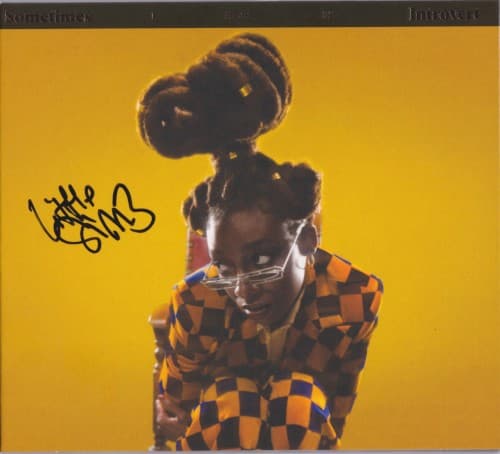
New listeners should start with Black and Streatham to understand the album's emotional core, then Lesley to hear Dave's storytelling at its most devastating. Fans of this should explore Little Simz's GREY Area for a different angle on British introspection, Loyle Carner's Not Waving, But Drowning for similar vulnerability over live instrumentation, or reach back to Roots Manuva's Run Come Save Me to hear the UK rap therapy session's spiritual ancestor. The album's influence echoes through every UK rapper who now treats mental health as valid subject matter and every producer who learned that space hits harder than saturation.
Psychodrama proved British rap could build its own emotional language without borrowing American templates, and in doing so it became the blueprint for a decade of UK artists willing to go inward.
Track Listing
Psycho
▲The album opens with Dave in conversation with his therapist, literal session audio setting the conceptual frame. When the beat arrives it's just piano chords and silence, Dave's voice entering with the measured cadence of someone who rehearsed this confession. He moves from personal anxiety to systemic observation — the way poverty manufactures mental illness, how his success creates survivor's guilt. The production never develops, staying locked in the same four-bar piano loop for the entire runtime. It's an intentional choice that forces focus onto the lyrics, but it also makes the track feel like an extended intro rather than a proper opener. Fraser T. Smith's restraint here establishes the album's sonic philosophy: nothing decorative, everything functional, space as instrument.
Streatham
▲This is where Dave's pen reaches its highest resolution. The entire track dissects his relationship with his neighborhood — the pride, the trauma, the contradictions of repping a place that shaped you and scarred you equally. He name-checks specific streets, specific corner shops, treating South London geography like sacred text. The production builds slightly from the opener, adding subtle strings and a bassline that pulses rather than knocks. His flow here alternates between conversational storytelling and clipped declarative statements, the rhythm shifting to match the emotional weight of each memory. The second verse about his brother's incarceration cuts deeper than anything else in his catalog. This is Dave at his most precise, every bar earning its place, zero filler, the kind of writing that makes other UK rappers sound careless.
Black
▲Dave delivered this at the 2020 Brit Awards and it became the performance UK music television will reference for the next twenty years. The album version lands with the same force — five minutes of spoken-word testimony about Black British identity, code-switching, respectability politics, and the exhaustion of explaining racism to people who benefit from not understanding it. The piano arrangement here is more compositional than the earlier tracks, dramatic chords that punctuate rather than loop. Dave's delivery abandons rap cadence entirely for the measured pace of a keynote speech, each line given space to settle before the next arrives. The verse about his nephew calling him the n-word without understanding its weight destroys every time. This is the track that proved Dave could write beyond rap's formal constraints and probably the song that will outlive everything else in his discography.
Purple Heart
▲The first track that attempts something close to a traditional song structure, with a repeated refrain and a beat that actually knocks. Dave examines toxic masculinity and emotional unavailability over keys and a bassline heavy enough to rattle dashboards. The hook about wearing his heart as a Purple Heart — the military medal for being wounded — is the kind of metaphor that sounds obvious until you hear how Dave extends it across three verses. He raps about failed relationships as battlefield injuries, therapy as triage, healing as something you earn through survival. The production, handled by 169, adds drums that finally feel like hip-hop rather than incidental rhythm. It's the album's first moment that could function outside the full project, which makes it slightly less essential to Psychodrama's arc but more accessible for casual listeners.
Location
●Drake's influence arrives for four minutes and then vanishes. This is the album's only concession to commercial palatability — sung melodies, relationship lyrics, a beat that borrows from Afrobeats' mid-tempo bounce. Dave's singing voice is serviceable but reveals why he built his career on rapping and spoken word. The track examines long-distance relationship strain and the specific loneliness of touring success, which would hit harder if the sonic template didn't feel borrowed from a different artist's playbook entirely. The production is polished, the songwriting competent, but it disrupts the album's aesthetic consistency in a way that feels like label pressure rather than artistic choice. Sequenced in the middle of the tracklist it functions as a brief exhale before the album descends back into psychological excavation, but it's the track you could remove without damaging Psychodrama's central argument.
Disaster
●J Hus appears and the energy shifts entirely. The production here is the album's most overtly Afrobeats-influenced moment, syncopated percussion and a melody that bounces rather than broods. Dave and Hus trade verses about success and paranoia, the way money creates new anxieties while solving old ones. Hus brings his signature melodic flow and his verse about fake friends and industry snakes feels lived-in rather than formulaic. Dave matches his energy, abandoning the therapy-speak for more traditional rap braggadocio, though even here he can't resist psychological analysis — dissecting his own ego while flexing it. The track works as a palette cleanser, proof that Dave can operate in different modes, but like Location it feels slightly separate from the album's core mission. You could sequence this onto a different project and it would function just as well, which is both a strength and a limitation.
Screwface Capital
▲Dave's thesis statement on London itself, the city as character and antagonist. The beat is skeletal — just keys and a bassline that sounds like it's being played on a instrument with broken strings. He catalogs London's contradictions: the wealth and the poverty existing on the same block, the way the city chews up young Black men and spits out statistics, the specific cruelty of a place that demands you succeed while systematically blocking every path to success. His flow here is patient, letting each observation breathe before moving to the next. The second verse about knife crime and the school-to-prison pipeline should be required listening for anyone trying to understand UK drill's context. The production never develops or shifts, staying locked in the same minimal arrangement for five minutes, which tests patience but reinforces the feeling of being trapped in a city that refuses to change. This is essential Psychodrama, the track where Dave's personal testimony expands into social critique.
Environment
▲The therapy-session framing returns explicitly, Dave in conversation with his therapist about nature versus nurture, whether his anxiety is genetic or environmental. The production is just piano again, almost identical to the album's opening track, which creates a sense of returning to the beginning of the session. He examines his childhood, his parents' struggles, the way poverty manufactures mental illness across generations. The lyrics are devastating — the verse about watching his mother work three jobs and still fall short of rent is the kind of detail that makes poverty real rather than abstract. His flow is conversational, the pacing matching the cadence of actual therapy-session speech. It drags slightly in the middle, the five-minute runtime feeling longer than it needs to, but the emotional core is undeniable. This is the track where Dave's project fully reveals itself as psychological archaeology, digging through layers of trauma to find the bedrock.
Lesley
▲The album's narrative centerpiece and its most devastating moment. Dave tells the story of a girl named Lesley, sexually abused by her father, the trauma unfolding across three verses with the precision of a short film. The production is just piano and strings, minimal arrangement that refuses to soften the horror of what Dave is describing. His delivery is matter-of-fact, no theatrical emotion, which makes the details land harder — Lesley's silence, her mother's willful blindness, the systems that failed her at every turn. The final verse, where Lesley confronts her abuser, is unbearable and necessary. This is UK rap's most unflinching examination of sexual abuse and one of the most important songs in British hip-hop history. It's also almost unlistenable, not because it fails artistically but because it succeeds too well at making the listener sit inside someone else's nightmare. Critics who claim rap can't handle serious subject matter should be sentenced to listen to this track on repeat.
Voices
▲The first track where Dave allows himself something close to hope. The production is brighter, major-key piano and a rhythm that suggests forward motion rather than stasis. He examines the voices in his head — anxiety, ambition, self-doubt, family expectations — and for the first time across the album he suggests that naming them might diminish their power. His flow is more energetic here, closer to traditional rapping than spoken-word confession. The hook about the voices getting louder as success arrives is the kind of observation that most artists treat as a throwaway bar but Dave extends into a full examination of fame's psychological cost. The track works as a late-album breath, a moment of relative lightness before the final descent. It's solid without being essential, the kind of song that functions better within the album's arc than it would as a standalone single.
Drama
▲The album ends where it began, Dave back in the therapist's office, the session concluding. The production is just piano one final time, the same minimal approach that opened the project. He reflects on the work of therapy, the exhaustion of self-examination, the question of whether talking about trauma heals it or just makes you better at describing your wounds. His final verse about his father's absence and his mother's strength brings the album full circle, returning to the family dynamics that shaped everything he's spent seventy minutes dissecting. The track fades out mid-thought, no resolution, no cathartic release, just the suggestion that therapy is ongoing work rather than a problem you solve. It's a perfect ending for an album that refuses easy answers, though the nine-minute runtime tests patience when the production never develops beyond the opening piano loop. This is the close that Psychodrama earns, uncomfortable and unresolved, the sound of someone who said everything they needed to say and still doesn't feel finished.