From Detroit Battle Grounds to Hip-Hop's Most Respected Lyricists
Royce da 5'9" emerged from Detroit's unforgiving underground scene in the late 1990s as a technical purist with venom in his delivery and complexity in his wordplay. Born Ryan Daniel Montgomery, he built his reputation through razor-sharp punchlines and intricate rhyme schemes that demanded multiple listens to fully decode. His early association with Eminem brought visibility, but also created expectations that would both help and complicate his path to recognition. While peers found mainstream success, Royce spent years navigating label complications, personal demons, and the challenge of being known primarily as a feature artist rather than a solo force.
What separates Royce from countless skilled technicians is his willingness to evolve beyond pure lyrical athleticism. The Detroit native transformed from a boastful wordsmith into one of hip-hop's most introspective voices, documenting addiction, family trauma, and spiritual growth with the same precision he once reserved for battle raps. His discography traces a journey from street-hardened bravado through collaborative ventures with PRhyme and Slaughterhouse to deeply personal solo projects that confront painful truths. By his fifth decade, Royce had become the rare artist who commands respect from both purists and younger generations seeking substance.
Royce's significance extends beyond his own catalog. He represents Detroit's lyrical tradition carried forward, a bridge between the rawness of early 2000s street rap and the confessional honesty that defines contemporary hip-hop. His refusal to chase trends or dilute his approach has made him a reference point for artistic integrity. Where commercial pressures might have pushed others toward pop crossover, Royce doubled down on bars, building a legacy one meticulously crafted verse at a time.
Multi-Syllabic Precision Meets Autobiographical Honesty
Royce's technical foundation rests on multi-syllabic rhyme patterns that fold back on themselves, creating internal connections most listeners miss on first encounter. His delivery favors controlled aggression over theatrical energy, each syllable landing with deliberate force. Early work showcased pure lyrical firepower—complex rhyme schemes stacked atop rugged Detroit production that favored hard drums and minimal melodic elements. He approached beats like obstacle courses, navigating them with the precision of someone proving technical superiority with every bar. This period established his reputation among hardcore fans but limited his commercial reach.
As his career progressed, Royce's sonic palette expanded while maintaining lyrical density. The PRhyme projects with DJ Premier introduced jazz-inflected boom-bap that gave his wordplay breathing room, proving he could match substance with production sophistication. He gravitated toward soulful loops, dusty breaks, and live instrumentation that complemented rather than competed with his voice. Unlike rappers who use beats as backgrounds, Royce engages production as a conversation partner, adjusting his cadence and flow to highlight musical nuance. His best work finds pockets within the beat that other emcees wouldn't notice, turning rhythm into another layer of meaning.
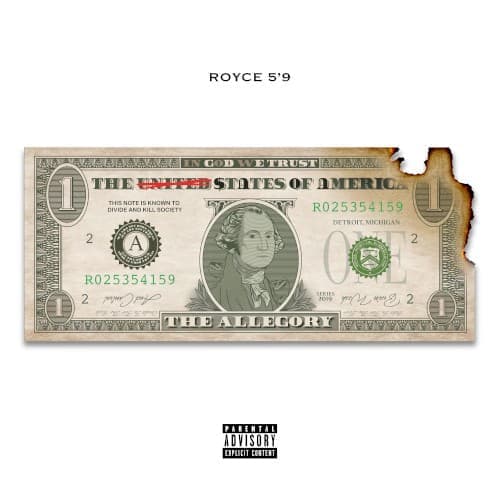
The most significant stylistic shift came with his embrace of vulnerability. Albums like Layers and The Allegory retained technical prowess while introducing confessional depth that earlier work only hinted at. He began deconstructing his own mythology, examining addiction, failed relationships, and the weight of Detroit expectations with forensic honesty. His flow softened in moments, allowing emotional weight to surface without sacrificing complexity. This evolution didn't abandon his foundation—it deepened it, proving that technical skill and emotional transparency could coexist. Royce learned to weaponize silence and space as effectively as he once weaponized punchlines.
The Long Road from Underground Respect to Artistic Fulfillment
Royce's professional beginnings trace back to Detroit's competitive underground, where he sharpened skills through ciphers and battles before catching Eminem's attention in the mid-1990s. Their chemistry produced "Bad Meets Evil" in 1999, a standout on *The Slim Shady LP* that showcased both rappers at their most vicious. This connection positioned Royce as Detroit's next breakout, but industry politics intervened. A falling out with D12 and Eminem sidelined his momentum just as his debut album should have dropped. Tommy Boy shelved Rock City, leaving Royce in professional limbo despite possessing undeniable talent. The experience taught him harsh lessons about the business machinery behind rap success.
The early 2000s found Royce rebuilding through independent releases and strategic features. Rock City finally emerged in 2002 through different distribution, but without major label muscle, it struggled commercially despite strong material. He became the rapper other rappers respected—a featured guest who elevated tracks but couldn't translate that consistency into solo stardom. His work with DJ Premier on PRhyme (2014) represented a creative rebirth, pairing his technical mastery with Premier's impeccable production. The project reminded hip-hop heads why Royce mattered, earning critical acclaim and reigniting interest in his solo work. A sequel followed in 2018, cementing the partnership as one of modern hip-hop's most satisfying collaborations.
Slaughterhouse offered another avenue for visibility. The supergroup with Joe Budden, Joell Ortiz, and Crooked I formed in 2008, uniting four elite lyricists without commercial profiles. Their self-titled debut and Shady Records follow-up Welcome to: Our House (2012) demonstrated chemistry but exposed the challenges of managing four strong personalities with different creative visions. The group's dissolution freed Royce to pursue personal directions without compromise, leading to his most accomplished solo phase.
Layers (2016) and Book of Ryan (2018) marked Royce's artistic maturity. The former addressed sobriety and self-awareness with unflinching honesty, while the latter deconstructed his relationship with his father through deeply personal narratives. These weren't just technical showcases—they were emotional excavations that resonated beyond traditional hip-hop audiences. The Allegory (2020) continued this trajectory, blending social commentary with introspection across 22 tracks that felt ambitious rather than bloated. The album earned an 8.3 rating, validating his evolution from respected technician to complete artist. He had finally achieved what eluded him for two decades: recognition for creating meaningful bodies of work, not just impressive verses.
Throughout his career, Royce maintained Detroit pride without becoming regionalized. He collaborated across generations and styles—from Premier's boom-bap to contemporary producers pushing boundaries. His podcast Teacha and various interviews revealed a thoughtful perspective on hip-hop's culture and business, adding another dimension to his public persona. By his mid-forties, Royce had outlasted trends, survived industry setbacks, and emerged as an elder statesman whose journey from battle rapper to introspective artist mirrored hip-hop's own maturation.
Technical Mastery Paired with Hard-Won Wisdom
Royce da 5'9" occupies a unique position in hip-hop's hierarchy—universally respected by peers, deeply appreciated by purists, yet never achieving the mainstream recognition his skill set warranted. This paradox defines his legacy. He represents the artist who refused to compromise vision for commercial validation, building a catalog that rewards close listening and multiple exposures. Younger lyricists cite him as influence, studying his rhyme construction and thematic depth. His sobriety journey, documented across multiple albums, provided a blueprint for artists struggling with similar demons, proving that vulnerability strengthens rather than weakens artistic credibility.
His impact extends through collaborations and mentorship. The PRhyme projects reminded a generation raised on trap production that boom-bap could still feel urgent and relevant when executed with skill and intention. Slaughterhouse, despite its brief run, demonstrated that lyrical rap could generate excitement outside algorithm-driven playlists. Royce's reconciliation with Eminem and their 2011 Hell: The Sequel EP showed growth beyond ego, two Detroit legends reconnecting on their own terms. These partnerships enriched hip-hop's ecosystem, creating spaces where technical excellence remained valued.
Detroit's lyrical lineage runs through Royce. He carried forward the city's tradition of uncompromising wordplay while adding layers of psychological depth that earlier generations rarely explored publicly. His willingness to discuss addiction, therapy, and personal failure normalized conversations that hip-hop culture often avoided. The Allegory stands as a testament to what's possible when an artist prioritizes artistic fulfillment over commercial calculation—a dense, rewarding project that asks listeners to engage rather than passively consume. Royce proved that careers aren't defined by chart positions or viral moments, but by consistent growth and unwavering commitment to craft. His legacy is the long game won.