Big Sean: The Detroit Rapper Who Freestyled His Way Into GOOD Music
Big Sean's career begins with sixteen bars in a doorway. In 2005, a Detroit high schooler named Sean Anderson heard that Kanye West was giving a radio interview at a local station, showed up, and talked his way into a freestyle. West was reluctant at first, but he gave him the sixteen bars, listened, and took the demo. Two years later Big Sean was signed to GOOD Music.
Born in Santa Monica in 1988 and raised in Detroit by his mother, a school teacher, and his grandmother, he attended Cass Technical High School and built his name on mixtapes before his debut album, Finally Famous, arrived in 2011. That album and its follow-up, Hall of Fame, both peaked at number three on the Billboard 200. Then came Dark Sky Paradise, Detroit 2 and I Decided, each of which debuted at number one, giving him three chart-topping albums.
If you want a Big Sean artist profile in a sentence: he is a punchline-minded, accessible Midwestern rapper who turned pop-friendly hooks and a famous mentor into a long, steady run at the top of the charts. He has cited Kanye West, Eminem, the Notorious B.I.G. and J Dilla as influences, and you can hear all four in different corners of his catalog.
Punchlines, Pop Hooks and the Big Sean Sound
Big Sean is a wordplay rapper at heart. His verses lean on punchlines, setups and quick turnarounds, delivered in a bright, conversational voice that sounds like he is grinning mid-sentence. That approach connects him to the Kanye West school of witty, self-aware rap, and it is why his guest verses tend to stand out on other people's songs.
The production around him has been unusually well-connected. No I.D. handled much of the sonic direction on his first two albums, with Key Wane, Hit-Boy and Da Internz also on Hall of Fame. Dark Sky Paradise brought in Mike Will Made It, DJ Mustard, DJ Dahi and Kanye West himself. Later he made Double or Nothing with Metro Boomin and formed the duo Twenty88 with Jhene Aiko, whose 2016 album leaned into R&B. The pattern is consistent: Sean chooses glossy, radio-ready beats and works hard to make them his.
The trade-off is a certain sameness. Because the formula is so reliable, some albums blur together, and the hooks can feel designed for playlists rather than for the full record. We rated Dark Sky Paradise 6.7/10, which captures the mix: a collection of big singles and confident rapping, without the stylistic risks that might have pushed it higher.
From Finally Famous Mixtapes to Detroit 2: Big Sean's Career Arc
The early years were mixtape years. Big Sean released his first official tape, Finally Famous: The Mixtape, in September 2007, followed by UKNOWBIGSEAN in 2009 and Finally Famous Vol. 3: Big in 2010, whose guests included Bun B, Curren$y, Tyga, Drake and Chiddy Bang. The internet following he built there set up his debut studio album, Finally Famous, released June 28, 2011. It spawned My Last with Chris Brown, Marvin & Chardonnay with Kanye West and Roscoe Dash, and a remix of Dance (Ass) featuring Nicki Minaj.
His 2012 mixtape Detroit, with guests including J. Cole, Juicy J, Royce da 5'9" and Kendrick Lamar, nodded to his hometown. He also appeared on Mercy, the lead single from GOOD Music's Cruel Summer compilation, alongside West, Pusha T and 2 Chainz. Hall of Fame (August 2013) leaned on No I.D. and added guests such as Lil Wayne, Miguel, Nas and Common, and its singles included Switch Up and Beware.
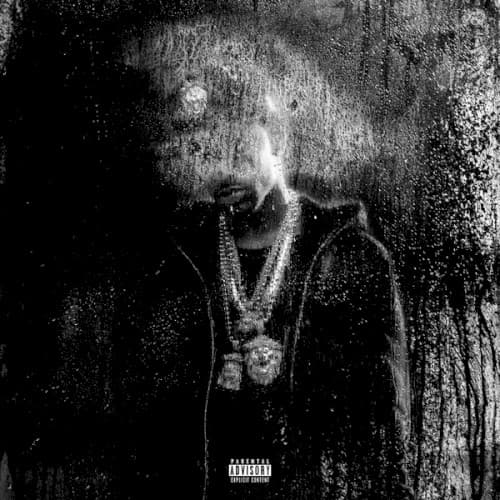
Dark Sky Paradise (2015) was the breakthrough. After signing a management deal with Roc Nation in September 2014, he released I Don't Fuck with You, known as IDFWU, with E-40; the song later received RIAA diamond certification. The album debuted at number one on the Billboard 200 and also yielded Blessings with Drake and West. We rated it 6.7/10.
Between albums he stayed busy. In April 2016 he released a self-titled album with Jhene Aiko as Twenty88, followed by a short film, Out of Love, built from its recordings. He called Overtime a return to his roots.
I Decided (February 2017) also debuted at number one. Bounce Back reached number six on the Hot 100 and remains his highest-charting song, and Sean has said he consulted Jay-Z and Rick Rubin while making it. The year ended with Double or Nothing, the collaborative album with Metro Boomin. His 2019 return began with Overtime, produced by Hit-Boy, Key Wane and the Tucker Brothers, and a performance of Bezerk with A$AP Ferg at the MTV Video Music Awards, all building toward Detroit 2 in September 2020, a third chart-topper featuring Eminem, Jhene Aiko and Lil Wayne, along with Deep Reverence with the late Nipsey Hussle.
In October 2021, after fourteen years, he announced he had left GOOD Music, explaining that he wanted a bigger cut of the business. His sixth album, Better Me Than You (2024), entered the Billboard 200 modestly and drew mixed reviews, a quieter chapter after a decade of near-automatic chart success.
Big Sean's Legacy: Detroit Pride and the Post-Mixtape Pop-Rap Era
Big Sean sits in a specific and underrated spot in hip-hop's timeline. He emerged during the blog and mixtape era, joined Kanye West's GOOD Music at the height of its influence, and then kept releasing chart-topping albums for years after. His three number-one albums and a diamond-certified single make a practical case for longevity, even if critics seldom list him among the genre's most daring voices.
Detroit is part of his identity, and he treats it that way. The city gave him the key to the city in 2017 in recognition of his Sean Anderson Foundation, and he donated $10,000 to Flint during the water crisis. Both his 2012 mixtape and Detroit 2 carry the city in their titles, and Eminem's presence on the latter ties together two generations of Detroit rap.
Listeners comparing him to peers tend to land on Wale, J. Cole, Kid Cudi or Logic, artists who share his mix of lyrical ambition and pop sensibility. What distinguishes Sean is the sheer reliability of his hits and the quality of his rolodex. If you are new to him, start with Dark Sky Paradise, then work backward to Hall of Fame and forward to Detroit 2.