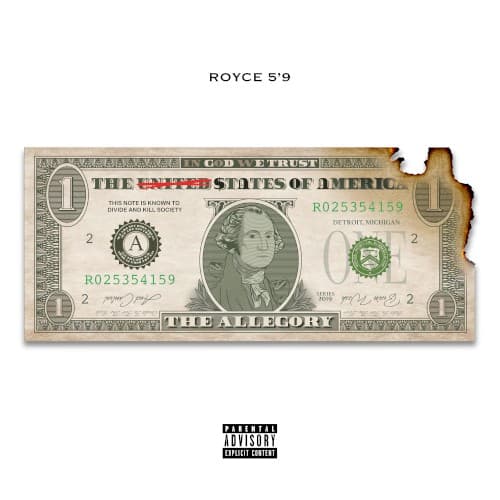
Royce 5'9 The Allegory — When Sobriety Sharpened the Sword
No other Detroit rapper has weaponized self-awareness quite like this. Four years sober and the bars hit harder than anything he wrote drunk. The punchline king turned philosopher without losing the edge that made him dangerous in the first place.
The entire premise sits on a tightrope — political commentary from a man who spent two decades prioritizing syllables over substance could easily collapse into lecture. It never does. The album dropped when political rap had become a minefield. Say too much and you sound preachy, say too little and you sound complicit.
Royce threaded the needle by making the personal inseparable from the political. This is not a protest album disguised as rap. This is rap that refuses to look away from what America does to Black men, including the one holding the mic. Twenty-two tracks across seventy-three minutes and the most shocking part is how few feel like filler.
The skits actually serve a purpose.
The interludes build momentum instead of killing it. The sequencing rewards full listens in an era when most albums are built for playlist extraction. Detroit rap had spent the last decade chasing pop crossover or settling into regional nostalgia. But what happens when the city's most technical rapper decides craft matters more than crossover?
Royce made an album that sounded like neither trend, that demanded attention the same way Illmatic did — not through hype but through craft so hard to argue with it forced the conversation.
The Sound of Detroit After the Hangovers Stopped
The production palette pulls from boom bap DNA but refuses to cosplay the nineties. DJ Premier only appears once. S1 handles the bulk of the work and builds something that breathes between eras — drums that knock without overwhelming, soul samples that enhance instead of carrying the track, space for Royce to work in pockets most rappers would rush through.
The piano loops feel lived-in, never dramatic. The basslines sit lower in the mix than most modern rap allows. Everything here prioritizes the voice. How many rappers this technical would trust the production to stay this understated?
Royce raps like a man who finally knows what he wants to say and exactly how long he has to say it.
The flow still flexes technical muscle — internal rhymes that most listeners will miss on first pass, multi-syllable schemes that never sacrifice clarity for complexity. But the wordplay now serves ideas instead of replacing them. He can still out-bar anyone in the room and chooses to use that skill talking about systemic racism, fatherhood, addiction, identity.
The sequencing takes risks most rap albums avoid.
Interludes do not feel like tracklist bloat. Skits set up thematic turns instead of breaking momentum. The second half does not coast on the first half's energy. The only real weakness shows up in the feature selection — some voices complement Royce's perspective while others feel like playlist additions rather than artistic choices.
When he locks in solo the album becomes a masterclass in how much one voice can carry across an hour-plus runtime. The production never tries to be futuristic or retro. It just sounds like Detroit — functional, direct, allergic to unnecessary decoration.
The Journey From Anger to Understanding
The opening stretch establishes the thesis without preaching. Mr. Grace (intro) welcomes you in, then the beats start hitting and the bars refuse to let you settle into passive listening mode. The early run moves fast — no time wasted, no momentum sacrificed to setup.
The middle section is where most long albums collapse. Here it deepens. The political commentary sharpens as the personal stakes get higher. By the time you reach the back half you are not listening to an album anymore, you are inside an argument Royce has been having with himself for years.
The sequencing understands when to hit hard and when to let a moment breathe. Interludes arrive exactly when the density threatens to overwhelm. Skits provide context instead of disrupting flow.
The final stretch does not try to resolve everything cleanly. Some questions remain unanswered. Some anger stays unresolved. The closing tracks feel earned — not tacked on for streaming numbers but necessary to complete the emotional arc.
What holds the entire structure together is pacing. Most seventy-minute rap albums feel bloated by track twelve. This one keeps finding new angles, new tones, new ways into the same set of questions. The album rewards sequential listening in a way few modern rap projects attempt.
Where Royce Finally Became Royce
This is Royce's best solo work and the gap is not close. PRhyme had better beats, Book of Ryan had rawer emotion, but The Allegory is the first time everything clicked at once — the bars, the sequencing, the thematic cohesion, the willingness to say something that might cost him fans. It sits comfortably in his top three alongside whatever PRhyme album you prefer.
The album is essential for anyone who thinks political rap died after the golden era or that technical rappers cannot also be deep thinkers. It will frustrate listeners who want Royce to stay in punchline mode or who find seventy-minute runtimes exhausting regardless of quality. New fans should start here then work backwards.
The album has not aged poorly because it never chased trends. In five years it will still sound exactly like what it is — Detroit's most technical rapper finally using all that skill to build something that matters beyond the bar-for-bar comparisons.
If you only play five tracks make them the stretch from the first full song through the fourth, plus the three-song run in the back half where the production and performance peak simultaneously. Fans of this should immediately run Marlowe's self-titled, Black Thought's Streams of Thought series, and Ka's Descendants of Cain.
The long-term influence is still being written but you can already hear echoes in how Detroit rappers approach album construction — less concerned with radio singles, more focused on complete statements. Royce proved you can make a seventy-minute rap album in 2020 and have people actually listen to the whole thing. That alone makes this one worth studying.
Track Listing
Mr. Grace (intro)
▲The album opens with Royce's mother speaking directly to the listener, setting a tone of matriarchal wisdom and accountability. Her voice carries weight without theatrics. The intro does exactly what intros should do — it signals that what follows will demand your full attention, that this is not background music. Royce has opened albums before but never with this much vulnerability up front.
Dope Man
▲S1 flips a groaning bassline and dusty drums into something that sounds like Detroit concrete cracking under pressure. Royce opens with a scalding indictment of drug economics and never lets up. The hook is functional rather than catchy, which works because this is not a song designed for singing along. The second verse shifts perspective without losing momentum, showing how the dope game corrupts every role it touches. The flow here is pure technical assault — multis stacked so tight you need three listens just to catch the internal rhymes. This is Royce at his most urgent, using every bar to build a case against a system that turns survival into crime. The production stays minimal, letting the words carry all the weight they need to.
I Don't Age
▲The flip here is wicked — a soul sample chopped into stuttering loops that mirror Royce's stop-start flow. He spends the entire track flexing longevity, making the case that sobriety extended his prime instead of ending it. The wordplay gets dense without becoming exhausting. There's a moment in the second verse where he stacks three different rhyme schemes on top of each other and makes it sound effortless. The confidence here is not empty bragging. This is a man who knows exactly how good he is and does not need your validation. The hook could be stronger but the verses more than compensate. This is what elite-level technical rapping sounds like when it is backed by substance instead of just showing off.
Pendulum
▲The beat swings heavy, a piano loop that sounds like it is mourning something. Royce uses the track to explore generational trauma and cycles of violence, drawing lines between personal history and systemic oppression. The metaphor work here is sharper than most rappers attempt — he actually commits to the pendulum concept instead of just mentioning it in the hook. The verses build on each other, each one adding context to the previous. There's a rawness in his delivery that cuts through the technical precision. He sounds exhausted by the weight of what he is describing. The back half loses a bit of steam but the first two verses are devastating.
I Play Forever
▲The production feels airier than what came before, giving Royce room to breathe between bars. He uses the space to reflect on legacy and permanence, making the case that his work will outlast trends and hype cycles. The hook is one of the album's strongest — simple, direct, memorable without being pop. The verses move between confidence and vulnerability, showing a man who knows his worth but still wrestles with doubt. The flow here is less aggressive, more conversational, which makes the moments when he shifts into rapid-fire multis hit even harder. The outro lingers just long enough to let the message land.
Ice Cream (interlude)
●A brief palette cleanser that uses the metaphor of ice cream flavors to discuss code-switching and identity performance. It is over before it wears out its welcome, and it sets up the thematic shift into the next track perfectly. Interludes on rap albums usually feel like filler. This one feels like architecture.
On the Block
▲The drums hit like a Detroit block party in slow motion. Royce paints vivid street scenes without glorifying or condemning the people living them. The storytelling here is specific — real locations, real dynamics, real consequences. The hook is minimal but effective, functioning more as a refrain than a chorus. The second verse shifts perspective to show the same block through different eyes, adding layers without losing focus. The production stays sparse, letting the narrative breathe. This is conscious street rap done right — clear-eyed about the reality without turning it into poverty porn.
A Generation Is Broken
●The title tells you exactly what to expect and Royce delivers. The beat is haunting, built around a minor-key loop that sounds like grief turned into drums. He spends three verses dissecting how systemic racism and economic disenfranchisement break Black communities across generations. The bars are heavy without being preachy. He connects personal experience to political analysis without losing the thread. The delivery here is more measured than the early tracks, like he is teaching rather than attacking. The hook could use more punch but the verses carry enough weight to make up for it. This is one of the album's most important tracks even if it is not one of the most immediately enjoyable.
Overcomer
▲A triumph track that earns its optimism through the darkness that came before it. The production lifts without going pop, piano chords that suggest hope without promising easy answers. Royce raps about perseverance and resilience without slipping into motivational-speaker territory. The verses are personal but universal, specific enough to feel real and broad enough to resonate. The hook is the album's most uplifting moment and it lands because everything leading up to it earned the right to breathe. The flow here is confident, almost celebratory, showing a man who made it through the fire and knows exactly what it cost.
Ms. Grace (interlude)
▲Royce's mother returns, her voice now discussing faith and survival. The interlude is brief but necessary, providing emotional grounding before the second half intensifies. It reminds you that behind all the technical rapping and political commentary is a man trying to honor the woman who raised him. The placement is perfect — a moment of grace before the album gets heavy again.
Thou Shall
▲The commandment framework is a bold choice and Royce commits fully. The beat is aggressive, drums that sound like judgments being handed down. He uses each verse to lay down principles for survival and resistance, blending personal ethics with political critique. The wordplay here is dense but never obscure. He wants you to understand every bar, not just admire the technique. The hook is forceful, almost antagonistic, daring you to disagree. The final verse is the strongest, building to a conclusion that feels both inevitable and earned. This is Royce at his most didactic and he makes it work by backing every claim with lived experience.
FUBU
▲The nostalgia here is tactical, not sentimental. Royce uses the FUBU brand as a lens to discuss Black capitalism, cultural appropriation, and the commercialization of identity. The beat nods to nineties production without copying it. The verses move fast, packed with references that reward close listening. The hook is catchy in a way that most of the album avoids, which makes it stand out without feeling out of place. The second verse gets especially sharp, connecting brand loyalty to broader questions about who profits from Black culture. The track is fun without being frivolous, clever without being lightweight.
A Black Man's Favorite Shoe (skit)
●A brief spoken-word piece about Timberland boots and what they represent in Black culture. It is funny and pointed, using humor to make a serious point about symbols and survival. The skit lasts less than a minute but it does more work than most three-minute rap songs. The placement is smart — a moment of levity before the album's heaviest stretch.
Upside Down
●The production inverts soul samples into something disorienting, matching the lyrical content about a world gone wrong. Royce raps about feeling untethered from reality, watching systems collapse in real time. The verses are frantic, the flow mimicking the instability he is describing. The hook is dissonant, intentionally uncomfortable. This is one of the album's riskiest tracks and it mostly works. The experimentation does not always land but the ambition is undeniable. The outro gets a bit meandering but the first two-thirds hit hard.
Perspective (skit)
●Another spoken interlude, this one discussing how viewpoint shapes understanding. It is short, focused, and sets up the thematic pivot into the final stretch. Royce has always been good at using skits to guide the listener without hand-holding. This one does exactly that.
Tricked
▲The beat is sinister, a minor-key piano loop that sounds like paranoia turned into music. Royce dissects manipulation and deception on multiple levels — personal relationships, political systems, media narratives. The wordplay here is some of the album's sharpest, multis that reveal new layers on repeat listens. The hook is minimal but effective, repeating the concept without overexplaining it. The second verse shifts focus to self-deception, showing how we trick ourselves into accepting oppression. The delivery is measured, controlled, like he is laying out evidence in a trial. This is one of the album's most complete tracks — strong concept, strong execution, no wasted bars.
Black People in America
▲The most direct political statement on the album and Royce does not flinch. The production is stark, just drums and bass holding space for the message. He spends three verses outlining the Black experience in America with unflinching clarity, connecting history to present reality without losing narrative thread. The bars are heavy, almost overwhelming in their density. He packs more information into each verse than most rappers fit in entire albums. The hook is blunt, no metaphor, no coded language. This is Royce at his most didactic and it works because the craft never suffers. The flow stays sharp, the wordplay stays tight, the delivery stays controlled. This is teaching disguised as rapping, and it is devastating.
Black Savage
▲The reclamation of language, the refusal to let labels define identity. Royce takes a loaded term and flips it into armor. The beat is aggressive, built for confrontation. The verses are combative, daring anyone to misunderstand the point. The hook is provocative, intentionally uncomfortable for anyone not ready to engage with the concept. The wordplay here is sharp, cutting through any potential misreading. This is one of the album's riskiest tracks conceptually and Royce commits fully. The second verse is especially strong, building on the first without repeating it. The outro could be trimmed but the track's core is undeniable.
Rhinestone Doo Rag
▲A sonic left turn, the production looser and funkier than anything else on the album. Royce uses the track to celebrate Black style and resilience, finding joy in cultural signifiers that others dismiss or appropriate. The flow here is more playful, showing range beyond the album's heavier moments. The hook is the album's catchiest, nodding to classic hip-hop without copying it. The verses balance celebration with critique, acknowledging how Black culture gets commodified even as he enjoys it. This is one of the few tracks that feels like it could work on radio without compromising the album's vision. The placement is perfect — a moment of lightness before the closing stretch.
Young World
▲The nostalgia here is bittersweet, Royce reflecting on a Detroit that no longer exists and a version of himself he left behind. The production nods to Slick Rick without mimicking it, updating the concept for a new context. The storytelling is vivid, specific, grounded in real places and real people. The hook is simple but effective, carrying the emotional weight without overplaying it. The verses move between past and present, showing how memory shapes identity. The flow here is relaxed, almost conversational, like he is telling stories at a barbecue. This is one of the album's warmest tracks and it earns that warmth through honesty.
My People Free
▲The production swells, strings and horns suggesting liberation without promising it. Royce uses the track to imagine freedom while acknowledging the barriers still standing. The verses are hopeful without being naive, grounded in reality even as they reach for something better. The hook is the album's most emotionally direct, a plea and a promise wrapped into one. The second verse is especially powerful, connecting personal freedom to collective liberation. The outro lingers, letting the message resonate instead of rushing to the next track. This is one of the album's most important moments and Royce treats it with the care it deserves.
Hero
▲The album closer, and Royce uses it to question the entire concept of heroism. The beat is reflective, piano and strings that suggest ending without closure. He spends the verses dissecting what it means to be a hero in a world built on anti-Black violence, questioning whether individual heroism can ever address systemic problems. The bars are dense, philosophical, refusing easy answers. The hook is understated, almost resigned. The final verse is the album's longest and it needs to be — Royce is wrapping up seventy minutes of ideas without pretending he solved anything. The outro fades slowly, leaving space for the listener to sit with everything that came before. This is how you close an album this ambitious — not with triumph but with continued questioning.