Style & Context
Influences
German Expressionism, Día de los Muertos imagery, punk aesthetics, horror cinema
Location
South Florida's underground scene produced artists unafraid to blend aggression with vulnerability, rejecting traditional tough-guy postures.
Visual Language
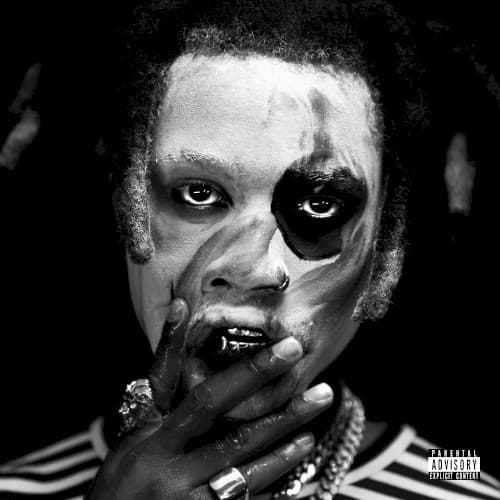
The dramatic lighting and makeup application create depth through shadow, transforming portraiture into psychological theater.
Symbols
Skull face paint
The skull represents Curry's meditation on death, depression, and the darker taboos society refuses to acknowledge openly.
Direct eye contact
The unflinching stare challenges viewers to engage with uncomfortable subject matter rather than look away from pain.
Hand near mouth
The gesture suggests contemplation and secrecy, embodying the whispered nature of taboo topics in public discourse.
Where Sound Meets Image
The tripartite album structure — Light, Gray, Dark — mirrors the cover's high-contrast aesthetic, where Curry navigates between extremes. The skull imagery directly connects to tracks exploring mortality, mental illness, and societal violence. Industrial production and distorted vocals throughout the album match the cover's horror-influenced visual language, creating a cohesive statement about confronting darkness rather than hiding it. The face paint serves as armor and exposure simultaneously, just as Curry's lyrics reveal vulnerability through aggressive delivery.
This cover helped normalize darker visual aesthetics in hip-hop album art beyond typical gangsta imagery, opening space for psychological horror and theatrical presentation. The monochrome approach influenced a wave of stripped-down, emotionally direct cover designs that rejected maximalist trends. By embracing skull imagery without irony or gangster posturing, it redefined how hip-hop artists could visualize internal struggles, proving vulnerability could be presented with visual intensity rather than softness.