Scorecard: 8.0/10 · Great
How we score- Writing(25%)
- 8.0
Paranoia, molestation trauma and social media rot traced across all three acts, from the Cobain hook to the Percs verse on numbness, though some middle-section writing turns more general.
- Production(25%)
- 8.5
FnZ beats shift convincingly from Act 1's bounce to Act 3's grinding distortion, each section with its own sound palette that serves the concept without losing the rawness.
- Delivery(15%)
- 8.0
Curry moves from melodic sing-rap on Black Balloons to full scream on Vengeance without sounding like two different artists, though the range sometimes exceeds the memorability.
- Cohesion(15%)
- 7.5
The three-act structure controls the pacing and each section does different work, though the Gray stretch sags slightly in the middle before Clout Cobain pivots to the close.
- Originality(10%)
- 7.5
The triptych concept and the range are rare in 2018 SoundCloud rap, though the individual sounds—melodic hooks, Ronny J bass—were already in use.
- Replay value(10%)
- 8.0
The Dark section's heaviness makes full playthroughs exhausting by design, but individual tracks hold up and the sequencing rewards the full listen.
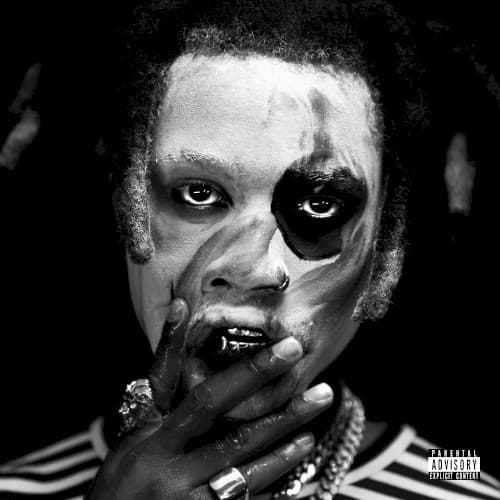
Denzel Curry TA13OO — The Triptych That Proved Structure Could Save SoundCloud Rap
Most SoundCloud-era rappers treated the album like a playlist: throw every mood on shuffle and hope three songs stick. Denzel Curry built TA13OO like a diagnosis, splitting thirteen tracks into Light, Gray and Dark and making each act do different work. The Light section opens with melodic hooks and bounce, names the problems—social media clout, the money chase—and sounds like it could play at a party. The Gray section turns combative, calling out fake friends and industry vultures with sharper flows and muddier production.
The Dark section, the final four tracks, goes fully inward: molestation trauma on The Blackest Balloon, opioid numbness on Percs, apocalyptic rage on Vengeance. The structure is not decorative. Each act has its own sound palette and thematic center, and the album works because Curry's writing and delivery are precise enough to justify the shift.
The thesis: TA13OO is the clearest argument that the SoundCloud generation could make conceptually ambitious albums without abandoning the rawness that defined the moment.
Released in July 2018 on Loma Vista Recordings, it arrived when most of Curry's peers were still chasing viral singles. The three-act rollout—one section per day leading to the full album on July 27—turned the structure into the campaign, and the critical consensus called it his best work. The question is whether the concept holds together on repeat or whether it is just well-organized variety?
When the Aesthetic Shift Is the Point
The production, handled primarily by FnZ with contributions from Ronny J, DJ Dahi, Illmind and Charlie Heat, does the structural work. Act 1 is clean and melodic: Taboo opens with a sung hook over a snapping beat, Black Balloons has GoldLink and Twelve'len trading verses over gliding keys, Sumo rides a Charlie Heat bounce that could have been a single on its own. The writing in this section names the traps—chasing clout, cash mania, the black balloon as the metaphor for fame pulling you under—but the sound is approachable, almost seductive.
Act 2 goes harder and muddier. Super Saiyan Superman is a two-minute adrenaline shot with no hook, Switch It Up has Curry yelling over Ronny J bass distortion, Sirens features JID matching Curry's intensity over a DJ Dahi beat that sounds like police lights. The writing turns accusatory: fake friends, industry leeches, the paranoia of success.
Clout Cobain, the Kurt Cobain reference that became the album's most-streamed track, closes the section with a sung hook about fame and suicide. The sound is grimier than Act 1, the flows less melodic, the mood angrier.
Act 3 strips away any remaining polish. The Blackest Balloon reprises the balloon metaphor from Act 1 but trades melody for menace, the beat slow and suffocating. Percs, which Curry co-produced with FnZ, is about numbness and self-medication, the flow monotone over minimal drums. Vengeance brings JPEGMafia and ZillaKami for the album's heaviest moment, all three screaming over crushing bass.
Black Metal Terrorist ends the album with industrial noise and Curry at full scream. The production across these four tracks is deliberately uncomfortable, the opposite of the Light section's bounce. The sequencing makes the point: the same artist, the same year, three different moods that mirror the descent the lyrics describe.
Curry's delivery is the constant. On Black Balloons he sings; on Vengeance he screams; on Sirens he raps in tight pockets. The range is real, and he never sounds like he is imitating anyone.
The writing is specific when it needs to be—The Blackest Balloon references childhood molestation plainly, Clout Cobain namedrops Cobain and Lil Peep in the same breath—and more general when describing paranoia and rage. The weakness is that the Gray section, despite its thematic clarity, has fewer standout moments than the sections around it. Super Saiyan Superman is short and intense but slight; Mad I Got It has a Hippie Sabotage sample that feels out of place; Switch It Up is solid but not memorable. The section does its job structurally—bridge the Light and Dark—but on individual listens, Acts 1 and 3 are where the album lives.
The Arc That Justifies the Length
The three-act structure is not just a framing device; it controls the pacing. The opening stretch is four tracks, twenty-four minutes, and it moves quickly. The melodic approach and the relatively clean production make it the easiest entry point, and the writing sets up the problems without resolving them.
The middle section is five tracks, the longest stretch, and it sags slightly in the middle. The energy is high but the songs start to blur into each other, which might be intentional—paranoia and combativeness do not have much dynamic range—but it makes the section less replayable than the others. CLOUT COBAIN | CLOUT CO13A1N, placed at the end of the middle section, is the album's pivot: it is melodic like the opening but lyrically dark like the close, and it works as both a single and a transition.
The closing run is four tracks, the heaviest and shortest section, and the sequencing here is tight. The first two tracks are the most personal, back to back, both slow and claustrophobic. The third track is the explosion, the loudest and angriest moment on the album, placed where the anger has been earned by what preceded it. The final track ends the album with no resolution, just noise and rage, which is the only honest ending given what came before.
The forty-minute runtime is well-judged. A few tracks in the middle section could be cut without losing the structure, but the album does not feel padded, and the three-act design makes it feel shorter than it is because each section has a clear start and end.
Where It Ranks and Who It Is For
TA13OO is Denzel Curry's best album because the structure is not cosmetic. The three-act split forces variety without losing coherence, and the album works as a sequence in a way that Imperial, his 2016 predecessor, did not. Imperial had higher peaks—Ultimate, Knotty Head—but TA13OO is the more complete statement, the album where Curry proved he could sustain a concept for forty minutes without relying on one or two breakout tracks.
It is for listeners who want the intensity of SoundCloud-era rap but also want albums that are built rather than compiled. It is not for anyone looking for background music or easy hooks; even the Light section has darkness underneath, and Act 3 is punishing.
The album has aged well because it captured the 2018 moment—clout culture, opioid crisis, the Cobain and Lil Peep deaths—without being trapped by it. The writing is specific enough to feel immediate but general enough to survive the moment.
Start with Clout Cobain for the most accessible entry, then Black Balloons for the melodic side and Vengeance for the heavy side. If those three tracks work, play the album front to back; the structure is the point. Listeners who want more Curry should go to Imperial next for the earlier, rawer version of this sound, though TA13OO is the more ambitious project. Fans of the melodic-to-aggressive range should try JPEGMafia's Veteran or Vince Staples' FM! for similarly sequenced albums that move between moods without losing control.
TA13OO is the album where Curry moved from promising Florida rapper to someone making albums that matter beyond the singles, and the three-act structure is the reason it still holds up five years later.
Track Listing
TABOO | TA13OO
▲The title track opens with Curry singing the hook, a melodic invitation that sets the tone for Act 1. The FnZ and M-Sol production is clean and snappy, the beat built around a simple loop and hard-hitting drums. Curry's verse introduces the album's themes—paranoia, the price of fame, the trap of success—without diving deep into any of them. The track works as an overture, establishing the sound palette for the Light section and making it clear that this will not be a typical SoundCloud rap album. The sung hook is catchy without being pop, and the writing is just specific enough to hint at what is coming without giving it away. A strong opener that does its job.
BLACK BALLOONS | 13LACK 13ALLOONZ
▲The black balloon as a metaphor for fame and depression, pulling you under while everyone watches. Curry opens with a sung hook over gliding keys and then brings in Twelve'len and GoldLink for verses that expand the theme. GoldLink's verse is the smoothest moment on the album, his flow effortless over the FnZ and Mickey de Grand IV production. The writing is more abstract than on other tracks—the balloon image does most of the work—but the melodic approach makes it one of the most accessible songs on the album. The background vocals from Savannah Cristina add texture without cluttering the mix. This became a single for a reason: it is catchy, well-produced and thematically on point without being heavy. One of the album's best tracks.
CASH MANIAC | CAZH MAN1AC
●Nyyjerya delivers the hook, a sung melody about chasing money, and Curry raps about the grind and the paranoia that comes with it. The FnZ, Mickey de Grand IV and Swish production is the bounciest on the album, the beat built for clubs and playlists. The writing is straightforward—money, success, the cost of both—and the track does not try to do more than that. It works as a palette cleanser between the heavier Black Balloons and the harder Sumo, and it fits the Light section's tone. Not a standout but solid.
SUMO | ZUMO
▲The Charlie Heat bounce, the hardest beat in Act 1, and Curry rapping with full confidence over it. The track was the first single, released in March 2018, and it works as both a standalone banger and a closing statement for the Light section. The writing is about dominance and competition, the sumo wrestler as a metaphor for size and power, and Curry's flow is locked in, every bar hitting the pocket. The production is minimal—just drums, bass and a looping sample—but it does not need more. This is the track that proved Curry could make a hit without compromising the album's concept, and it still bangs five years later. The best track in Act 1.
SUPER SAIYAN SUPERMAN | ZUPER ZA1YAN ZUPERMAN
●Two minutes, no hook, just Curry rapping at full speed over FnZ and HWLS production. The track is an adrenaline shot, the opening of Act 2, and it works as a mood shift from the melodic Light section. The writing is about power and competition, the Dragon Ball Z and Superman references doing most of the thematic work. The production is sparse, just bass and drums, and Curry's flow is relentless. The track is slight—too short to develop an idea, too intense to be filler—but it does its job as a transition. Not a standout but effective.
SWITCH IT UP | ZWITCH 1T UP
●Ronny J bass distortion, Curry yelling over it, the beat crushing and minimal. The Illmind and Ronny J production is pure aggression, and the writing is about switching flows and moods, a meta-commentary on the album's structure. The track is solid but not memorable; the intensity is high but the song does not have a hook or a moment that sticks. It fits the Gray section's combative tone, but it is one of the weaker tracks on the album. Functional but forgettable.
MAD I GOT IT | MAD 1 GOT 1T
▼The Hippie Sabotage sample feels out of place, a softer sound than anything else in Act 2, and the track does not recover from it. Curry raps about success and the people who doubted him, the writing competent but not specific. The FnZ and Hippie Sabotage production is the issue: the sample is too lush, too chill, and it undercuts the paranoia and anger that define the Gray section. The track is not bad, but it disrupts the album's flow, and it is the one moment where the sequencing fails. The weakest track on the album.
SIRENS | Z1RENZ
▲JID and Curry trade verses over a DJ Dahi beat that sounds like police sirens, the production tense and claustrophobic. The writing is about paranoia, police violence and the constant threat of danger, and both rappers deliver sharp, specific verses. JID's flow is jagged and unpredictable, a perfect match for the beat, and Curry matches his energy without sounding like he is trying to keep up. Billie Eilish provides additional vocals, a subtle touch that adds to the track's atmosphere without dominating it. This is one of the best tracks in Act 2, a rare moment where the production, writing and performances all align. The track holds up on repeat.
CLOUT COBAIN | CLOUT CO13A1N
▲The most-streamed track on the album, and it is easy to hear why. Curry sings the hook, a Kurt Cobain reference that connects fame, depression and suicide, and the J Gramm and Hector production is melodic and dark, a perfect bridge between Act 2's aggression and Act 3's despair. The writing is direct—Cobain and Lil Peep both named, the clout-chasing culture indicted—and the hook is catchy enough to work as a single without feeling like a concession. The track was released with a music video in July 2018, and it became the album's calling card. This is the pivot, the moment where the album shifts from external enemies to internal collapse, and it works as both a standalone song and a structural hinge. One of the album's best tracks.
THE BLACKEST BALLOON | THE 13LACKEZT 13ALLOON
▲The black balloon image from Act 1 returns, but the sound is now suffocating, the FnZ and Mickey de Grand IV production slow and menacing. Curry's verse references childhood molestation plainly, the most personal and painful moment on the album, and the writing is specific without being graphic. The track has no hook, no relief, just Curry rapping over a beat that sounds like drowning. This is the opening of Act 3, the point where the album stops fighting and starts collapsing inward, and the sequencing is perfect: after the Clout Cobain hook, this track strips away any remaining melody or hope. The track is hard to listen to, by design, and it does not work as a standalone song. But in the album's context, it is essential, the moment where the concept justifies itself. One of the album's most important tracks.
PERCS | PERCZ
●Opioid numbness, the Percocet as escape and erasure, and Curry rapping in a monotone flow over minimal FnZ and Curry production. The beat is just bass and sparse drums, the writing about self-medication and the loss of feeling. The track is short, just over three minutes, and it does not try to build or resolve. The monotone delivery is deliberate, a sonic representation of the numbness the lyrics describe, and it works in context but not as a standalone song. This is the second-most personal track after The Blackest Balloon, and it is placed right after it, the two forming the emotional core of Act 3. The track is effective but exhausting.
VENGEANCE | VENGEANCE
▲JPEGMafia and ZillaKami join Curry for the heaviest track on the album, all three screaming over FnZ and Mickey de Grand IV production that sounds like a building collapsing. The writing is about revenge and rage, the apocalyptic tone earned by the two tracks before it. JPEGMafia's verse is chaotic and raw, ZillaKami's delivery is pure aggression, and Curry matches both without being outshone. The track is four minutes of sustained intensity, no hooks, no breaks, just three rappers yelling over crushing bass. This is the explosion, the moment where the album's anger finally erupts, and it is placed perfectly: after The Blackest Balloon and Percs describe the internal collapse, Vengeance is the external expression. The track does not work outside the album's context, but in sequence, it is one of the most cathartic moments in recent rap. One of the album's best tracks.
BLACK METAL TERRORIST | 13 M T
●Industrial noise, Curry screaming, the FnZ, Ronny J and M-Sol production at its harshest. The track is less than three minutes, and it ends the album with no resolution, no catharsis, just noise and rage. The writing is fragmented, the delivery chaotic, and the production is designed to be uncomfortable. This is not a song you return to; it is the endpoint of the album's descent, the moment where the structure collapses entirely. As a closer, it is effective: it refuses to provide comfort or answers, and it makes the album feel like a complete experience rather than a collection of songs. But it is also the least replayable track on the album, a deliberate choice that limits its value outside of the full listen.