From Carol City to Genre Rebellion: Denzel Curry's Relentless Evolution
Denzel Curry emerged from Carol City, Florida in the early 2010s as a technically ferocious rapper who refused to stay in one lane. Born in 1995, Curry started building buzz through association with SpaceGhostPurrp's internet-born Raider Klan collective, a crew that mixed Memphis rap worship with lo-fi experimentalism and dark aesthetics. While many of his contemporaries chased viral moments or radio accessibility, Curry developed something stranger and more volatile — a sound that could shift from guttural aggression to introspective vulnerability within the same project, sometimes within the same verse.
What sets Curry apart is his willingness to dismantle expectations at every turn. He's equally comfortable delivering punk-influenced ragers that feel engineered for mosh pits and crafting contemplative tracks that examine mental health, systemic racism, and personal trauma. This refusal to be categorized has made him a bridge figure between South Florida's regional sound, SoundCloud-era experimentation, and traditional boom-bap reverence. His technical ability — rapid-fire flows, dynamic breath control, strategic voice modulation — rivals the genre's established technicians, but he deploys these skills in service of emotional truth rather than pure virtuosity.
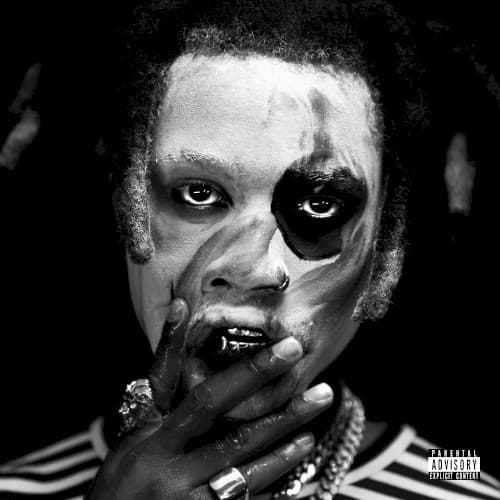
By the time TA13OO arrived in 2018, Curry had positioned himself as one of underground hip-hop's most unpredictable forces. He'd built a devoted fanbase without major label compromise, collaborated across genre boundaries, and proven that artistic integrity and commercial viability weren't mutually exclusive. His career represents a generation of artists who grew up online, absorbed influence from every corner of hip-hop history, and emerged with something distinctly their own.
Sonic Chaos Theory: Denzel Curry's Elastic Approach to Sound
Curry's production palette is deliberately schizophrenic. He gravitates toward beats that reject comfort — distorted 808s that feel physically oppressive, industrial clatter that borders on noise, sudden tempo shifts that disorient before locking into hypnotic grooves. Producers like Ronny J, FnZ, and JPEGMafia have helped him craft sonic environments that feel combustible, where aggression and melody coexist in uneasy tension. These aren't tracks designed for passive listening. They demand engagement, sometimes confrontation.
Vocally, Curry operates across an unusually wide register. He can deliver guttural death growls that nod to metal and hardcore punk, then pivot to melodic hooks or rapid-fire double-time flows without breaking stride. This versatility isn't stylistic tourism — it's structural to how he builds songs. A track might open with subdued introspection before erupting into full-throated rage, mirroring the emotional turbulence he's documenting. His enunciation remains crisp even at extreme tempos, a technical achievement that keeps complex wordplay intelligible when lesser rappers would dissolve into rhythmic blur.
The Memphis influence runs deep, inherited partly through Raider Klan's Three 6 Mafia fixation. You hear it in the ominous minor-key loops, the horror-movie atmospherics, the repetitive hooks designed to burrow into the listener's skull. But Curry filters these elements through South Florida's bass-heavy tradition and his own experimental impulses, creating something that acknowledges lineage without replicating it. When he samples or interpolates, it's rarely straightforward homage — he tends to deconstruct and rebuild, treating hip-hop history as raw material rather than museum piece.
Career Trajectory: From Raider Klan Breakout to Independent Visionary
Curry's earliest releases as a teenager showed raw talent struggling to find direction. Joining Raider Klan in 2011 gave him infrastructure and visibility within internet hip-hop circles, but also imposed aesthetic constraints. The collective's lo-fi cloud rap sound, while influential, risked pigeonholing him as a regional curiosity. His departure from the group in 2013 — following internal conflicts and SpaceGhostPurrp's erratic leadership — freed him to chase a more expansive vision.
Nostalgia 64, released independently in 2013, announced Curry as something more than a promising affiliate. The project showcased his technical precision and demonstrated comfort across multiple styles, from the hostile energy of "Threatz" to more contemplative moments. He was still finding his voice, but the ambition was unmistakable. The follow-up double EP Imperial (2016) refined the formula, delivering more focused songwriting and cohesive production while maintaining the intensity that defined his early work.
TA13OO in 2018 represented a creative breakthrough. Structured in three acts — Light, Gray, Dark — the album moved from radio-friendly accessibility to progressively darker territory, both sonically and thematically. The concept allowed Curry to explore mental health, violence, and social critique without sacrificing the visceral energy his fanbase expected. Tracks like "Clout Cobain" and "Percs | 03" addressed suicide, depression, and substance abuse with uncommon directness, while "Sirens | Z1RENZ" examined police brutality through a deeply personal lens. The project earned an 8.4 rating and validated Curry's refusal to chase trends or dilute his vision for broader appeal.
ZUU (2019) pivoted hard toward celebration of his South Florida roots — a purposefully lighter, more regional project that felt like exhaling after TA13OO's intensity. It wasn't regression; it was recalibration, proving he could operate across tonal registers without losing credibility. Melt My Eyez See Your Future (2022) pushed further into introspection and melodic experimentation, featuring collaborations with artists like Robert Glasper, Slowthai, and JID. The album demonstrated growth without abandoning the aggression that remained his foundation.
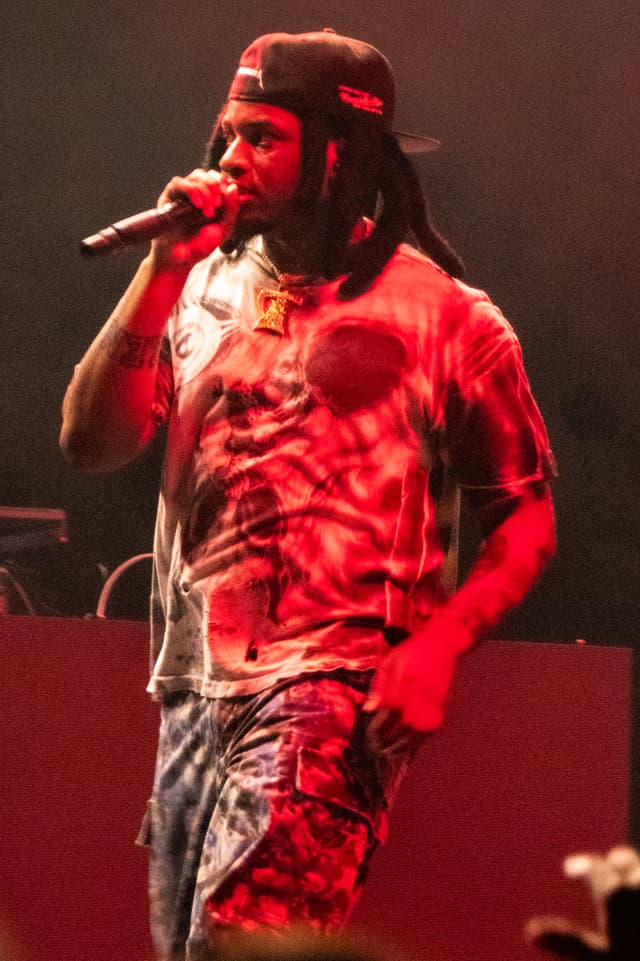
Throughout this evolution, Curry maintained independence from major label pressure while building genuine collaborative relationships. He's worked with Rico Nasty on chaotic trap metal experiments, traded bars with JID and other technically minded lyricists, and appeared on tracks with artists ranging from Playboi Carti to Billie Eilish. These partnerships feel organic rather than calculated — shared artistic values rather than playlist strategy. His live performances became legendary for their intensity, with Curry commanding mosh pits and delivering full-throttle energy that translated studio ferocity into physical experience.
Influence and Cultural Position: Underground Integrity in the Streaming Era
Curry's significance lies partly in what he refused to become. He emerged during an era when SoundCloud rap prioritized virality over longevity, when many artists treated music as disposable content. Instead, he built albums with thematic coherence, invested in technical growth, and spoke openly about subjects — mental health, systemic injustice, artistic integrity — that required vulnerability. This approach influenced a generation of artists trying to balance internet-native distribution with traditional album craft.
His willingness to merge seemingly incompatible sounds — trap, metal, boom-bap, punk — helped expand what underground hip-hop could contain. Artists like Rico Nasty, Slowthai, and others exploring aggressive, genre-fluid approaches owe something to the path Curry helped clear. He proved that extremity and intelligence weren't contradictory, that you could make music for mosh pits and headphones simultaneously. The trap metal experiments he pursued alongside groups like City Morgue created space for heavier, more sonically abrasive hip-hop to exist without apologizing for its harshness.
Curry's Carol City roots and consistent South Florida representation matter regionally and culturally. He brought attention to an area often overshadowed by Miami's more commercial faces, highlighting a grittier reality and different musical tradition. His career demonstrates that artistic success doesn't require abandoning where you're from or sanitizing your perspective for mass consumption. That authenticity — sometimes uncomfortable, rarely easy — remains his most valuable contribution. He showed that you could grow, experiment, and evolve without compromising the core intensity that made people pay attention in the first place.