Style & Context
Influences
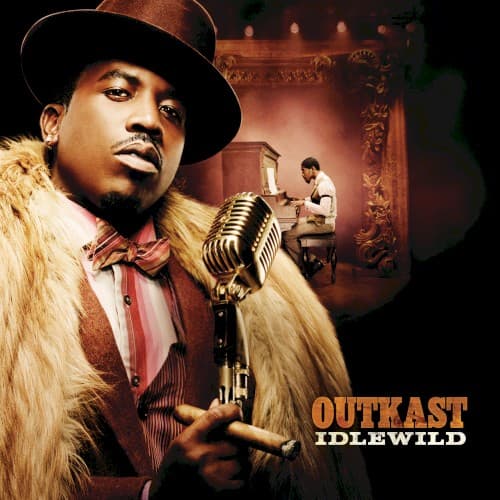
Gordon Parks photography, Harlem Renaissance portraiture, classic Blue Note album covers, vaudeville promotional posters
Location
The cover situates Atlanta's hip-hop royalty within the broader Southern Black performance continuum from Delta blues to trap music.
Visual Language
The theatrical staging mimics vintage publicity stills, positioning OutKast as both historical subjects and modern interpreters of lineage.
Symbols
Vintage ribbon microphone
The chrome mic represents Southern oral tradition evolving from blues shouters to hip-hop MCs across generations.
Fur coat and fedora
Big Boi's luxurious wardrobe channels both 1930s hustler prosperity and hip-hop's enduring love for ostentatious elegance.
Ornate theater backdrop
The gilded architecture symbolizes the Black-owned performance spaces that nurtured jazz, blues, and soul before hip-hop existed.
Where Sound Meets Image
The dual portrait mirrors the album's structure as a soundtrack splitting time between narrative interludes and full OutKast tracks. Big Boi's direct camera gaze with performance tools suggests the more traditional rap cuts, while André's background piano positioning hints at his continued drift toward live instrumentation and jazz fusion. The 1930s setting prepares listeners for samples of classic blues and swing woven throughout tracks, making the album feel like a jukebox in a speakeasy rather than a standard hip-hop release.
The cover legitimized hip-hop artists reaching backward for inspiration beyond the genre's 1970s birth, opening creative space for concept albums rooted in Black historical periods. Its period-piece aesthetic influenced how rappers could package experimental projects—you could sell artistic ambition if you framed it as cultural archaeology. The theatrical staging predicted how hip-hop visuals would increasingly embrace narrative costume design rather than just street fashion or bling.