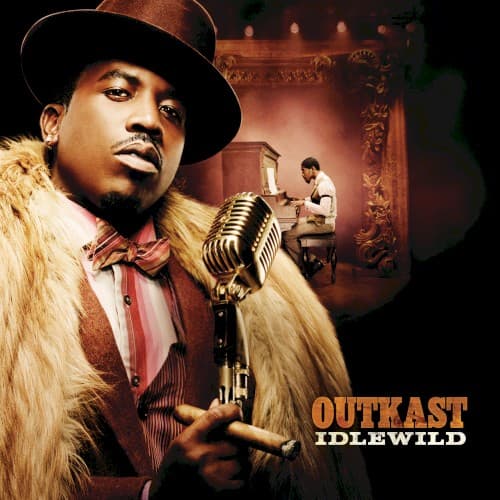
The scorecard
6.3/10 · Mixed
- Writing25%
- 6.5
- Production25%
- 7.5
- Delivery15%
- 6.0
- Cohesion15%
- 4.5
- Originality10%
- 7.0
- Replay value10%
- 5.5
Lyricism swings between sharp moments like the music-industry cynicism on Hollywood Divorce and forced vaudeville wordplay that lands flat across multiple tracks
Organized Noize and Benjamin execute period jazz, blues and swing with real craft on Morris Brown and Idlewild Blue, though the sheer variety of styles strains coherence
Big Boi brings his usual snap on The Train while Andre's crooning on multiple tracks exposes vocal limitations that rapping concealed
Twenty-five entries with five interludes and constant genre shifts create a sprawl that no sequencing could organize; at seventy-six minutes the film soundtrack conceit cannot hold the weight
The deliberate fusion of Prohibition-era sounds with Southern rap breaks new ground for the duo but draws from a well-documented past rather than inventing a future
The best five or six tracks reward returns but the album-length commitment punishes; most listeners will extract the highlights and leave the rest
OutKast Idlewild — When the Concept Ate the Rap Album
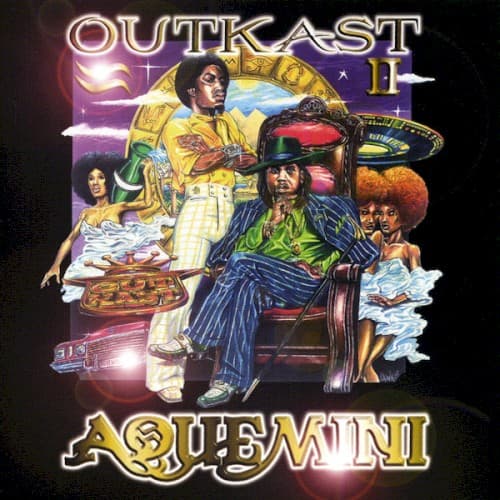
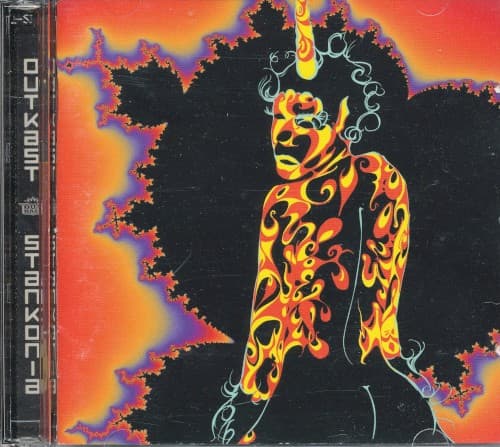
Idlewild arrives as a film soundtrack masquerading as an OutKast album, and that confusion defines everything wrong with it. The duo that pushed Atlanta rap into uncharted territory on Aquemini and Stankonia returns with seventy-six minutes of Prohibition-era cosplay, five interludes of movie dialogue, and a production palette that borrows from hot jazz, jump blues and swing more than it builds from the South that made them. The ambition is visible in every horn chart and ragtime piano run, but ambition without focus produces the kind of bloat that sinks records. Where Stankonia took chances within the frame of a great rap album, Idlewild abandons that frame entirely and never replaces it with anything sturdy enough to carry twenty-five tracks.
The film premise — two friends running a speakeasy in 1930s Georgia — gives them license to explore the roots of Black American music, and on paper that makes sense for a duo that always valued range. In practice it means Andre spends half the album crooning in a register his voice cannot handle while Big Boi tries to anchor the chaos with the same muscular flow that worked better when the beats underneath were trunk-rattling funk instead of dated pastiche. The sequencing lurches from brass-band rap to acoustic blues to psychedelic soul with no internal logic, and the interludes work only if you have seen the movie and care about the plot. Most people have not and do not. What remains is a collection with six or seven obvious songs surrounded by filler, half-baked experiments, and the creeping sense that OutKast recorded their breakup in real time and called it a concept album.
The Sound of a Duo Pulling in Opposite Directions
Organized Noize handles most of the heavy lifting and delivers the cleanest work, layering live horns and marching drums on Morris Brown until it knocks like a second-line parade that wandered into a college football game. That track and Mighty O anchor the first act with enough swing and bottom end to remind you what Atlanta rap sounded like when it still moved bodies, and the Cab Calloway interpolation on the latter works because the production treats it as ornamentation instead of the whole point. Peaches flips a Too Short sample into a smooth midtempo roll with Sleepy Brown on the hook, and the groove holds even when the writing does not.
Andre Benjamin produced seven tracks himself and the results reveal the split. Idlewild Blue works as a Stevie Wonder homage with acoustic guitar and harmonica, a rare moment where his singing fits the material, but Chronomentrophobia and Makes No Sense at All meander through tempo changes and melodic detours that suggest ideas captured in the studio and never refined into songs. Hollywood Divorce brings Lil Wayne and Snoop Dogg into a bitter music-industry screed over a bassline that drags, and the five-minute runtime earns maybe three. When Benjamin locks into a pocket, as he does on the eerie PJ & Rooster, the production serves the concept without smothering the song, but those moments are scattered across an hour-plus of material that needed an editor.
Big Boi fares better with his own cuts. The Train rides a chugging rhythm and film dialogue into one of the album's few outright bangers, and his verse cuts through the clutter with the kind of wordplay and cadence control that made Stankonia work. Call the Law, co-produced with the then-unknown Janelle Monáe and her Wondaland crew, builds a hypnotic chant-and-response over minimal keys, and Monáe's chorus hints at the future she would build from this sound. But Big Boi only gets a handful of these moments, and the rest of the record buries him under Andre's theatrical diversions and Organized Noize's attempts to score a period film instead of a rap album.
The sequencing makes the bloat worse. Five interludes break momentum that the album never establishes, and the constant shifts from rapped verses to sung choruses to full crooner reveal mean nothing builds or flows. The Train into Life Is Like a Musical into No Bootleg DVDs (Interlude) into Hollywood Divorce is four consecutive tracks with four completely different sonic aims, and by the time you reach the eight-minute closing track A Bad Note, produced by Johnny Vulture, the only question left is why no one in the room suggested cutting this thing to forty-five minutes.
An Album That Peaks Early and Never Recovers
The front half contains the only stretch where Idlewild feels like it knows what it wants to be, and even that run includes an interlude and two songs that coast on vibes instead of ideas. Once the record sprawls past the halfway point, the plot gets lost entirely and concepts start getting thrown at the wall. The middle section gestures toward something interesting but sounds like rough drafts that someone decided counted as finished songs because the film needed them for a montage. A few moments arrive too late and too far apart to rescue the sag, even when the production finally remembers what Atlanta rap sounds like.
The three-song closing stretch plays like a separate album that no one wanted to cut for runtime reasons, and the fatigue is audible. The first entry is a competent slow jam that any R&B act from 2006 could have released, the second wanders through two minutes of sparse piano and half-committed crooning, and the third stretches nearly nine minutes for reasons that the music never justifies. By the time the record ends you have been listening for over an hour and the only thing you remember clearly is that the front portion existed and the rest did not need to.
Where It Ranks and Who Should Bother
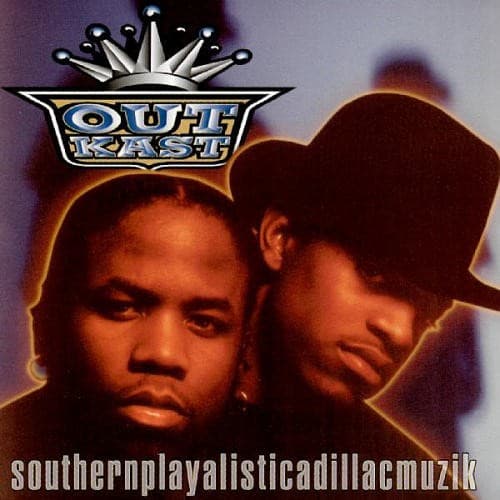
Idlewild sits at the bottom of the OutKast catalog by a wide margin, and the gap between this and Stankonia is not close. Southernplayalisticadillacmuzik had the advantage of focus and hunger; Aquemini and Stankonia balanced wild ambition with the discipline to make forty-five minutes feel necessary. This one has ambition without discipline, and the result is a bloated, unfocused mess that serves the film concept better than it serves the listener who came for a rap album. The mixed reception and the platinum sales both make sense: enough people showed up for the OutKast name to move units, and enough of them walked away disappointed that this became the duo's final album before an indefinite hiatus.
It works best for completists who need every OutKast release and for anyone curious about what a hip-hop period piece sounds like when two diverging artists try to make it happen at the same time. If you want to hear Big Boi and Andre 3000 at their peak, go to Aquemini or Stankonia and stay there. If you want to understand how a great duo falls apart, Idlewild is the document: one member chasing theatrical side projects, the other trying to keep the rap center intact, and a runtime that never met a sketch it could not promote to a full track.
Start with Morris Brown and The Train if you need the two songs that justify the file space. Call the Law if you want to hear Janelle Monáe before anyone knew her name. Skip the interludes, skip the last twenty minutes, and skip the crooner detours unless you have a high tolerance for experiments that do not land. If you want to hear what comes next for either artist, Big Boi's solo catalog and Andre's scattered guest verses both deliver more focus than this album ever manages. Idlewild is not a disaster but it is a disappointment, and for a duo that once seemed incapable of making a boring record, that might be worse.
Track by track
Track Listing
Intro
SolidTwo minutes of scene-setting that announces the period concept without delivering a hook or a reason to stay. Sets the tone for the bloat to come.
Mighty “O”
StandoutOrganized Noize wraps a Cab Calloway interpolation around a horn-driven stomp and Big Boi attacks with enough energy to make the throwback sound urgent instead of academic. The swing works because the bottom end still hits and the verse rides the pocket instead of fighting it. One of the few tracks where the period elements enhance the rap instead of replacing it.
Peaches
SolidSleepy Brown and Scar trade verses over a Too Short flip that glides without much ambition. The groove is clean and the hook is serviceable, but nothing here rises above solid filler. Organized Noize keeps it moving and that is enough for a three-minute album cut that knows its place.
Idlewild Blue (Don’tchu Worry ’Bout Me)
StandoutAndre takes a Stevie Wonder template with acoustic guitar and harmonica and sings it convincingly enough that the homage justifies itself. The melody holds and the two-minute runtime keeps it from overstaying the concept. One of the rare moments where his crooning works because the production was built for a singer instead of retrofitted around one.
Infatuation (interlude)
WeakForty-eight seconds of film dialogue that means nothing if you have not seen the movie. Breaks momentum for no musical reason.
N2U
SolidKhujo guests over another Organized Noize cut that blends bass and live instrumentation into a midtempo roll with enough snap to keep attention. The writing is workmanlike and the hook does not stick, but the groove is there and the guest verse fits. Solid but forgettable.
Morris Brown
StandoutThe crown jewel, a marching-band stomp with live brass and drums that sounds like a second-line parade crashing a rap record. Organized Noize builds the track around the horns instead of draping them over a loop, and Andre's hook cuts through with the kind of melody that OutKast used to land in their sleep. Big Boi and Scar trade verses that snap over the rhythm, and Sleepy Brown anchors the outro. The four-minute runtime feels earned because every section works and the energy never sags. This is what the whole album should have sounded like: Southern rap that borrows from the past without getting stuck there.
Chronomentrophobia
WeakTwo minutes of tempo shifts and melodic wandering that never coheres into a song. The title references the fear of time but the track just wastes it. Feels like a studio experiment that should have stayed a demo.
The Train
StandoutBig Boi produces a chugging rhythm and layers film dialogue over a bassline that actually knocks. His verse rides the pocket with the kind of technical control and wordplay that reminds you why he was always the anchor, and Sleepy Brown's hook works because it does not try to do too much. One of the few bangers on a record that forgot how to make them.
Life Is Like a Musical
SolidOrganized Noize delivers a breezy two-minute soul cut that plays like an interlude stretched into a full track. Pleasant but insubstantial, with no reason to return.
No Bootleg DVDs (interlude)
WeakFifty seconds of a character yelling about piracy. Dated when it dropped and worse now. Skip it.
Hollywood Divorce
WeakLil Wayne and Snoop Dogg join Andre for a bitter music-industry screed that sprawls past five minutes without earning the length. The bassline drags, Wayne's verse is the only one with real bite, and Andre's sung hook grates by the third repetition. The frustration in the writing is real but the execution is sluggish, and the track collapses under its own weight. Should have been three minutes and all rapping.
Zora (interlude)
WeakSixteen seconds of nothing. Exists only because the film needed a transition.
Call the Law
StandoutJanelle Monáe guests on a hypnotic chant-and-response built over minimal keys, and her chorus hints at the retro-futurist sound she would spend the next decade refining. Big Boi co-produced with Monáe and the Wondaland crew, and the result is one of the few tracks where the period elements and the rap impulse actually merge instead of competing. Monáe's presence elevates the whole cut and gives it a center that most of the album lacks. The nearly five-minute runtime works because the groove locks in and never wavers.
Bamboo & Cross (interlude)
WeakFifty-five seconds of film dialogue. Another momentum-killer that serves the movie at the album's expense.
Buggface
WeakFilm dialogue opens a track that never finds a hook or a reason to exist beyond the soundtrack requirement. The beat from Jeminesse Smith and Mr. DJ has texture but no direction, and the writing coasts. Filler.
Makes No Sense at All
WeakAndre produces and sings over a track that meanders through tempo changes without building toward anything. The title is accurate. Sounds like a rough draft that no one bothered to finish.
In Your Dreams
StandoutKiller Mike and Janelle Monáe reunite over an Organized Noize beat that finally remembers what Atlanta rap is supposed to sound like. The groove is immediate, Mike's verse hits with the kind of street-level grit that the rest of the album abandoned, and Monáe's presence again centers a track that would drift without her. Arrives too late to save the back half but stands as proof that the ideas were there if anyone had cared to develop them.
PJ & Rooster
SolidAndre produces a haunting, off-kilter track with film dialogue woven into a beat that builds tension without releasing it. The eerie atmosphere works and the four-minute runtime feels deliberate instead of bloated. One of the few places where the soundtrack conceit enhances the music, even if the track does not have enough hooks to justify repeat listens outside the film context.
Mutron Angel
SolidWhild Peach produces and guests on a psychedelic soul cut that gestures toward something interesting but never commits. The four-minute runtime drags and the hook is weak. Another sketch promoted to a full track without the editing it needed.
Greatest Show on Earth
SolidMacy Gray guests on a theatrical closer for the film portion of the album, and her raspy voice fits the carnival atmosphere Andre builds in the production. The track works as a showcase for Gray but not as a rap song, and the three-minute runtime feels indulgent when the album has already passed the hour mark. Decent within its lane but the lane was the wrong choice.
You’re Beautiful (interlude)
WeakTwenty-nine seconds of sentiment that does nothing for anyone who came here for music.
When I Look in Your Eyes
SolidA competent slow jam that any R&B act in 2006 could have released. Kevin Kendricks produces a clean track and Andre sings it well enough, but there is no reason for this to be on an OutKast album. Fans of mid-2000s neo-soul will find it pleasant; everyone else will skip it.
Dyin’ to Live
WeakTwo minutes of sparse piano and Andre crooning without much conviction. Feels like a demo that made the tracklist because someone needed a reflective moment before the album ended. Does not work.
A Bad Note
WeakJohnny Vulture produces an eight-minute closing track that sprawls without purpose or payoff. The runtime suggests ambition but the execution is a slow fade with no peaks, no hooks, and no reason to listen past the two-minute mark. The longest track on the album and the least necessary, a final reminder that no one involved could say no to a bad idea if it had a film justification. Skip it.