The scorecard
6.6/10 · Good
- Writing25%
- 6.5
- Production25%
- 7.0
- Delivery15%
- 7.0
- Cohesion15%
- 6.0
- Originality10%
- 6.5
- Replay value10%
- 6.5
The songs about love, ambition and getting by are warm and likable, but the images stay general and the hooks carry more of the weight than the verses.
A crowd of producers share the work and the record still holds one warm, live-sounding texture, with real guitar, bass and keys under the soul and funk grooves.
His raspy, elastic voice moves between singing and rapping without a seam, and the phrasing on the slower songs has a lived-in ease.
At sixteen tracks with two brief sketches and a run of similar mid-tempo songs, the record wanders and loses momentum in the back half.
The mix of rapping, singing and live-band funk was distinctive in 2014, but the album leans on familiar West Coast soul and funk reference points.
The best songs hold up and the groove invites relistening, but the weaker stretches make it more of a playlist than a front-to-back return visit.
Anderson .Paak Venice: A Great Voice Still Looking for Its Album
Venice is the sound of a gifted performer who has not yet decided what kind of record he wants to make. Anderson .Paak sings, raps, plays and arranges, and he is audibly comfortable in each role, but the debut moves between them so freely that the album never settles into a single identity. That is both its charm and its limit. The best songs on it have the unhurried swing of a West Coast summer afternoon, and the weaker ones sound like sketches waiting for a second pass.
The case for the record is the voice and the band. The case against it is the sequencing and the writing. Venice contains the seeds of everything that later made .Paak a household name on the West Coast, including the rasp, the groove and the instinct for a warm hook, and yet it is easy to hear why it was a stepping stone and not a destination. It rewards a listener who is willing to pick favorites, and it frustrates one who wants a coherent journey from the first song to the last.
The context helps explain the shape of it. The album was released in 2014 through Steel Wool, OBE and Empire Distribution, and it credits a long list of producers alongside the artist himself, with a live backing band carrying the guitar, bass and keys. That patchwork approach shows. A record built from so many hands has a real range of textures, but it also has to fight to sound like one person's statement. In the strongest stretches it does.
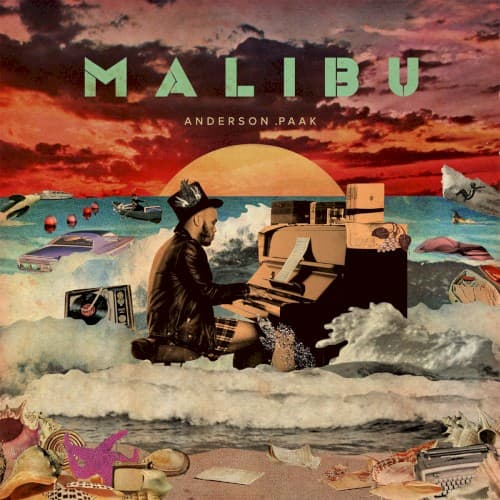
Against the long West Coast tradition of sunny, slow-rolling funk, from the G-funk template to the current wave of Los Angeles soul, Venice is more loose than rigorous. It borrows the mood of those records more than their discipline. The result is likable and often lovely, but it does not yet carry the weight of a classic debut. It is a promising first album from Anderson .Paak that is best understood as the rough draft of the sound he would sharpen on Malibu, and that comparison is the best way to appreciate both what works here and what does not.
Rasp, Rhythm and a Revolving Door of Beatmakers
The most reliable thing on Venice is the delivery. .Paak's voice is grainy and flexible, and he uses it like an instrument, bending a phrase upward or letting it drag behind the beat for effect. When he raps, the cadence is quick and playful and keeps a sing-song pulse. When he sings, there is a rough edge that keeps the melodies from sounding polished into blandness. The switching between the two modes is seamless, and that fluidity is a large part of why the album sounds so distinct from standard rap or standard R&B of its moment.
The production is the other strength. The fact sheet credits a wide group of beatmakers, with Lo_Def appearing on a large share of the tracklist and others, including DJ Nobody, DK the Punisher, Mikos the Gawd, Tokimonsta and Ta-Ku, taking individual songs. Despite the number of hands, the album stays coherent in tone. Live guitar, bass and keyboards from members of his backing band give the music a lived-in, human warmth, and the drums have a loose, slightly behind-the-beat pocket. Milk n' Honey and Get 'em Up show the range, one leaning into a long, hazy groove and the other into something more dance-oriented.
Where the album struggles is the writing. The lyrics are about love, hustle, lust and escape, and they are charming rather than vivid. Lines are built to feel good in the mouth, and the imagery tends to stay generic. For a record that nods so often to the West Coast tradition of specific place and detail, it is surprisingly light on the kind of sharp, local observation that makes a Los Angeles record feel like Los Angeles. The geography is in the titles more than in the verses.
There is also a lack of editing. Several songs are built on a single mood and then repeat it for the full length of the track, and the middle of the record sags because of it. A few ideas, including the short sketches that open parts of the album, feel more like transitions than songs. The concept of a loose, shaggy debut is part of its charm, but not every loose thread reads as intentional.
The album's sound sits between neo-soul, funk and rap, but it commits fully to none of them. That flexibility is the draw, but it also means the record rarely builds momentum. Each song can be enjoyable in isolation, and as a result Venice is better sampled than studied. The talent is obvious, and so is the room to grow.
Sixteen Tracks, Too Many Detours
Venice opens with a very short piece that works as a curtain-raiser, and the first stretch of the record is the most convincing. The early songs set up the mood, a mix of relaxed groove and soulful hooks, and give the album a confident sense of direction. There is a good rhythm in how the first few tracks move from slow and hazy to bright and upbeat, and the album seems to understand its own appeal.
The middle is where the pace starts to wobble. Another short interlude arrives, then a run of mid-tempo songs that share a mood and tempo, and the contrast between tracks becomes less sharp. The album does not collapse, but it stops building. Sixteen tracks is a lot for a debut that sits so consistently in one comfortable zone, and a leaner version of this record, trimmed by four or five songs, would be considerably stronger.
The back half has a few highlights that recover some energy, and the closing songs tend to be longer and more stretched out than the opening ones. That gives the end of the album a more spacious, jam-like feel, which suits the live-band approach, but it also makes the whole record feel longer than it is. The final run is pleasant rather than climactic, and the album finishes more with a fade than a statement.
The overall pacing issue is not a lack of good songs. It is that the album does not seem to know which songs matter most. Strong tracks sit next to sketches and filler without any clear hierarchy, and the sequencing does not do much to separate them. As a result, the record plays well as a playlist and less well as an album. The length is not fully earned, and the sequence is the clearest sign that .Paak was still learning how to build a full-length record.
The Rough Draft Before Malibu
No other albums by .Paak are rated on the site yet, so there is no catalog order to defend with numbers, but the shape is clear. Venice is the foundation, and it is best heard as the debut that points toward the stronger records that followed. It is a good album with real charm and a handful of excellent songs, held back by uneven writing and a sprawling tracklist.
It is for listeners who like warm, live-sounding soul and funk with a rap sensibility, and for anyone who wants to trace how .Paak developed. Fans of the Los Angeles groove tradition will find plenty to like in the bass lines and the loose drums. Listeners who want sharp lyrical detail, tight sequencing or a strong central concept might want to skip ahead, because the album is more about feel than argument.
It has aged reasonably well. The sound is warm and unforced, and the best songs still hold up because they are built on groove and melody rather than trends. The weaknesses, particularly the length and the uneven back half, are more visible now that the follow-up records exist for comparison.
If you only have time for a few songs, start with Drugs, Miss Right and Already. They show the best of the record: the hook, the voice and the easy band feel, with a guest turn from SiR that adds variety. For what to hear next, go to Malibu, where the same ingredients are focused and sequenced with much more care. Venice is the record where the voice arrived and the album did not, and the gap between those two things is the whole story of why it is a good debut and not a great one.
Track by track
Track Listing
Waves
SolidA brief opening sketch that sets a relaxed, beachside mood. It works as a curtain-raiser and not much else.
Milk n’ Honey
StandoutOne of the longer and hazier songs, built on a slow groove that lets the live feel and the grainy voice settle in. The mood is the point, and it succeeds at it, though the song stretches a little past what the writing can sustain. It is a good early taste of the album's strengths and its habit of staying in one comfortable place.
The City
SolidA mid-tempo song that leans on atmosphere and a melodic hook more than a distinctive verse. It is smooth and pleasant, and it fits the record's mood, but it does not sharpen the picture of the place its title promises.
Might Be
SolidA relaxed, groove-led track that keeps the same temperature as the songs around it. The vocal is the draw, but the arrangement stays within familiar territory and the track is easy to forget once it ends.
Miss Right
StandoutOne of the album's most direct and most appealing songs, and the second single. He produced it himself, and the arrangement shows his instincts: a clean, bouncy groove, a clear hook and a vocal that sounds playful without being sloppy. The writing is a lighthearted look at romance and not a deep one, but the melody does the work and the song holds attention from start to finish. It is the clearest early sign of the pop-soul side of his talent, and it is among the first places to start on this record.
Put You On
SolidA short, easygoing track that moves quickly and keeps the groove going without overreaching. It is pleasant and tidy, and its brevity helps, though it is more of a bridge than a destination.
Already
StandoutThe lone guest feature on the album is SiR, and the contrast in voices gives the song a welcome lift. The beat has a livelier bounce than much of what surrounds it, and the interplay between the two singers adds variety to a record that is otherwise fairly even in temperature. It is a quietly strong track and one of the better arguments for the album's wider range.
Dogtown
SolidA very short interlude that works as a palate cleanser. It is atmosphere and not a full song.
I Miss That Whip
SolidA breezy, nostalgic track about a car and the memories attached to it, with a loose groove that suits the theme. It is charming and light, though it is more of a vibe than a developed idea.
Get ’em Up
StandoutA more dance-oriented song that adds energy and a different rhythm to the sequence. The production stands out here for its brighter, more insistent pulse, and it is a useful change of pace in the middle of the album.
Paint
SolidA slower, moodier track that sits comfortably in the album's groove and gives the vocal space to stretch. It is pleasant, but the length and the lack of a strong hook keep it from standing out.
Drugs
StandoutThe first single and one of the longest songs, it is the clearest early statement of the sound the album is aiming for: a loose, hazy groove, a hook that sticks, and a vocal that mixes rap rhythm with soulful phrasing. Lo_Def produced it, and the arrangement lets the live-band feel carry the track through its nearly five-minute run. The subject is dealt with in a relaxed, matter-of-fact way and not as a lecture, which suits the tone of the record. It is slightly overlong, but it holds together because the groove never breaks. It is a key song to hear first.
Miki Doralude
SolidA short instrumental-leaning interlude that offers a moment of atmosphere between songs. Pleasant but inessential.
Luh You
SolidA warm, affectionate song with a smooth melody and a relaxed vocal. It is sweet and easy to like, though the writing stays on the surface and the song does not add much to the album's emotional range.
Right There
SolidA mellow, spacious track that leans on feel and texture more than on structure. The production by Ta-Ku gives it a softer, more electronic edge than most of the record, which is a nice change, but the song drifts and never fully lands.
Off the Ground
SolidA long, stretched-out closer that puts the live-band feel front and center and lets the groove run. It suits the jam-like spirit of the album and makes a relaxed final note, though at nearly five minutes it asks for more patience than the material fully repays.